
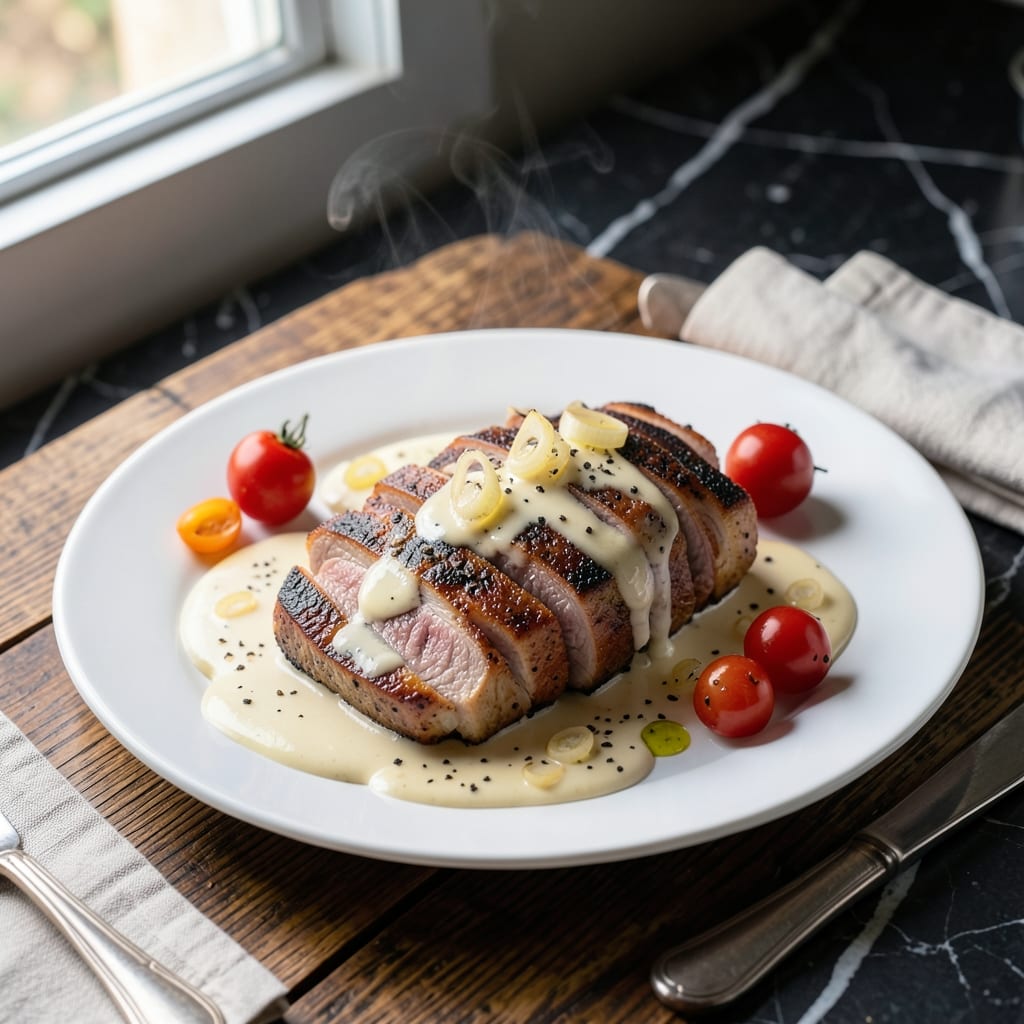
I developed this pork tenderloin recipe after one too many dry, overcooked dinners. The secret lies in quick searing and precise timing to guarantee tender results every time.
What elevates this dish is the silky cream sauce that transforms simple ingredients into something restaurant-worthy. The sauce comes together in minutes while the pork rests, infusing each bite with rich, velvety flavor.
You’ll serve perfectly cooked medallions with a glossy drizzle that clings beautifully to each piece. The contrast between the juicy pork and creamy sauce makes this a meal worth repeating.
This method works for weeknight dinners or special occasions with minimal effort and maximum impact.
Ingredients for Pork Tenderloin Recipe Cream Sauce
Elevated yet approachable components create a restaurant-worthy plate with minimal effort and maximum flavor impact.
| Ingredient | Amount | Notes |
|---|---|---|
| Pork Tenderloin 🥩 | 1 ½ lb | Trimmed of silver skin |
| Kosher Salt 🧂 | 1 tsp | Plus more to taste |
| Black Pepper 🌶️ | ½ tsp | Freshly ground preferred |
| Olive Oil 🫒 | 2 tbsp | Divided for searing |
| Unsalted Butter 🧈 | 2 tbsp | For cream sauce base |
| Shallot 🧅 | 1 whole | Finely minced for sauce |
| Garlic Cloves 🧄 | 3 cloves | Minced for sauce |
| Dry White Wine 🍷 | ¼ cup | Sauvignon Blanc recommended |
| Heavy Cream 🥛 | 1 cup | Full-fat for richness |
| Dijon Mustard 🟡 | 1 tbsp | Smooth variety preferred |
| Chicken Stock 🍲 | ½ cup | Low-sodium if available |
| Fresh Thyme Sprigs 🌿 | 3 sprigs | Leaves stripped for sauce |
| Fresh Parsley 🍃 | 2 tbsp | Chopped for garnish |
The pork tenderloin must be fresh with a rosy pink hue—avoid any with grayish discoloration or strong odor. Whole Foods and Costco consistently stock high-quality options. Trim the silver skin yourself (a quick YouTube tutorial helps) for even cooking and better texture. For the wine, a crisp Sauvignon Blanc from New Zealand adds the perfect acidity to balance the cream.
No white wine? Substitute with dry vermouth or additional chicken stock plus 1 tsp lemon juice. Shallots can be swapped for 1 small onion finely diced. For a lighter sauce, half-and-half works at a 1:1 ratio, though the texture won’t be as luxurious. If avoiding alcohol, apple cider vinegar at 1 tbsp adds necessary brightness to the sauce.
The pork keeps in the fridge for 3-4 days post-cooking, though it’s best served immediately. Cream sauce thickens as it cools—reheat gently with a splash of stock. Pre-trimmed tenderloin from Trader Joe’s saves prep time without sacrificing quality.
Why You’ll Love This Recipe
- One Pan Wonder: I sear the pork tenderloin in olive oil, then use the same pan for the creamy sauce—minimal cleanup, maximum flavor.
- Rich & velvety: That butter-based cream sauce clings to every bite, turning simple pork into something restaurant-worthy.
- Weeknight Hero: Honestly, it’s fancy enough for guests but fast enough for a Tuesday when I’m short on time.
- Leftovers Win: The pork stays tender, and the sauce thickens even more the next day—my lunchbox has never been happier.
Step-by-Step Instructions for Pork Tenderloin Cream Sauce
Master the technique for perfectly seared pork with a velvety sauce that clings to every bite.
Step 1: Sear the Pork Tenderloin to Golden Perfection
Pat the 1.5 lb Pork Tenderloin completely dry with paper towels—this ensures a proper sear. Season all sides aggressively with the 1 tsp Kosher Salt and 0.5 tsp Black Pepper. Heat 1 tbsp Olive Oil in a large skillet over medium-high heat until it shimmers.
Add the pork and sear for 3-4 minutes per side until deep golden brown. The meat should release easily from the pan when it’s ready to flip. Transfer it to a plate and tent loosely with foil—this keeps it warm while you build the sauce.
Step 2: Build the Flavor Base for the Cream Sauce
Reduce heat to medium and add the remaining 1 tbsp Olive Oil to the same skillet. Add the 1 whole Shallot (finely minced) and sauté for 2-3 minutes until translucent. Stir in the 3 cloves Garlic Cloves (minced) and cook for 30 seconds until fragrant.
Pour in the 0.25 cup Dry White Wine to deglaze the pan, scraping up all those flavorful browned bits with a wooden spoon. Let it simmer for 2 minutes until the liquid reduces by half. This step extracts maximum flavor from the fond left by the pork.
Step 3: Create the Silky Cream Sauce
Reduce heat to medium-low and add the 2 tbsp Unsalted Butter. Once melted, whisk in the 1 cup Heavy Cream, 0.5 cup Chicken Stock, and 1 tbsp Dijon Mustard. Stir in the leaves from the 3 sprigs Fresh Thyme Sprigs.
Simmer for 4-5 minutes until the sauce thickens enough to coat the back of a spoon. The cream should look velvety and rich, with a pale ivory color. Taste and adjust seasoning with additional salt if needed.
Step 4: Finish and Serve with Fresh Herbs
Return the pork to the skillet and spoon the sauce over it. Simmer for 2-3 minutes to reheat the meat and allow the flavors to meld. The pork should reach an internal temperature of 145°F—use an instant-read thermometer to confirm.
Slice the pork into 1-inch thick medallions and arrange on a serving platter. Drizzle the remaining sauce over the top and garnish with the 2 tbsp Fresh Parsley (chopped). Serve immediately while the sauce is still glossy and warm.
Pro Tips For Making Pork Tenderloin Recipe Cream Sauce
- Sear Hot, Then Rest: Crank the heat to medium-high for searing—this builds a golden crust on the tenderloin. Then let it rest 5-10 minutes before slicing, or the juices will flood your cream sauce.
- Pat It Dry First: I learned this the hard way—blot the tenderloin with paper towels before seasoning, or the salt won’t stick and the meat won’t brown properly.
- Skip Cold Butter: Use room-temperature unsalted butter for the cream sauce so it melts evenly instead of clumping. Sounds fussy, but it’s the difference between silky and greasy.
- Pull at 145°F: Resist the urge to overcook—pork tenderloin’s best at 145°F internal temp. It’ll stay juicy, and you can always return it to the pan if needed.
Pro Cooking Tips for pork tenderloin recipe cream sauce
Perfect Searing Technique
Pat the pork completely dry before seasoning—this is non-negotiable for a good sear. I use paper towels and press firmly to remove all moisture. The drier the surface, the better the Maillard reaction, which gives you that beautiful golden crust. 🔥
Temperature Control
Use medium-high heat for searing but reduce to medium when building the sauce. A heavy-bottomed skillet (like my Lodge cast iron) distributes heat evenly and prevents hot spots. This ensures the pork cooks through without burning the shallots or garlic.
Resting the Meat
Let the pork rest for 5-10 minutes after searing. This allows the juices to redistribute, so they don’t all spill out when you slice it. I tent it loosely with foil to keep it warm while I work on the sauce—efficiency is key in my kitchen.
Deglazing Like a Pro
Pour the white wine into the hot pan and let it sizzle. Use a wooden spoon to scrape up every browned bit from the bottom—this is pure flavor. Simmer until the liquid reduces by half; you’ll see the sauce start to take on a glossy sheen.
Sauce Consistency
For that silky texture, whisk constantly as the cream simmers. If it thickens too much, add a splash of chicken stock. The sauce should coat the back of a spoon but still drizzle easily. Taste as you go—I often add a pinch more salt or a squeeze of lemon at the end.
Slicing for Presentation
Slice the pork against the grain into 1-inch medallions. This shortens the muscle fibers, making each bite more tender. Arrange them on a platter and spoon the sauce over the top just before serving so it stays glossy and warm. ✨
Nutrition Facts
Frequently Asked Questions
How do I prevent the cream sauce from curdling?
Keep the heat at medium-low and whisk constantly while adding the cream. Avoid boiling, as high heat causes separation. If it starts to look grainy, remove from heat and whisk in 1 tsp ice-cold water to smooth it out.
Can I use a different cut of pork?
Tenderloin works best for quick cooking, but pork chops (1-inch thick) can substitute. Reduce searing time to 2-3 minutes per side and check internal temp reaches 145°F. Avoid tougher cuts like shoulder.
What if I don’t have white wine?
Substitute with 0.25 cup chicken stock plus 1 tsp lemon juice or vinegar. The acidity mimics wine’s role in balancing the cream. Dry vermouth also works in a pinch.
How long can I store leftovers?
Refrigerate in an airtight container for up to 3 days. Reheat gently on the stove with a splash of stock to thin the sauce. Avoid microwaving, as it can make the pork rubbery.

- Potato Patty Recipe No Egg: Crispy Edges Without the Binder - October 30, 2026
- Paula Deen’s Potato Chip Cookies Recipe: Salty-Sweet Crunch in Every Bite - October 30, 2026
- Potato Gnocchi Recipe Ideas: Pillowy Soft Dumplings With Rustic Charm - October 30, 2026