
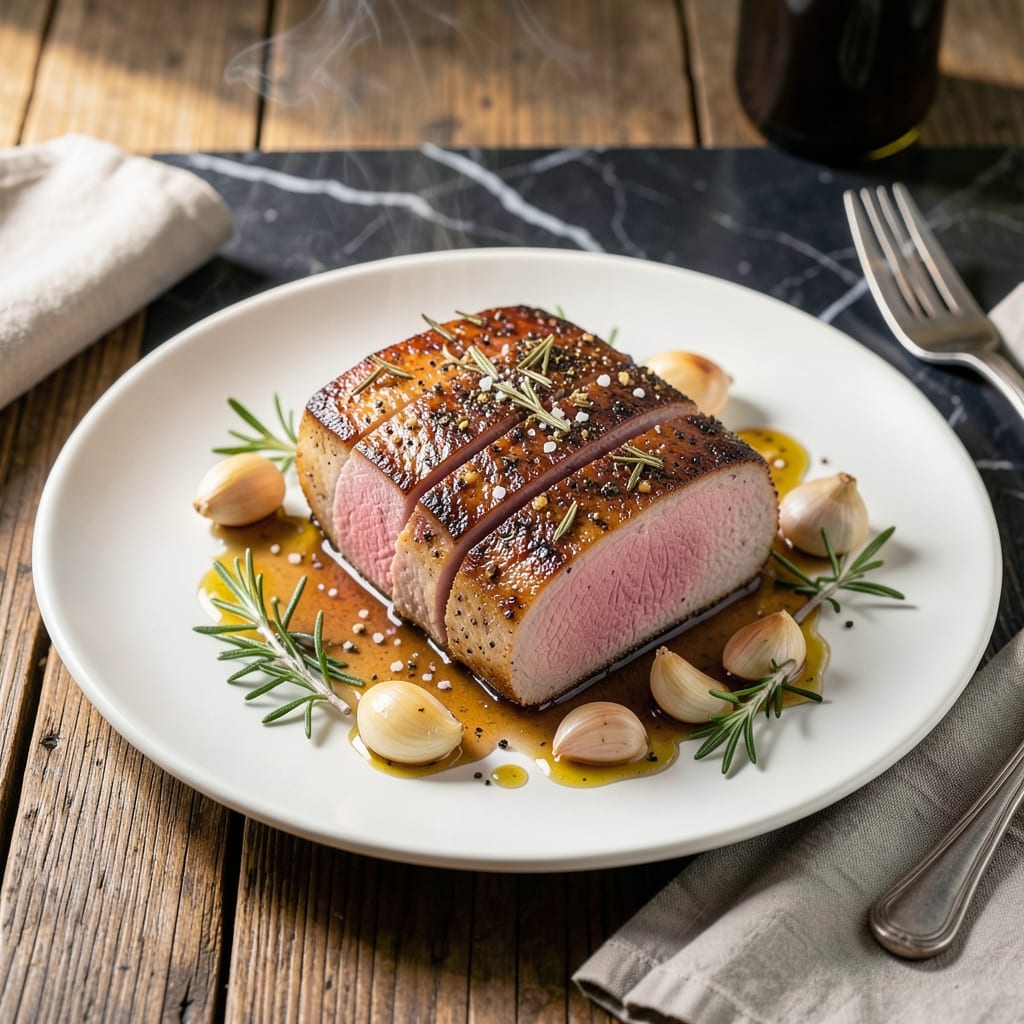
This sear-then-bake method guarantees tender pork tenderloin with a perfect golden crust every time. I developed this technique after testing countless variations in my small Boston kitchen, focusing on simplicity and reliability.
The process begins with a hot pan to create a flavorful sear, locking in juices before finishing in the oven. This approach ensures even cooking and a beautiful crust without drying out the meat.
You’ll be rewarded with juicy, succulent slices that look and taste restaurant-quality. The combination of searing and baking develops complex flavors while maintaining tenderness.
Serve with roasted vegetables or mashed potatoes for a complete meal. This method works beautifully for both everyday dinners and special occasions.
Ingredients for Pork Tenderloin Recipe Sear Then Bake
A few quality ingredients transform pork tenderloin into restaurant-worthy centerpiece with golden crust and juicy interior.
| Ingredient | Amount | Notes |
|---|---|---|
| Pork Tenderloin 🥩 | 1 ½ lb | Trimmed of excess fat |
| Kosher Salt 🧂 | 1 ½ tsp | Diamond Crystal preferred |
| Black Pepper 🌶️ | 1 tsp | Freshly ground preferred |
| Garlic Powder 🧄 | 1 tsp | Not garlic salt |
| Dried Thyme 🌿 | 1 tsp | Crushed between fingers |
| Dried Rosemary 🍃 | 1 tsp | Finely crushed |
| Olive Oil 🫒 | 2 tbsp | High smoke point variety |
| Unsalted Butter 🧈 | 1 tbsp | For basting finish |
| Fresh Garlic Cloves 🧄 | 2 cloves | Minced for pan sauce |
| Low-Sodium Chicken Broth 🍲 | ½ cup | For deglazing pan |
| Dijon Mustard 🟡 | 1 tbsp | For serving glaze |
| Honey 🍯 | 1 tbsp | For balancing glaze |
The pork tenderloin quality is paramount. Look for pale pink, fine-grained meat with minimal fat at Whole Foods or local butchers—avoid anything grayish or with strong odor. Uniform thickness ensures even cooking; if your piece tapers significantly, tuck the thin end under and secure with kitchen twine. The herbs should be freshly crushed to release their aromatic oils, elevating the crust’s flavor profile.
No pork tenderloin? Pork loin roast at half the cooking time works in a pinch (slice into cutlets first). Out of fresh garlic? Garlic powder at half the amount substitutes acceptably. For the glaze, maple syrup replaces honey 1:1. The broth can be swapped with white wine for deglazing—use something dry like Sauvignon Blanc. Butter can be omitted, but it adds a professional sheen to the crust.
Store raw pork tenderloin in its original packaging on a plate in the coldest part of your fridge for up to 3 days. Cooked leftovers keep 4-5 days refrigerated or 3 months frozen. Slice only after resting to retain juices—this maintains the tenderness promised by the sear-then-bake method.
Why You’ll Love This Recipe
- Minimal Effort: Sear it, bake it, done. I don’t even need to marinate—just salt, pepper, and those dry spices work magic.
- Crispy & Juicy: That first bite with the caramelized crust and tender center? Honestly, it’s why I make this every other week.
- Feeds My Crowd: From Sunday dinner to meal prep, this tenderloin stretches for sandwiches, salads, or tacos the next day.
- Budget Hero: A whole pork tenderloin costs less than steak, and I get multiple meals out of one cut.
Step-by-Step Instructions for Pork Tenderloin Sear Then Bake
This method guarantees juicy meat with a perfect golden crust every time.
Step 1: Season and Prep the Pork Tenderloin
Pat the 1.5 lb pork tenderloin completely dry with paper towels to ensure a good sear. Trim any visible silver skin or excess fat, though most tenderloins come pre-trimmed.
Combine the 1.5 tsp kosher salt, 1 tsp black pepper, 1 tsp garlic powder, 1 tsp dried thyme, and 1 tsp dried rosemary. Rub this mixture evenly over all surfaces of the pork, pressing it in gently. Let the seasoned tenderloin sit at room temperature for 15-20 minutes to allow the salt to penetrate.
Step 2: Sear the Tenderloin to Golden Perfection
Heat the 2 tbsp olive oil in a large oven-safe skillet over medium-high heat until it shimmers. Add the pork tenderloin and sear for 3-4 minutes per side until deeply browned. Use tongs to rotate the meat, ensuring all sides develop a rich crust.
Add the 1 tbsp unsalted butter to the pan during the last minute of searing. Tilt the skillet slightly and baste the pork with the melted butter using a spoon. This step enhances both flavor and appearance with a glossy finish.
Step 3: Finish in the Oven
Transfer the skillet to a preheated 400°F oven. Roast the pork tenderloin for 10-15 minutes, or until the internal temperature reaches 145°F in the thickest part. The meat should feel firm but springy when pressed.
Remove the skillet from the oven and transfer the pork to a cutting board. Tent loosely with foil and let it rest for 5-10 minutes. This resting period allows the juices to redistribute, ensuring tender slices.
Step 4: Create the Pan Sauce
Return the skillet to medium heat and add the 2 cloves fresh garlic cloves (minced). Sauté for 30 seconds until fragrant, then pour in the 0.5 cup low-sodium chicken broth. Use a wooden spoon to scrape up all the browned bits from the bottom of the pan.
Simmer the mixture for 2-3 minutes until it reduces by half. Remove from heat and stir in the 1 tbsp Dijon mustard and 1 tbsp honey until smooth. The sauce should coat the back of a spoon with a glossy sheen.
Slice the pork tenderloin into ½-inch thick pieces and drizzle with the warm pan sauce before serving. The combination of searing and baking delivers a tender interior with a beautifully caramelized exterior, while the sauce adds a balanced sweet-savory finish.
Pro Tips For Making Pork Tenderloin Recipe Sear Then Bake
- Pat It Dry: Use paper towels to thoroughly dry the tenderloin before seasoning—I learned this the hard way after my first few attempts steamed instead of seared.
- Hot Pan, Hot Oil: Get your pan screaming hot and add about 2 tablespoons of oil before the pork goes in, or you’ll end up with pale, sad meat instead of that golden crust.
- Don’t Overcrowd: If your tenderloin is too thick, butterfly it slightly so it cooks evenly—resist the urge to cram it into a small pan, which drops the temperature fast.
- Rest Under Foil: Give it a solid 10 minutes under foil after baking; sounds tedious, but it keeps the juices from pooling on the cutting board instead of in the meat.
Perfect Pairings for This Recipe
Wine Pairings
This dish shines with a medium-bodied red wine like Pinot Noir from Oregon—I love Eyrie Vineyards for its bright acidity that cuts through the richness. The wine’s cherry notes complement the pork’s natural sweetness beautifully. 🍷
Craft Beer Options
A Belgian dubbel like Chimay Red offers caramel and dark fruit notes that pair wonderfully. For something lighter, try a New England IPA from Trillium Brewing—its juicy, hazy profile balances the savory crust.
Side Dish Ideas
Roasted Brussels sprouts with balsamic glaze bring a nice contrast to the pork’s richness. Toss 1 lb trimmed sprouts with 2 tbsp olive oil, roast at 425°F for 20 minutes until crispy.
Seasonal Veggies
In fall, I love serving this with maple-glazed carrots—simmer 4 large carrots (sliced) in ¼ cup maple syrup and 1 tbsp butter for 15 minutes. The sweetness echoes the honey in the pan sauce. ✨
Starch Suggestions
Garlic mashed potatoes soak up the pan sauce beautifully. Use 2 lbs Yukon Golds and 4 roasted garlic cloves for extra depth. For a lighter option, wild rice pilaf adds a nutty texture that complements the pork.
Nutrition Facts
Frequently Asked Questions
Do I need an oven-safe skillet for this method?
Yes, oven-safe skillets are essential to transfer from stovetop to oven safely. Cast iron or stainless steel work perfectly and can handle the 400°F temperature.
How do I know when the pork is done?
Use a meat thermometer to check the internal temperature. It should read 145°F in the thickest part. The meat will continue cooking while resting, so remove it just as it reaches temperature.
Can I skip the resting time?
Never skip resting! Letting the pork rest for 5-10 minutes allows juices to redistribute. Slicing too soon causes the juices to spill out, leaving the meat dry.
What if my tenderloin is thicker on one end?
Tuck the thinner end under and secure it with kitchen twine. This creates even thickness for consistent cooking throughout the 10-15 minutes in the oven.

- Potato Patty Recipe No Egg: Crispy Edges Without the Binder - October 30, 2026
- Paula Deen’s Potato Chip Cookies Recipe: Salty-Sweet Crunch in Every Bite - October 30, 2026
- Potato Gnocchi Recipe Ideas: Pillowy Soft Dumplings With Rustic Charm - October 30, 2026