
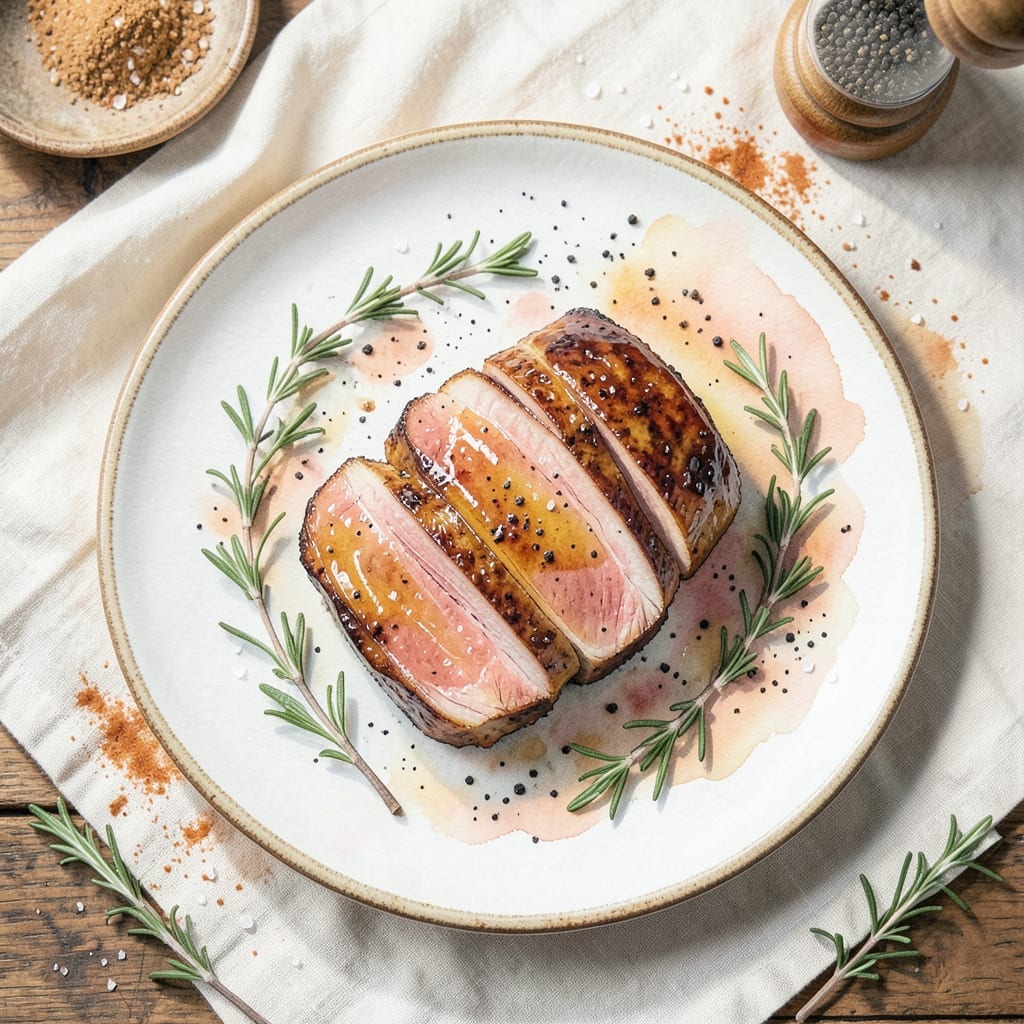
This pan-searing method delivers tender pork tenderloin every time by locking in natural juices. The key is proper heat control and timing.
You’ll achieve a golden crust outside while keeping the inside perfectly moist. This technique works with minimal equipment and basic ingredients.
Ingredients for Pork Tenderloin Recipe Stove Top
Minimal ingredients maximize flavor with proper technique for this stove-top preparation.
| Ingredient | Amount | Notes |
|---|---|---|
| Pork Tenderloin 🥩 | 1 ½ lb | Trimmed of silver skin |
| Kosher Salt 🧂 | 1 ½ tsp | Diamond Crystal preferred |
| Freshly Ground Black Pepper 🌶️ | 1 tsp | Coarse grind for texture |
| Garlic Powder 🧄 | 1 tsp | Not garlic salt |
| Smoked Paprika 🌶️ | 1 tsp | For depth of flavor |
| Dried Thyme 🍃 | 1 tsp | Rubbed between fingers |
| Olive Oil 🫒 | 2 tbsp | High smoke point variety |
| Unsalted Butter 🧈 | 2 tbsp | For basting finish |
| Fresh Rosemary Sprigs 🌿 | 2 whole | Optional for aromatics |
| Fresh Garlic Cloves 🧄 | 3 cloves | Smashed for infusion |
The pork tenderloin quality is paramount. Opt for USDA Choice or better from a trusted butcher or Whole Foods for consistent tenderness. Look for pieces with a pale pink hue and minimal surface moisture—indicators of freshness. The silver skin must be removed (a sharp knife works best) to prevent curling during cooking. Costco offers excellent pre-trimmed options for convenience without sacrificing quality.
No smoked paprika? Regular paprika plus 1/4 tsp cayenne approximates the flavor. Fresh rosemary can replace dried thyme at twice the quantity. For a dairy-free finish, avocado oil substitutes for butter effectively. The garlic powder can be replaced with 1 tbsp fresh minced garlic, though the flavor profile will be more assertive. Always pat the pork dry before seasoning for optimal crust development.
Seasoned pork keeps refrigerated for 1-2 days before cooking. Leftovers store well for 4 days or freeze for 3 months. Reheat gently in a skillet with a splash of broth to maintain moisture. The spice blend can be pre-mixed and stored in an airtight container for up to 6 months.
Why You’ll Love This Recipe
- One Pan Wonder: I sear the tenderloin in a single skillet—no oven, no extra dishes, just juicy pork with minimal cleanup.
- Smoky Depth: The smoked paprika and garlic powder give it that rich, almost barbecue-like flavor without firing up the grill.
- Weeknight Hero: I throw it together after work and still have time to set the table. (Yes, even on a Tuesday night)
- Leftovers Win: Honestly, the slices taste even better the next day tucked into sandwiches or over salad.
Step-by-Step Instructions for Pork Tenderloin Stove Top
Master the pan-searing technique that guarantees tender, juicy pork with a caramelized crust.
Step 1: Season and Temper the Pork Tenderloin
Pat the 1.5 lb Pork Tenderloin completely dry with paper towels to ensure optimal browning. Trim any remaining silver skin if needed. In a small bowl, combine the 1.5 tsp Kosher Salt, 1 tsp Freshly Ground Black Pepper, 1 tsp Garlic Powder, 1 tsp Smoked Paprika, and 1 tsp Dried Thyme, rubbing the dried thyme between your fingers to release its oils as you mix.
Coat the pork tenderloin evenly with the spice blend on all sides, pressing gently so it adheres. Let the seasoned pork sit at room temperature for 20-30 minutes—this step ensures even cooking throughout and allows the spices to penetrate the surface.
Step 2: Sear the Tenderloin for a Perfect Crust
Heat the 2 tbsp Olive Oil in a large, heavy skillet (cast iron works best) over medium-high heat until it shimmers but does not smoke. Place the pork tenderloin in the pan, positioning it so it doesn’t touch the sides. Sear undisturbed for 4-5 minutes until the underside develops a deep golden-brown crust.
Flip the tenderloin using tongs and sear the remaining sides, including the ends, for 2-3 minutes per side. The pork should release easily from the pan when it’s ready to turn—if it sticks, let it cook for another minute before attempting to flip.
Step 3: Aromatic Basting for Depth of Flavor
Reduce the heat to medium. Add the 2 tbsp Unsalted Butter, 2 whole Fresh Rosemary Sprigs, and 3 cloves Fresh Garlic Cloves (smashed but left whole) to the skillet. Tilt the pan slightly and use a spoon to baste the pork tenderloin continuously with the melted butter, rosemary, and garlic for 2-3 minutes.
The butter will foam as it cooks, and the rosemary and garlic will infuse into it, creating an aromatic basting liquid. This step not only adds flavor but also helps cook the tenderloin evenly. Watch for the butter to turn a light golden brown—this indicates it’s developed nutty, rich flavors without burning.
Step 4: Finish Cooking and Rest for Tenderness
Once the pork tenderloin reaches an internal temperature of 145°F in the thickest part, transfer it to a cutting board. If the exterior isn’t as browned as you’d like, increase the heat to high for the final minute of cooking to deepen the crust.
Tent the pork loosely with foil and let it rest for 8-10 minutes. This resting period allows the juices to redistribute throughout the meat, ensuring every slice is moist and tender. The internal temperature will rise by 5-10°F during resting due to carryover cooking.
Slice the pork tenderloin against the grain into ½-inch thick medallions. The meat should be slightly pink in the center and juicy, with a well-browned exterior. Serve immediately with any pan juices spooned over the top.
Pro Tips For Making Pork Tenderloin Recipe Stove Top
- Pat It Dry: Blot the tenderloin with paper towels before seasoning—this guarantees a better sear instead of steaming the meat. I learned this the hard way after wondering why my crust was always pale.
- Start Hot, Finish Low: Sear the pork over medium-high heat for 2-3 minutes per side, then drop to medium-low to cook through without burning the spices. Sounds simple, but it prevents that sad, overcharred exterior.
- Rest Under Foil: Let the pork rest for 5-10 minutes wrapped loosely in foil after cooking—it keeps the juices inside where they belong. I skip this when I’m starving, but the difference is noticeable.
- Season Twice: Hit the tenderloin with salt and spices before searing, then give it another light dusting of smoked paprika and garlic powder after flipping. The double layer builds way more flavor than a single coat.
Common Mistakes When Making Perfect Results
Skipping the Rest
I’ve seen too many home cooks slice into their pork tenderloin immediately after cooking. Resting for 8-10 minutes is non-negotiable—it allows juices to redistribute. Without this, all those flavorful liquids end up on your cutting board instead of in your meat. 💡
Overcrowded Pan
Using a pan that’s too small causes the pork to steam rather than sear. A 12-inch cast iron skillet gives the 1.5 lb tenderloin enough space for proper browning. If your pan is too small, the temperature drops dramatically when you add the meat.
High Heat Burn
Cranking the heat to maximum might seem like a shortcut, but it burns the spices and creates a bitter crust. Stick to medium-high heat for the initial sear. The butter basting step works best at medium heat to prevent burning the garlic and rosemary.
Uneven Thickness
Pork tenderloin tapers at one end, which can lead to uneven cooking. I fold the thin end under and secure it with a toothpick before seasoning. This creates a more uniform thickness, ensuring the entire piece reaches 145°F simultaneously without overcooking the thinner part.
Dry Meat
This usually happens from overcooking. Use an instant-read thermometer to monitor the internal temperature. Pull the pork at 145°F—it will continue cooking during the rest. Remember, pork tenderloin is lean, so even a few degrees over can make it dry.
Cold Meat in Pan
Adding cold pork to a hot pan causes the temperature to plummet. Always let your seasoned tenderloin sit at room temperature for 20-30 minutes before cooking. This ensures even cooking from edge to center and better crust development. 🔥
Nutrition Facts
Frequently Asked Questions
What pan works best for searing?
A heavy cast iron skillet is ideal for even heat distribution and a perfect crust. A 12-inch size gives the tenderloin room to brown without steaming.
Do I need a meat thermometer?
Pork tenderloin cooks quickly, and an instant-read thermometer ensures you pull it at 145°F for juicy results. Guessing risks overcooking.
Can I use a different seasoning blend?
Yes! Try 1 tsp cumin and ½ tsp cinnamon for a warm twist, or 1 tbsp fresh herbs like thyme or rosemary. Just keep salt levels consistent.
Why does my pork turn out dry?
Overcooking is the most common culprit. Pull it at 145°F and rest for 8-10 minutes to lock in moisture. Lean cuts like tenderloin dry out fast.

- BBQ Sausage Recipe Oven: Smoky Depth Without the Grill - September 28, 2026
- BBQ Chicken Bowl Recipe Rice: Smoky Sweetness Over Fluffy Grains - September 28, 2026
- Beef Cutlet Recipe Ideas: Crispy Breaded Patties With Bold Seasonings - September 28, 2026