
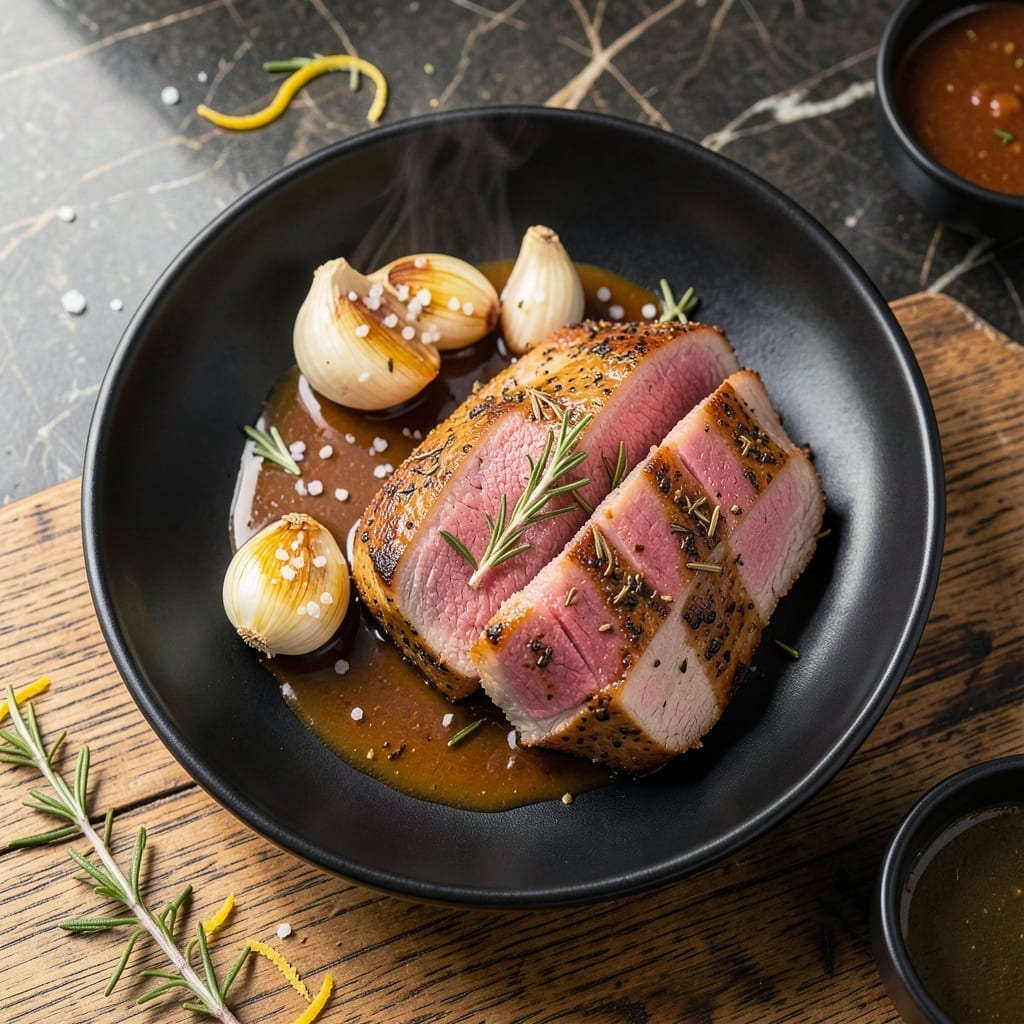
Achieving perfectly tender pork tenderloin every time comes down to one crucial detail: the internal temperature. My years in professional kitchens proved that precision is everything with this lean cut.
This recipe delivers juicy results by targeting a 145°F internal temperature, measured at the thickest part. That’s the USDA-recommended safe minimum that keeps the meat moist without overcooking.
The method is simple but precise. Sear the seasoned tenderloin in a hot pan for color and flavor, then transfer to the oven to finish cooking evenly. Always let it rest afterward—this step locks in the juices.
You’ll get a centerpiece dish with a golden crust and a tender, rosy center that slices beautifully. No dry meat, no guesswork—just consistent, impressive results.
Ingredients for Pork Tenderloin Recipe Temp
Precision starts with quality ingredients for this elegant centerpiece dish.
| Ingredient | Amount | Notes |
|---|---|---|
| Pork Tenderloin 🥩 | 1 ½ lb | Trimmed of excess fat |
| Kosher Salt 🧂 | 1 ½ tsp | Diamond Crystal preferred |
| Freshly Ground Black Pepper 🌶️ | 1 tsp | Coarse grind ideal |
| Garlic Powder 🧄 | 1 tsp | Not garlic salt |
| Onion Powder 🧅 | 1 tsp | Fine grind preferred |
| Dried Rosemary 🌿 | 1 tsp | Crushed to release oils |
| Dried Thyme 🍃 | 1 tsp | Rubbed between fingers |
| Olive Oil 🫒 | 2 tbsp | High smoke point variety |
| Unsalted Butter 🧈 | 2 tbsp | For finishing sear |
| Fresh Garlic Cloves 🧄 | 3 cloves | Minced finely |
| Fresh Rosemary Sprigs 🌿 | 2 sprigs | Leaves removed and chopped |
| Fresh Thyme Sprigs 🍃 | 2 sprigs | Leaves stripped |
The pork tenderloin must be fresh—look for pale pink color with slight marbling. Whole Foods or a trusted butcher will have the best selection. Avoid any pieces with dark spots or strong odor. The weight matters here: a 1.5 lb piece cooks evenly without drying out. Professional kitchens always trim excess fat and silver skin before seasoning for optimal texture and flavor absorption.
No fresh herbs? Dried at one-third the quantity works in a pinch, though the flavor profile will be slightly muted. Need to skip the garlic powder? Double the fresh garlic for similar impact. The olive oil can be substituted with avocado oil for an even higher smoke point. Avoid pre-ground black pepper—freshly ground makes a noticeable difference in the crust.
Store the raw tenderloin in the coldest part of your fridge for up to 3 days. Once cooked, leftovers keep for 4 days refrigerated or can be frozen for 3 months. Always let the meat rest at room temperature for 15 minutes before slicing to maintain moisture.
Why You’ll Love This Recipe
- Five Minute Prep: Honestly, it’s just rub, roast, rest—no marinating, no fuss.
- Garlic-Pepper Magic: That crust from the garlic and black pepper? Ridiculously good.
- Feeds Four, Easily: One tenderloin, four happy people, and the leftovers make killer sandwiches.
- Budget Hero: A pound of pork tenderloin costs less than steak and tastes just as fancy.
Step-by-Step Instructions for Pork Tenderloin
Master these precise steps to achieve tender, juicy results with ideal internal temperature every time.
Step 1: Season and Marinate the Pork Tenderloin
Pat the 1.5 lb pork tenderloin dry with paper towels to ensure proper browning. In a small bowl, combine the 1.5 tsp kosher salt, 1 tsp freshly ground black pepper, 1 tsp garlic powder, 1 tsp onion powder, 1 tsp dried rosemary, and 1 tsp dried thyme.
Rub this mixture evenly over all surfaces of the pork, pressing gently to adhere. Drizzle 1 tbsp olive oil over the seasoned meat and massage it in. This step ensures the spices penetrate the surface for maximum flavor impact.
Let the pork sit at room temperature for 30 minutes before cooking. This allows the seasoning to absorb and the meat to cook more evenly, preventing the outside from overcooking before the center reaches temperature.
Step 2: Sear for Flavor Development
Heat the remaining 1 tbsp olive oil in a large oven-safe skillet over medium-high heat until shimmering. Add the pork tenderloin and sear for 3-4 minutes per side until a deep golden-brown crust forms.
Add the 2 tbsp unsalted butter, 3 cloves fresh garlic cloves (minced), 2 sprigs fresh rosemary sprigs (chopped), and 2 sprigs fresh thyme sprigs (leaves stripped) to the pan. Baste the pork with the foaming butter and herbs for 1-2 minutes, spooning it over the top repeatedly.
This basting technique infuses the meat with aromatic flavors while building a rich, glossy exterior. The butter should turn a light nutty brown, but not burn.
Step 3: Finish in the Oven to Perfect Temperature
Transfer the skillet to a preheated 400°F oven. Roast the pork tenderloin for 15-20 minutes, or until an instant-read thermometer inserted into the thickest part registers 145°F.
I recommend checking the temperature at the 15-minute mark to avoid overcooking. The pork should have a lightly pink center when sliced, which indicates ideal doneness. If the temperature hasn’t reached 145°F, return it to the oven and check every 2-3 minutes.
Step 4: Rest and Serve
Remove the pork from the oven and transfer it to a cutting board. Tent loosely with foil and let it rest for 10 minutes before slicing. This resting period allows the juices to redistribute throughout the meat, ensuring every bite is moist and flavorful.
The internal temperature will rise by 5-10°F during resting (carryover cooking), so pulling it at 145°F guarantees a final temperature of 150-155°F—perfect for tender, juicy pork.
Slice the pork tenderloin into ½-inch thick medallions and serve immediately with any pan juices spooned over the top.
Pro Tips For Making Pork Tenderloin Recipe Temp
- Pull at 145°F: Use a meat thermometer and remove the pork tenderloin from the oven at 145°F—it’ll coast up to 150°F while resting, staying juicy every time. I learned this the hard way after overcooking a few too many.
- Pat It Dry: Before seasoning, blot the tenderloin with paper towels to remove excess moisture so the salt, pepper, and spices actually stick and form a crust. Sounds simple, but it makes a real difference.
- Skip the Overcrowding: If searing first, don’t cram the pan—give the pork space so it browns instead of steams. After burning my first attempt in a crowded skillet, I now cook in batches if needed.
- Rest Under Foil: Let the pork rest for 10 minutes under loose foil after cooking—it redistributes the juices and keeps it warm. My grandmother swore by this, and she was right.
Storing and Reheating Leftovers
Refrigerator Storage
Let your cooked pork cool for no more than 2 hours before transferring to airtight containers. I use glass containers from my local Italian deli—they keep flavors fresh and prevent fridge odors. Store at 40°F or below for up to 4 days. ❄️
Freezer Storage
For longer storage, wrap individual portions tightly in plastic wrap, then place in freezer bags. Squeeze out all air to prevent freezer burn. This method keeps your pork tenderloin tasting great for up to 3 months. Label with the date—I always use my grandmother’s wooden spoon to write on the bags.
Stovetop Reheating
My preferred method for leftovers: Heat 1 tbsp olive oil in a skillet over medium-low heat. Add pork slices and warm for 2-3 minutes per side, basting with pan juices. This restores moisture and prevents drying out. The aroma always takes me back to Sunday dinners.
Microwave Reheating
Place pork slices on a microwave-safe plate, cover with a damp paper towel, and heat on 50% power for 1-2 minutes. Check temperature and repeat in 30-second intervals until reaching 145°F. Add a splash of broth if needed. 💡
Oven Reheating
Preheat oven to 300°F, place pork in a baking dish with ¼ cup broth, cover with foil, and heat for 10-15 minutes. This gentle method works best for larger portions. I often add fresh rosemary sprigs for extra flavor.
Slicing Before Storage
For quick meals, slice the pork into ½-inch medallions before storing. This makes reheating faster and more even. Just be sure to cool completely first to maintain texture. My Nonna always said, “A sharp knife makes happy meals.”
Nutrition Facts
Frequently Asked Questions
What internal temperature ensures safe but juicy pork?
Pull it from heat at exactly 145°F measured at the thickest part. The USDA confirms this as the safe minimum that keeps the meat tender and slightly pink inside.
How long should it rest after cooking?
Let it rest for 10 minutes under loose foil. This allows juices to redistribute for moist slices. The temperature will rise 5-10°F during this time.
Can I use a different cooking method?
For grilling, maintain medium-high heat and target the same 145°F internal temp. Slow cookers work too but may require 2-3 hours on low.
Why does my pork tenderloin turn out dry?
Overcooking is the main culprit. Always use a meat thermometer and remove at 145°F. Letting it rest before slicing also prevents moisture loss.

- Potato Patty Recipe No Egg: Crispy Edges Without the Binder - October 30, 2026
- Paula Deen’s Potato Chip Cookies Recipe: Salty-Sweet Crunch in Every Bite - October 30, 2026
- Potato Gnocchi Recipe Ideas: Pillowy Soft Dumplings With Rustic Charm - October 30, 2026