
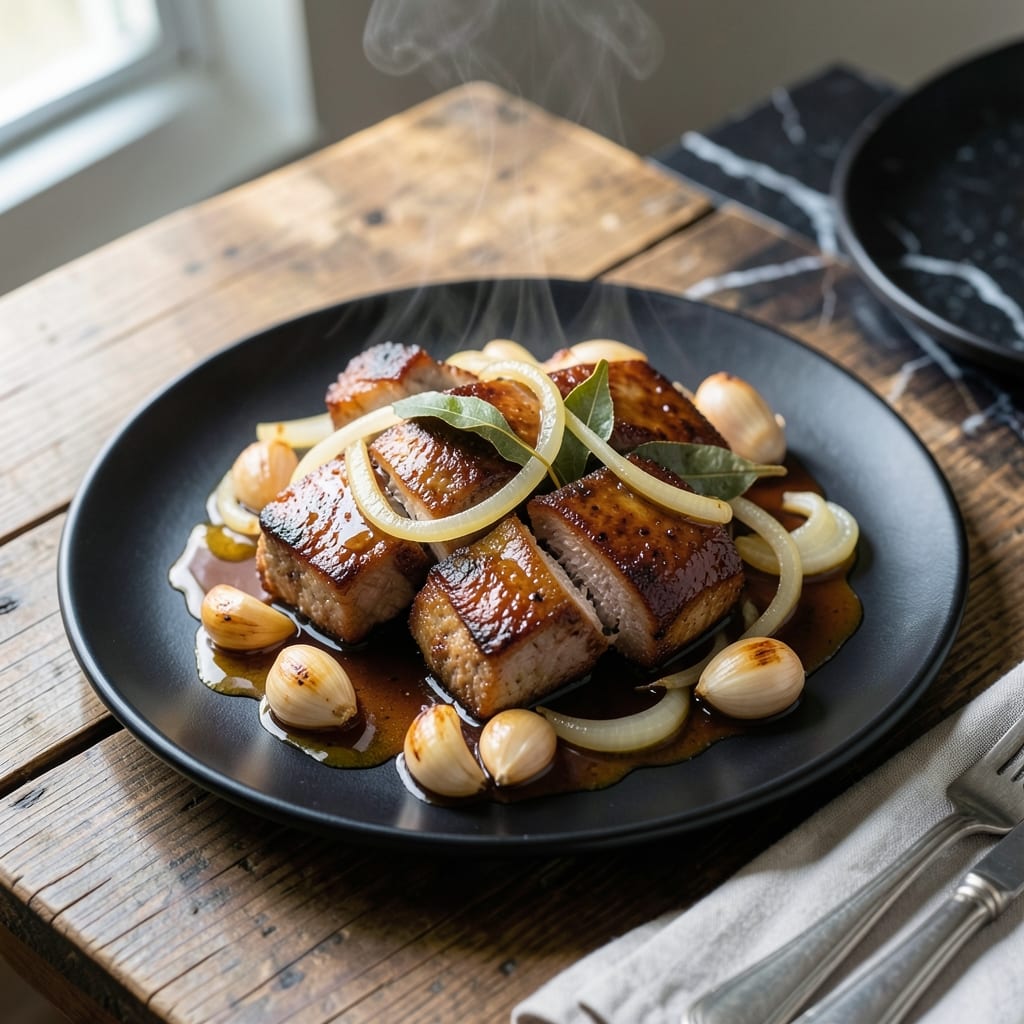
This Filipino pork dish brings bold, tangy flavors to your table with a simple vinegar braise. I tested this method in my small Boston kitchen until the balance of sour, savory, and slightly sweet felt just right.
The key is slow-simmering pork in a mix of vinegar, soy sauce, and aromatics until it becomes tender and rich. Traditional versions often include potatoes or pineapple for extra texture and sweetness.
What emerges is a deeply flavorful dish with a glossy sauce that clings to each piece of pork. The vinegar cuts through the richness, creating a perfect harmony of flavors.
Serve over steamed rice to soak up every drop of the tangy braising liquid. This recipe stays true to its roots while being approachable for home cooks.
Ingredients for Pork Ulam Recipe Ideas
Nothing exotic here—just good stuff for that tangy, savory Filipino braise.
| Ingredient | Amount | Notes |
|---|---|---|
| Pork Shoulder 🥩 | 2 lb | Cut into 2-inch chunks |
| White Vinegar 💧 | 1 cup | Cane or white vinegar |
| Soy Sauce 🫒 | ½ cup | Regular or low-sodium |
| Garlic Cloves 🧄 | 8 cloves | Peeled and smashed |
| Yellow Onion 🧅 | 1 whole | Sliced into rings |
| Bay Leaves 🍃 | 3 pieces | Dried or fresh |
| Black Peppercorns 🌶️ | 1 tsp | Whole, lightly crushed |
| Brown Sugar 🍚 | 2 tbsp | Light or dark |
| Potatoes 🥔 | 2 whole | Peeled and quartered |
| Pineapple Chunks 🍍 | 1 cup | Fresh or canned |
| Water 💧 | 1 cup | For braising liquid |
| Salt 🧂 | 1 tsp | Adjust to taste |
The pork shoulder is non-negotiable here. Look for good marbling at your butcher or the meat section at Market Basket. I always grab mine from the local Asian market—they cut it perfectly for stewing. The vinegar matters too: cane vinegar is traditional, but white vinegar (the plain kind, not cleaning vinegar) works just fine. Datu Puti is a great brand if you can find it.
No pork shoulder? Pork belly or country-style ribs work too (just trim excess fat). Out of cane vinegar? Apple cider vinegar at the same amount gives a slightly fruitier taste. Skip the pineapple? Extra potatoes or carrot chunks add the sweetness. The soy sauce can be swapped for tamari if you’re avoiding gluten. Sanoy or Silver Swan are my go-to Filipino brands.
This tastes even better the next day once everything soaks in. Keeps for 4-5 days in the fridge, freezes for 3 months. I always make extra—leftovers reheat beautifully (the pork gets even more tender).
Why You’ll Love This Recipe
- One Pan Magic: I just toss the pork shoulder with garlic, onion, vinegar, and soy sauce in a single pan—no fancy techniques, no fuss.
- Tangy Savory Bite: The vinegar cuts through the richness of the pork while the garlic and soy sauce create this deep, umami-packed flavor that lingers.
- Feeds a Hungry Crowd: I make a big batch for family gatherings, and honestly, it’s the first dish to disappear.
- Stretches the Budget: Pork shoulder is so affordable, and a little goes a long way—leftovers taste even better the next day.
Step-by-Step Instructions for Filipino-Style Pork with Tangy Vinegar Braise
Here’s the method that makes this dish shine with bold, balanced flavors.
Step 1: Sear the Pork Shoulder
Cut the 2 lb Pork Shoulder into 2-inch chunks and pat them dry with paper towels. Heat a large pot over medium-high heat without oil—the pork fat will render and prevent sticking. Add the pork and sear for 5-7 minutes until golden brown on all sides.
Don’t rush this step. You want a deep, caramelized crust on each piece. The browned bits left in the pot will dissolve into the sauce, adding rich, savory depth. Remove the pork and set it aside temporarily.
Step 2: Build the Flavor Base
In the same pot, add the sliced Yellow Onion, 8 cloves Garlic Cloves, 3 pieces Bay Leaves, and 1 tsp Black Peppercorns. Sauté for 2-3 minutes until the onions soften and the garlic turns fragrant but not brown.
Add the 2 tbsp Brown Sugar and stir until it melts and begins to caramelize. This creates a sweet foundation that balances the vinegar’s tang. Real talk: watch closely—sugar burns easily.
Step 3: Add Liquids and Braise
Pour in the 1 cup White Vinegar, 0.5 cup Soy Sauce, and 1 cup Water. Use a wooden spoon to scrape up all the browned bits from the bottom of the pot. Return the pork to the pot along with the 2 whole Potatoes (peeled and quartered).
Bring the mixture to a boil, then reduce heat to medium-low. Cover and let it simmer for 45-50 minutes until the pork is fork-tender and the potatoes are soft.
Step 4: Add Pineapple and Finish
Stir in the 1 cup Pineapple Chunks and 1 tsp Salt. Continue to cook uncovered for 10-15 minutes until the sauce reduces slightly and thickens. The pineapple adds a subtle sweetness that complements the tangy vinegar perfectly.
Taste and adjust the seasoning if needed. I know it seems weird, but the sauce should taste balanced—sweet, sour, and savory all at once. Remove the bay leaves before serving.
Pro Tips For Making Pork Ulam Recipe Ideas
- Boil Then Sear: Parboil the pork shoulder first for 10-15 minutes to remove impurities, then drain and sear in a hot pan—this keeps the ulam clean and adds a nice caramelized layer.
- Marinate Overnight: Let the pork sit in the vinegar, soy sauce, garlic, and onion mix for at least 2 hours (or overnight) so the flavors really sink in—I learned this the hard way when my first batch tasted bland.
- Watch the Vinegar: Don’t overdo the white vinegar; stick to about ¼ cup per pound of pork, or it’ll overpower the dish instead of balancing the richness.
- Slice Against Grain: Cut the pork shoulder into thin strips against the grain after cooking—makes it tender and easier to eat, especially when mixed with the ulam’s bold flavors.
Serving Suggestions for pork ulam recipe ideas
Over Steamed Rice
This dish was practically made for steamed jasmine rice—the fluffy grains soak up that glossy, tangy sauce like a dream. I use my rice cooker with a 1:1.25 rice-to-water ratio for perfectly tender results every time. 💛
With Pickled Vegetables
Serve with atchara (Filipino pickled papaya) or quick-pickled cucumbers to cut through the richness. The vinegar in the pickles echoes the dish’s tang while adding a crisp, refreshing contrast. I make mine with rice vinegar and a pinch of sugar.
Garnished Fresh
Brighten each serving with thinly sliced green onions or cilantro just before serving. The fresh herbaceous notes balance the deep, braised flavors. I also love adding a squeeze of calamansi or lime for extra zing.
As a Banquet Spread
This shines as part of a larger Filipino feast. Pair with lumpia (spring rolls) and sinigang (sour soup) for a full meal. In my Boston kitchen, I serve it family-style with all the dishes on the table for everyone to share.
For Meal Prep
Portion over rice in airtight containers for grab-and-go lunches. The flavors deepen overnight, making leftovers taste even better. I pack mine with a side of pickled veggies to keep the meal fresh and balanced. ⏰
With Crusty Bread
For a twist, serve with warm pandesal or crusty bread to mop up every last bit of sauce. The soft, pillowy texture of pandesal is perfect for soaking up the tangy braising liquid. I get mine from the local Asian bakery.
Nutrition Facts
Frequently Asked Questions
Can I use a different cut of pork?
Yes! Pork belly or country-style ribs work well. Just trim excess fat and adjust cooking time to 50-60 minutes for ribs. Shoulder stays the most forgiving choice.
What if my sauce is too sour?
Balance it with 1-2 tsp sugar or honey. Stir well and taste before adding more. The flavors meld as it simmers, so give it 10 minutes before adjusting again.
Can I make this in a slow cooker?
Brown the pork first, then cook on low for 6-7 hours or high for 3-4 hours. Add pineapple in the last 30 minutes to prevent mushiness.
How do I store leftovers?
Keep in an airtight container in the fridge for 4-5 days or freeze for 3 months. Reheat gently on the stove to maintain texture.

- Potato Patty Recipe No Egg: Crispy Edges Without the Binder - October 30, 2026
- Paula Deen’s Potato Chip Cookies Recipe: Salty-Sweet Crunch in Every Bite - October 30, 2026
- Potato Gnocchi Recipe Ideas: Pillowy Soft Dumplings With Rustic Charm - October 30, 2026