
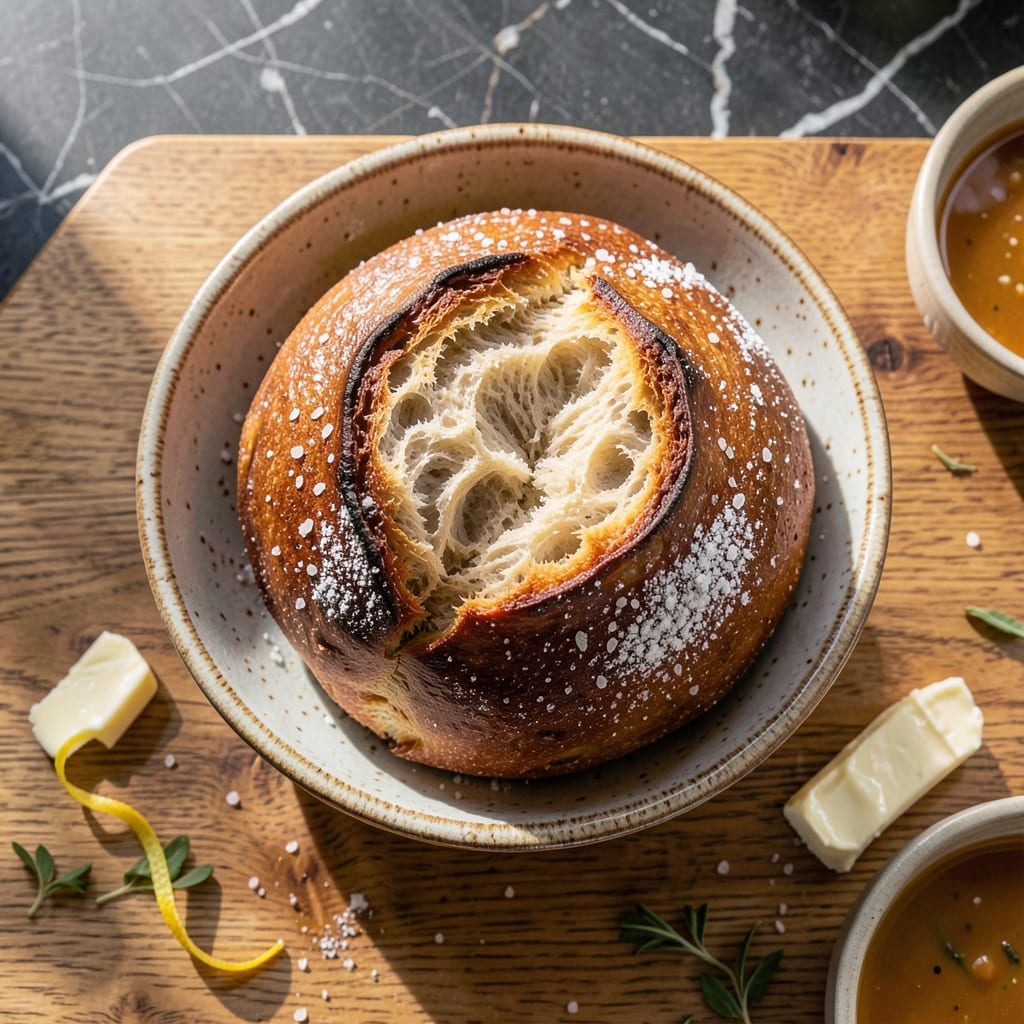
There’s something special about the warm, rustic aroma of freshly baked bread filling your kitchen. This hands-free method brings traditional Portuguese flavors to your bread machine with minimal effort.
The beauty of this recipe lies in its simplicity. With just a few basic ingredients and your bread machine, you can create a loaf with a golden crust and soft, airy interior that rivals any bakery.
What emerges is a perfectly shaped loaf with that characteristic Portuguese texture—slightly chewy with a tender crumb. The machine handles all the mixing, kneading, and baking while you go about your day.
Ideal for sandwiches, toast, or serving warm with butter. This method delivers consistent, professional results every time.
Ingredients for Portuguese Bread Recipe for Bread Machine
A handful of pantry staples transforms into a golden, bakery-quality Portuguese loaf with ease.
| Ingredient | Amount | Notes |
|---|---|---|
| Bread Flour 🌾 | 3 ½ cups | All-purpose works in a pinch |
| Warm Water 💧 | 1 ¼ cups | 110°F to 115°F temperature |
| Granulated Sugar 🍚 | 2 tbsp | Fine white sugar preferred |
| Sea Salt 🧂 | 1 ½ tsp | Fine grain for even distribution |
| Unsalted Butter 🧈 | 2 tbsp | Softened at room temperature |
| Active Dry Yeast 🍞 | 2 ¼ tsp | One standard packet equivalent |
| Olive Oil 🫒 | 1 tbsp | Extra-virgin for flavor depth |
| Nonfat Dry Milk 🥛 | 2 tbsp | Instant or regular variety |
| Large Egg 🥚 | 1 whole | Room temperature for best results |
| Potato Flour 🥔 | 2 tbsp | Not potato starch substitute |
| Honey 🍯 | 1 tbsp | Light variety for subtle sweetness |
The flour is the foundation here. King Arthur Bread Flour is my go-to for consistent results, but all-purpose works if that’s what’s in your cupboard. Look for flour with at least 12% protein content for that perfect chewy texture. The yeast needs to be fresh—check the expiration date. Red Star or Fleischmann’s are reliable brands. Don’t skip the potato flour; it’s key for that authentic Portuguese crumb (worth hunting down at Whole Foods if your regular store doesn’t carry it).
No bread flour? All-purpose plus 1 tbsp vital wheat gluten per cup gets you close. Out of potato flour? Instant mashed potato flakes work in a pinch—use the same amount. The honey can be swapped for maple syrup or sugar, but honey adds that subtle depth. For a richer loaf, use whole milk instead of water and dry milk—just reduce the water by a quarter cup. Butter can be replaced with olive oil if you’re avoiding dairy.
Store flour in an airtight container in a cool, dark place—it’ll keep for 6-12 months. Yeast lasts 4 months unopened at room temp, but stash it in the freezer to extend its life. This loaf stays fresh for 3-4 days in a bread box or wrapped tightly (if it lasts that long).
Why You’ll Love This Recipe
- Set and Forget: I just dump the flour, warm water, sugar, salt, and butter into the machine and let it do the work.
- Warm Buttery Crust: The butter gives it that golden, slightly crisp outside with a soft, pillowy inside.
- Breakfast to Dinner: Honestly, it’s just as good toasted with jam in the morning as it is soaking up stew at night.
- Budget Stretch: Five simple ingredients, one loaf that feeds my family for days without breaking the bank.
Step-by-Step Instructions for Portuguese Bread for Bread Machine
This hands-free method delivers a golden, tender loaf with minimal effort from you.
Step 1: Activate the Yeast and Prepare Wet Ingredients
Begin by adding the 1.25 cups Warm Water to your bread machine pan. The temperature should be between 110°F to 115°F—too hot and it will kill the yeast, too cold and it won’t activate properly. I use a kitchen thermometer to verify.
Next, add the 2 tbsp Granulated Sugar, 1 tbsp Honey, 1 tbsp Olive Oil, 2 tbsp Unsalted Butter, and 1 whole Large Egg. The butter should be softened but not melted. Whisk these gently with a fork to combine before adding the dry ingredients.
Step 2: Layer in Dry Ingredients and Start the Machine
In a separate bowl, whisk together the 3.5 cups Bread Flour, 2 tbsp Nonfat Dry Milk, and 2 tbsp Potato Flour. The potato flour adds a subtle tenderness that’s characteristic of Portuguese bread. Pour this mixture over the wet ingredients in the bread machine pan.
Make a small well in the center of the dry ingredients and add the 2.25 tsp Active Dry Yeast. It’s crucial to keep the yeast separate from the liquid until the machine starts—this prevents premature activation. Finally, sprinkle the 1.5 tsp Sea Salt over the top. The salt should go last to avoid direct contact with the yeast.
Step 3: Select the Dough Cycle and Monitor the Process
Secure the pan in the bread machine and select the dough cycle. This cycle typically takes about 1 hour and 30 minutes to 2 hours, depending on your machine. During the first 10 minutes, watch to ensure the paddle is properly mixing the ingredients into a smooth, elastic dough.
If the dough appears too dry or too sticky after the initial mixing, add 1 tbsp of water or flour at a time until it reaches the right consistency. The dough should pull away from the sides of the pan and form a cohesive ball. Avoid opening the lid once the kneading begins to maintain a consistent environment.
Step 4: Bake to Golden Perfection
Once the dough cycle completes, reset the machine to the bake cycle. If your machine has a specific setting for bread loaves, use that; otherwise, the standard bake cycle for 30 to 40 minutes at 350°F to 375°F works well. The loaf is done when it’s a deep golden brown and sounds hollow when tapped on the top.
I like to check the loaf about 5 minutes before the cycle ends. If it’s browning too quickly, tent the machine with a piece of aluminum foil to prevent over-browning. The internal temperature should reach 190°F to 200°F for a fully baked loaf.
Step 5: Cool and Serve
When the baking cycle finishes, carefully remove the pan from the machine and transfer the loaf to a wire rack. Let it cool for at least 20 minutes before slicing. This resting period allows the crumb to set and the flavors to meld, ensuring each slice is tender and evenly textured.
Serve warm with butter or your favorite jam. For the best texture, store any leftovers in an airtight container at room temperature for up to 3 days. This bread freezes beautifully, too—just slice it before freezing for easy toast-and-serve portions later.
Pro Tips For Making Portuguese Bread Recipe For Bread Machine
- Check Water Temp: Use a thermometer to make sure your warm water is between 110-115°F—any hotter and you’ll kill the yeast before the machine even starts.
- Soften the Butter: Cut the unsalted butter into small cubes and let it sit at room temperature for 20 minutes before adding it—cold butter won’t incorporate properly in the bread machine.
- Measure Flour Right: Spoon the bread flour into your measuring cup and level it off with a knife; scooping directly from the bag packs it down and can make your loaf dense.
- Skip the Overfill: Resist the urge to max out the machine’s capacity—this dough rises a lot, and overfilling means a collapsed loaf or a mess in your kitchen.
Dietary Considerations for This Dish
Gluten-Free Option
For gluten-free bakers, replace the bread flour with a 1:1 gluten-free bread flour blend. I recommend King Arthur Gluten-Free Measure for Measure. Add 1 tsp xanthan gum to improve structure. The texture will be denser but still delicious. 🌾
Dairy-Free Adaptation
To make this dairy-free, swap the unsalted butter for olive oil or vegan butter. Replace the nonfat dry milk with 2 tbsp almond flour. The loaf will have a slightly different crumb but remains flavorful.
Vegan Version
For a vegan loaf, omit the egg and use ¼ cup unsweetened applesauce as a binder. Replace the honey with maple syrup. The bread will be slightly denser but still soft and aromatic.
Lower Sugar
If you’re reducing sugar, cut the granulated sugar in half or replace it with 1 tbsp monk fruit sweetener. The yeast may need an extra 5 minutes to activate, so monitor the initial mixing phase closely. 💡
Whole Wheat Swap
For a whole wheat version, replace 1.5 cups bread flour with whole wheat flour. Add 1 tbsp vital wheat gluten to maintain structure. Expect a heartier texture and nuttier flavor. Let the dough rest for 10 minutes before baking.
Egg-Free Alternative
If eggs are a concern, use ¼ cup plain yogurt or flax egg (1 tbsp ground flaxseed + 3 tbsp water). The yogurt adds tenderness, while the flax egg provides binding without altering flavor.
Nutrition Facts
Frequently Asked Questions
What size bread machine pan works best?
This recipe fits a standard 1.5-pound bread machine pan. For a 2-pound pan, increase all ingredients by 25%. Never exceed 75% capacity to allow proper rising.
Can I use all-purpose flour instead?
Yes, but add 1 tbsp vital wheat gluten per cup of flour for structure. Bread flour’s higher protein content yields a chewier texture, but all-purpose works in a pinch.
Why is potato flour important?
Potato flour adds moisture retention and tenderness, key for authentic Portuguese texture. Substitute with instant mashed potato flakes if unavailable, but avoid potato starch.
How do I know when the dough is ready?
After kneading, it should form a smooth ball that pulls away from the pan sides. If too sticky, add 1 tbsp flour; if too dry, add 1 tbsp water. Avoid over-adjusting.

- Potato Patty Recipe No Egg: Crispy Edges Without the Binder - October 30, 2026
- Paula Deen’s Potato Chip Cookies Recipe: Salty-Sweet Crunch in Every Bite - October 30, 2026
- Potato Gnocchi Recipe Ideas: Pillowy Soft Dumplings With Rustic Charm - October 30, 2026