
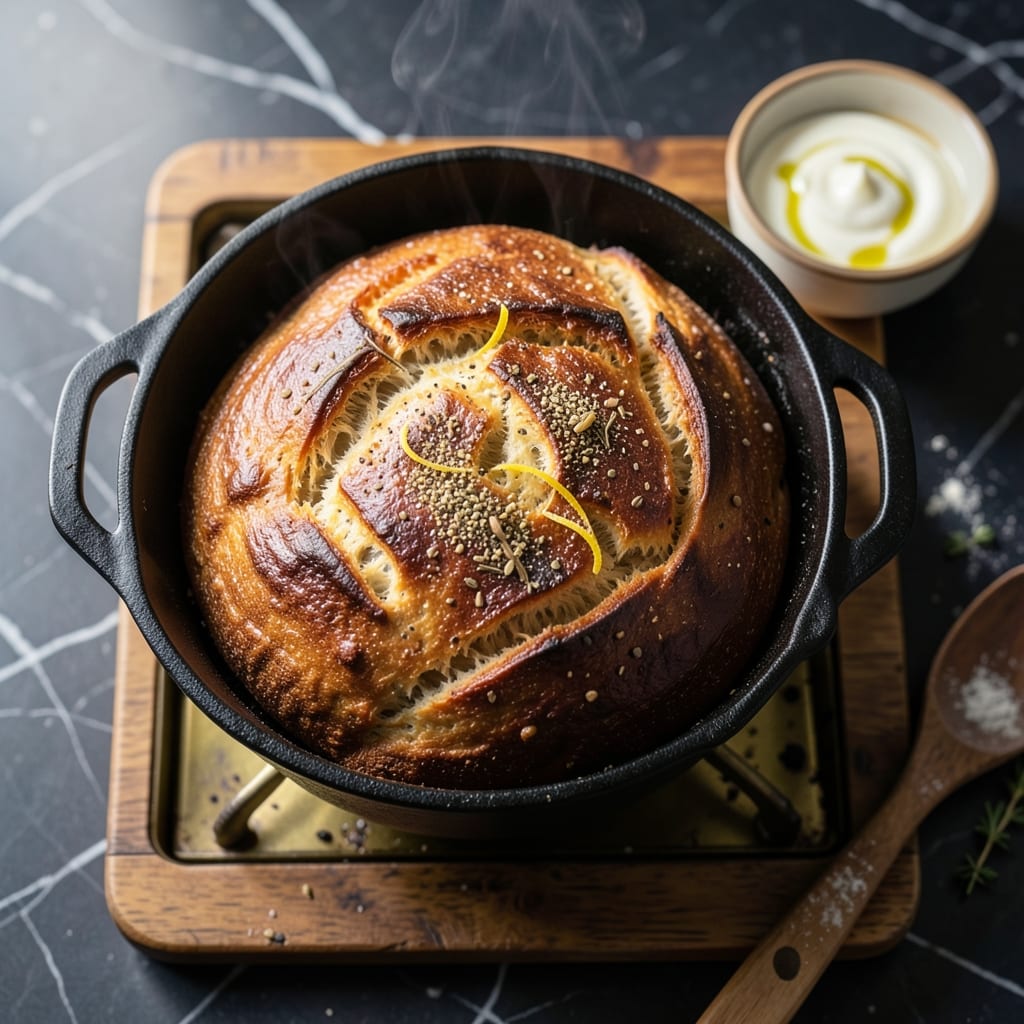
This stovetop bread proves you don’t need an oven—or yeast—to make fresh, warm flatbread at home.
The method is simple: mix a few basic ingredients, let the dough rest for 10 minutes, then cook in a hot skillet until golden. The result is soft, slightly chewy bread with a rustic charm that pairs perfectly with any meal.
With no rising time and minimal effort, this recipe delivers freshly baked flavor in under 30 minutes. It’s the ideal solution when you crave homemade bread but lack the time or tools for traditional baking.
Use it for sandwiches, as a side, or simply with butter. Here’s how to make it.
Ingredients for Pot Bread Recipe on Stove
Simple pantry staples transform into warm, no-yeast flatbread right on your stovetop.
| Ingredient | Amount | Notes |
|---|---|---|
| All-Purpose Flour 🌾 | 2 cups | Plus extra for dusting |
| Baking Powder 🧂 | 2 tsp | Ensures proper rise |
| Salt 🧂 | 1 tsp | Kosher or fine sea salt |
| Plain Yogurt 🥛 | ¾ cup | Full-fat for best texture |
| Water 💧 | ¼ cup | Warm, to activate baking powder |
| Olive Oil 🫒 | 2 tbsp | Divided for dough and skillet |
| Unsalted Butter 🧈 | 2 tbsp | Melted, for brushing |
| Garlic Powder 🧄 | ½ tsp | Optional, for flavor |
| Dried Oregano 🌿 | ½ tsp | Optional, for herb notes |
| Black Pepper 🌶️ | ¼ tsp | Freshly ground preferred |
The yogurt is key here—full-fat Greek or plain gives the softest texture. I grab mine from Whole Foods or any major grocery chain. The baking powder must be fresh (test by dropping a bit in hot water—it should bubble vigorously). For flour, King Arthur or Gold Medal are reliable choices. Don’t skip the rest time—it relaxes the gluten for easier rolling.
No yogurt? Buttermilk or sour cream work at a 1:1 ratio. Need to make it dairy-free? Unsweetened almond milk plus 1 tsp vinegar mimics the tang. Out of baking powder? Baking soda plus cream of tartar at a 1:2 ratio can substitute. The olive oil can be any neutral oil in a pinch, but the flavor won’t be as rich.
Dough keeps in the fridge for 1 day (though best used immediately). Cooked bread stays fresh for 2 days wrapped in a towel—reheat in a dry skillet. For longer storage, freeze baked bread for up to 1 month.
Why You’ll Love This Recipe
- One Pot Wonder: I just dump flour, yogurt, and a pinch of salt in a pot—no yeast, no waiting, no fuss.
- Tangy & Soft: The yogurt gives it this subtle tang that pairs perfectly with that warm, pillowy texture.
- Breakfast to Dinner: I’ve served it with soup, used it for sandwiches, even torn it up for dipping in stew.
- Pennywise Comfort: Five ingredients I always have, and it costs less than a loaf of store-bought bread.
Step-by-Step Instructions for Pot Bread on Stove
This straightforward method delivers soft, pillowy flatbreads with minimal effort and maximum flavor.
Step 1: Combine Dry Ingredients
In a large mixing bowl, whisk together the 2 cups All-Purpose Flour, 2 tsp Baking Powder, 1 tsp Salt, 0.5 tsp Garlic Powder, 0.5 tsp Dried Oregano, and 0.25 tsp Black Pepper until evenly distributed. I use a fork for this—it breaks up any lumps in the flour and ensures the baking powder is thoroughly incorporated.
The baking powder is your leavening agent here, so proper distribution is key. You’ll notice the mixture takes on a slightly speckled appearance from the herbs and spices, which will translate into beautiful flavor flecks in your finished bread.
Step 2: Form the Dough
Create a well in the center of the dry ingredients and add the 0.75 cup Plain Yogurt, 0.25 cup Water, and 1 tbsp Olive Oil. Use a wooden spoon or silicone spatula to mix until a shaggy dough forms. The yogurt adds tang and tenderness, while the warm water helps activate the baking powder.
Once the dough comes together, turn it out onto a lightly floured surface. The dough will be slightly sticky but should hold its shape. Knead gently for 1-2 minutes until smooth, adding a dusting of flour only if absolutely necessary. Overworking the dough will make the bread tough.
Step 3: Divide and Rest the Dough
Divide the dough into 4 equal portions and shape each into a ball. Flatten each ball slightly into a disc about ½-inch thick. Place the discs on a clean surface, cover with a damp towel, and let them rest for 10 minutes.
This short rest relaxes the gluten, making the dough easier to roll out. You’ll see the discs puff slightly as the baking powder begins to work. Meanwhile, heat a large skillet over medium heat and add the remaining 1 tbsp Olive Oil.
Step 4: Cook the Flatbreads
Once the skillet is hot, place one or two discs in the pan, depending on size. Cook for 2-3 minutes per side until golden brown with charred spots in places. Press down gently with a spatula if the bread puffs too much—this ensures even cooking.
The bread is ready to flip when the bottom is deeply golden and the top surface looks set. You’ll hear a gentle sizzle as it cooks, and the aroma of toasted bread and herbs will fill your kitchen.
Step 5: Finish and Serve Warm
Transfer the cooked breads to a plate and immediately brush the tops with the 2 tbsp Unsalted Butter, melted. This adds richness and a beautiful sheen. Stack them and cover with a clean towel to keep warm while you finish the batch.
Serve the flatbreads warm, straight from the skillet. They should be soft and pillowy inside with a slightly crisp exterior. Tear or cut into wedges and enjoy with your favorite dips or as a side to any meal.
Pro Tips For Making Pot Bread Recipe On Stove
- Preheat the Pot: Heat your pot on medium-low for 3-4 minutes before adding the dough—I learned this the hard way after my first few loaves stuck terribly.
- Use Room-Temp Yogurt: Cold yogurt can make the dough tough, so pull it out of the fridge 30 minutes early. It blends better with the flour.
- Don’t Over-Knead: Just mix until the dough comes together; overworking it makes the bread dense. I was skeptical until I tried it.
- Cover While Cooking: Keep the lid on for the first 10 minutes to trap steam, then uncover to let it brown. Sounds weird, but it works.
Health Benefits of pot bread recipe on stove
Nutrient-Rich Ingredients
This bread uses plain yogurt, which adds protein and probiotics for gut health. Each serving provides about 8g of protein from the yogurt and flour combination. The yogurt also contributes calcium, with roughly 15% of your daily needs per flatbread. 💪
Low-Fat Advantage
With only 2 tbsp olive oil and 2 tbsp butter divided among four servings, each piece contains just 5-6g of fat. This makes it lighter than many store-bought breads while maintaining rich flavor. The fats come from heart-healthy sources like olive oil.
Complex Carbohydrates
All-purpose flour provides slow-digesting carbs that offer steady energy. One flatbread contains approximately 45g of complex carbs. The fiber content, while modest, helps with digestion and satiety.
Minimal Additives
This recipe contains no preservatives or artificial ingredients. The baking powder is the only leavening agent, and in small amounts—just 2 tsp total. This means you’re getting clean, simple ingredients with every bite.
Dietary Flexibility
Easily adapt this for dietary needs. Swap regular yogurt for dairy-free alternatives to make it vegan. Use gluten-free flour blends for those avoiding gluten. Each modification maintains the bread’s soft texture and satisfying flavor. 💛
Energy Boost
The combination of carbs and protein provides balanced energy. I find these flatbreads keep me full for hours. The iron from flour and B vitamins from yogurt support metabolism, making this a nutritious addition to any meal.
Nutrition Facts
Frequently Asked Questions
Can I use whole wheat flour instead?
Yes, but the texture will be denser. Replace up to 1 cup of all-purpose with whole wheat. Add 1-2 tbsp extra water if the dough feels dry. The flavor will be nuttier and more robust.
Why does my bread turn out tough?
Over-kneading develops too much gluten. Mix just until the dough comes together, then knead gently for 1-2 minutes max. Also, ensure you’re not using too much flour when rolling out the discs.
Can I make this ahead of time?
The dough can rest in the fridge for up to 24 hours, but it’s best to cook and serve fresh. Cooked flatbreads stay soft for 2 days if wrapped in a towel. Reheat in a dry skillet to restore warmth.
What if I don’t have a cast-iron skillet?
Any heavy-bottomed pan works. Use medium heat and ensure it’s fully preheated. Nonstick pans may require less oil, but cast iron gives the best golden, crispy crust.

- Potato Patty Recipe No Egg: Crispy Edges Without the Binder - October 30, 2026
- Paula Deen’s Potato Chip Cookies Recipe: Salty-Sweet Crunch in Every Bite - October 30, 2026
- Potato Gnocchi Recipe Ideas: Pillowy Soft Dumplings With Rustic Charm - October 30, 2026