
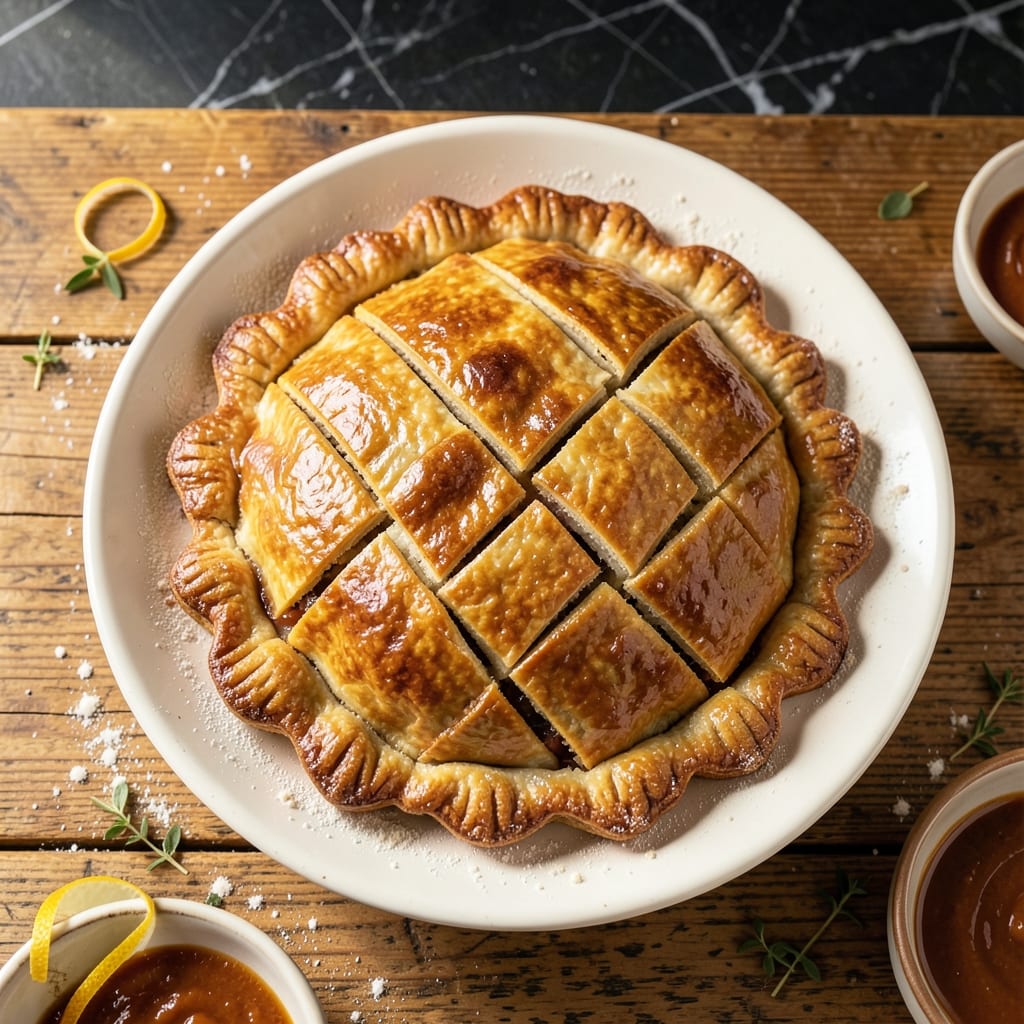
I developed this crust after my infamous 2019 pot pie disaster, determined to find a flaky alternative without dairy. Using oil instead of butter creates layers just as tender and golden.
The key is chilled oil and minimal handling. Cold fat prevents gluten from overdeveloping, while ice water keeps the dough from toughening. This method works in any kitchen, even my old Boston triple-decker’s tiny space.
You’ll achieve a crisp, multi-layered crust that holds up to hearty fillings. The oil base also makes this naturally vegetarian-friendly, perfect for any comfort food spread.
Ready in 30 minutes with pantry staples, this proves butter isn’t the only path to perfect pastry. Here’s how to make it happen.
Ingredients for Pot Pie Crust Recipe No Butter
Six pantry staples create that golden, flaky crust you’ve been craving.
| Ingredient | Amount | Notes |
|---|---|---|
| All-Purpose Flour 🌾 | 2 ½ cups | Plus extra for dusting |
| Vegetable Oil 🫒 | ¾ cup | Chilled for flakiness |
| Ice Water 💧 | ½ cup | Keep it icy cold |
| Salt 🧂 | 1 tsp | Fine sea salt preferred |
| Granulated Sugar 💡 | 1 tsp | Balances saltiness |
| Baking Powder 🧂 | ½ tsp | For extra lift |
The oil is the star here—use a neutral-tasting vegetable oil (not olive oil). Chill it in the freezer for 20 minutes before mixing to mimic cold butter. I grab mine from Whole Foods in bulk, but any grocery store brand works. The flour? All-purpose is ideal (King Arthur if you want to splurge), but don’t stress over protein content—this crust is forgiving.
No vegetable oil? Melted coconut oil (chilled solid) works too, though it adds a slight flavor. Short on all-purpose flour? Half bread flour, half all-purpose for extra crispness. Skip the sugar if you’re using this for savory pies (though I like the subtle balance). The baking powder is optional but gives a little extra rise.
Dough keeps in the fridge for 2 days or freezes for 1 month (wrap tightly). Pre-baked crusts hold at room temp for 24 hours—perfect for make-ahead pies.
Why You’ll Love This Recipe
- No-Fuss Mixing: I just stir flour, oil, and ice water—no cold butter to cut in or mess with.
- Crisp & Flaky: The oil makes it surprisingly tender, with just a hint of sugar for balance.
- Endless Fillings: I’ve used it for chicken, veggie, even taco pot pies—works every time.
- Pantry Staples: Honestly, I always have these ingredients on hand, so it’s my last-minute lifesaver.
Step-by-Step Instructions for Pot Pie Crust No Butter
This method delivers perfectly flaky layers using oil instead of butter—easier than you think.
Step 1: Combine Dry Ingredients for Even Distribution
In a large mixing bowl, whisk together the 2.5 cups All-Purpose Flour, 1 tsp Salt, 1 tsp Granulated Sugar, and 0.5 tsp Baking Powder until fully combined. The sugar isn’t just for flavor—it helps with browning, while the baking powder gives your crust that extra lift.
Make sure there are no lumps in your flour mixture. I always sift my flour first if it looks compacted, though store-bought all-purpose typically doesn’t need it. This step ensures your dry ingredients are evenly distributed, preventing pockets of salt or baking powder in your finished crust.
Step 2: Cut in Chilled Oil for Flaky Texture
Measure out the 0.75 cup Vegetable Oil—I recommend chilling it in the freezer for 10 minutes first. Cold oil creates better flakiness, just like cold butter would in a traditional crust. Pour the chilled oil into the dry ingredients.
Using a fork, cut the oil into the flour mixture until it resembles coarse crumbs with some pea-sized pieces remaining. Don’t overmix here—you want visible oil streaks in the flour. These oil pockets will create the flaky layers as the crust bakes. The mixture should hold together when pressed but still look slightly dry.
Step 3: Add Ice Water Gradually for Perfect Consistency
Make a well in the center of your flour-oil mixture. Add the 0.5 cup Ice Water 1 tablespoon at a time, mixing gently with a fork after each addition. You might not need all the water—stop when the dough just begins to come together.
The dough should be shaggy but hold its shape when pressed. If it’s too dry, add more ice water 1 teaspoon at a time. If it’s sticky, dust with a bit of extra all-purpose flour. Remember, the less you handle the dough, the flakier your crust will be. Overworking develops gluten, which makes crust tough instead of tender.
Step 4: Rest and Roll for Even Layers
Divide the dough into two equal portions and shape each into a disk about 1 inch thick. Wrap in plastic wrap and refrigerate for at least 30 minutes. This resting period allows the flour to fully hydrate and the oil to solidify, making the dough easier to roll out.
When ready to use, roll out one disk on a lightly floured surface to about ⅛ inch thickness. The dough should be just large enough to fit your pie dish with a slight overhang. If the edges crack while rolling, don’t worry—just press them back together. This oil-based dough is more forgiving than butter-based versions.
Step 5: Blind Bake for Crisp Bottom Crust
For a pot pie, you’ll want to blind bake the bottom crust to prevent it from becoming soggy. Preheat your oven to 425°F. Line your pie dish with the rolled-out dough, crimp the edges, and prick the bottom all over with a fork.
Line the crust with parchment paper and fill with pie weights or dried beans. Bake for 12-15 minutes until the edges are just beginning to turn light golden brown. Remove the weights and parchment, then bake for another 3-5 minutes until the bottom appears dry. This creates a sturdy base that won’t absorb too much filling moisture.
Pro Tips For Making Pot Pie Crust Recipe No Butter
- Chill the Oil: I learned this the hard way—freeze your vegetable oil for 10 minutes before mixing. It makes the crust flakier, like the butter version you’re avoiding.
- Use Ice Water: Sounds obvious, but actually use ice-cold water, not just cold tap water. It keeps the oil solid longer while you work the dough.
- Skip Overworking: After burning three batches, I finally figured out that stirring just until the dough comes together prevents a tough crust.
- Rest the Dough: Give it a solid 15 minutes in the fridge before rolling—I was skeptical until I tried it, but it rolls out smoother and cracks less.
Regional Styles of These Flavors
New England Tradition
In my Boston triple-decker kitchen, we often used shortening for pot pie crusts—a holdover from Depression-era cooking. The result was a sturdier crust that held up to hearty chicken and vegetable fillings. This oil-based version achieves similar durability without the trans fats. 💛
Southern Comfort
Across the South, cooks traditionally used lard for pie crusts, prized for its flakiness and rich flavor. For a vegetarian take, I swap in vegetable oil with a pinch of baking powder for lift, mimicking that classic Southern texture.
Midwestern Practicality
Midwest farm wives often relied on crisco for their pot pies, valuing its long shelf life and consistent results. This oil version offers the same practicality—no refrigeration needed—while delivering that golden, flaky finish everyone loves.
West Coast Innovation
California cooks embrace avocado oil for its health benefits and high smoke point. For this crust, I stick with neutral vegetable oil to keep the flavor clean, but the West Coast inspiration shines in the light, crisp layers.
Appalachian Simplicity
Mountain cooks historically used whatever fat was available—often bacon grease. While I skip the animal fats, this recipe honors that resourceful spirit by using simple pantry staples for a crust that’s both humble and extraordinary.
Modern Twist
Today’s cooks love coconut oil for its mild sweetness. For this crust, I prefer neutral oil to let the filling shine, but the technique remains the same—cold fat and minimal handling for maximum flakiness. ✨
Nutrition Facts
Frequently Asked Questions
What kind of oil works best?
Use a neutral-tasting vegetable oil for best results. Chill it in the freezer for 10 minutes before mixing to create flaky layers. Coconut oil works too but adds a slight flavor.
Can I make this ahead of time?
Yes! The dough keeps in the fridge for 2 days or freezes for 1 month. Pre-baked crusts hold at room temp for 24 hours—perfect for make-ahead pies.
Why did my crust turn out tough?
Overworking the dough develops gluten, making it tough. Handle minimally and use ice water to keep it tender. The key is visible oil streaks in the flour mixture.
Do I need to blind bake the crust?
For pot pie, yes! Blind bake at 425°F for 12-15 minutes with weights to prevent sogginess. This creates a sturdy base for fillings.

- Potato Patty Recipe No Egg: Crispy Edges Without the Binder - October 30, 2026
- Paula Deen’s Potato Chip Cookies Recipe: Salty-Sweet Crunch in Every Bite - October 30, 2026
- Potato Gnocchi Recipe Ideas: Pillowy Soft Dumplings With Rustic Charm - October 30, 2026