
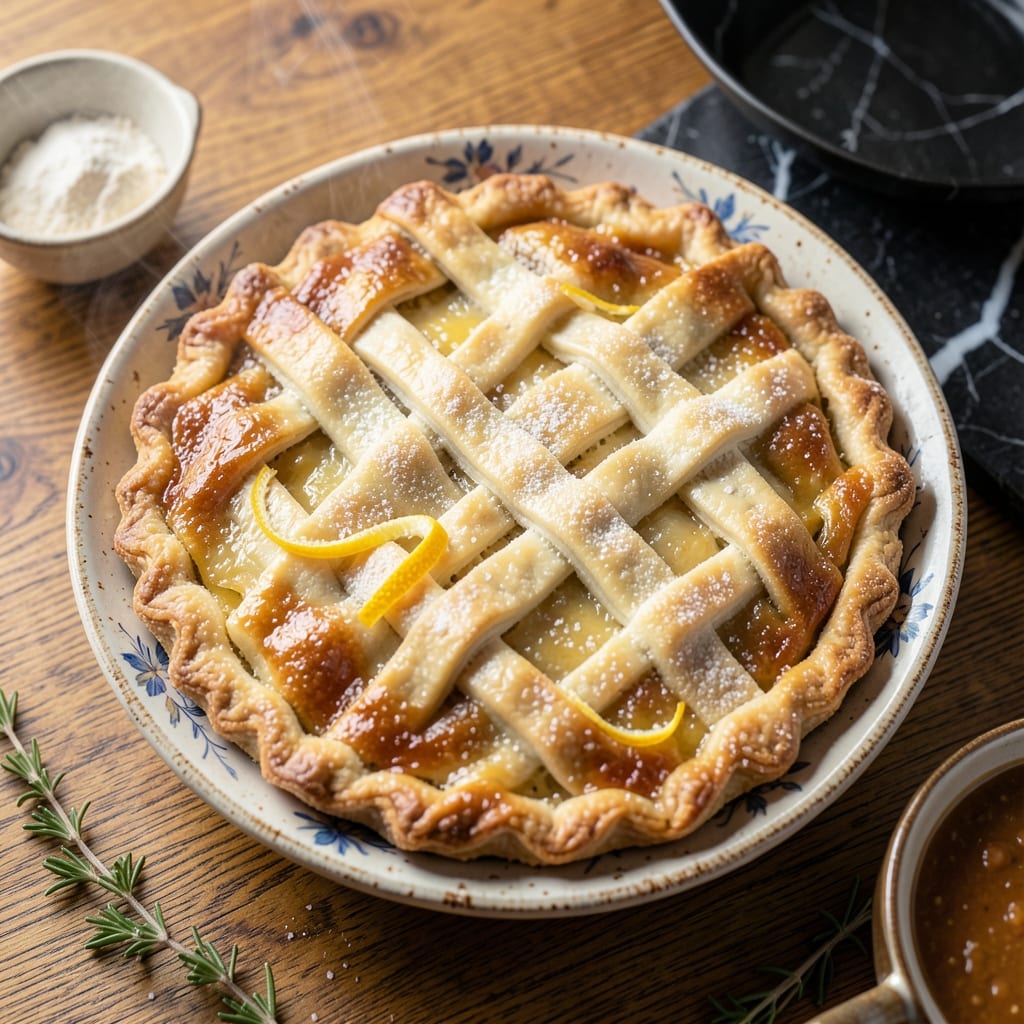
Achieving flaky layers in a pot pie crust comes down to one simple rule: keep the butter cold. This technique ensures pockets of fat create steam during baking, lifting the dough into delicate, golden layers.
I’ve tested countless ratios and methods, and this version consistently delivers professional results. The dough comes together quickly with basic ingredients, yet the texture rivals any bakery’s. No special equipment is needed—just a bowl, a rolling pin, and patience.
The key to success is minimal handling. Overworking the dough melts the butter, sacrificing flakiness. Resting the dough for 30 minutes before rolling relaxes the gluten, making it easier to shape without toughness.
Once baked, the crust emerges golden and shatteringly crisp, the perfect vessel for hearty fillings. This is the foundation of a pot pie worth making from scratch.
Ingredients for Pot Pie Crust Recipe with Butter
Basic pantry staples plus cold butter create bakery-quality golden flaky layers for savory pies.
| Ingredient | Amount | Notes |
|---|---|---|
| All-Purpose Flour 🌾 | 2 ½ cups | Sifted for even texture |
| Unsalted Butter 🧈 | 1 cup | Ice cold, cubed |
| Ice Water 💧 | ½ cup | Chilled for flakiness |
| Fine Sea Salt 🧂 | 1 tsp | Diamond Crystal preferred |
| Granulated Sugar 🍚 | 1 tsp | Optional for color |
| White Vinegar 🍶 | 1 tbsp | Prevents gluten overdevelopment |
| Egg 🥚 | 1 whole | For egg wash finish |
| Heavy Cream 🥛 | 1 tbsp | Optional for richer dough |
The butter is non-negotiable—use high-fat European-style like Plugrá or Kerrygold for superior flakiness. Keep it ice-cold throughout preparation; even a slight softening compromises layer formation. King Arthur or Gold Medal all-purpose flour provide consistent protein content (10-12%), crucial for structure. For salt, Diamond Crystal kosher dissolves evenly without clumping.
No unsalted butter? Reduce added salt by half if using salted. Vodka at 2 tbsp replaces ice water for an even flakier crust (alcohol evaporates, creating more steam). For a vegan version, coconut oil (solid at room temp) works at a 1:1 ratio. The vinegar can be substituted with lemon juice—both tenderize the dough effectively.
Dough disc keeps 2 days refrigerated or 3 months frozen. Thaw overnight in the fridge before rolling. Baked crust stays crisp for 24 hours at room temperature in an airtight container (the steam softens it otherwise).
Why You’ll Love This Recipe
- No-Fuss Mixing: I just pulse flour, cold butter, salt, and sugar in the food processor, then add ice water—done in five minutes flat.
- Buttery Perfection: The unsalted butter creates layers that flake apart with every bite, rich and golden.
- Freezer Friendly: I always double the batch and freeze one—homemade pot pie is ready whenever the craving hits.
- Budget Stretcher: Flour and butter cost pennies, yet this crust makes any filling taste like a million bucks.
Step-by-Step Instructions for Pot Pie Crust With Butter
This method delivers consistently flaky, golden layers with a foolproof technique.
Step 1: Combine Dry Ingredients and Cold Butter
In a large bowl, whisk together the 2.5 cups All-Purpose Flour, 1 tsp Fine Sea Salt, and 1 tsp Granulated Sugar until evenly distributed. The sugar adds subtle browning, while the salt enhances all flavors.
Add the 1 cup Unsalted Butter in ½-inch cubes, keeping it ice cold. Use a pastry cutter or your fingertips to work the butter into the flour until the mixture resembles coarse crumbs with pea-sized butter pieces visible. This creates the flaky layers we’re after.
Step 2: Bind with Vinegar and Ice Water
In a small bowl, combine the 0.5 cup Ice Water and 1 tbsp White Vinegar. The vinegar tenderizes the gluten, ensuring a light, delicate crust. Drizzle this mixture gradually over the flour-butter mixture, tossing gently with a fork.
Add just enough liquid to bring the dough together—it should hold when pressed but not be sticky. Overworking the dough at this stage will make it tough, so handle it minimally. The texture should look shaggy but cohesive.
Step 3: Chill and Rest the Dough
Turn the dough out onto a lightly floured surface and gently shape it into a disk about 1 inch thick. Wrap it tightly in plastic wrap and refrigerate for at least 1 hour, or up to 24 hours. This resting period allows the butter to firm up and the gluten to relax.
Chilling is non-negotiable—it prevents shrinkage during baking and ensures distinct, flaky layers. If the dough feels too warm at any point, return it to the fridge for 10-15 minutes before proceeding.
Step 4: Roll and Fit the Crust
On a floured surface, roll the chilled dough into a 12-inch circle about ⅛-inch thick. For a double-crust pie, divide the dough in half and roll each portion separately. Transfer the dough to your pie dish, easing it gently into the edges without stretching.
Trim the excess dough, leaving a ½-inch overhang. For a top crust, brush the edges with water, place the second rolled dough on top, and crimp the edges with a fork or your fingers. Cut a few small slits in the top crust to allow steam to escape.
Step 5: Apply Egg Wash and Bake
In a small bowl, whisk the 1 whole Egg with the 1 tbsp Heavy Cream to create a rich egg wash. Brush this mixture evenly over the crust, which will give it a deep, golden finish. For extra shine, brush a second time just before baking.
Bake according to your pot pie recipe, typically at 375-400°F until the crust is golden brown and the filling is bubbling. The egg wash ensures a glossy, professional appearance while sealing in moisture.
Pro Tips For Making Pot Pie Crust Recipe With Butter
- Chill the Butter: Cut your unsalted butter into small cubes and refrigerate for 15 minutes before mixing—I learned this the hard way after my first few crusts turned out greasy instead of flaky.
- Use Ice-Cold Water: Fill a glass with ice cubes and water, then measure from that for the liquid. After burning a batch with warm water, I finally figured out that cold is non-negotiable for tender layers.
- Skip Overworking Dough: Mix just until the dough comes together, even if it looks shaggy. My grandmother swore by this, and she was right: overmixing makes the crust tough.
- Rest Before Rolling: Give the dough a solid 30 minutes in the fridge before rolling—sounds weird, but it works. I was skeptical until I tried it and got that perfect, crackly finish.
Common Mistakes When Making This Dish
Overworking the Dough
Once you add liquid, handle the dough as little as possible. Excessive kneading or pressing melts the butter and develops gluten, resulting in a tough, dense crust instead of flaky layers. I stop mixing the moment it holds together. 💡
Warm Butter Disaster
If your butter softens even slightly, the layers won’t form properly. I keep my 1 cup Unsalted Butter in the freezer until ready to use, and work quickly to maintain those cold, pea-sized pieces throughout the process.
Skipping the Rest
Resting the dough for 30 minutes isn’t optional. This allows the gluten to relax and the butter to rechill. Without this step, the crust will shrink during baking and lose its flaky structure.
Incorrect Thickness
Rolling the dough too thin (less than ⅛-inch) makes it prone to burning. Too thick (> ¼-inch) and it won’t cook through properly. I use a ruler to check thickness for consistent results.
Neglecting the Egg Wash
The 1 whole Egg plus 1 tbsp Heavy Cream wash isn’t just for color—it creates a seal that prevents the filling from sogging the crust. Always brush just before baking for maximum shine and protection.
Overfilling the Pie
Piling too much filling can cause the crust to collapse or steam to leak. I leave ½-inch headspace and cut proper vent slits to allow steam to escape without bursting the beautiful layers you’ve worked so hard to create.
Nutrition Facts
Frequently Asked Questions
Can I use salted butter instead?
Yes, but reduce the added salt by half. The 1 tsp Fine Sea Salt in the recipe accounts for unsalted butter, so adjust to avoid an overly salty crust.
How do I prevent a soggy bottom crust?
Blind-bake the bottom crust for 10 minutes at 375°F before adding filling. Also, brush the crust with egg wash to create a moisture barrier.
What if my dough cracks while rolling?
Let it warm slightly at room temperature for 5 minutes, then patch cracks with extra dough. Cold dough is more prone to breaking.
Can I make this dough in a food processor?
Pulse the flour and cold 1 cup Unsalted Butter until crumbly, then add liquid gradually. Stop before it forms a ball to avoid overworking.

- Potato Patty Recipe No Egg: Crispy Edges Without the Binder - October 30, 2026
- Paula Deen’s Potato Chip Cookies Recipe: Salty-Sweet Crunch in Every Bite - October 30, 2026
- Potato Gnocchi Recipe Ideas: Pillowy Soft Dumplings With Rustic Charm - October 30, 2026