
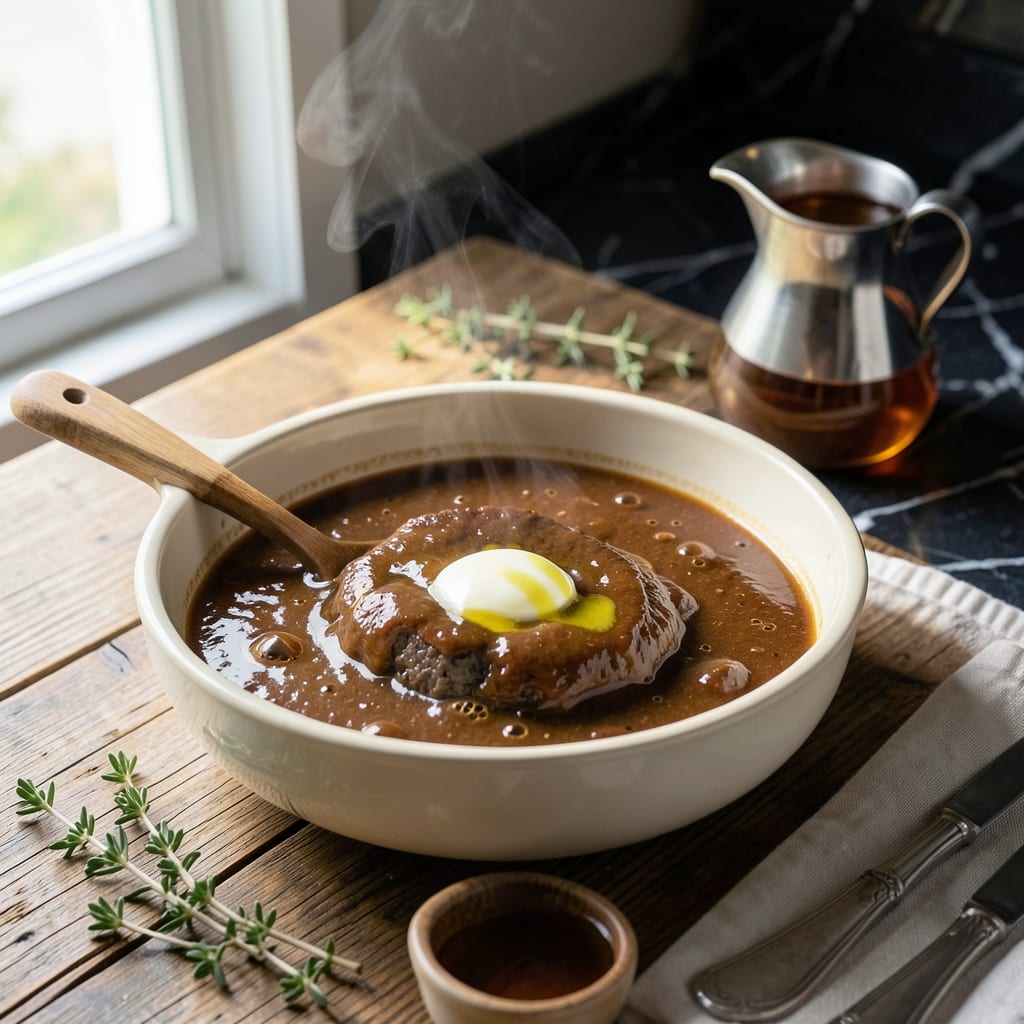
Transform your pot roast drippings into a velvety, restaurant-quality gravy with this straightforward method. Cornstarch creates the perfect thick consistency without altering the rich, meaty flavor you’ve built during roasting.
This technique requires just a few simple ingredients you likely already have on hand. The key is whisking the cornstarch with cold liquid before introducing it to the hot drippings, which prevents lumps and ensures a smooth finish every time.
You’ll end up with a gravy that’s thick enough to cling to your roast and potatoes but still pourable. It’s the ideal way to elevate your meal from good to unforgettable, using every bit of flavor from your cooking process.
Make it ahead and reheat gently, as the cornstarch will maintain its thickening power. This gravy keeps well for several days in the refrigerator.
Ingredients for Pot Roast Gravy Recipe Cornstarch
Turn those rich drippings into velvety, restaurant-quality gravy with just a few pantry staples.
| Ingredient | Amount | Notes |
|---|---|---|
| Pot Roast Drippings 🍖 | 2 cups | Defatted, rich in flavor |
| Cornstarch 🌾 | 2 tbsp | For thickening slurry |
| Cold Water 💧 | 2 tbsp | For cornstarch slurry |
| Beef Broth 🥩 | ½ cup | Low-sodium preferred |
| Unsalted Butter 🧈 | 2 tbsp | For richness and sheen |
| Worcestershire Sauce 🍶 | 1 tsp | Adds depth of flavor |
| Kosher Salt 🧂 | ½ tsp | Adjust to taste |
| Freshly Ground Black Pepper 🌶️ | ½ tsp | For finishing flavor |
The drippings are everything here. Skim off the fat (a gravy separator works wonders) but keep all that flavorful liquid gold. If you come up short, supplement with low-sodium beef broth—Swanson or Better Than Bouillon are reliable. The cornstarch should be fresh (check the expiration date)—old stuff loses its thickening power. I always keep a box of Argo in the pantry.
No cornstarch? All-purpose flour at double the amount works in a pinch, but cook it a minute longer to remove the raw taste. Skip the Worcestershire? A splash of soy sauce adds that umami kick. Butter can be swapped with olive oil for a lighter finish (though you’ll miss the gloss). If your gravy turns out too thin, whisk another slurry—1 tbsp cornstarch + 1 tbsp cold water—and simmer.
Gravy thickens as it cools, so don’t panic if it seems thin at first. Stores 4-5 days in the fridge—reheat gently to avoid breaking. Freezes beautifully for 3 months. Pro tip: pour it into ice cube trays for easy portioning later.
Why You’ll Love This Recipe
- No-Fuss Slurry: I just whisk cornstarch and cold water—no roux, no waiting. The gravy thickens in seconds right in the pan.
- Rich, Meaty Depth: Those pot roast drippings and beef broth create a gravy so deep and savory, I could drink it with a spoon.
- Sunday Roast Upgrade: It turns yesterday’s pot roast into today’s mashed potato topping or open-faced sandwich magic.
- Stretch Your Meal: A little cornstarch slurry stretches those precious drippings into enough gravy to feed the whole table.
Step-by-Step Instructions for Pot Roast Gravy
This method transforms those rich drippings into a luxurious sauce with minimal effort.
Step 1: Defat and Measure the Drippings
Let the pot roast drippings settle in a measuring cup for 5 minutes so the fat rises to the top. Skim off excess fat with a spoon, leaving behind 2 cups of the rich, flavorful liquid. I always use a clear glass measure for this—it makes it easy to see the separation line between fat and juice.
If you’re short on drippings, don’t worry. You can supplement with additional beef broth later, but start with what you have. The flavor from the actual roasting juices is what makes this gravy special, so preserve as much as possible.
Step 2: Create the Cornstarch Slurry
In a small bowl, whisk together the 2 tbsp cornstarch and 2 tbsp cold water until completely smooth. This slurry is your thickening agent, and the cold water is crucial—it prevents the cornstarch from clumping when it hits the hot liquid.
I’ve found that using a fork works better than a whisk for this small amount. You want a consistency like heavy cream with no lumps. Set this aside while you prepare the base—it only takes a minute but makes all the difference in your final texture.
Step 3: Build the Gravy Base
Pour the 2 cups pot roast drippings into a saucepan and place over medium heat. Add the 0.5 cup beef broth, 1 tsp Worcestershire sauce, 0.5 tsp kosher salt, and 0.5 tsp freshly ground black pepper. Bring to a gentle simmer, stirring occasionally.
This is where the flavor develops. The Worcestershire adds depth without overpowering, while the salt and pepper enhance the natural richness of the drippings. Taste as you go—you can always adjust seasoning later, but it’s easier to add than to fix.
Step 4: Thicken to Velvety Perfection
Once simmering, slowly pour in the cornstarch slurry while whisking constantly. Continue whisking for 1-2 minutes as the gravy thickens. You’ll see it transform from a thin liquid to a luscious, coat-the-back-of-a-spoon consistency.
Don’t rush this step. If it thickens too quickly, reduce the heat slightly. The cornstarch needs that gentle simmer to fully activate and create that beautiful, glossy finish. If it seems too thick, you can thin it with a splash more beef broth.
Step 5: Finish with Butter for Shine
Remove the saucepan from heat and stir in the 2 tbsp unsalted butter until fully melted. This final step adds a rich, silky sheen and rounds out the flavors. The butter should melt instantly from the residual heat—no need to return it to the stove.
Give it one last taste and adjust seasoning if needed. The gravy should be thick enough to cling to your pot roast but still pourable. Serve immediately while hot—the flavor and texture are at their peak when fresh.
Pro Tips For Making Pot Roast Gravy Recipe Cornstarch
- Chill the Drippings: Skim the fat from your pot roast drippings after they’ve cooled in the fridge for 20 minutes—it separates cleanly and saves you from greasy gravy.
- Mix Cornstarch First: Whisk cornstarch into cold water before adding to hot drippings to prevent clumping—I learned this the hard way after stirring in dry cornstarch and ending up with lumps.
- Simmer, Don’t Boil: Keep the gravy at a gentle simmer once thickened, or the cornstarch will break down and turn your gravy thin again.
- Finish with Butter: Stir in a pat of unsalted butter at the end for a silky, rich finish—sounds simple, but it actually changes the outcome.
Troubleshooting This Recipe
Gravy Too Thin
If your gravy is still thin after adding the slurry, don’t panic. Mix 1 tbsp cornstarch with 1 tbsp cold water in a small bowl, then whisk it into the simmering gravy. Give it 2-3 minutes to thicken. I always keep extra cornstarch on hand for adjustments.
Lumpy Gravy Fix
Lumps happen when cornstarch isn’t fully dissolved before hitting hot liquid. If you spot them, whisk vigorously for 1 minute—they often dissolve with enough agitation. For stubborn lumps, strain through a fine-mesh sieve. Prevention is better: always mix slurry with cold liquid first. 💡
Gravy Too Thick
If your gravy thickens too much, thin it with ¼ cup beef broth at a time, whisking until smooth. Heat gently over low heat to maintain consistency. Remember, gravy thickens as it cools, so it may be perfect once it reaches serving temperature.
Gravy Won’t Simmer
If your gravy refuses to thicken, check your heat level. It needs a gentle simmer—not a rolling boil—to activate the cornstarch. If using an electric stove, I find medium-low heat works best. Also, ensure you’re using fresh cornstarch, as old supplies lose effectiveness.
Separated Gravy
If your gravy separates or looks greasy, it often means the fat wasn’t fully skimmed initially. Whisk in 1 tsp cold water to help re-emulsify. For severe separation, blend with an immersion blender for 10 seconds to restore a smooth texture.
Salty Gravy
If you’ve oversalted, don’t despair. Stir in ½ cup unsalted beef broth to dilute the flavor. Potatoes served with your roast can also help balance the saltiness. Taste frequently as you adjust—it’s easier to add salt than to remove it.
Nutrition Facts
Frequently Asked Questions
Why use cold water in the cornstarch slurry?
Cold water prevents the cornstarch from clumping when added to hot liquid. Warm or hot water can cause premature thickening, leading to lumps. Always mix slurry with cold liquid first for a smooth finish.
Can I make this gravy ahead of time?
Yes! It keeps well in the fridge for 4-5 days. Reheat gently over low heat to maintain texture, stirring occasionally. For longer storage, freeze for up to 3 months.
What if my gravy is too salty?
Dilute with ½ cup unsalted beef broth and adjust to taste. Serving with potatoes can also help balance the saltiness. Always taste as you go to avoid over-seasoning.

- Potato Patty Recipe No Egg: Crispy Edges Without the Binder - October 30, 2026
- Paula Deen’s Potato Chip Cookies Recipe: Salty-Sweet Crunch in Every Bite - October 30, 2026
- Potato Gnocchi Recipe Ideas: Pillowy Soft Dumplings With Rustic Charm - October 30, 2026