
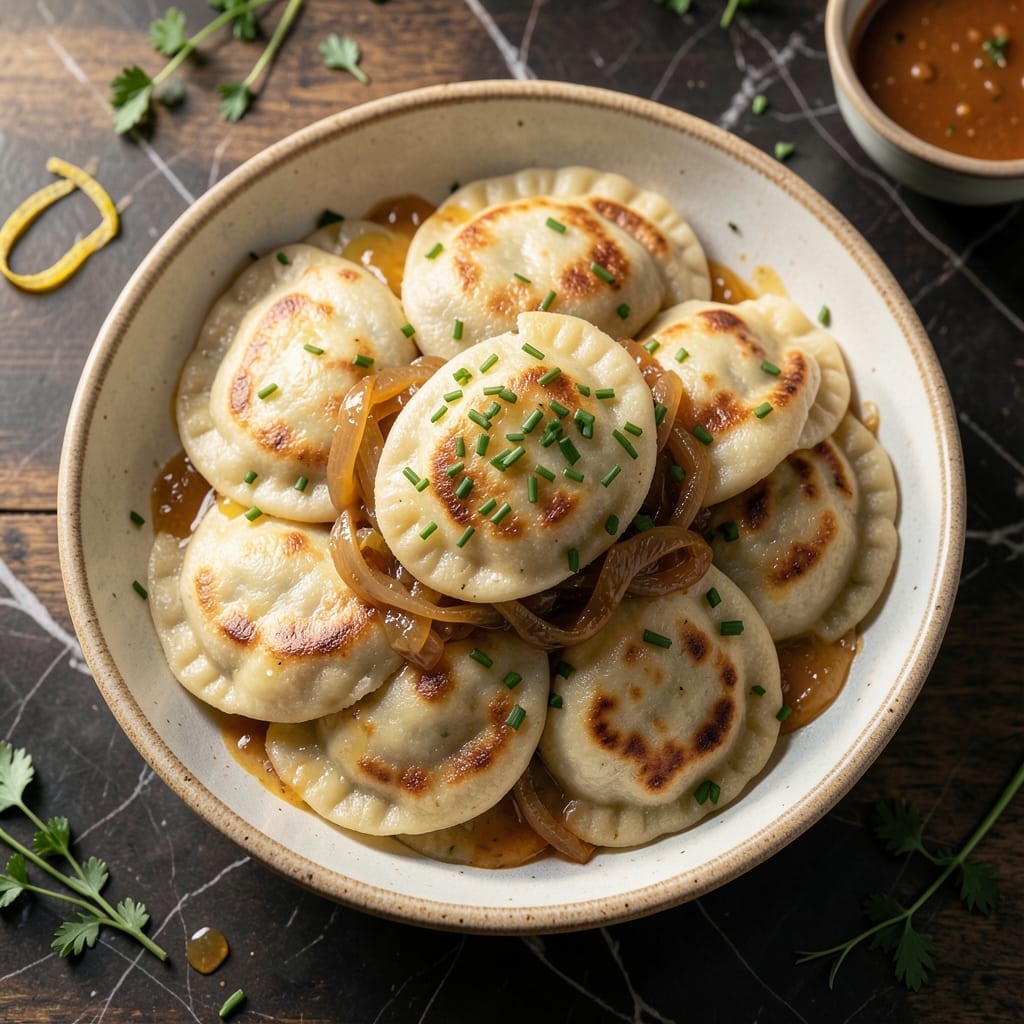
Traditional Polish pierogi have been a cornerstone of Eastern European cuisine for generations, and this version stays true to those roots. The dough comes together with just flour, water, and a touch of salt for that perfect tender bite.
I’ve tested this recipe in my small Boston kitchen to ensure it works in any home setting. The filling combines mashed potatoes and farmer’s cheese for a creamy, savory center that’s both comforting and authentic.
Boiling the dumplings first ensures they cook through evenly, while a quick pan-fry adds a golden, slightly crispy exterior. Each bite delivers a perfect balance of soft dough and rich, cheesy potato filling.
Serve with sour cream, fried onions, or a pat of butter for the full experience. This method honors tradition while keeping it simple for home cooks.
Ingredients for Potato and Cheese Pierogi Recipe Polish
Traditional Polish flavors start with simple pantry staples and dairy basics.
| Ingredient | Amount | Notes |
|---|---|---|
| All-Purpose Flour 🌾 | 3 cups | Plus extra for dusting |
| Warm Water 💧 | ¾ cup | About 110°F |
| Salt 🧂 | 1 tsp | Divided for dough and filling |
| Russet Potatoes 🥔 | 2 lb | Peeled and quartered |
| Farmer's Cheese 🧀 | 1 cup | Crumbled, or dry cottage cheese |
| Unsalted Butter 🧈 | 4 tbsp | Melted for mashed potatoes |
| Sour Cream 🥛 | ¼ cup | For serving, plus extra |
| Yellow Onion 🧅 | 1 whole | Diced for filling and topping |
| Large Egg 🥚 | 1 whole | For dough binding |
| Olive Oil 🫒 | 2 tbsp | For frying dumplings |
| Black Pepper 🌶️ | ½ tsp | Freshly ground preferred |
| Chives 🌿 | 2 tbsp | Finely chopped for garnish |
The farmer’s cheese is non-negotiable for authenticity. Look for it at Polish markets or specialty stores—if unavailable, dry cottage cheese (drained well) is the closest substitute. Russet potatoes give the creamiest filling (their high starch content binds perfectly). For flour, King Arthur’s all-purpose is the gold standard, but any unbleached brand works. The dough should be soft but not sticky, so adjust water by the tablespoon if needed.
No farmer’s cheese? Whole-milk ricotta (drained overnight in cheesecloth) works in a pinch. Swap the sour cream topping for Greek yogurt—thicker texture, tangier bite. The butter in the filling can be replaced with olive oil if avoiding dairy, but it changes the flavor. For frying, vegetable oil has a higher smoke point than olive oil. The chives are optional but add a fresh contrast.
Dough can be made 1 day ahead—wrap tightly in plastic. Filled pierogi freeze beautifully on a tray before boiling, then transfer to bags for up to 3 months. Cooked dumplings keep 4-5 days in the fridge (reheat in butter). Always boil from frozen—add 2-3 minutes to cooking time.
Why You’ll Love This Recipe
- Dough Ready Fast: The flour, water, and salt mix comes together in minutes—no fancy techniques, just my hands and a bowl.
- That Creamy Bite: Russet potatoes and farmer’s cheese make a filling so rich and smooth, it’s honestly hard to stop at one.
- Freezer to Table: I make a big batch, freeze them, and boil straight from icy—dinner’s ready before the kids argue over who sets the table.
- Stretches Far: A pound of potatoes and a block of cheese feed my family of four with leftovers, and it’s way cheaper than takeout.
Step-by-Step Instructions for Potato and Cheese Pierogi
Traditional technique ensures these dumplings turn out perfectly pillowy with rich, savory filling.
Step 1: Prepare the Dough
In a large bowl, combine the 3 cups all-purpose flour with ½ tsp salt and make a well in the center. Add the 1 whole large egg and 0.75 cup warm water to the well. Using a fork, gradually incorporate the flour into the wet ingredients until a shaggy dough forms.
Turn the dough onto a lightly floured surface and knead for 8-10 minutes until smooth and elastic. The dough should be soft but not sticky—add a bit more flour if needed, but avoid overworking it. Wrap the dough in plastic and let it rest at room temperature for 30 minutes.
Step 2: Make the Potato and Cheese Filling
Boil the 2 lb russet potatoes in salted water until fork-tender, about 15-20 minutes. Drain well and return to the pot. Mash the potatoes until smooth, then stir in the 4 tbsp unsalted butter, 1 cup farmer’s cheese, remaining ½ tsp salt, and 0.5 tsp black pepper.
The filling should be thick and slightly sticky. If it seems too wet, let it sit for 5 minutes to allow excess moisture to evaporate. Taste and adjust seasoning—this is your chance to ensure the filling has a bold, savory flavor that will shine through the dough.
Step 3: Assemble the Pierogi
Roll the rested dough on a floured surface to about ⅛-inch thickness. Use a 3-inch round cutter to cut circles. Place 1 tsp of filling in the center of each circle, being careful not to overfill. Fold the dough over the filling to create a half-moon shape, then pinch the edges tightly to seal.
For extra security, you can crimp the edges with a fork or your fingers. Arrange the finished pierogi on a floured baking sheet, ensuring they don’t touch. Cover with a clean kitchen towel to prevent drying out while you work.
Step 4: Cook the Pierogi
Bring a large pot of salted water to a boil. Drop the pierogi in batches, stirring gently to prevent sticking. Cook for 3-4 minutes after they float to the surface—they should be plump and slightly translucent when done. Remove with a slotted spoon and drain well.
For a golden finish, heat the 2 tbsp olive oil in a skillet over medium heat. Add diced yellow onion and cook until soft and golden. Add the cooked pierogi and fry for 2-3 minutes per side until lightly browned.
Step 5: Serve with Toppings
Transfer the pierogi to a serving platter and top with the caramelized onion. Dollop with 0.25 cup sour cream and sprinkle with 2 tbsp chives for a pop of color and freshness. Serve immediately while hot—the contrast of the crispy exterior and creamy filling is best enjoyed fresh.
Pro Tips For Making Potato And Cheese Pierogi Recipe Polish
- Drain Potatoes Well: After boiling, rice or mash the russets, then let them sit in a colander for 10 minutes—I learned this the hard way when my first batch turned into soggy dumplings.
- Use Dry Farmer’s Cheese: Squeeze out as much moisture as you can from the cheese before mixing, or your filling will be watery and hard to seal.
- Roll Thin, Not Too Thin: Aim for dough about 1/8-inch thick—any thinner and it tears when boiling, any thicker and the pierogi turn out doughy instead of tender.
- Boil in Salted Water: Add a generous tablespoon of salt to the boiling water, like pasta water—this is the only chance to season the dough itself, and it makes a real difference in flavor.
Wine and Beer Pairings for This Recipe
Polish Beer Pairings
For an authentic experience, I love serving these with Żywiec or Tyskie—Polish lagers with crisp, clean profiles that cut through the richness. The light bitterness balances the creamy filling beautifully. These are easy to find at Boston neighborhood markets. 🍺
Craft Beer Alternatives
If you prefer craft options, a pilsner from Trillium Brewing offers similar crispness with local New England character. The carbonation helps cleanse your palate between bites of pierogi.
White Wine Options
A chilled Polish Riesling from the Lublin region provides a slightly sweet contrast to the savory filling. The acidity complements the dish without overpowering it.
Red Wine Choices
For red lovers, a light Pinot Noir from Oregon works surprisingly well. Its earthy notes pair nicely with the potato and cheese. Serve slightly chilled.
Non-Alcoholic Pairing
Sparkling apple cider from a local orchard gives the same palate-cleansing effect as beer. I love Downeast Cider from Boston—its dry finish works perfectly.
Traditional Touch
In Poland, many serve pierogi with kompot (fruit drink). A sparkling raspberry kompot adds a fruity, refreshing contrast to the savory dumplings. 💫
Nutrition Facts
Frequently Asked Questions
Can I use regular potatoes instead of russets?
Russets work best because their high starch content makes the filling creamy. You can use Yukon Golds, but the texture will be slightly waxier. Always cook until fork-tender for best results.
How do I prevent pierogi from bursting while boiling?
Seal the edges tightly and avoid overfilling with more than 1 tsp of filling. Boil in batches to prevent crowding, and stir gently. They’re done when they float to the surface.
Can I bake pierogi instead of frying?
Yes! Toss boiled pierogi with a bit of oil, then bake at 375°F for 15-20 minutes until golden. They won’t be as crispy as pan-fried but still delicious.
What’s the best way to freeze pierogi?
Place uncooked pierogi on a floured tray and freeze solid before transferring to bags. Cook from frozen by boiling for 2-3 minutes longer than fresh. They’ll keep for up to 3 months.

- Protein Pudding Recipe With Sugar Free Pudding: High-Protein Creamy Indulgence - November 3, 2026
- Progresso Recipe Starters Creamy Parmesan Basil Cooking Sauce: Rich Herb-Infused Base for Pasta and More - November 3, 2026
- Pudding Recipe With Egg Yolks: Silky Smooth Custard in Minutes - November 3, 2026