
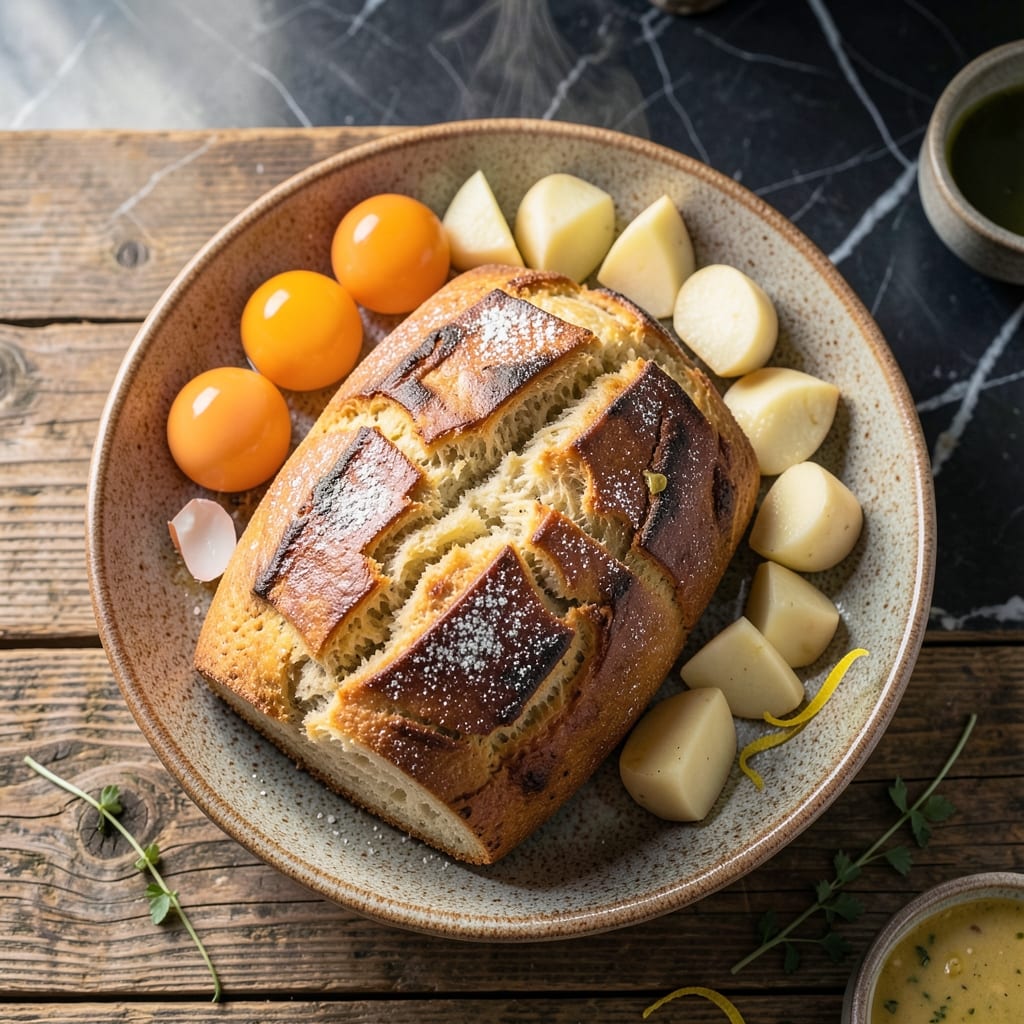
This potato bread delivers a cloud-like texture without wheat flour, using just mashed potatoes, eggs, and baking powder. It’s surprisingly simple yet yields a soft, slightly sweet loaf that’s perfect for those avoiding traditional flour.
I developed this recipe after experimenting with gluten-free alternatives, discovering that potatoes create a tender crumb that’s both satisfying and versatile. The method requires no special equipment—just a mixing bowl and oven.
The result is a bread with a golden crust and moist interior, ideal for sandwiches or toast. Its subtle sweetness pairs well with both savory and sweet toppings, making it a staple in my kitchen.
Bake a loaf today and experience how humble ingredients can create something extraordinary.
Ingredients for Potato Bread Recipe No Flour
Humble ingredients transform into a tender, gluten-free loaf with cloud-like texture.
| Ingredient | Amount | Notes |
|---|---|---|
| Russet Potatoes 🥔 | 2 lb | Peeled, boiled, mashed |
| Large Eggs 🥚 | 4 whole | Room temperature preferred |
| Baking Powder 🧂 | 2 tsp | Ensures proper rise |
| Salt 🧂 | 1 tsp | Fine sea salt preferred |
| Granulated Sugar 🍚 | 2 tbsp | Balances savory notes |
| Olive Oil 🫒 | ¼ cup | For greasing pan |
| Vanilla Extract 🌿 | 1 tsp | Pure extract recommended |
| Almond Milk 🥛 | ¼ cup | Optional for moisture |
| Apple Cider Vinegar 🍏 | 1 tbsp | Activates baking powder |
| Ground Cinnamon 🌿 | ½ tsp | Adds subtle warmth |
The potatoes are the foundation here. Russet potatoes yield the lightest texture—avoid waxy varieties like red or new potatoes, as they lack the necessary starch. Organic potatoes are ideal for their cleaner flavor and fewer additives. Boil them whole (skins on to retain starch), then mash while hot for the smoothest consistency. Whole Foods or your local farmers market will have the best selection.
No almond milk? Any dairy or plant-based milk works equally well (use what you have on hand). For a richer flavor, substitute whole milk or coconut milk. If avoiding added sugar, replace granulated sugar with maple syrup or honey at the same quantity. The apple cider vinegar is subtle but important—white vinegar or lemon juice can stand in if needed.
Store cooled loaves wrapped in foil at room temperature for 2-3 days. For longer storage, slice and freeze in airtight bags for up to 3 months. Reheat slices in a toaster or warm oven to restore that fresh-baked softness.
Why You’ll Love This Recipe
- No Flour Needed: I love that this skips the flour aisle entirely—just mashed russets, eggs, and a pinch of baking powder do the trick.
- Sweet and Savory: The sugar caramelizes just enough to balance the earthy potato, while the eggs give it a rich, custardy crumb.
- Meal Prep Hero: Honestly, it toasts even better the next day, so I make a double batch for quick breakfasts all week.
- Budget Friendly: Russet potatoes and pantry staples keep the cost low, and it still feels like a special treat.
Step-by-Step Instructions for Potato Bread
Master this technique for a light, airy loaf that defies expectations without traditional flour.
Step 1: Prepare the Potato Base
Peel and dice the 2 lb Russet Potatoes, then boil them in salted water until fork-tender. This typically takes 15-20 minutes depending on dice size. Drain thoroughly and return to the pot for 1-2 minutes over low heat to evaporate excess moisture.
Mash the potatoes until completely smooth with no lumps. I use a potato ricer for the finest texture, but a sturdy masher works too. The drier the mash, the better your bread’s structure will be. Let it cool to room temperature before proceeding to prevent cooking the eggs when combined.
Step 2: Activate Leavening and Combine Wet Ingredients
In a small bowl, whisk together the 1 tbsp Apple Cider Vinegar and 0.25 cup Almond Milk. Let this mixture sit for 5 minutes to slightly curdle—this creates a buttermilk-like reaction that enhances texture.
In a large mixing bowl, beat the 4 whole Large Eggs with the 2 tbsp Granulated Sugar, 1 tsp Vanilla Extract, and 0.25 cup Olive Oil until pale and slightly thickened. Gradually whisk in the vinegar-milk mixture. The emulsion should look smooth and slightly creamy.
Step 3: Incorporate Dry Components and Potato
Add the 2 tsp Baking Powder, 1 tsp Salt, and 0.5 tsp Ground Cinnamon to the wet ingredients, whisking until just combined. The baking powder will begin reacting with the acidic vinegar immediately, so work efficiently.
Fold in the cooled mashed potatoes using a silicone spatula. The dough will be thick and slightly sticky—more like a very firm batter than traditional bread dough. Ensure the potato is fully incorporated with no streaks. The mixture should hold its shape when scooped but still be pliable.
Step 4: Bake to Golden Perfection
Preheat your oven to 375°F. Grease a 9×5-inch loaf pan thoroughly with additional olive oil, ensuring all corners and the rim are coated. Transfer the dough to the pan, smoothing the top with wet fingers to prevent sticking.
Bake on the center rack for 45-50 minutes until the top is deep golden brown and a toothpick inserted in the center comes out clean. If the top browns too quickly, tent loosely with foil for the remaining time. The internal temperature should reach 200-205°F for full doneness.
Step 5: Cool and Serve
Let the bread cool in the pan for 10 minutes, then transfer to a wire rack to cool completely. This waiting period is crucial—it allows the structure to set and prevents a gummy texture. The bread will firm up significantly as it cools.
Slice when completely cool. The crust should be thin and slightly crisp, while the interior reveals a fine, moist crumb with a subtle sweetness. For best results, store wrapped at room temperature for up to 3 days, or freeze for longer storage. Toast slices to revive the texture if needed.
Pro Tips For Making Potato Bread Recipe No Flour
- Dry the Potatoes: After boiling and mashing the russets, let them sit in the colander for 5 minutes to evaporate excess moisture—I learned this the hard way when my first loaf turned out gummy.
- Warm the Eggs: Take the eggs out of the fridge 15 minutes before mixing, or soak them in warm water for 5; cold eggs can cause the potato base to seize up and turn dense.
- Don’t Overmix: Stir just until the eggs and potatoes come together—overworking develops a gluey texture that no amount of baking powder can fix.
- Bake Immediately: Once you fold in the baking powder, get the batter into the oven right away; it starts reacting the second it hits the wet ingredients, and waiting kills the rise.
Flavor Customization for This potato bread recipe no flour
Sweet Enhancements
For a dessert-like loaf, increase the granulated sugar to ¼ cup and add ½ cup raisins or chopped dates to the batter. I also love folding in 1 tsp orange zest for a bright citrus note that reminds me of Nonna’s holiday baking. 💛
Savory Twists
Reduce the sugar to 1 tbsp and add ½ cup shredded cheddar or ¼ cup grated Parmesan for a cheesy bread perfect for sandwiches. A pinch of garlic powder or onion powder deepens the flavor beautifully.
Herb Infusions
Add 1 tbsp fresh rosemary or thyme to the dough for an earthy, aromatic touch. For Italian flair, mix in 2 tsp dried oregano and 1 tsp basil. These herbs pair wonderfully with the subtle sweetness of the potato base.
Spiced Variations
Boost the cinnamon to 1 tsp and add ¼ tsp nutmeg for a warm, spiced loaf that’s perfect for fall. For a bolder kick, include ½ tsp cardamom—it adds complexity without overpowering the potato flavor.
Nutty Additions
Fold in ½ cup chopped walnuts or pecans for crunch and richness. Toast the nuts first for deeper flavor. For a Sicilian touch, I sometimes add ¼ cup toasted pine nuts, which reminds me of my grandmother’s kitchen. ✨
Moisture Boosters
If your potatoes are extra dry, add 2 tbsp extra almond milk or swap it for coconut milk for a richer texture. A dollop of Greek yogurt (about ¼ cup) also works wonders for keeping the bread tender.
Nutrition Facts
Frequently Asked Questions
Can I use sweet potatoes instead?
Yes, but adjust the sugar. Sweet potatoes add natural sweetness, so reduce granulated sugar to 1 tbsp for balance. The texture will be slightly denser but still tender.
Why did my bread sink in the middle?
This usually means underbaked or too much liquid. Ensure internal temp reaches 200-205°F and measure ingredients precisely. Overmixing can also deflate the batter.
How do I make it vegan?
Replace eggs with 4 tbsp ground flaxseed mixed with 10 tbsp water (let sit 5 minutes). Use plant-based milk and check baking powder is aluminum-free.
Can I bake this in a different pan?
A 9×5-inch loaf pan is ideal, but muffin tins work for rolls (bake 20-25 minutes). Avoid glass pans as they may over-brown the crust.

- Potato Patty Recipe No Egg: Crispy Edges Without the Binder - October 30, 2026
- Paula Deen’s Potato Chip Cookies Recipe: Salty-Sweet Crunch in Every Bite - October 30, 2026
- Potato Gnocchi Recipe Ideas: Pillowy Soft Dumplings With Rustic Charm - October 30, 2026