
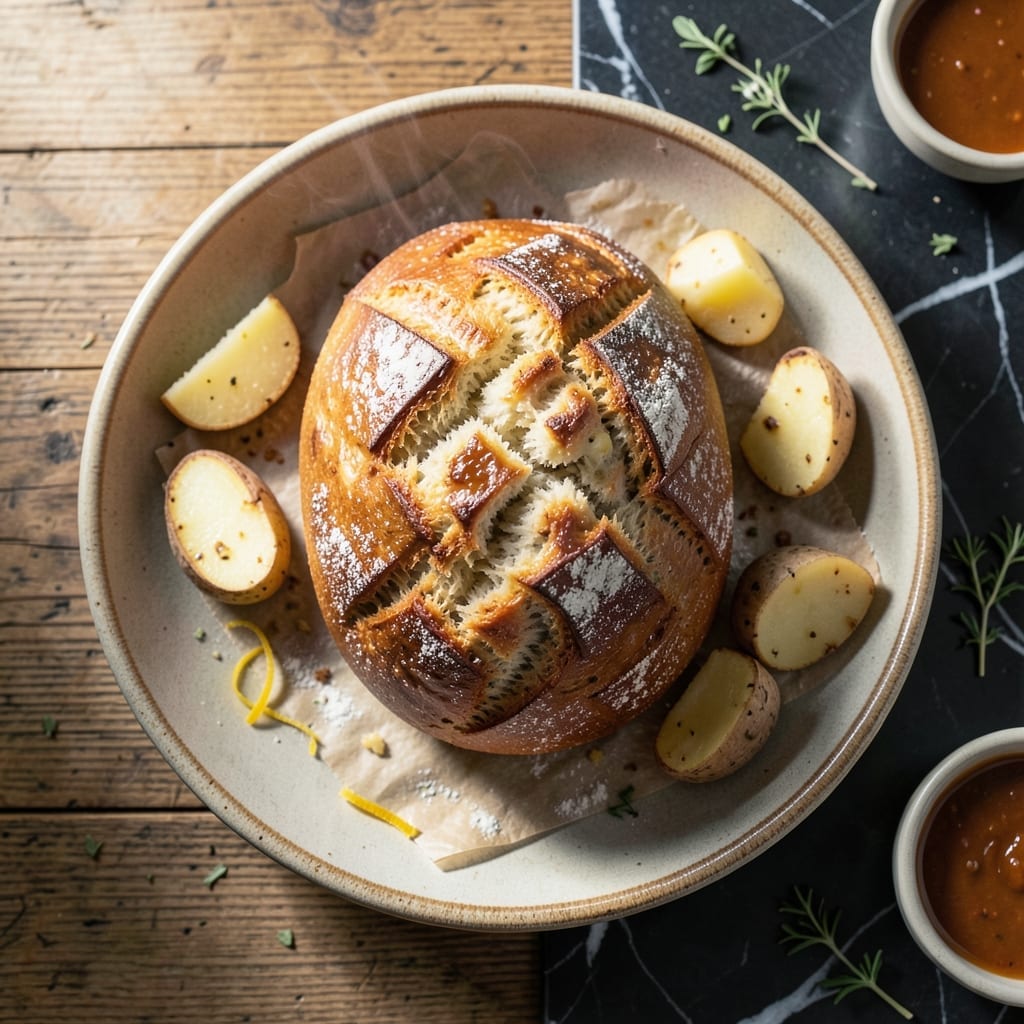
This no-milk potato bread delivers a soft interior with a rustic crust that’s hard to resist. I developed this version after realizing many home bakers need a dairy-free option without sacrificing texture or flavor.
The mashed potatoes in the dough create natural moisture and tenderness, while a touch of sugar enhances browning. This method requires no special equipment—just a mixing bowl, your hands, and a standard loaf pan.
You’ll achieve a golden-brown loaf with a slightly chewy crumb that’s perfect for sandwiches or toast. The aroma alone makes the 2-hour rise time worthwhile.
Baking at 375°F ensures even cooking and a beautiful crust. This recipe proves dairy isn’t necessary for exceptional homemade bread.
Ingredients for Potato Bread Recipe No Milk
Pantry staples plus potatoes create this tender, dairy-free loaf with rustic charm.
| Ingredient | Amount | Notes |
|---|---|---|
| Russet Potatoes 🥔 | 1 lb | Peeled, boiled, mashed |
| All-Purpose Flour 🌾 | 4 cups | Plus extra for dusting |
| Granulated Sugar 🧈 | 2 tbsp | For browning and sweetness |
| Active Dry Yeast 🍞 | 2 ¼ tsp | One packet, proofed in warm water |
| Salt 🧂 | 1 ½ tsp | Fine sea salt preferred |
| Water 💧 | 1 ¼ cups | Warm, 110°F for yeast |
| Vegetable Oil 🫒 | 2 tbsp | Neutral flavor, for dough |
| Unsweetened Almond Milk 🥛 | ¼ cup | Or any plant-based milk |
| Olive Oil 🫒 | 1 tbsp | For greasing bowl |
| Bread Flour 🌾 | 1 cup | For structure, optional boost |
The potatoes are key here. Russets give the best texture—starchy and dry, so they mash smooth without extra moisture. Yukon Golds work too (they’re creamier) but may need a touch less water in the dough. I grab mine from Whole Foods or any grocery with a good produce section. Boil them whole, skin on, then peel after cooking—way easier. The yeast needs to be fresh; check the expiration date on the packet.
No almond milk? Any plant milk works—soy, oat, even coconut (just skip the sweetened kind). Out of all-purpose flour? Bread flour at a 1:1 swap adds chew. Short on sugar? Honey or maple syrup at the same amount, but skip the honey if strict vegan. The oil can be any neutral one—avocado or canola if you don’t have vegetable. For a richer loaf, use melted coconut oil.
Dough rises best in a warm spot—75-80°F. Covered with a damp towel, it’ll take about 2 hours. Baked loaf keeps wrapped at room temp for 3 days, or freeze slices for up to 3 months. Slice when completely cool to avoid gummy texture.
Why You’ll Love This Recipe
- No-Fuss Mixing: I just dump the mashed russets, flour, and yeast in one bowl—no fancy steps, no milk to warm.
- Rich Potato Flavor: The russets give it this subtle earthy sweetness that pairs perfectly with the yeasty warmth.
- Meal Prep Hero: Honestly, I bake a loaf on Sunday and it’s still soft for sandwiches all week.
- Budget Friendly: Russets and basic pantry staples keep the cost way lower than store-bought artisan loaves.
Step-by-Step Instructions for Potato Bread No Milk
Here’s how I make this soft, rustic loaf with a tender crumb and golden crust.
Step 1: Prepare and Mash the Russet Potatoes
Peel and dice the 1 lb Russet Potatoes, then boil them in salted water until fork-tender, about 15-20 minutes. Drain well and return them to the pot. The potatoes should be completely soft with no resistance when pierced.
Mash the potatoes until smooth—no lumps. You’ll need exactly 1 cup of mashed potato for the dough. I use a potato ricer for the silkiest texture, but a fork or masher works too. Let the mashed potatoes cool to room temperature before mixing them into the dough. Warm potatoes can kill the yeast.
Step 2: Proof the Yeast and Mix the Dough
In a small bowl, combine the 2.25 tsp Active Dry Yeast with 1.25 cups Water heated to 110°F and the 2 tbsp Granulated Sugar. Let it sit for 5-10 minutes until foamy. This confirms the yeast is alive and active.
In a large mixing bowl, whisk together the 4 cups All-Purpose Flour, 1 cup Bread Flour, and 1.5 tsp Salt. Add the cooled mashed potatoes, the 0.25 cup Unsweetened Almond Milk, the 2 tbsp Vegetable Oil, and the proofed yeast mixture. Stir until a shaggy dough forms.
Step 3: Knead the Dough Until Smooth
Turn the dough out onto a lightly floured surface. I dust the counter with a handful of the All-Purpose Flour to prevent sticking. Knead for 8-10 minutes until the dough is smooth, elastic, and slightly tacky but not sticky. You’ll notice it becomes more pliable as you work it.
If the dough feels too sticky, resist the urge to add too much flour—just a sprinkle at a time. Over-flouring can make the bread dense. The finished dough should spring back slowly when poked with a finger.
Step 4: First Rise Until Doubled
Lightly grease a large bowl with the 1 tbsp Olive Oil and place the dough inside, turning to coat it lightly. Cover the bowl with a damp kitchen towel or plastic wrap. Let it rise in a warm, draft-free spot for 1-1.5 hours, or until doubled in size.
I like to preheat my oven to the lowest setting for 2 minutes, then turn it off and place the bowl inside for a consistent rise. The dough is ready when it holds an indentation when gently pressed with a finger.
Step 5: Shape, Second Rise, and Bake
Punch down the dough to release the air, then shape it into a loaf and place it in a greased 9×5-inch loaf pan. Cover again and let it rise for 45-60 minutes until the dough domes about 1 inch above the rim of the pan.
Preheat the oven to 375°F. Bake for 35-40 minutes until the loaf is golden brown and sounds hollow when tapped on the bottom. If the top browns too quickly, tent loosely with foil. Cool in the pan for 5 minutes, then transfer to a wire rack to cool completely before slicing.
Pro Tips For Making Potato Bread Recipe No Milk
- Proof the Yeast: Always dissolve the active dry yeast in warm water with a pinch of sugar first—I learned this the hard way after a few dense loaves that never rose.
- Rice the Potatoes: After boiling, rice the russets while still hot so they incorporate smoothly into the dough without lumps.
- Skip Cold Ingredients: Resist the urge to use cold potatoes or flour straight from the fridge; room temperature ingredients blend better and rise faster.
- Use Potato Water: Save the starchy water from boiling the russets and use it in the dough—it adds moisture and a subtle richness without milk.
Make-Ahead Tips for Leftovers
Overnight Dough Prep
Mix your dough as usual, then cover the bowl tightly with plastic wrap and refrigerate for up to 12 hours. This slow rise develops deeper flavor. In the morning, let it sit at room temperature for 30-45 minutes before shaping. 💡
Pre-Shape and Freeze
After the first rise, shape the dough into a loaf and wrap it tightly in plastic wrap, then foil. Freeze for up to 1 month. Thaw overnight in the fridge, then let it warm at room temperature for 1-2 hours before the second rise and baking.
Baked Loaf Storage
Once completely cooled, wrap the loaf in aluminum foil or place in a ziplock bag. It stays fresh at room temperature for 2-3 days. For longer storage, slice before storing to make toasting individual pieces easier.
Reviving Stale Bread
Sprinkle the loaf with 1-2 tbsp water, wrap in foil, and warm in a 350°F oven for 10-15 minutes. This restores moisture beautifully. Alternatively, toast slices directly from frozen for a quick breakfast. ❄️
Dough Portioning
Divide the dough into 4 equal portions after kneading, shape into balls, and freeze on a tray. Once frozen, transfer to a bag. Bake individual rolls by thawing overnight, shaping, and baking at 375°F for 20-25 minutes.
Make-Ahead Mashed Potatoes
Prepare and mash the 1 lb Russet Potatoes up to 1 day ahead and store in the fridge. Bring to room temperature before mixing into the dough. This saves time on baking day without affecting texture.
Nutrition Facts
Frequently Asked Questions
Can I use sweet potatoes instead of Russets?
Yes, but reduce the water slightly as sweet potatoes are moister. Their natural sweetness will also add a different flavor profile to your loaf.
Why did my bread turn out dense?
This usually happens if the dough didn’t rise enough. Check your yeast expiration date and ensure your rising spot is warm enough, ideally 75-80°F. Over-flouring can also cause density.
How do I know when the bread is done?
The loaf should be golden brown and sound hollow when tapped. For accuracy, use an instant-read thermometer: it should register 190-200°F in the center.
Can I make this in a bread machine?
Use the dough setting, then shape and bake as directed. Add ingredients in the order your machine specifies, typically liquids first, then dry ingredients.

- Pressure Cooker Ketchup Recipe With Canned Tomatoes: Homemade Tangy Richness in Half the Time - October 30, 2026
- Pottukadalai Sweet Recipe in Tamil: Festive Roasted Gram Delight - October 30, 2026
- Potato Salad Recipe With Egg and Sour Cream: Creamy Tang With Classic Crunch - October 30, 2026