
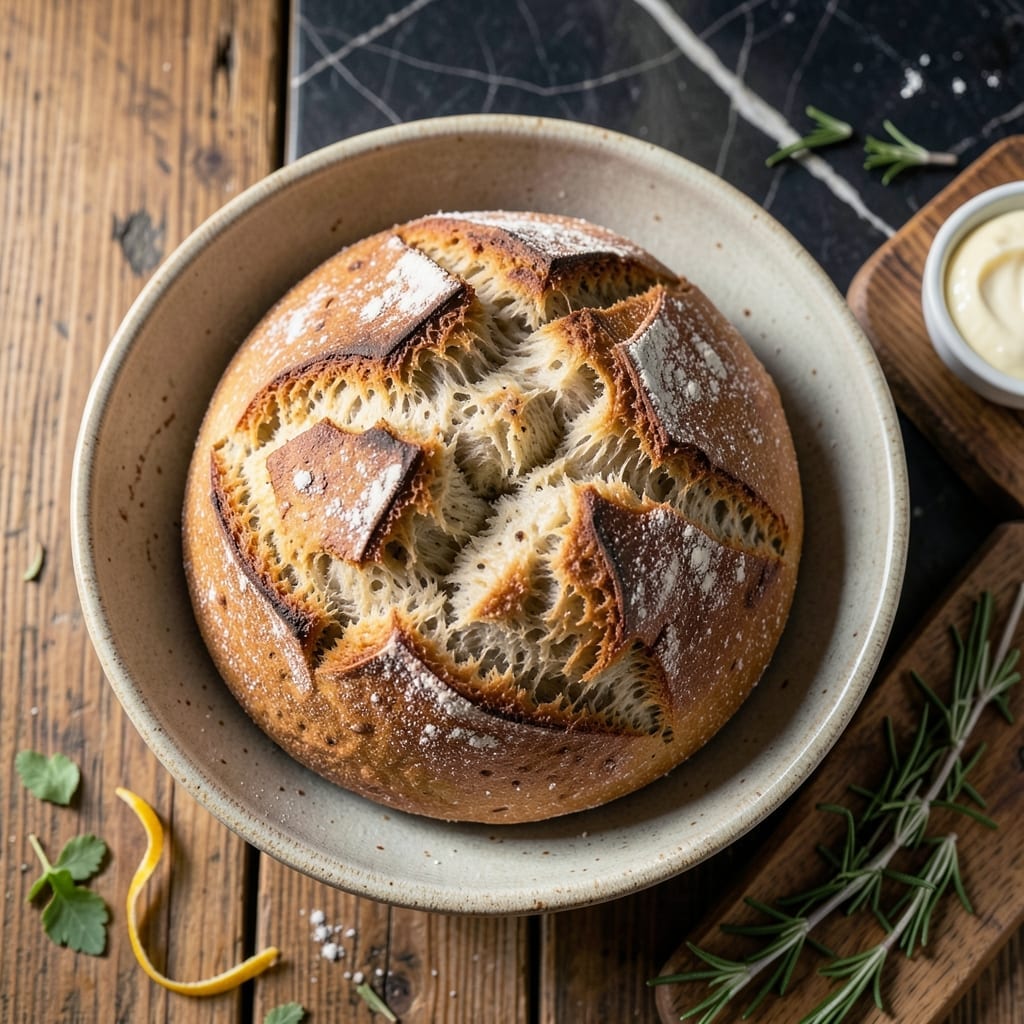
This potato bread delivers a light, airy texture with a subtle rustic flavor that sets it apart from ordinary loaves. The potato flour adds natural sweetness while keeping the crumb tender and moist.
I developed this recipe to capture that old-fashioned bakery quality without complicated techniques. The dough comes together easily with basic ingredients, and the potato flour ensures a soft yet sturdy structure perfect for sandwiches or toast.
After baking, you’ll have a golden loaf with a delicate crust and an interior so fluffy it nearly melts in your mouth. The potato flour enhances both the flavor and the keeping quality, so this bread stays fresh longer than most.
Serve warm with butter or use it for your favorite sandwiches. This method guarantees consistent results every time.
Ingredients for Potato Bread Recipe Potato Flour
Basic ingredients create that bakery-style loaf with tender, fluffy crumb everyone loves.
| Ingredient | Amount | Notes |
|---|---|---|
| All-Purpose Flour 🌾 | 4 cups | Plus extra for dusting surface |
| Potato Flour 🥔 | ¾ cup | Not potato starch, essential for texture |
| Warm Water 💧 | 1 ¼ cups | 110-115°F for yeast activation |
| Active Dry Yeast 🍞 | 2 ¼ tsp | One packet plus extra for rise |
| Granulated Sugar 🍚 | 2 tbsp | Feeds the yeast, balances flavor |
| Salt 🧂 | 1 ½ tsp | Fine sea salt preferred |
| Unsalted Butter 🧈 | 3 tbsp | Melted and cooled slightly |
| Whole Milk 🥛 | ½ cup | Warmed to 110°F, adds richness |
| Large Egg 🥚 | 1 whole | Room temperature for binding |
| Honey 🍯 | 1 tbsp | Adds subtle sweetness and moisture |
| Olive Oil 🫒 | 1 tbsp | For greasing the bowl |
The potato flour is non-negotiable here—Bob’s Red Mill is my go-to, but any brand works as long as it’s labeled potato flour (not starch). King Arthur all-purpose flour gives consistent results. I grab both from Whole Foods bulk section to save money. The yeast? Check the expiration date—old yeast kills the rise. Whole milk adds richness, but 2% works fine if that’s what you’ve got.
No potato flour? Mashed real potatoes at half the amount (cooled completely) can work in a pinch. Out of honey? Maple syrup or sugar at the same quantity. Milk substitutes like oat or almond need a teaspoon of vinegar to mimic the acidity. For extra softness, swap a cup of all-purpose for bread flour. The egg can be skipped, but the loaf might be slightly denser.
Dough rises best in a warm, draft-free spot—my oven with the light on works perfectly. Baked loaf stays fresh wrapped in foil for 3-4 days. For longer storage, slice and freeze in a ziptop bag for up to 3 months (the good stuff, not the pre-shredded kind).
Why You’ll Love This Recipe
- One Bowl Wonder: I just dump the all-purpose flour, potato flour, and yeast into a single bowl—no fancy equipment, no fuss.
- Cloud-Like Texture: The potato flour gives it this incredibly soft, slightly sweet crumb that melts in your mouth.
- Meal Prep Hero: I bake a loaf on Sunday and it’s still perfect for sandwiches or toast by Wednesday.
- Penny Pincher: A bag of potato flour stretches this recipe way further than regular bread, and it costs barely anything.
Step-by-Step Instructions for Potato Bread
Here’s how to achieve that perfect loaf with a soft crumb and rustic flavor.
Step 1: Activate the Yeast and Combine Wet Ingredients
In a small bowl, sprinkle the 2.25 tsp Active Dry Yeast over the 1.25 cups Warm Water and let it sit for 5 minutes until foamy. This confirms your yeast is alive and ready to work its magic.
Meanwhile, in a large mixing bowl, whisk together the 0.5 cup Whole Milk, 2 tbsp Granulated Sugar, 1 whole Large Egg, 1 tbsp Honey, and melted 3 tbsp Unsalted Butter. The mixture should be smooth and slightly warm to the touch.
Once the yeast is frothy, pour it into the wet ingredients and stir gently. You’ll notice the mixture starts to bubble slightly—that’s the yeast activating, a good sign your bread will rise beautifully.
Step 2: Incorporate Dry Ingredients to Form the Dough
In a separate bowl, whisk together the 4 cups All-Purpose Flour, 0.75 cup Potato Flour, and 1.5 tsp Salt. The potato flour is what gives this bread its signature soft texture and subtle flavor.
Gradually add the dry ingredients to the wet mixture, about 1 cup at a time, stirring with a wooden spoon until a shaggy dough forms. It will look rough at first, but don’t worry—the gluten will develop as you knead.
You’ll know you’ve added enough flour when the dough starts to pull away from the sides of the bowl. It should be slightly sticky but manageable.
Step 3: Knead Until Smooth and Elastic
Turn the dough out onto a lightly floured surface (use some of the All-Purpose Flour reserved for dusting) and knead for 8-10 minutes by hand. Push the dough away with the heel of your hand, then fold it back over itself in a rhythmic motion.
The dough will be sticky at first, but resist the urge to add too much extra flour. After a few minutes, it should become smooth, elastic, and slightly tacky. You can test it by poking the dough with your finger—if it springs back slowly, it’s ready.
Shape the dough into a ball and place it in a clean bowl greased with the 1 tbsp Olive Oil. Turn the dough once to coat it lightly in the oil.
Step 4: Let the Dough Rise Until Doubled
Cover the bowl with a clean kitchen towel or plastic wrap and let the dough rise in a warm, draft-free place for 1 to 1.5 hours. I like to place mine near a sunny window or on top of the fridge where it’s slightly warm.
You’ll know it’s ready when the dough has doubled in size and a finger pressed gently into the top leaves a slight indentation that slowly springs back. The dough should look puffy and full of air bubbles.
Step 5: Shape, Rise Again, and Bake to Golden Perfection
Punch down the risen dough to release the air, then turn it out onto a lightly floured surface. Shape it into a loaf by flattening it into a rectangle and rolling it up tightly, pinching the seam to seal.
Place the loaf seam-side down in a greased 9×5-inch loaf pan. Cover and let it rise again for 30-45 minutes until it domes about 1 inch above the rim of the pan.
Preheat your oven to 375°F. Bake the loaf for 30-35 minutes until the top is deep golden brown and the bread sounds hollow when tapped on the bottom. Let it cool in the pan for 10 minutes, then transfer to a wire rack to cool completely before slicing.
Pro Tips For Making Potato Bread Recipe Potato Flour
- Test the Yeast: I learned this the hard way—always proof your active dry yeast in the warm water with a pinch of sugar first. If it doesn’t foam within 5-10 minutes, your bread won’t rise, no matter how long you wait.
- Measure Potato Flour Right: Potato flour is dense and clumps easily, so spoon it into your measuring cup and level it off—don’t scoop directly from the bag. This keeps your dough from turning into a brick.
- Skip Cold Water: Warm water between 105-110°F wakes up the yeast without killing it. I used to eyeball it and ended up with sad, flat loaves more times than I’d like to admit.
- Rest the Dough: After kneading, let the dough rise in a warm spot for at least 1 hour, or until doubled. Rushing this step gives you dense bread—ask me how I know.
Storing and Reheating potato bread recipe potato flour
Room Temperature Storage
Once completely cooled, wrap your loaf in aluminum foil or place in an airtight container. It’ll stay fresh at room temperature for 3-4 days. The potato flour helps retain moisture longer than regular bread. ❄️
Refrigerator Storage
For longer freshness, store wrapped loaves in the fridge for up to 1 week. Slice before storing to make individual portions easier to grab. Let slices come to room temperature for 10-15 minutes before serving.
Freezing for Long-Term
Slice the loaf and wrap individual pieces in plastic wrap, then place in a freezer bag. This bread freezes beautifully for up to 3 months. I like using my New Seasons Market bags for this.
Reheating Methods
For the oven: wrap slices in foil and warm at 350°F for 5-8 minutes. For a toaster, use the defrost setting first, then toast to your preferred crispness. 🔥
Reviving Stale Bread
Sprinkle slices with a little water and bake at 375°F for 5 minutes. The steam will restore moisture. This trick works wonders with day-old loaves.
Pro Storage Tip
Always let bread cool completely before storing to prevent condensation. I learned this the hard way with my first few loaves in Portland’s damp climate. Store in a cool, dry place away from direct sunlight.
Nutrition Facts
Frequently Asked Questions
Why use potato flour instead of mashed potatoes?
Potato flour adds moisture and a tender crumb without making the dough too wet. It also provides more consistent results than mashed potatoes, which can vary in texture.
Can I use potato starch instead?
No, potato starch behaves differently and won’t give you the same soft texture. Stick with potato flour for the best results.
How do I know when the bread is fully baked?
Check for a deep golden brown crust and a hollow sound when tapped. An internal temperature of 190-200°F confirms it’s done.
Why did my bread turn out dense?
Over-kneading or not letting the dough rise long enough can cause density. Ensure your yeast is fresh and the dough doubles in size during rising.

- Pressure Cooker Ketchup Recipe With Canned Tomatoes: Homemade Tangy Richness in Half the Time - October 30, 2026
- Pottukadalai Sweet Recipe in Tamil: Festive Roasted Gram Delight - October 30, 2026
- Potato Salad Recipe With Egg and Sour Cream: Creamy Tang With Classic Crunch - October 30, 2026