
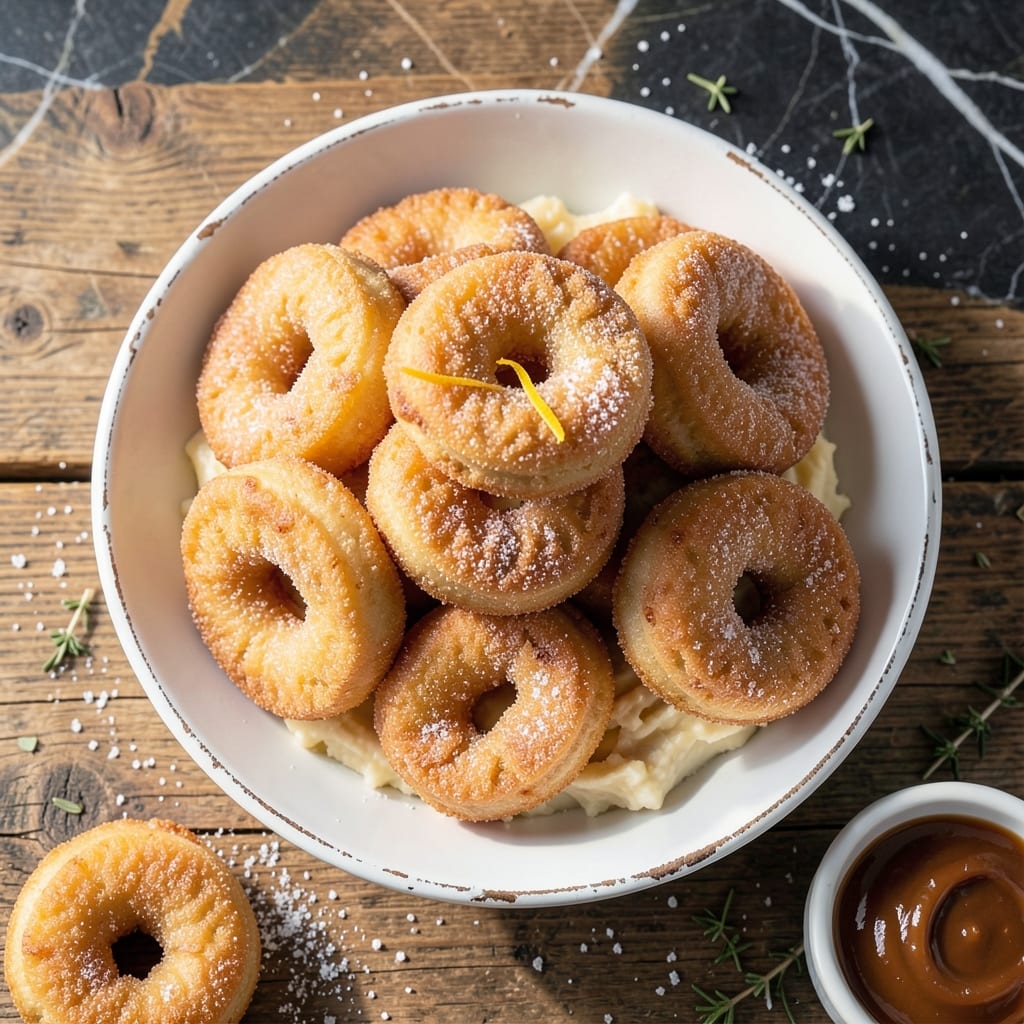
Few things rival the satisfaction of a homemade donut, and this yeast-raised version with potato delivers unmatched lightness. The secret lies in the mashed potato, which keeps the dough moist while allowing it to rise high.
I developed this recipe after years of testing, perfecting the balance between airy texture and golden crust. The yeast needs proper proofing time to create those signature pillowy rings we all crave.
Each bite offers a tender interior with just the right crispness on the outside. The potato adds subtle sweetness that pairs beautifully with any glaze or cinnamon sugar coating.
David always requests these for weekend breakfasts, and I’ve yet to find anyone who can resist a second one. The process requires patience, but the results are worth every minute.
Ingredients for Potato Donut Recipe with Yeast
Potatoes, yeast, and flour create these impossibly light, golden donuts everyone loves.
| Ingredient | Amount | Notes |
|---|---|---|
| Russet Potatoes 🥔 | ½ lb | Peeled, boiled, mashed |
| Active Dry Yeast 🍞 | 2 ¼ tsp | One packet or from jar |
| Granulated Sugar 🍚 | ⅓ cup | Divided for dough and glaze |
| Whole Milk 🥛 | ¾ cup | Warm to 110°F |
| Unsalted Butter 🧈 | 4 tbsp | Melted and cooled |
| Large Eggs 🥚 | 1 whole | Room temperature |
| All-Purpose Flour 🌾 | 4 cups | Plus extra for dusting |
| Salt 🧂 | 1 tsp | Fine sea salt |
| Ground Nutmeg 🌰 | ¼ tsp | Freshly ground preferred |
| Vegetable Oil 🫒 | 4 cups | For deep frying |
| Vanilla Extract 🌿 | 1 tsp | Pure vanilla preferred |
| Cinnamon Sugar 🍯 | ½ cup | For coating (optional) |
The potatoes are key here. Russets give the best texture—Yukon Golds work too but have slightly more moisture. I grab mine from Trader Joe’s or the local farmers market when they’re in season. Boil them whole (peeled) until fork-tender, then mash until smooth with no lumps. The yeast needs to be fresh—check the expiration date on the packet or jar. Warm milk is critical, but don’t go over 110°F or you’ll kill the yeast.
No whole milk? 2% works in a pinch but full-fat is ideal for richness. For a lighter version, half-and-half also does the trick. Out of nutmeg? Skip it—the potato and vanilla carry the flavor. The flour can be swapped for bread flour (same amount) if you want extra chew. For the glaze, powdered sugar plus milk makes a quick alternative to cinnamon sugar. Just don’t skip the vanilla—it’s the difference between good and great.
The mashed potatoes can be made 1 day ahead and refrigerated. The dough needs to rise twice, so plan for about 2.5 hours total. Fry in batches—don’t crowd the pot. Leftovers? Best eaten fresh, but they’ll keep 2 days in an airtight container. Reheat briefly in the oven to crisp them back up.
Why You’ll Love This Recipe
- One-Bowl Mix: I love that the dough comes together in a single bowl—just mash the potatoes, stir in the yeast, sugar, warm milk, and butter, and let it rise.
- Breakfast or Dessert: Honestly, these work as a sweet morning treat with coffee or as an after-dinner indulgence dusted with cinnamon sugar.
- Budget Stretch: Russet potatoes are cheap, and this recipe makes a big batch, so it feeds a crowd without breaking the bank.
Step-by-Step Instructions for Potato Donuts With Yeast
Here’s the method that guarantees light, fluffy donuts with a perfect golden crust.
Step 1: Prepare the Potato Mixture and Activate the Yeast
Peel and boil the 0.5 lb Russet Potatoes until fork-tender, then mash until completely smooth with no lumps. Let them cool to room temperature. Meanwhile, warm the 0.75 cup Whole Milk to exactly 110°F—any hotter and you’ll kill the yeast.
In a small bowl, dissolve the 2.25 tsp Active Dry Yeast and a pinch of the 0.33 cup Granulated Sugar into the warm milk. Let it sit for 5-7 minutes until frothy and puffed. This visual confirmation means your yeast is alive and ready to work its magic in the dough.
Step 2: Mix and Knead the Dough
In a large mixing bowl, combine the mashed potatoes, yeast mixture, melted 4 tbsp Unsalted Butter, 1 whole Large Egg, remaining granulated sugar, 1 tsp Salt, and 0.25 tsp Ground Nutmeg. Stir until just combined before adding the 4 cups All-Purpose Flour one cup at a time.
Turn the dough onto a lightly floured surface and knead for 8-10 minutes until smooth and elastic. You’ll know it’s ready when it springs back slowly when poked with a finger. The potatoes make this dough slightly stickier than usual, so don’t be tempted to add extra flour—just keep kneading.
Step 3: Let the Dough Rise and Shape the Donuts
Place the dough in a greased bowl, cover with a clean towel, and let it rise in a warm place for 1-1.5 hours or until doubled in size. I like to turn my oven on to its lowest setting for 2 minutes, then turn it off before placing the bowl inside—this creates the perfect proofing environment.
Once risen, roll the dough to ½-inch thickness and cut into rings using a donut cutter or two round cutters. Place them on a floured surface, cover, and let rise again for 30-45 minutes until puffy. They should look slightly domed when ready.
Step 4: Fry to Golden Perfection
Heat the 4 cups Vegetable Oil in a deep pot to 350-360°F. Use a thermometer for accuracy—this temperature range ensures even cooking without burning. Carefully slide in 2-3 donuts at a time, being careful not to overcrowd the pot.
Fry for 1-2 minutes per side until golden brown and cooked through. They’ll float to the surface when ready to flip. Remove with a slotted spoon and drain on a wire rack or paper towels. The oil should sizzle gently but not violently when the donuts hit it.
Step 5: Coat and Serve
While still warm, toss the donuts in the 0.5 cup Cinnamon Sugar until evenly coated. For extra flavor, I add 1 tsp Vanilla Extract to the cinnamon sugar and mix it in before coating—the warmth of the donuts releases the vanilla’s aroma beautifully.
Serve immediately while still warm. Each bite should deliver a light, airy interior with a crisp golden exterior and that signature potato donut richness. These are best the day they’re made, but leftovers can be revived by warming in a 300°F oven for 5-10 minutes.
Pro Tips For Making Potato Donut Recipe With Yeast
- Warm the Milk: Heat your whole milk to about 110°F—any hotter and you’ll kill the yeast, any cooler and it won’t activate properly. I learned this the hard way after wasting a batch with lukewarm milk that just sat there.
- Rice the Potatoes: After boiling your russets, rice or mash them while still hot to avoid gluey dough. Sounds weird, but it works: the fine texture blends seamlessly into the dough.
- Proof Twice: Let the dough rise once after mixing, then again after shaping—skipping the second rise gives you dense donuts. I was skeptical until I tried it, but the difference is night and day.
- Use Melted Butter: Brown your unsalted butter slightly before adding it to the dough for a deeper, nuttier flavor. It’s an extra 2 minutes that actually changes the outcome.
Perfect Pairings for These Flavors
Breakfast Pairings
These donuts shine alongside a strong cup of black coffee or café au lait—the bitterness cuts through the sweetness beautifully. I also love them with a cold glass of whole milk for dipping, which David insists on every time. 🥛
Savory Balance
For a Southern-style breakfast spread, serve with crispy bacon or sausage links. The salty-sweet contrast is unbeatable. At Nana Mae’s diner, we always paired donuts with country ham—simple but irresistible.
Fruit Complements
Fresh berries like strawberries or raspberries add a bright, tart counterpoint. Try a quick berry compote with 1 cup berries and 2 tbsp sugar for dipping. The acidity balances the richness perfectly.
Beverage Options
For a festive touch, pair with spiced chai tea or hot chocolate topped with whipped cream. I also enjoy them with cold brew coffee from our local Austin roaster. The bold flavors stand up to the donut’s sweetness. 🌟
Dessert Pairings
Transform these into a dessert by serving with vanilla ice cream or whipped cream. A drizzle of caramel sauce or chocolate syrup takes them over the top.
Glaze Variations
Beyond cinnamon sugar, try a maple glaze or chocolate icing. For a citrus twist, mix 1 cup powdered sugar with 2 tbsp orange juice for a bright, tangy coating.
Nutrition Facts
Frequently Asked Questions
Why use potatoes in donut dough?
Potatoes add moisture and subtle sweetness, creating an extra tender crumb. They also help the dough stay soft longer after frying.
Can I use instant yeast instead of active dry?
Yes, use 1.5 tsp instant yeast and skip the proofing step. Mix it directly with dry ingredients to save time.
How do I know when the oil is hot enough?
A small dough scrap should sizzle and float immediately when dropped in. Use a thermometer for 350-360°F accuracy.
What if my donuts are raw inside?
Lower the oil temperature slightly and fry 30 seconds longer per side. Overcrowding the pot can cause uneven cooking.

- Potato Patty Recipe No Egg: Crispy Edges Without the Binder - October 30, 2026
- Paula Deen’s Potato Chip Cookies Recipe: Salty-Sweet Crunch in Every Bite - October 30, 2026
- Potato Gnocchi Recipe Ideas: Pillowy Soft Dumplings With Rustic Charm - October 30, 2026