
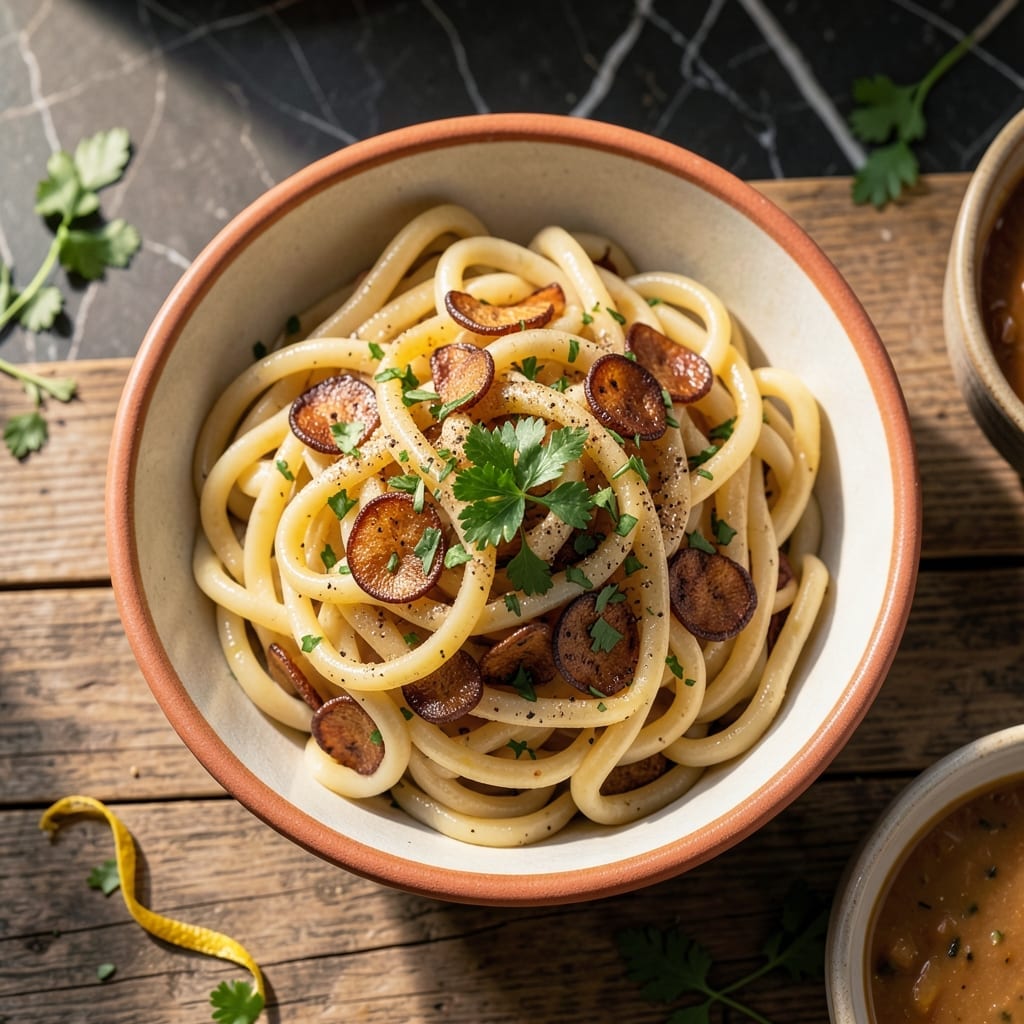
These potato noodles deliver a surprisingly light yet chewy texture without relying on potato starch as a thickener. This method transforms simple potatoes into delicate strands that hold their shape beautifully.
I developed this technique after experimenting with various binders, discovering that proper potato selection and cooking time are the real secrets. The key is using starchy potatoes like Russets and handling the dough gently to maintain structure.
The result is tender noodles with just the right amount of resistance, perfect for pairing with your favorite sauces or simply tossing with olive oil and herbs. They cook quickly and maintain their shape better than traditional pasta.
This approach makes gluten-free noodles accessible with ingredients you likely already have on hand. The process is straightforward and rewarding for home cooks at any skill level.
Ingredients for Potato Noodles Recipe Without Potato Starch
Simple ingredients transform into light, chewy noodles with just the right texture.
| Ingredient | Amount | Notes |
|---|---|---|
| Russet Potatoes 🥔 | 2 lb | Peeled, starchy type essential |
| All-Purpose Flour 🌾 | 1 ½ cups | Or gluten-free blend if needed |
| Salt 🧂 | 1 ½ tsp | Divided for dough and water |
| Olive Oil 🫒 | 2 tbsp | Extra-virgin for richness |
| Water 💧 | ½ cup | For boiling noodles |
| Garlic Powder 🧄 | 1 tsp | Optional for extra flavor |
| Dried Oregano 🌿 | 1 tsp | For serving suggestion |
| Black Pepper 🌶️ | ½ tsp | Freshly ground preferred |
| Nutritional Yeast 🧀 | 2 tbsp | Optional cheesy flavor boost |
| Fresh Parsley 🌿 | ¼ cup | Chopped, for garnish |
| Lemon Juice 🍋 | 1 tbsp | Freshly squeezed, optional |
The potatoes are everything here. Russets from any grocery store work—just make sure they’re starchy (avoid waxy red or new potatoes). I grab mine from Trader Joe’s or Whole Foods when I want organic. The flour is just for structure, not flavor, so all-purpose or a gluten-free 1:1 blend both work. Don’t skip the salt in the dough itself—it’s the difference between bland and delicious (the good stuff, not iodized).
Out of Russets? Idaho potatoes are basically the same thing. No all-purpose flour? Bread flour at 1:1 ratio works—slightly chewier texture. Want it gluten-free? Bob’s Red Mill 1-to-1 blend is my go-to. The olive oil can be swapped for any neutral oil (avocado, grapeseed), but extra-virgin adds a nice depth. Nutritional yeast is optional but gives that Parmesan-like kick (worth the extra minute to add).
Dough keeps 2 days in the fridge, wrapped tightly. Cooked noodles? Toss with a little oil and store 3-4 days. Freeze uncooked dough balls for up to 1 month—just thaw before rolling. Always cook from room temp for even texture.
Why You’ll Love This Recipe
- No Fuss Dough: I skip the specialty starch and just use flour—mixing takes two minutes flat with what’s already in my pantry.
- Crispy yet Creamy: The russets give that buttery center while the olive oil fries up golden edges. Honestly, it’s the texture I crave.
- Meals for Days: I double the batch, stash half in the fridge, and they reheat like fresh for quick lunches all week.
- Pennywise Comfort: A 5-pound bag of russets and basic flour feed my family for less than a fiver. Between us, it’s cheaper than takeout.
Step-by-Step Instructions for Potato Noodles Without Potato Starch
Here’s how to turn those potatoes into perfect, chewy noodles with just a few simple steps.
Step 1: Prepare and Cook the Potatoes
Peel the 2 lb Russet Potatoes and cut them into even chunks to ensure uniform cooking. Place them in a pot of cold water, add ½ tsp Salt, and bring to a boil over high heat.
Cook for 15-20 minutes until the potatoes are fork-tender but not mushy. Drain immediately and spread them on a baking sheet to cool slightly. You want them warm but not steaming—this prevents the dough from becoming gummy.
Step 2: Create the Dough
In a large bowl, combine the 1.5 cups All-Purpose Flour, 1 tsp Salt, 2 tbsp Olive Oil, and the remaining 1 tsp Garlic Powder and ½ tsp Black Pepper. Use a fork to mix until crumbly.
Gradually add the cooked potatoes, mashing them slightly as you incorporate them into the flour mixture. Add the 2 tbsp Nutritional Yeast for a subtle cheesy depth. Knead the dough for 5-7 minutes until smooth and elastic. If it feels too dry, add a splash of the 0.5 cup Water—just enough to bring it together.
Step 3: Roll and Cut the Noodles
Divide the dough into four portions for easier handling. On a lightly floured surface, roll each portion into a ⅛-inch thick sheet. The thinner you roll, the lighter the noodles will be, but don’t go too thin, or they’ll tear.
Let the sheets rest for 5 minutes to relax the gluten, then cut into ¼-inch wide strips. Dust the noodles lightly with flour to prevent sticking. This resting step ensures they hold their shape when cooked.
Step 4: Boil the Noodles
Bring a large pot of water to a rolling boil and add the remaining ½ tsp Salt. Drop in the noodles and cook for 2-3 minutes until they float to the surface and are al dente.
Drain immediately and toss with a drizzle of Olive Oil to prevent clumping. The noodles should be tender with a slight bite, not mushy. If you prefer a lighter texture, rinse briefly under cold water to stop the cooking process.
Step 5: Serve and Garnish
Transfer the noodles to a serving dish and sprinkle with the 1 tsp Dried Oregano for a touch of herby brightness. For a fresh finish, toss with the 0.25 cup Fresh Parsley and a squeeze of 1 tbsp Lemon Juice.
The parsley adds a pop of color and freshness, while the lemon juice brightens the dish. Serve immediately while the noodles are hot and at their best texture.
Pro Tips For Making Potato Noodles Recipe Without Potato Starch
- Dry the Potatoes: After grating the russets, squeeze out every last drop of moisture with a clean towel—I learned this the hard way when my first batch turned to mush.
- Work Fast: Once the potatoes hit the flour, shape and cut the dough immediately; the starch starts binding as soon as it’s exposed to air.
- Skip Cold Water: Use room-temperature water in the dough, or the oil will clump and the texture will turn gummy instead of smooth.
- Roll Thin: Aim for 1/8-inch thickness when rolling; any thicker and the noodles won’t cook through, even in boiling water.
Health Benefits of potato noodles recipe without potato starch
Nutrient-Rich Base
Potatoes provide a solid foundation of complex carbohydrates for sustained energy, along with fiber (about 4g per cup) that supports digestion. They’re naturally fat-free and cholesterol-free, making this dish a heart-healthy choice. I love that it starts with such a wholesome ingredient. 💪
Vitamin Powerhouse
Each serving delivers a significant dose of vitamin C and potassium—essential for immune function and maintaining healthy blood pressure. Russet potatoes are particularly rich in these nutrients, offering about 30% of your daily vitamin C needs per serving.
Gluten-Free Option
By simply swapping all-purpose flour for a gluten-free 1:1 blend, this recipe becomes accessible to those with gluten sensitivities. The texture remains just as satisfying, and you still get all the nutritional benefits of the potatoes.
Plant-Based Protein
While not a high-protein dish, the combination of potatoes and flour provides about 6g of plant-based protein per serving. Adding nutritional yeast boosts this further while contributing B vitamins, including B12, which is often lacking in vegan diets.
Low in Saturated Fat
This creation contains virtually no saturated fat, especially if you use extra-virgin olive oil as specified. Healthy fats from the oil support heart health while keeping calories in check—just about 200 per serving without toppings. 💛
Antioxidant Boost
Potatoes contain flavonoids and carotenoids that act as antioxidants. These compounds help combat inflammation and may reduce the risk of chronic diseases. The olive oil adds its own polyphenols, enhancing the dish’s protective benefits.
Nutrition Facts
Frequently Asked Questions
What kind of potatoes work best?
Use starchy potatoes like Russets or Idaho. Their high starch content binds the dough naturally. Avoid waxy types like red or new potatoes, as they lack the needed starch.
Can I make this gluten-free?
Yes! Swap all-purpose flour for a gluten-free 1:1 blend. The texture stays light and chewy. Test small batches first to adjust consistency.
Why did my noodles fall apart?
Under-kneading or overcooking causes this. Knead for 5-7 minutes until smooth, and boil for just 2-3 minutes. Handle gently when rolling and cutting.
How do I store leftovers?
Toss cooked noodles with olive oil and refrigerate in an airtight container for 3-4 days. Reheat in boiling water for 1 minute.

- Potato Patty Recipe No Egg: Crispy Edges Without the Binder - October 30, 2026
- Paula Deen’s Potato Chip Cookies Recipe: Salty-Sweet Crunch in Every Bite - October 30, 2026
- Potato Gnocchi Recipe Ideas: Pillowy Soft Dumplings With Rustic Charm - October 30, 2026