
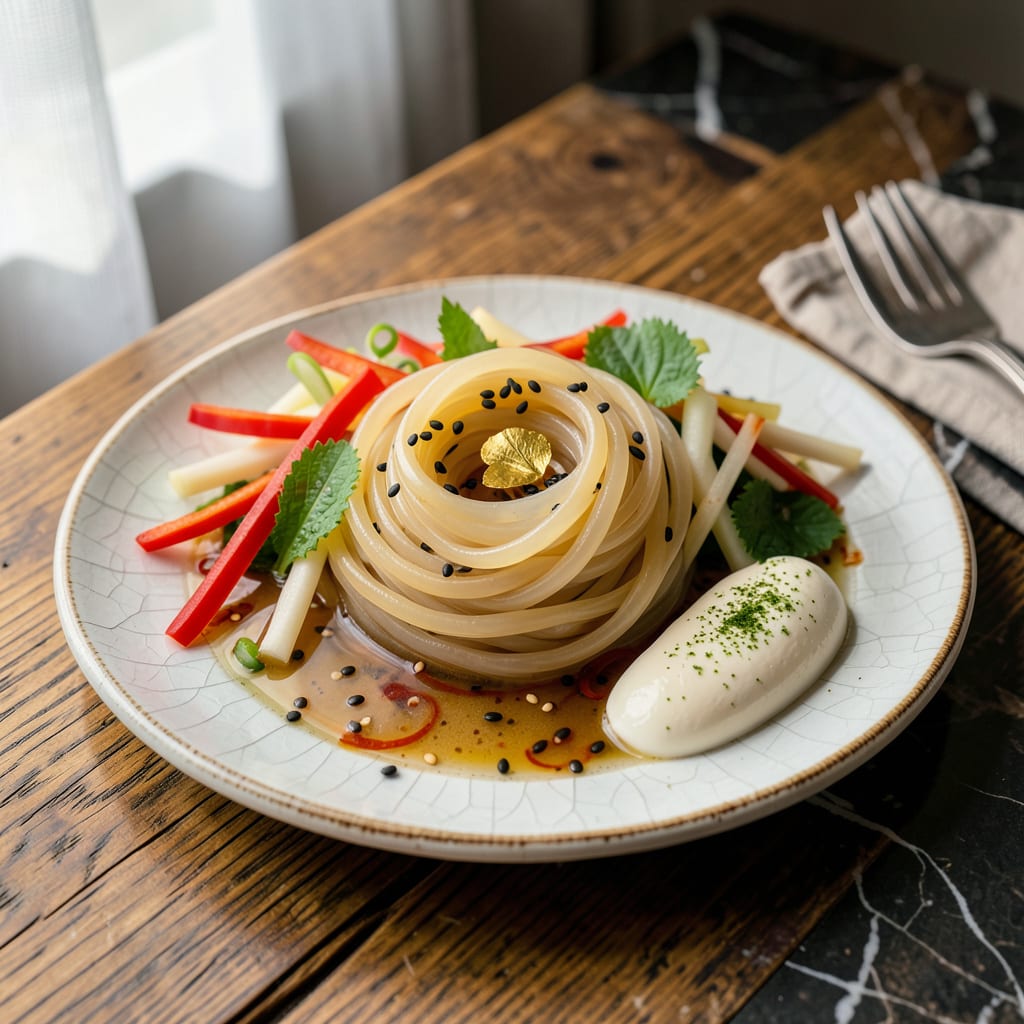
Potato starch is a versatile gluten-free thickener perfect for sauces, soups, and crispy fried foods. Use 1-2 tablespoons to thicken liquids or as a coating for extra-crispy textures in frying and baking.
What sets this ingredient apart is its ability to create that coveted restaurant-style crunch without gluten. 🔥 I’ve found it works particularly well in Asian-inspired dishes where you want that light, airy crispness that holds up even after frying. The secret lies in its high gelatinization temperature—it stays stable at higher heats where cornstarch might break down.
For sauces, it delivers a silky texture without that gummy aftertaste you sometimes get with other starches. I always keep some on hand for emergency gravy fixes or when I need to thicken a soup at the last minute. Just remember to mix it with cold liquid first to prevent clumping. ✨
💡 In This Article
- How Potato Starch Works in Cooking and Baking
- Top 5 Must-Try Potato Starch Recipes for Every Kitchen
How Potato Starch Works in Cooking and Baking
The magic of potato starch lies in its unique molecular structure. When heated with liquids, its long-chain molecules absorb water and swell dramatically—a process called gelatinization. What makes it special is its higher gelatinization temperature (140-149°F) compared to cornstarch (136-144°F).
This means it stays stable at higher cooking temperatures without breaking down, giving you that perfect consistency even in prolonged cooking. 🔥
For crispy applications, potato starch creates a more delicate, lacy crust than cornstarch. The key difference is in the granule size—potato starch granules are larger and more irregular, which translates to a lighter, airier texture when fried.
When used in coatings (like for fried chicken), it forms a network that expands during frying, creating those beautiful bubbles and ridges that stay crispy longer. I’ve found a 1:1 ratio of potato starch to flour gives the best balance of crunch and structure. ✨
The science gets even more interesting with sauces. Potato starch produces a remarkably clear, glossy finish because its molecules don’t retrogradate (revert to their original form) as quickly as other starches. This means your gravies and sauces stay smooth and silky for hours.
For best results, always mix it with cold liquid first (1 tablespoon per cup of liquid) to prevent clumping, then gradually heat. The thickening power is about twice as strong as wheat flour, so you’ll need less. 💫
Heat tolerance is where potato starch truly shines. It maintains its structure up to 203°F, while cornstarch starts breaking down around 185°F. This makes it ideal for dishes that require extended cooking or reheating. I particularly love using it in fruit pie fillings because it holds up beautifully during baking without turning gummy.
The neutral flavor also means it won’t compete with your other ingredients. ⚡
There’s also the moisture factor to consider. Potato starch absorbs and releases moisture differently than other starches, which is why it creates that perfect crispy-yet-tender contrast in fried foods. When used in baking (like in gluten-free bread), it helps retain moisture while still providing structure.
The general rule I follow is 1-2 tablespoons per cup of flour in baked goods for optimal texture without gumminess. 🌟
One pro tip I’ve learned: potato starch works best when added at the end of cooking for sauces. Unlike flour that needs cooking time to lose its raw taste, potato starch activates almost instantly when heated. This gives you more control over your final texture.
For frying applications, double-dipping in potato starch (with a 5-minute rest between dips) creates an extra-crispy, shatteringly thin crust that’s hard to achieve with other starches. 💛

- BBQ Sausage Recipe Oven: Smoky Depth Without the Grill - September 28, 2026
- BBQ Chicken Bowl Recipe Rice: Smoky Sweetness Over Fluffy Grains - September 28, 2026
- Beef Cutlet Recipe Ideas: Crispy Breaded Patties With Bold Seasonings - September 28, 2026