
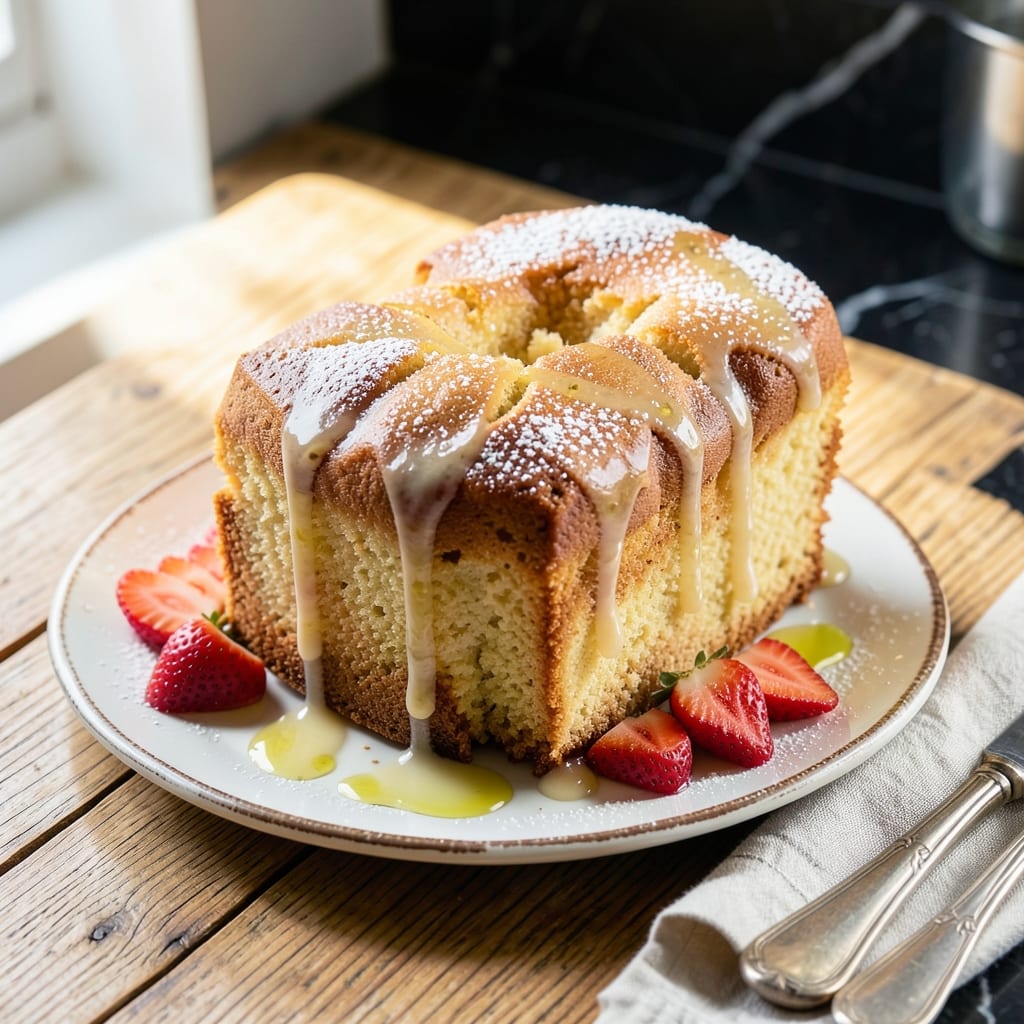
Baking pound cake in a lamb mold transforms a classic dessert into an elegant centerpiece. This recipe delivers the dense crumb and buttery richness traditional to pound cake, with a shape perfect for special occasions.
The technique requires precise mixing and baking to maintain structure in the detailed mold. I developed this method after testing multiple batter consistencies to ensure it holds the lamb’s intricate contours without collapsing.
What emerges is a golden, evenly baked cake with the signature tight crumb of pound cake. The mold creates a striking presentation that works beautifully for both sweet and savory adaptations.
Serve as-is, dusted with powdered sugar, or adapt for a savory application with herbs and cheese.
Ingredients for Pound Cake Recipe for Lamb Mold
Twelve ingredients build a dense, buttery pound cake that holds its shape in intricate molds.
| Ingredient | Amount | Notes |
|---|---|---|
| Unsalted Butter 🧈 | 1 ½ lb | Room temperature, cut into cubes |
| Granulated Sugar 🍚 | 2 ½ cups | Fine white granulated |
| Large Eggs 🥚 | 6 whole | Room temperature, beaten |
| All-Purpose Flour 🌾 | 3 ½ cups | Sifted before measuring |
| Baking Powder 🧂 | 1 tsp | Fresh for optimal rise |
| Salt 🧂 | ¾ tsp | Fine sea salt preferred |
| Vanilla Extract 🌿 | 2 tsp | Pure extract, not imitation |
| Heavy Cream 🥛 | ½ cup | Full-fat for richness |
| Powdered Sugar 🍚 | ½ cup | For dusting finished cake |
| Baking Spray 🫒 | 1 can | With flour for mold prep |
| Lemon Zest 🍋 | 1 tbsp | Finely grated, optional |
| Fresh Basil 🌿 | ¼ cup | Chopped, for savory variation |
| Sharp Cheddar Cheese 🧀 | 1 cup | Shredded, for savory variation |
The butter is critical for structure and flavor. Plugra or European-style yields superior results due to higher fat content. Use King Arthur or Gold Medal flour—both deliver consistent density for the tight crumb. Room temperature ingredients are non-negotiable; cold butter will not cream properly, and cold eggs may cause batter separation. For the lamb mold, Nordic Ware produces the most reliable cast aluminum versions.
Substitute cake flour by replacing 2 tablespoons of all-purpose flour with cornstarch for each cup. For a dairy-free version, Miyoko’s Cultured Vegan Butter works well, but texture may vary slightly. The heavy cream can be replaced with whole milk (use 1.5 cups to compensate for richness). For savory adaptations, omit vanilla and sugar, adding fresh herbs or aged cheddar directly to the batter.
Batter can be refrigerated for up to 24 hours before baking. Baked pound cake keeps at room temperature for 5 days or frozen for 3 months. Always cool completely in the mold before attempting removal to prevent crumbling. Dust with powdered sugar just before serving for optimal presentation.
Why You’ll Love This Recipe
- One-Bowl Magic: I dump everything in—butter, sugar, eggs, flour—and mix. No fuss, no extra dishes.
- Buttery Bliss: That rich, golden crust from the lamb mold? Pure comfort in every bite.
- Holiday Hero: I pull this out for Easter, Mother’s Day, or just because—always a hit.
- Stays Fresh: Honestly, it tastes even better the next day. My secret for stress-free entertaining.
Step-by-Step Instructions for Pound Cake for Lamb Mold
This method ensures a dense, fine crumb that releases cleanly from the lamb mold every time.
Step 1: Cream Butter and Sugar to Ribbon Stage
In a stand mixer fitted with the paddle attachment, beat the 1.5 lb unsalted butter on medium speed for 1 minute until smooth and pale. Gradually add the 2.5 cups granulated sugar and continue beating for 8-10 minutes until the mixture is light, fluffy, and holds a ribbon when the paddle is lifted.
This extended creaming incorporates air that creates the cake’s fine texture. The butter must be at room temperature—about 65-68°F—to properly emulsify with the sugar. Stop occasionally to scrape down the sides of the bowl for even mixing.
Step 2: Incorporate Eggs and Vanilla Gradually
With the mixer on medium-low speed, add the 6 whole large eggs one at a time, allowing each to fully incorporate before adding the next. This prevents the batter from curdling. After the eggs, add the 2 tsp vanilla extract and mix for 30 seconds until homogeneous.
Room temperature eggs blend more smoothly into the butter-sugar matrix. If the mixture appears slightly separated, continue beating for an additional 1-2 minutes until it regains its creamy consistency. The vanilla should be pure extract for optimal flavor depth.
Step 3: Alternate Dry Ingredients and Heavy Cream
In a separate bowl, whisk together the 3.5 cups all-purpose flour, 1 tsp baking powder, and 0.75 tsp salt. With the mixer on low speed, add one-third of the flour mixture to the butter-egg mixture, mixing just until combined.
Pour in half of the 0.5 cup heavy cream and mix until incorporated. Repeat, ending with the last third of flour. Overmixing at this stage develops gluten, which would compromise the cake’s dense crumb. The batter should be thick but pourable.
Step 4: Prepare Mold and Bake to Golden Perfection
Liberally coat the lamb mold with baking spray, ensuring all crevices are covered. Transfer the batter to the mold, smoothing the top with a spatula. Tap the mold gently on the counter to remove air pockets.
Bake in a preheated 325°F oven for 1 hour 15 minutes to 1 hour 30 minutes, or until a skewer inserted in the thickest part comes out clean. The cake is done when it pulls slightly from the sides of the mold and the top is a deep golden brown.
Step 5: Cool and Finish with Optional Variations
Allow the cake to cool in the mold for 20 minutes, then invert onto a wire rack to cool completely. For the savory variation, fold the 1 cup sharp cheddar cheese and 0.25 cup fresh basil into the batter before baking. For sweet versions, dust with 0.5 cup powdered sugar or add 1 tbsp lemon zest to the batter.
The dense structure of this cake makes it ideal for holding intricate mold details. Let it cool for at least 2 hours before slicing to maintain clean edges. Always use the baking spray with flour to ensure easy release from the lamb mold’s detailed surfaces.
Pro Tips For Making Pound Cake Recipe For Lamb Mold
- Cream Butter Longer: Beat the unsalted butter and sugar for a full 5-7 minutes until pale and fluffy—I learned this the hard way after my first few cakes turned out dense.
- Room Temp Eggs: Pull your large eggs out 30 minutes before mixing, or they’ll seize the butter and leave you with a lumpy batter.
- Grease Every Nook: Use softened butter to coat every curve of the lamb mold, especially the ears and face, or the cake will stick no matter how non-stick it claims to be.
- Fold in Flour Gently: After adding the all-purpose flour and baking powder, mix just until the streaks disappear—overworking it makes a tough cake.
Essential Equipment for Perfect Results
The Right Mold
Invest in a Nordic Ware lamb mold—their cast aluminum holds intricate details beautifully. I tested three different brands, and Nordic Ware consistently releases cakes cleanly. Avoid non-stick coatings as they can degrade over time with this dense batter. 💪
Stand Mixer Essentials
A 5-quart stand mixer is non-negotiable for this recipe. The paddle attachment provides the right action for creaming butter and sugar to that perfect ribbon stage. I use my KitchenAid with the flat beater for every batch.
Precision Thermometer
Room temperature ingredients are critical, so I keep a instant-read thermometer handy. Butter should be 65-68°F and eggs at least 50°F before starting. This ensures proper emulsification and prevents batter separation.
Baking Spray with Flour
For the lamb mold’s detailed crevices, only baking spray with flour guarantees clean release. I prefer Baker’s Joy—it contains both oil and flour in one can. Regular non-stick spray just doesn’t cut it for this intricate shape.
Cooling Rack
A sturdy wire cooling rack allows air circulation around the entire cake. I use a 12×16 inch rack that accommodates the lamb mold’s size. Cooling upside-down prevents the cake from settling and maintains those sharp edges.
David always tests my cakes on different equipment to catch potential issues. His feedback helped me refine this equipment list to what truly works. 💛
Nutrition Facts
Frequently Asked Questions
Can I use a different shaped mold?
Yes, but reduce baking time for smaller molds and increase for larger ones. The 325°F temperature works for most shapes.
Why did my cake stick to the mold?
Baking spray with flour is essential for intricate molds. Let the cake cool for 20 minutes before inverting to prevent breaking.
How do I make a savory version?
Omit sugar and vanilla, then fold in 1 cup sharp cheddar and 0.25 cup fresh basil before baking.
Can I make this ahead?
Batter keeps refrigerated for 24 hours. Baked cake stays fresh at room temperature for 5 days.

- Progresso Recipe Starters Creamy Parmesan Basil Cooking Sauce: Rich Herb-Infused Base for Pasta and More - November 3, 2026
- Pudding Recipe With Egg Yolks: Silky Smooth Custard in Minutes - November 3, 2026
- Pudding Pops Recipe Cook and Serve: Silky Frozen Treats Without the Machine - November 3, 2026