
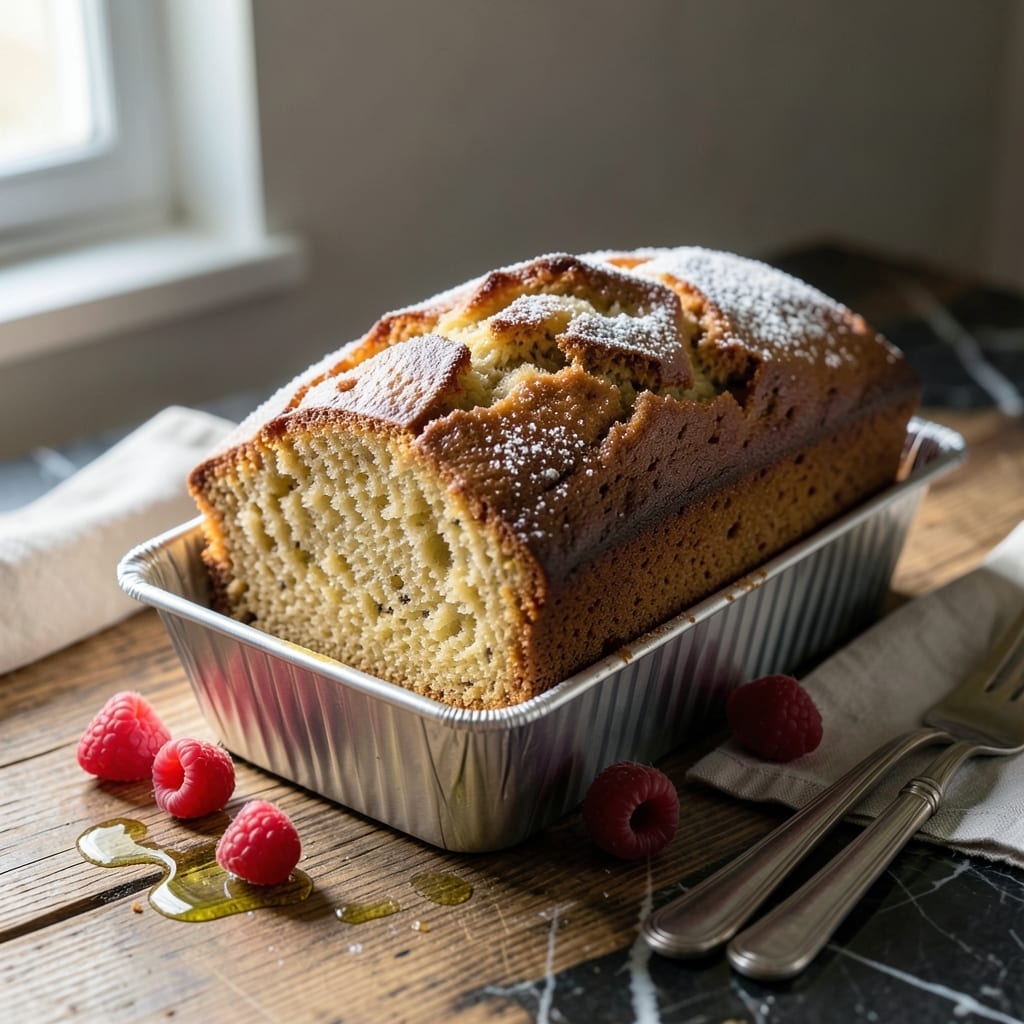
There’s a reason pound cake has stood the test of time—its dense, buttery simplicity is impossible to resist. This version bakes beautifully in a standard loaf pan for that classic golden crust.
I learned early that the magic lies in the ratio: equal parts butter, sugar, eggs, and flour. No fancy techniques, just precise measurements and a steady oven. The result is a cake that’s moist yet sturdy, perfect for slicing.
You’ll love how this recipe transforms basic ingredients into something extraordinary. The crust forms a delicate, slightly crisp layer while the interior stays tender and rich.
Serve it plain, dusted with powdered sugar, or topped with fresh berries. It’s versatile enough for any occasion.
Ingredients for Pound Cake Recipe Loaf Pan
Just butter, sugar, eggs, flour, and a few extras for that perfect loaf.
| Ingredient | Amount | Notes |
|---|---|---|
| Unsalted Butter 🧈 | 1 lb | Room temperature, high-fat preferred |
| Granulated Sugar 🍚 | 2 cups | Fine grain for even distribution |
| Large Eggs 🥚 | 4 whole | Room temperature for best volume |
| All-Purpose Flour 🌾 | 2 cups | Sifted for lightness |
| Baking Powder 🧂 | 1 tsp | Fresh for optimal rise |
| Vanilla Extract 💧 | 1 tbsp | Pure extract for best flavor |
| Salt 🧂 | ½ tsp | Fine sea salt preferred |
| Whole Milk 🥛 | ¼ cup | Room temperature for smooth batter |
| Lemon Zest 🍋 | 1 tbsp | Freshly grated for brightness |
| Powdered Sugar 🍚 | ¼ cup | For dusting (optional) |
Butter quality matters here—Plugra or European-style gives you that rich, velvety texture you can’t fake. The sugar should be fine grain so it dissolves evenly. King Arthur Flour is my go-to for all-purpose, but any trusted brand works. Don’t skip the room temperature rule for the butter and eggs (they cream together better, promise).
No vanilla extract? Vanilla bean paste adds speckles and depth, but it’s pricier. Out of milk? Buttermilk at the same amount actually makes it richer. Swap the lemon zest for orange if that’s what you’ve got. The baking powder is non-negotiable though—old stuff loses its oomph (test by dropping a pinch in hot water; it should bubble vigorously).
The batter keeps in the fridge for 24 hours if you want to prep ahead. Baked cake stays fresh wrapped at room temp for 4 days, or freeze slices for 3 months. Dust with powdered sugar just before serving (it dissolves otherwise).
Why You’ll Love This Recipe
- I’ll be real: this loaf tastes just as good on day three as it did fresh from the oven.
- One Bowl Magic: I just cream the butter and sugar, toss in the eggs, then the flour—no fancy steps, no extra bowls.
- Buttery Richness: That unsalted butter and sugar combo gives it a velvety texture that’s hard to resist.
- Tea Time Hero: Honestly, it’s my go-to for brunch, dessert, or even a midnight snack with a cup of coffee.
Step-by-Step Instructions for Pound Cake in a Loaf Pan
This method guarantees that dense, buttery texture with a perfect golden crust every time.
Step 1: Cream the Butter and Sugar to Perfection
In a stand mixer fitted with the paddle attachment, beat the 1 lb Unsalted Butter on medium-high speed until it’s pale and fluffy, about 3-4 minutes. You want the butter to look almost white and have a light, airy texture.
Gradually add the 2 cups Granulated Sugar, beating for another 5-7 minutes until the mixture is light and ribbony. This step is crucial—it incorporates air that gives your cake that classic fine crumb. Scrape down the sides of the bowl occasionally to ensure everything is well combined.
Step 2: Incorporate Eggs and Flavorings
Add the 4 whole Large Eggs one at a time, mixing well after each addition and scraping the bowl as needed. I always crack my eggs into a separate bowl first to avoid any shell mishaps. After the eggs, beat in the 1 tbsp Vanilla Extract and 1 tbsp Lemon Zest.
The mixture might look slightly curdled at first, but don’t worry. Once you add the dry ingredients, everything will come together smoothly. The lemon zest adds a subtle brightness that cuts through the richness of all that butter.
Step 3: Combine Dry Ingredients and Alternate with Milk
In a separate bowl, whisk together the 2 cups All-Purpose Flour, 1 tsp Baking Powder, and 0.5 tsp Salt. This ensures the leavening agent is evenly distributed throughout the flour.
With the mixer on low speed, add the dry ingredients in three additions, alternating with the 0.25 cup Whole Milk in two additions. Begin and end with the flour mixture. Mix just until combined—overmixing will develop the gluten and result in a tough cake. The batter should be thick but pourable.
Step 4: Bake to Golden Perfection
Pour the batter into a greased 9×5-inch loaf pan. Smooth the top with a spatula and tap the pan gently on the counter to remove any large air bubbles. Place the pan in the center of a preheated 325°F oven.
Bake for 1 hour to 1 hour 15 minutes, or until a toothpick inserted into the center comes out clean. The top should be deep golden brown and slightly domed. If the top begins to brown too quickly, tent the pan loosely with aluminum foil to prevent over-browning while the center finishes cooking.
Step 5: Cool and Finish
Remove the cake from the oven and let it cool in the pan for 15 minutes. This allows the cake to set slightly, making it easier to remove from the pan without breaking. After 15 minutes, carefully turn the cake out onto a wire rack to cool completely.
Once completely cooled, dust the top with the 0.25 cup Powdered Sugar if desired. I like to use a fine-mesh sieve for an even, professional-looking dusting. Let the cake rest for at least 1 hour before slicing to allow the flavors to meld together beautifully.
Pro Tips For Making Pound Cake Recipe Loaf Pan
- Cream Butter Longer: Beat the unsalted butter and sugar for a full 5 minutes—it should look pale and fluffy, like whipped cream. I learned this the hard way after my first few cakes turned out dense.
- Room Temp Eggs: Pull your large eggs out 30 minutes before baking so they mix evenly into the batter. Cold eggs can cause the butter to clump, and nobody wants a lumpy pound cake.
- Don’t Overmix Flour: Fold in the all-purpose flour just until the streaks disappear—overmixing develops gluten, which turns your cake tough instead of tender.
- Test with a Skewer: Start checking for doneness at 50 minutes by inserting a skewer into the center—if it comes out clean or with a few dry crumbs, it’s done. After burning one batch, I finally realized my oven runs hot.
Regional Styles of pound cake recipe loaf pan
Southern Style
In the South, we often add a touch of buttermilk for extra moisture and tang. Replace the ¼ cup whole milk with buttermilk and add ½ tsp baking soda to balance the acidity. This version stays incredibly tender for days. 💛
French Quatre Quarts
The French version uses equal weights of butter, sugar, eggs, and flour—about 7 oz each. They also add 1 tbsp dark rum or orange flower water for a sophisticated twist. Bake in a 8×4-inch pan for a slightly denser texture.
British Version
Across the pond, they often make pound cake with self-rising flour and omit the baking powder. Some recipes include 1 tsp almond extract alongside vanilla for depth. The British prefer a lighter, slightly less buttery result.
New England Variation
In New England, I’ve seen recipes that incorporate sour cream—about ½ cup—for extra richness. They also tend to use brown sugar for half the granulated sugar, giving a subtle caramel note. Perfect with a cup of tea.
Mediterranean Touch
Inspired by my Sicilian roots, I sometimes add 1 tsp orange blossom water and ½ cup finely chopped pistachios. The floral note pairs beautifully with the buttery base. Dust with powdered sugar and a pinch of cinnamon for warmth. ✨
Midwest Classic
Midwestern bakers often include ½ cup crushed pineapple (well drained) for moisture and a hint of tropical flavor. This version is popular at church potlucks and stays moist for up to 5 days when wrapped tightly.
Nutrition Facts
Frequently Asked Questions
What size loaf pan should I use?
A standard 9×5-inch loaf pan works perfectly. Avoid smaller pans as the batter may overflow during baking.
Why did my cake sink in the middle?
This usually means the center wasn’t fully baked. Always check with a toothpick—it should come out clean. Also, avoid opening the oven door too early.
Can I use a glass loaf pan?
Yes, but reduce the oven temperature by 25°F as glass heats differently. Bake for the same time and check for doneness.
How do I prevent a dense texture?
Cream the butter and sugar thoroughly for at least 5-7 minutes to incorporate air. Overmixing the batter after adding flour can also cause density.

- Protein Pudding Recipe With Sugar Free Pudding: High-Protein Creamy Indulgence - November 3, 2026
- Progresso Recipe Starters Creamy Parmesan Basil Cooking Sauce: Rich Herb-Infused Base for Pasta and More - November 3, 2026
- Pudding Recipe With Egg Yolks: Silky Smooth Custard in Minutes - November 3, 2026