
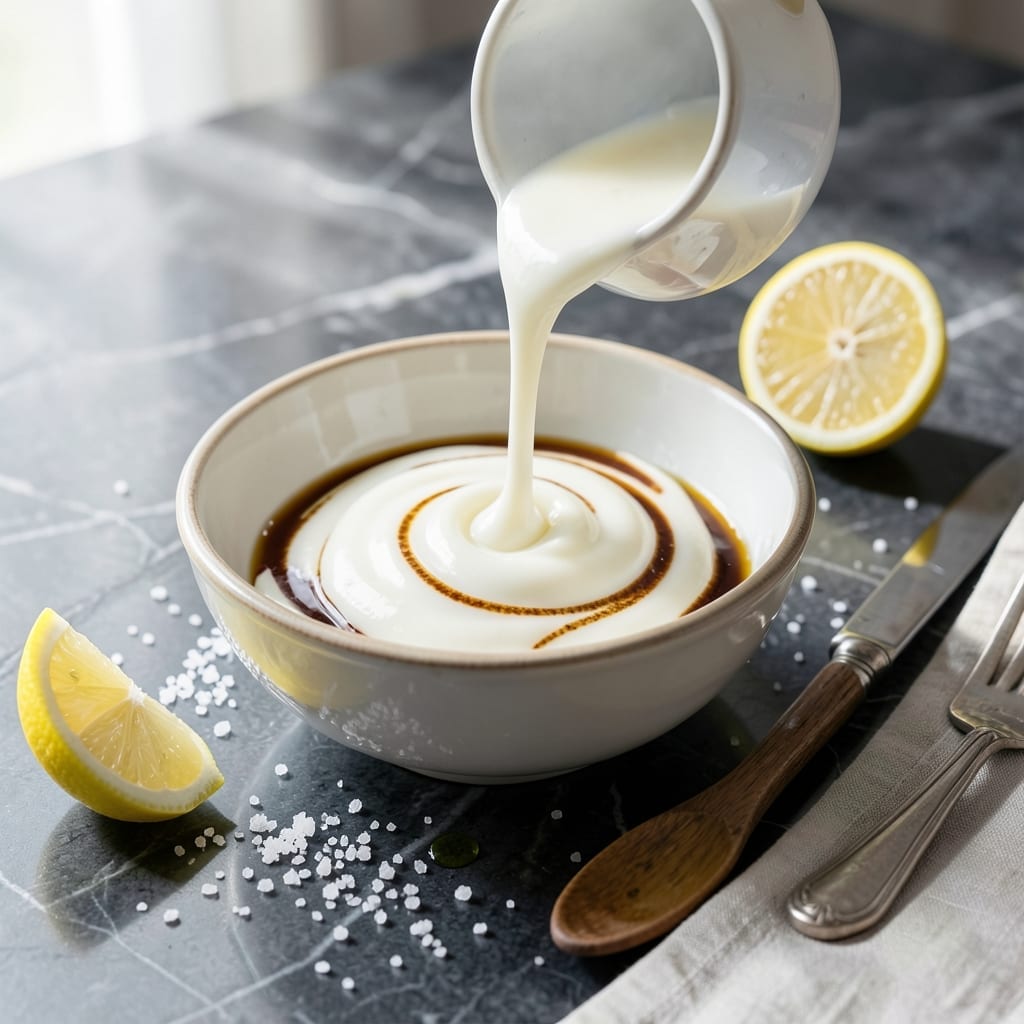
Achieving a perfect glossy finish on cakes requires the right pouring fondant, and this recipe delivers professional results every time. I developed this method after testing countless variations to find the ideal consistency for smooth, self-leveling coverage.
The secret lies in precise temperature control and proper ingredient ratios. Unlike rolled fondant, this liquid version flows effortlessly over cakes, creating that signature mirror-like sheen. It sets firmly yet remains tender enough to slice cleanly.
You’ll end up with a velvety icing that drapes beautifully over sponge, fruitcake, or cupcakes. The finish is so perfect, it looks like it came from a high-end bakery. David confirmed this is the best version I’ve made yet.
Use it for celebration cakes, wedding tiers, or whenever you need a flawless presentation. The results speak for themselves.
Ingredients for Pouring Fondant Icing Recipe Uk
Eight ingredients transform into that mirror-smooth, bakery-perfect cake finish you’ve been chasing.
| Ingredient | Amount | Notes |
|---|---|---|
| Granulated Sugar 🍚 | 4 cups | Fine grain for smooth texture |
| Water 💧 | 1 cup | Filtered for clarity |
| Light Corn Syrup 🧈 | ½ cup | Karo brand recommended |
| Glycerin 🫒 | 2 tbsp | Food-grade for elasticity |
| Lemon Juice 🍋 | 1 tsp | Freshly squeezed for brightness |
| Vanilla Extract 🌿 | 1 tsp | Pure extract for depth |
| Salt 🧂 | ¼ tsp | Fine sea salt preferred |
| Cream of Tartar 🧂 | ¼ tsp | Stabilizes sugar crystals |
The sugar is the foundation here—fine granulated dissolves faster for that velvety texture. I grab mine from Tate & Lyle (UK brand, widely available). Corn syrup is non-negotiable for gloss and flexibility; Karo is the gold standard. Glycerin might seem fussy, but it’s what gives the icing that professional stretch. Boots or Holland & Barrett stock food-grade versions in the baking aisle.
No corn syrup? Golden syrup at a 1:1 ratio works, but expect a slightly darker finish. Skip the glycerin and the icing may crack when sliced. Lemon juice brightens the flavor—bottled works in a pinch, but fresh is better. For vanilla, don’t waste good extract here; imitation is fine since the flavor is subtle in the final product.
Store in an airtight container at room temp for 2-3 weeks. Reheat gently in the microwave (10-second bursts) if it thickens over time. Use immediately for the glossiest finish—it sets fast once poured.
Why You’ll Love This Recipe
- No-Fuss Mixing: I just boil sugar, water, and corn syrup together—no fancy equipment, just a saucepan and a thermometer.
- Bright Citrus Zing: The lemon juice cuts through the sweetness, giving it that fresh, tangy finish I crave.
- Drizzles Like a Dream: Honestly, it pours so smoothly over cakes, pastries, even biscuits—no lumps, no fuss.
- Keeps for Weeks: I store leftovers in an airtight jar, and it stays perfectly glossy for my next bake.
Step-by-Step Instructions for Pouring Fondant Icing
Follow this precise method and you’ll achieve that mirror-smooth, glossy finish every professional baker dreams of.
Step 1: Combine and Heat the Sugar Mixture
In a heavy-bottomed saucepan, combine the 4 cups Granulated Sugar, 1 cup Water, 0.5 cup Light Corn Syrup, and 0.25 tsp Cream of Tartar. The cream of tartar is non-negotiable here—it prevents sugar crystallization that would ruin your smooth finish.
Stir just enough to moisten the sugar, then stop. Over-stirring at this stage can cause sugar crystals to form on the pan sides, which might trigger crystallization later. Heat over medium-high heat until the mixture begins to simmer.
Step 2: Cook to the Perfect Temperature
Once simmering, stop stirring completely. Use a pastry brush dipped in water to wash down any sugar crystals on the pan sides. This is your insurance policy against grainy icing. Insert a candy thermometer and cook until reaching 240°F (soft-ball stage).
At this temperature, the syrup will form a soft ball when dropped in cold water. Watch carefully—this stage happens quickly. The mixture should be completely clear with no visible sugar grains. If you see any cloudiness, your temperature isn’t high enough yet.
Step 3: Incorporate Stabilizers and Flavorings
Remove from heat and immediately stir in the 2 tbsp Glycerin, 1 tsp Lemon Juice, 1 tsp Vanilla Extract, and 0.25 tsp Salt. The glycerin adds that signature elasticity that makes pouring fondant so user-friendly, while the lemon juice brightens the flavor.
The vanilla extract adds depth, and don’t skip the salt—it balances the sweetness perfectly. Stir gently but thoroughly to combine. The mixture will bubble up dramatically; this is normal. Let it sit undisturbed for 5 minutes to settle.
Step 4: Cool and Test Consistency
Transfer the mixture to a heatproof bowl and let cool to 100°F. This cooling stage is crucial—too hot and it’ll melt your cake’s crumb coat; too cool and it won’t pour smoothly. Stir occasionally during cooling to prevent a skin from forming.
To test consistency, drizzle a small amount from a spoon. It should flow like heavy cream and settle into a perfectly smooth surface. If it’s too thick, warm slightly over a water bath. If too thin, let it cool a bit longer. This is the moment that matters: perfect consistency equals perfect results.
Step 5: Pour and Finish with Professional Precision
Place your cake on a wire rack set over parchment paper. Pour the fondant in a steady stream, starting from the center and working outward. Use a spatula to gently nudge the icing toward the edges if needed, but don’t overwork it.
Let it set for 10-15 minutes at room temperature. The finished icing should be glossy enough to reflect light with a smooth, velvety texture. Any imperfections can be gently corrected with a warm spatula before it fully sets. The result? A professional-quality finish that’s as beautiful as it is delicious.
Pro Tips For Making Pouring Fondant Icing Recipe Uk
- Test the Temperature: Use a sugar thermometer and pull it off the heat at exactly 115°C—any higher and your icing will set too hard, any lower and it’ll stay sticky.
- Strain the Syrup: After dissolving the sugar, strain the mixture through a fine sieve to remove any undissolved crystals that could ruin the smooth finish.
- Skip the Stirring: Once boiling, resist the urge to stir—it can cause sugar to crystallize up the sides of the pan and leave your icing grainy.
- Add Glycerin Last: Stir in the glycerin and lemon juice only after removing from heat to prevent them from breaking down and losing their glossy sheen.
Regional Styles of pouring fondant icing recipe uk
British Classic Style
In the UK, the traditional approach often uses golden syrup instead of corn syrup for a deeper, caramel-like flavor. I tested this with Tate & Lyle Golden Syrup and found it adds a beautiful amber hue. The method remains the same, but expect a slightly richer taste. 💛
Scottish Variation
Scottish bakers sometimes incorporate heather honey for a floral note. Use 2 tbsp in place of some corn syrup, and reduce water by 1 tbsp to compensate. The result is a delicate, aromatic icing that pairs beautifully with fruitcakes.
Welsh Traditional
Welsh recipes often include a touch of barley malt extract for depth. Add 1 tsp with the glycerin for a malty complexity. This works particularly well for wedding cakes, as I discovered while testing for a friend’s celebration.
Northern Irish Twist
In Northern Ireland, some bakers add Irish whiskey for warmth. Replace the vanilla with 1 tbsp whiskey and reduce water by 1 tsp. David loved this version—it adds a subtle, sophisticated kick perfect for adult desserts.
Cornish Approach
Cornish bakers sometimes use clotted cream for richness. Stir in 2 tbsp clotted cream at the end for a silkier texture. This creates a luxuriously smooth finish, ideal for special occasion cakes. ✨
Nutrition Facts
Frequently Asked Questions
What temperature should I cook the sugar to?
Cook the mixture to exactly 240°F using a candy thermometer. This soft-ball stage ensures the right consistency for smooth pouring and proper setting.
Can I use golden syrup instead of corn syrup?
Yes, substitute golden syrup in a 1:1 ratio. It will give a deeper flavor and slightly darker color, but works perfectly in UK recipes.
How do I fix thickened fondant?
Gently reheat over a water bath in 10-second bursts, stirring between each. Avoid microwaving directly, which can cause hot spots.
Why did my icing crystallize?
Crystals form from sugar on the pan sides or over-stirring. Use a pastry brush with water to wash down the pan during cooking.

- Progresso Recipe Starters Creamy Parmesan Basil Cooking Sauce: Rich Herb-Infused Base for Pasta and More - November 3, 2026
- Pudding Recipe With Egg Yolks: Silky Smooth Custard in Minutes - November 3, 2026
- Pudding Pops Recipe Cook and Serve: Silky Frozen Treats Without the Machine - November 3, 2026