
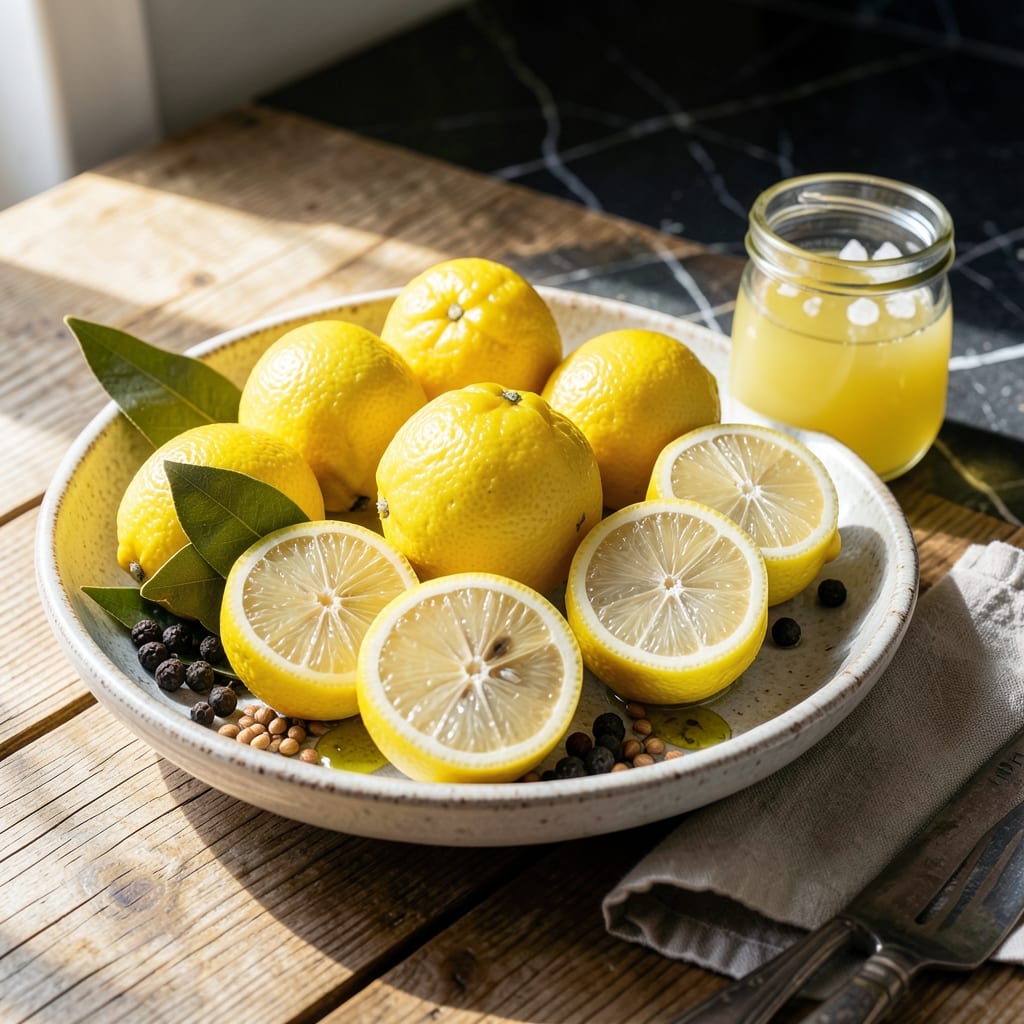
Preserved lemons transform ordinary dishes with their unique zesty, briny depth. This method captures the fruit’s essence through a simple salt-and-time process.
The technique involves packing lemons with salt, submerging them in their own juice, and letting them ferment for weeks. The result is a versatile condiment that elevates both sweet and savory recipes.
Once cured, these lemons add a bright, complex flavor to dressings, marinades, or desserts. Their soft rind and mellow tang make them a game-changer in the kitchen.
Store them in a cool, dark place for up to a year, ready to enhance any dish with minimal effort.
Ingredients for Preserved Lemon Recipe Ideas
Seven ingredients capture bright citrus essence through salt and time fermentation.
| Ingredient | Amount | Notes |
|---|---|---|
| Lemons 🍋 | 6 whole | Organic, thoroughly washed |
| Kosher Salt 🧂 | ½ cup | Diamond Crystal preferred |
| Lemon Juice 🍋 | ½ cup | Freshly squeezed, additional as needed |
| Bay Leaves 🍃 | 2 whole | Dried, for aromatics |
| Black Peppercorns 🌶️ | 1 tbsp | Whole, lightly crushed |
| Coriander Seeds 🌿 | 1 tsp | Optional, for depth |
| Water 💧 | ¼ cup | Filtered, as needed |
The lemons are everything here. Organic is essential—conventional ones have wax coatings that inhibit fermentation. Look for firm, heavy fruit with smooth, vibrant skin. Diamond Crystal kosher salt is the gold standard for even curing without bitterness. A wide-mouth quart jar works best for packing. I source mine from Ball or Le Parfait for reliable sealing.
No kosher salt? Sea salt at the same volume works, but avoid iodized—it can discolor the lemons. Skipping bay leaves? A cinnamon stick or cardamom pod adds nice complexity. The peppercorns can be swapped for pink peppercorns or allspice berries. If your lemons aren’t juicy enough to submerge, top up with filtered water (never tap).
Fully cured lemons keep in a cool, dark place for up to a year. Once opened, transfer to the fridge and cover with extra brine to extend their life. The rind softens beautifully over 3-4 weeks—don’t rush the process.
Why You’ll Love This Recipe
- 5-Minute Prep: I just slice lemons, pack them with salt, and let time do the rest—no fancy techniques needed.
- Sunburst in a Jar: That briny tang with hints of bay and peppercorns brightens everything from tagines to salads.
- Pantry MVP: Honestly, I toss preserved lemon into marinades, dressings, or even hummus for an instant flavor boost.
- Stretches the Budget: A single jar lasts months, so I’m always ready to upgrade a dish without another grocery run.
Step-by-Step Instructions for Preserved Lemons
This traditional fermentation method transforms fresh citrus into a versatile, long-lasting pantry staple.
Step 1: Prepare and Sterilize the Lemons
Begin by thoroughly washing the 6 whole Lemons under warm water to remove any wax or debris. I use organic lemons for this process as their peels are thinner and more flavorful. Pat them completely dry with a clean kitchen towel—any residual moisture can dilute the preserving solution.
Lightly score each lemon from stem to blossom end, cutting just deep enough to open the fruit without separating the halves. This allows the preserving mixture to penetrate while keeping the lemons intact for presentation.
Step 2: Create the Preserving Mixture
In a small saucepan, combine the 0.5 cup Kosher Salt, 0.5 cup Lemon Juice, 0.25 cup Water, 2 whole Bay Leaves, 1 tbsp Black Peppercorns, and 1 tsp Coriander Seeds. Heat over medium heat just until the salt dissolves completely and the liquid becomes clear and fragrant.
Remove from heat and let cool to room temperature. The mixture should taste aggressively salty—this high concentration is what preserves the lemons and prevents spoilage. The spices will infuse subtle complexity into the final product.
Step 3: Pack and Submerge the Lemons
Pack the prepared lemons tightly into a clean, 1-quart mason jar, squeezing them slightly to fit. Pour the cooled preserving mixture over the lemons, ensuring they are completely submerged. I often add a small glass weight or a zip-top bag filled with water to keep the lemons below the liquid surface.
Leave at least ½ inch of headspace at the top of the jar to allow for expansion during fermentation. The lemons will release additional liquid as they cure, so don’t be concerned if they’re not fully covered initially.
Step 4: Ferment and Store
Seal the jar tightly and place it in a cool, dark location. Let the lemons ferment at room temperature for 3 days, shaking the jar daily to redistribute the liquid and spices. You’ll notice the peel beginning to soften and the liquid becoming slightly cloudy.
After the initial fermentation, transfer the jar to the refrigerator and let the lemons cure for at least 3 weeks before using. The peel will become tender and the flavor will mellow and develop complexity. Properly stored, these will keep for up to 6 months in the refrigerator.
The lemons are ready when the peel can be easily pierced with a fork and the preserving liquid has taken on a golden hue. The longer they cure, the more the flavors will meld and intensify.
Pro Tips For Making Preserved Lemon Recipe Ideas
- Slice the Lemons: Cut them into quarters almost all the way through, leaving them attached at the base—this keeps the juice contained while letting the salt penetrate evenly.
- Use Enough Salt: Pack at least 1/4 cup of kosher salt into each lemon, more if they’re large. I learned this the hard way when my first batch turned out bland.
- Submerge Completely: Push the lemons down into the jar so they’re fully covered by their own juice. Sounds weird, but it works: this prevents mold from forming on exposed surfaces.
- Wait 3 Weeks: Resist the urge to use them early. After burning through three batches too soon, I finally figured out that full fermentation takes a solid 21 days for that perfect tangy depth.
Creative Variations of preserved lemon recipe ideas
Moroccan Tagine Twist
Add 1 tsp ground cumin and ½ tsp cinnamon to your brine for North African flair. These preserved lemons pair perfectly with chicken tagines or couscous. The warm spices complement the citrus beautifully.
Mediterranean Herb Blend
Include 3 sprigs fresh thyme and 1 sprig rosemary in the jar. This variation shines in Greek salads or with roasted lamb. The herbs infuse the lemons with aromatic depth.
Spicy Harissa Kick
Stir in 1 tbsp harissa paste to the preserving liquid. These fiery lemons elevate hummus, grilled meats, or roasted vegetables. The heat builds gradually over the curing period. 🌶️
Sweet Citrus Fusion
Add 2 strips orange zest and 1 star anise pod to the brine. This version works wonders in desserts like lemon bars or with vanilla ice cream. The anise adds subtle licorice notes.
Garlic and Dill
Include 4 smashed garlic cloves and 1 tbsp dill seeds for a Eastern European touch. These lemons are fantastic with smoked fish or in potato salads. The garlic mellows during fermentation.
Smoked Paprika Style
Add 1 tsp smoked paprika to your brine mixture. This variation brings depth to Spanish dishes or grilled seafood. The smokiness pairs especially well with olive oil-based recipes. 💫
Nutrition Facts
Frequently Asked Questions
How long do preserved lemons last?
Properly stored in the fridge, they’ll keep for up to 6 months. The flavor intensifies over time, so longer curing yields deeper taste. Always ensure they stay submerged in brine.
Can I use regular table salt instead of kosher?
Avoid iodized salt—it can discolor the lemons. If using fine sea salt, reduce the amount by 25% since it’s denser. Diamond Crystal kosher salt is ideal for even curing.
What if my lemons aren’t fully covered in liquid?
Top up with additional filtered water or lemon juice to submerge them completely. A small weight (like a glass marble) helps keep them under the brine during fermentation.
How do I use the lemons once they’re ready?
Rinse off excess salt and use the rind (discard seeds). Finely chop and add to dressings, tagines, or desserts for a bright, tangy kick. The pulp works well in marinades.

- Protein Pudding Recipe With Sugar Free Pudding: High-Protein Creamy Indulgence - November 3, 2026
- Progresso Recipe Starters Creamy Parmesan Basil Cooking Sauce: Rich Herb-Infused Base for Pasta and More - November 3, 2026
- Pudding Recipe With Egg Yolks: Silky Smooth Custard in Minutes - November 3, 2026