
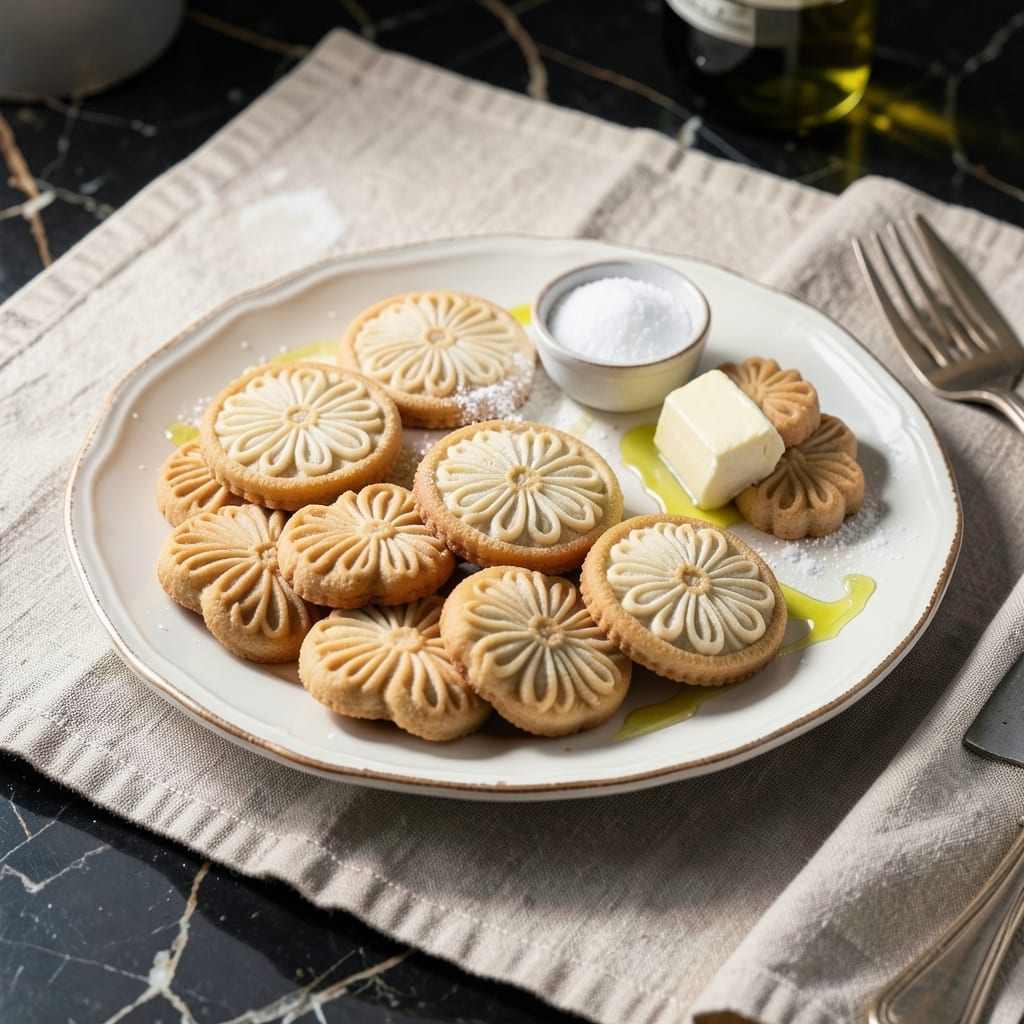
Pressed cookies offer a precise, elegant way to bake with consistent results every time. This method creates uniform patterns and crisp edges that look as good as they taste.
Using a cookie press allows you to shape dough quickly with intricate designs that hold their form during baking. The technique requires chilled dough and the right pressure for clean, professional-looking cookies.
The process is straightforward yet yields impressive results. You’ll achieve evenly baked treats with sharp details that stand out on any dessert tray.
Perfect for holidays, gifts, or everyday indulgence. The method ensures each batch matches the last in both appearance and texture.
Ingredients for Pressed Cookies Recipe and Procedure
These precise ingredients create elegant cookies with crisp edges and uniform designs every time.
| Ingredient | Amount | Notes |
|---|---|---|
| Unsalted Butter 🧈 | 1 cup | Room temperature, high-fat content preferred |
| Granulated Sugar 🍚 | ¾ cup | Fine grain for even distribution |
| Large Egg 🥚 | 1 whole | Room temperature for smooth incorporation |
| Vanilla Extract 🌿 | 1 tsp | Pure vanilla for optimal flavor |
| All-Purpose Flour 🌾 | 2 ½ cups | Sifted for fine texture |
| Baking Powder 🧂 | ½ tsp | Fresh for maximum leavening power |
| Salt 🧂 | ¼ tsp | Fine sea salt or table salt |
| Almond Extract 🌰 | ¼ tsp | Optional for depth of flavor |
| Lemon Zest 🍋 | 1 tsp | Freshly grated for brightness |
| Confectioners Sugar 🍬 | ½ cup | For dusting (optional garnish) |
The butter is critical here. Use a high-fat European-style butter like Plugrá or Kerrygold for superior texture and flavor. Room temperature is essential—cold butter won’t cream properly, and melted butter will make the dough greasy. The flour should be sifted to eliminate lumps, ensuring the dough presses smoothly through the cookie press. Most supermarkets carry these brands, but Whole Foods has a great selection.
No almond extract? Substitute with an equal amount of orange extract for a different but complementary flavor. For a nut-free version, simply omit it—the vanilla will still shine. If you’re out of confectioners’ sugar for dusting, granulated sugar pulsed in a blender works in a pinch. The lemon zest can be swapped for lime or orange zest if that’s what you have on hand.
Chilled dough is non-negotiable for clean pressing. Store dough in an airtight container in the fridge for up to 3 days, or freeze for 2 months. Baked cookies keep in a sealed container at room temperature for 1 week (though they rarely last that long).
Why You’ll Love This Recipe
- I’ll be real: I double the batch, press half, freeze the dough, and bake fresh cookies anytime I want.
- One Bowl Wonder: I mix everything in a single bowl—butter, sugar, vanilla, egg, flour—and it’s ready to press in minutes.
- Buttery Vanilla Bliss: The unsalted butter and real vanilla make these cookies rich and fragrant in a way store-bought just can’t match.
- Holiday Ready: I use my cookie press for wreaths at Christmas, but honestly, they’re just as welcome at a Tuesday tea.
Step-by-Step Instructions for Pressed Cookies
Master the technique for perfectly patterned cookies with crisp edges and consistent texture.
Step 1: Cream Butter and Sugars Thoroughly
In a stand mixer with paddle attachment, beat the 1 cup Unsalted Butter with the 0.75 cup Granulated Sugar on medium speed for 3-4 minutes. The mixture should become pale and fluffy, nearly doubling in volume.
This creaming process incorporates air, which creates the fine, delicate texture characteristic of pressed cookies. Scrape the bowl sides periodically with a silicone spatula to ensure even mixing. The butter should be at room temperature but not overly soft.
Step 2: Incorporate Egg and Flavorings
Add the 1 whole Large Egg and mix on low speed until fully emulsified. Then add the 1 tsp Vanilla Extract, 0.25 tsp Almond Extract, and 1 tsp Lemon Zest, mixing for an additional 20-30 seconds.
The zest adds a subtle brightness that balances the richness of the butter. I always use fresh zest rather than dried for maximum aromatic impact. The mixture should appear smooth and homogeneous at this stage.
Step 3: Combine Dry Ingredients and Form Dough
In a separate bowl, whisk together the 2.5 cups All-Purpose Flour, 0.5 tsp Baking Powder, and 0.25 tsp Salt. Gradually add this to the wet ingredients on low speed, mixing just until the flour disappears and the dough comes together.
Overmixing develops gluten, which would make the cookies tough rather than tender. The finished dough should be soft but not sticky. If it feels too warm, refrigerate for 15-20 minutes before pressing.
Step 4: Press and Chill for Definition
Load the dough into a cookie press fitted with your desired pattern. Press cookies onto ungreased baking sheets, spacing them 1-2 inches apart. For uniform thickness, maintain consistent pressure as you release the dough.
Refrigerate the pressed cookies for 20-30 minutes before baking. This chilling step is crucial—it prevents spreading and preserves the intricate patterns. The dough should feel firm to the touch when ready.
Step 5: Bake to Perfect Crispness
Preheat oven to 375°F. Bake for 8-10 minutes or until the edges are just beginning to turn light golden brown. The centers will still appear soft but will firm up as they cool.
Cool the cookies on the baking sheet for 2 minutes before transferring to a wire rack. Once completely cool, dust with 0.5 cup Confectioners Sugar if desired. The patterns should remain sharp and well-defined, with crisp edges and tender centers.
Pro Tips For Making Pressed Cookies Recipe And Procedure
- Chill the Dough: After mixing, refrigerate the dough for at least 30 minutes—I learned this the hard way when my first batch spread into a single, sad pancake.
- Soften Butter Right: Use butter that’s soft but not greasy, about 65°F; if it looks shiny or melts when touched, it’s too warm and your cookies will lose their shape.
- Press Evenly: Fill the cookie press no more than two-thirds full and press straight down, not at an angle, to keep the designs clean and consistent.
- Use Parchment Paper: Skip the ungreased sheets; parchment prevents sticking and makes cleanup a breeze, especially with these buttery, delicate cookies.
Wine and Beer Pairings for This Dish
Sweet Wine Pairings
A glass of Moscato d’Asti from Italy complements the buttery richness beautifully. Its light effervescence and notes of peach and apricot cleanse your palate between bites. I love serving this chilled at 45-50°F for the perfect finish. 🍷
Dessert Wine Options
For a more decadent pairing, try a Sauternes from Bordeaux. The honeyed sweetness and citrus undertones enhance the lemon zest in your cookies. A 3-ounce pour is all you need to elevate the experience.
Coffee Pairings
If you prefer non-alcoholic options, a light roast coffee with floral notes works wonderfully. The acidity cuts through the cookie’s richness while highlighting the vanilla flavor. I brew mine with Ethiopian Yirgacheffe beans for this purpose.
Beer Selections
A Belgian wheat beer like Hoegaarden offers a refreshing contrast with its citrusy profile and smooth finish. The effervescence helps balance the cookie’s texture. Serve at 40-45°F for optimal flavor. 🍺
Tea Alternatives
For tea lovers, a Earl Grey with its bergamot notes pairs surprisingly well. The citrus complements the lemon zest while the tannins cleanse your palate. Steep for exactly 3 minutes to avoid bitterness.
Hot Chocolate
On colder days, a rich dark hot chocolate made with 70% cocoa creates a cozy pairing. The bitterness contrasts the cookie’s sweetness beautifully. I add a pinch of cinnamon for extra warmth. ✨
Nutrition Facts
Frequently Asked Questions
Why does my dough stick to the cookie press?
Your dough may be too warm or too soft. Chill it for 15-20 minutes before pressing. If it still sticks, lightly dust the press with powdered sugar or flour.
Can I use margarine instead of butter?
Margarine can work, but the flavor and texture won’t match. Butter’s fat content creates the crisp edges and rich taste. For best results, stick with room-temperature butter.
How do I get sharp, clean designs?
Chill your dough thoroughly and press onto ungreased, cool baking sheets. Apply even pressure and release the press cleanly without dragging.
Why do my cookies lose their shape while baking?
This usually happens if the dough wasn’t chilled long enough or the oven temperature is too low. Ensure your oven is preheated to 375°F and chill pressed cookies for 20-30 minutes before baking.

- Pudding Recipe With Egg Yolks: Silky Smooth Custard in Minutes - November 3, 2026
- Pudding Pops Recipe Cook and Serve: Silky Frozen Treats Without the Machine - November 3, 2026
- Protein Ice Cream Recipe Blender Xanthan Gum: Ultra Creamy Texture Without the Guilt - November 3, 2026