
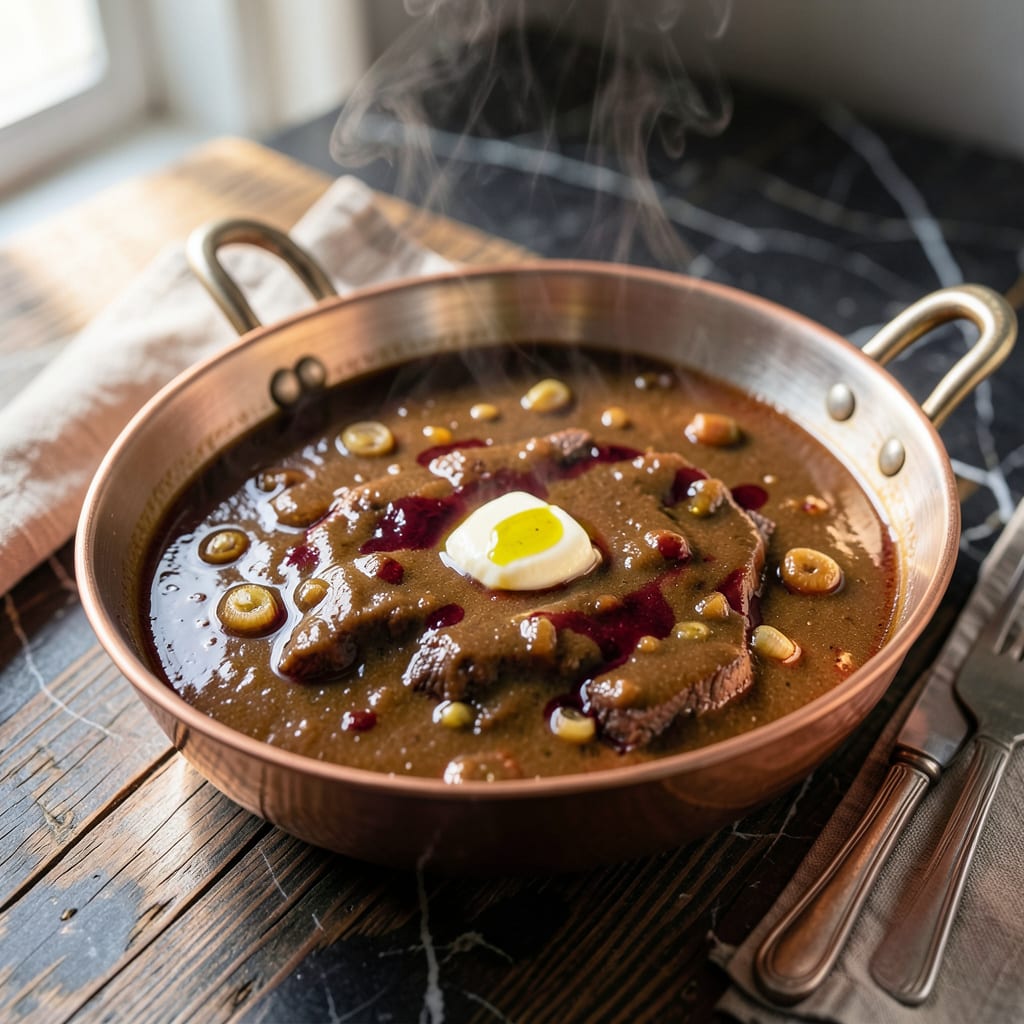
This prime rib gravy elevates any roast with its rich, velvety depth of flavor. Built from the meat’s natural juices, it transforms simple drippings into a luxurious sauce.
With just a few pantry staples and the beef’s fond, you’ll create a smooth, au jus-style gravy that complements the main course perfectly. The secret lies in proper reduction and straining for silky texture.
Ingredients for Prime Rib Gravy
A handful of pantry staples turns prime rib drippings into luxurious sauce.
| Ingredient | Amount | Notes |
|---|---|---|
| Prime Rib Drippings 🥩 | 2 cups | Fat skimmed from roast |
| All-Purpose Flour 🌾 | 2 tbsp | For thickening roux |
| Unsalted Butter 🧈 | 2 tbsp | For richness in roux |
| Beef Stock 🥩 | 1 cup | Low-sodium preferred |
| Dry Red Wine 🍷 | ½ cup | Cabernet or Merlot |
| Shallot 🧅 | 1 whole | Finely minced |
| Garlic Cloves 🧄 | 2 cloves | Minced fine |
| Fresh Thyme Sprigs 🌿 | 2 whole | Stems removed |
| Worcestershire Sauce 💧 | 1 tsp | Classic flavor enhancer |
| Kosher Salt 🧂 | ½ tsp | Adjust to taste |
| Freshly Ground Black Pepper 🌶️ | ½ tsp | For depth of flavor |
The drippings are non-negotiable—use every last bit of that flavorful fat from your roast. Skim off excess fat but leave the good stuff (that’s where the magic is). I grab low-sodium beef stock from Trader Joe’s—lets you control the salt. The wine? Any bold red you’d drink. Cabernet or Merlot work perfectly. Don’t use cooking wine—it’s harsh and salty.
No red wine? Extra beef stock with a dash of balsamic gets you close. Skip the shallot and use half a small onion instead. Fresh thyme is ideal but dried at one-third the amount works. The flour is just for thickening—cornstarch slurry (1 tbsp cornstarch + 1 tbsp water) can replace it if needed. Anchovy-free Worcestershire exists if you need it.
Gravy thickens as it cools. Store in an airtight container—good for 3 days in the fridge, freezes beautifully for 3 months. Reheat gently with a splash of water or stock to loosen. Strain before storing if you want it ultra-smooth (the solids get weird when reheated).
Why You’ll Love This Recipe
- 5-Minute Magic: I just reuse the prime rib drippings and flour I already have out, so the whole gravy comes together faster than the roast rests.
- Rich & Deep: That red wine and beef stock combo pulls every last bit of flavor out of the pan—honestly, it tastes like a fancy steakhouse in a spoonful.
- Sunday to Tuesday: I make a double batch on Sunday, then drizzle it over mashed potatoes, open-faced sandwiches, even leftover roast beef wraps.
- Zero Waste: Between us, using up the drippings means nothing goes to waste and my grocery bill stays smaller.
Step-by-Step Instructions for Prime Rib Gravy
This method delivers a velvety, restaurant-quality sauce with deep, balanced flavor.
Step 1: Skim and Measure the Drippings
Start by skimming the fat from the 2 cups Prime Rib Drippings using a spoon or fat separator. You want the rich, meaty juices without excess grease. I pour the drippings into a measuring cup first to confirm I have exactly 2 cups—this ensures consistent flavor concentration in the final gravy.
If your drippings have cooled and solidified, gently reheat them until liquid but not boiling. This makes skimming easier and prevents the fat from emulsifying back into the liquid. Place the skimmed drippings in a saucepan and set aside.
Step 2: Build a Flavorful Roux Base
In a separate saucepan over medium heat, melt the 2 tbsp Unsalted Butter. Once foaming subsides, whisk in the 2 tbsp All-Purpose Flour to create a smooth roux. Cook for 2-3 minutes, stirring constantly, until the mixture turns a light golden color—this removes the raw flour taste.
Here’s the thing—you’re not just thickening here, you’re building flavor. The butter adds richness while the flour creates the base that will bind all those beautiful pan juices together. Don’t let it brown too deeply or your gravy will taste bitter.
Step 3: Deglaze and Infuse with Aromatics
Add the finely minced 1 whole Shallot and 2 cloves Garlic Cloves to the roux. Cook for 1-2 minutes until fragrant but not browned. Then pour in the 0.5 cup Dry Red Wine, scraping up any browned bits from the bottom of the pan with a wooden spoon.
Add the 2 whole Fresh Thyme Sprigs, 1 tsp Worcestershire Sauce, 0.5 tsp Kosher Salt, and 0.5 tsp Freshly Ground Black Pepper. The wine should reduce by about half—you’ll see the liquid level drop and the aroma become more concentrated. This step extracts maximum flavor from your aromatics.
Step 4: Combine and Simmer to Perfection
Now pour the skimmed 2 cups Prime Rib Drippings and 1 cup Beef Stock into the saucepan with the roux mixture. Whisk vigorously to combine, then bring to a gentle simmer over medium-low heat. The gravy will begin to thicken as it cooks.
Simmer for 8-10 minutes until it reaches your desired consistency—it should coat the back of a spoon but still be pourable. I like mine thick enough to cling to mashed potatoes but thin enough to flow easily. Taste and adjust seasoning if needed, remembering the drippings are already well-seasoned from the prime rib.
Step 5: Strain and Serve Warm
Remove the saucepan from heat and discard the thyme sprigs. For an ultra-smooth gravy, strain it through a fine-mesh sieve. This step is optional but recommended for that velvety texture that makes this gravy special.
Serve immediately while hot. The gravy will thicken slightly as it cools, so if you’re making it ahead, thin with a little additional beef stock when reheating. Pour over slices of prime rib or into a gravy boat for serving. This makes enough for 4 generous servings.
Pro Tips For Making Prime Rib Gravy
- Skim the Drippings: After roasting, pour the drippings through a fine-mesh strainer to remove any bits of fat or sediment—I learned this the hard way when my first gravy had a greasy texture.
- Toast the Flour: Cook the flour in the butter for at least 2 minutes over medium heat until it turns a light golden brown, or your gravy will taste like raw paste instead of rich, nutty depth.
- Deglaze First: Pour the red wine into the pan while it’s still hot to scrape up all those browned bits from the prime rib—this is where the real flavor hides, and skipping it means weaker gravy.
- Reduce the Stock: Simmer the beef stock for 5-10 minutes before adding it to the roux so the gravy isn’t thin or watery—sounds like extra work, but it actually changes the outcome.
Make-Ahead Tips for prime rib gravy
Prep Drippings Ahead
After roasting your prime rib, pour all drippings into a fat separator or glass measuring cup. Refrigerate for 30 minutes—the fat will solidify on top. I use a OXO fat separator for this. The cold drippings will keep in the fridge for 2 days before making gravy. 💡
Make Roux in Advance
Cook your 2 tbsp butter and 2 tbsp flour roux up to 2 days ahead. Store it in an airtight container in the fridge. When ready to use, simply reheat it gently over medium-low heat before adding your aromatics.
Pre-Chop Aromatics
Mince your 1 shallot and 2 garlic cloves together and store in a small sealed container. They’ll keep fresh in the fridge for 24 hours. This saves precious time on the big day.
Freeze for Later
Completed gravy freezes beautifully for up to 3 months. Portion into ice cube trays first for easy single-serving portions, then transfer to a freezer bag. I use Silicone molds from Amazon. Thaw overnight in the fridge before reheating. ❄️
Reheating Tips
Gently reheat thawed gravy in a saucepan over low heat, stirring frequently. Add 1-2 tbsp beef stock to loosen if needed. Avoid boiling to maintain that velvety texture.
Nutrition Facts
Frequently Asked Questions
Can I use cornstarch instead of flour?
Yes! Replace the 2 tbsp flour with 1 tbsp cornstarch mixed with 1 tbsp cold water. Whisk this slurry into the hot liquid at the end. It thickens faster and creates a glossier finish.
How do I fix lumpy gravy?
Strain it through a fine-mesh sieve to remove lumps. For stubborn ones, blend briefly with an immersion blender. To prevent lumps, whisk constantly when adding liquid to your roux.
What if my drippings are too salty?
Use low-sodium beef stock and skip added salt initially. Taste before seasoning. If still too salty, add a splash of water or a peeled potato to absorb excess salt while simmering.

- BBQ Sausage Recipe Oven: Smoky Depth Without the Grill - September 28, 2026
- BBQ Chicken Bowl Recipe Rice: Smoky Sweetness Over Fluffy Grains - September 28, 2026
- Beef Cutlet Recipe Ideas: Crispy Breaded Patties With Bold Seasonings - September 28, 2026