
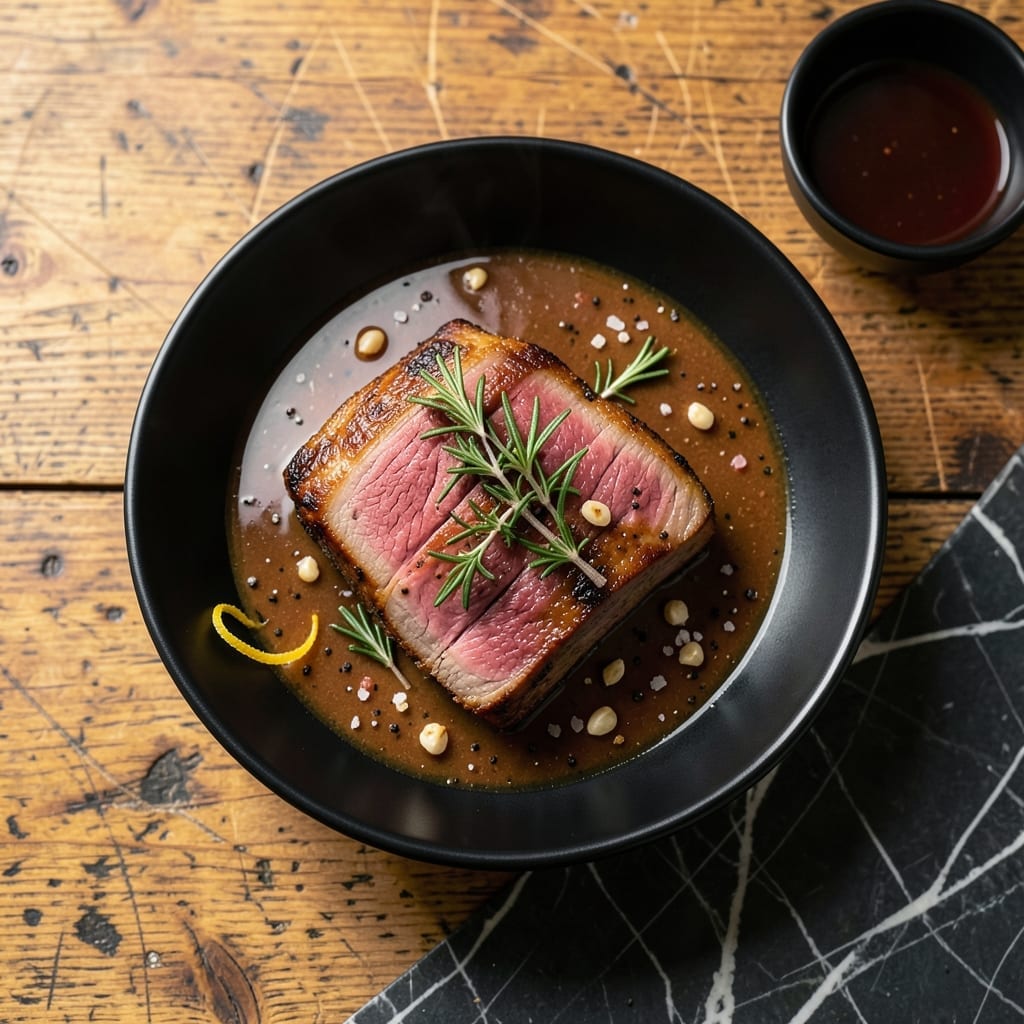
This slow-roasted prime rib delivers perfectly tender meat with a deeply flavored red wine au jus that elevates every bite. The key is a low-and-slow cooking process that ensures even doneness from edge to edge.
I’ve refined this technique over years of holiday cooking, focusing on simplicity without sacrificing results. A flavorful dry rub and proper resting time guarantee juicy, flavorful meat that impresses without complicated steps.
The au jus comes together using the pan drippings, creating a rich, savory sauce that complements the beef beautifully. Every element works in harmony for a restaurant-quality experience at home.
Serve with horseradish cream and roasted vegetables for a complete meal. Here’s how to achieve perfect results every time.
Ingredients for Prime Rib Recipe Au Jus
Slow-roasted perfection starts with these prime ingredients for tender beef and rich au jus.
| Ingredient | Amount | Notes |
|---|---|---|
| Prime Rib Roast 🥩 | 5 lb | Bone-in, well-marbled preferred |
| Kosher Salt 🧂 | 2 tbsp | Diamond Crystal preferred for texture |
| Freshly Ground Black Pepper 🌶️ | 2 tbsp | Coarse grind for rub |
| Garlic Cloves 🧄 | 6 cloves | Minced for dry rub |
| Fresh Rosemary 🌿 | 3 tbsp | Finely chopped, stems discarded |
| Fresh Thyme 🍃 | 3 tbsp | Finely chopped, stems discarded |
| Dry Red Wine 🍷 | 2 cups | Bold variety like Cabernet Sauvignon |
| Beef Stock 🥣 | 4 cups | Low-sodium preferred for reduction |
| Unsalted Butter 🧈 | ½ cup | For au jus finishing |
| All-Purpose Flour 🌾 | 2 tbsp | For thickening au jus |
| Yellow Onion 🧅 | 1 whole | Roughly chopped for au jus |
| Carrots 🥕 | 2 whole | Roughly chopped for au jus |
| Celery Stalks 🥬 | 2 whole | Roughly chopped for au jus |
The prime rib roast is non-negotiable for this dish. Optimal quality requires well-marbled, bone-in cuts from a trusted butcher or Whole Foods meat counter. The fat cap should be at least 1/4-inch thick for proper rendering. Professional kitchens use USDA Prime grade, but Choice works admirably for home cooks. Avoid pre-cut roasts—ask for the ribeye end for the most flavorful results.
No red wine? Beef broth with a tablespoon of balsamic vinegar provides acceptable depth. Fresh herbs are essential for the dry rub—dried cannot replicate the aromatic oils. For the au jus, low-sodium beef stock allows proper reduction without becoming overly salty. Diamond Crystal kosher salt is preferred for its clean flavor and consistent grain size in the rub.
Store the roast uncovered on a rack in the refrigerator for 1-2 days before cooking to dry the surface for better browning. The au jus base can be prepared 1 day ahead and reheated. Completed au jus keeps for 3 days refrigerated or 3 months frozen. Always bring to a boil before serving when reheating.
Why You’ll Love This Recipe
- I’ll be real: the sandwiches I make with the leftovers might be even better than the original meal.
- Set and Forget: I rub the roast with salt, pepper, garlic, and rosemary, pop it in the oven, and let it do its thing—no babysitting required.
- Impressive but Simple: Here’s what sold me—it looks like a fancy restaurant dish, but my secret is just five ingredients and a little patience.
- Leftovers for Days: I’ll be real: the sandwiches I make with the leftovers might be even better than the original meal.
Step-by-Step Instructions for Prime Rib Au Jus
This method delivers perfectly cooked prime rib with a luxurious red wine au jus every time.
Step 1: Prepare and Season the Prime Rib Roast
Begin by patting the 5 lb Prime Rib Roast completely dry with paper towels. This ensures the rub adheres properly and promotes even browning. In a small bowl, combine the 2 tbsp Kosher Salt, 2 tbsp Freshly Ground Black Pepper, minced 6 cloves Garlic Cloves, 3 tbsp Fresh Rosemary, and 3 tbsp Fresh Thyme.
Generously coat the roast with the herb mixture, pressing it firmly into the meat on all sides. The coarse grind of the black pepper and the aromatic herbs will create a flavorful crust as it roasts. Let the seasoned roast sit at room temperature for 1 hour before cooking to ensure even doneness throughout.
Step 2: Slow-Roast to Perfection
Preheat your oven to 250°F. Place the seasoned Prime Rib Roast bone-side down on a rack set in a roasting pan. This low-and-slow method allows the meat to cook evenly without drying out, resulting in tender, juicy slices.
Roast for approximately 3 to 4 hours, or until the internal temperature reaches 120-125°F for medium-rare. Use a meat thermometer to check the temperature in the thickest part of the roast, avoiding the bone. The exterior should develop a rich, deep brown crust.
Step 3: Prepare the Au Jus Base
While the roast cooks, roughly chop the 1 whole Yellow Onion, 2 whole Carrots, and 2 whole Celery Stalks. Place these vegetables in the bottom of the roasting pan beneath the rack to catch drippings and infuse flavor. Once the roast reaches temperature, transfer it to a cutting board and tent loosely with foil to rest for 20-30 minutes.
Pour all the pan drippings into a saucepan, discarding the solids. Place the saucepan over medium heat and add the 2 cups Dry Red Wine. Simmer for 5-7 minutes, scraping the bottom to release any browned bits, until the wine reduces by half.
Step 4: Finish the Rich Red Wine Au Jus
Add the 4 cups Beef Stock to the reduced wine and bring to a gentle simmer. In a small bowl, whisk the 2 tbsp All-Purpose Flour into the 0.5 cup Unsalted Butter to create a smooth paste. Gradually whisk this mixture into the simmering liquid, a little at a time, to avoid lumps.
Continue to simmer for 10-12 minutes, stirring occasionally, until the au jus thickens enough to lightly coat the back of a spoon. Taste and adjust seasoning if needed. Strain the au jus through a fine-mesh sieve into a gravy boat or serving vessel before serving with the carved prime rib.
Pro Tips For Making Prime Rib Recipe Au Jus
- Reverse Sear Method: Start at 250°F until the internal temp hits 110°F for medium-rare, then blast it at 450°F for 15 minutes to get that perfect crust—I learned this the hard way after serving gray prime rib to my in-laws.
- Salt Overnight: Rub the roast with kosher salt at least 12 hours before cooking; it draws out moisture then reabsorbs it, seasoning deep into the meat. Sounds weird, but it works.
- Skip the Water: For the au jus, deglaze the pan with beef broth, not water, to build rich flavor. I used to rush this part and wondered why my jus tasted flat.
- Rest Before Carving: Give it a solid 20-30 minutes under foil after cooking—this lets the juices redistribute. My grandmother swore by this, and she was right.
Pro Cooking Tips for This Dish
Thermometer Precision
Invest in a leave-in probe thermometer like ThermoWorks Smoke for hands-off monitoring. I set mine to alert at 118°F to catch the temp before it overshoots. The difference between 120°F and 125°F is the line between rare and medium-rare perfection. 🌡️
Resting Strategy
The 20-30 minute rest isn’t just about juiciness—it lets the internal temperature rise 5-10°F for even doneness. I wrap mine in foil and a towel to retain heat. Carve too early and you’ll lose those precious juices to the cutting board.
Pan Drippings Hack
After removing the roast, place the pan over medium-high heat with the vegetables. Add ¼ cup water to deglaze, scraping aggressively. This step extracts maximum flavor for your au jus. I use a wooden spoon to avoid damaging my pan.
Wine Reduction Tip
Use a bold Cabernet Sauvignon—its tannins soften during reduction. I reduce mine to ½ cup before adding stock. Pro tip: tilt the pan slightly to pool the wine for even evaporation. The aroma when it hits the fond is incredible.
Au Jus Consistency
If your au jus is too thin, mix 1 tbsp cornstarch with 1 tbsp cold water instead of flour slurry. Add it off-heat first to prevent clumping. For too-thick sauce, whisk in ¼ cup hot water gradually. 💡
Nutrition Facts
Frequently Asked Questions
What’s the ideal internal temperature for medium-rare?
Remove the roast at 120-125°F. The temperature will rise 5-10°F during resting, reaching perfect medium-rare. Use a probe thermometer for accuracy.
Can I use a different wine for the au jus?
Yes, but choose a bold red like Merlot or Shiraz. Avoid sweet wines—they won’t complement the beef’s richness. Reduce by half before adding stock.
How do I prevent the au jus from breaking?
Whisk in cold butter off-heat. If it separates, blend with an immersion blender. Keep the sauce warm, never boiling, to maintain a smooth texture.
Should I cover the roast while resting?
Yes, tent loosely with foil for 20-30 minutes. This retains heat while allowing steam to escape, ensuring the crust stays crisp.

- BBQ Sausage Recipe Oven: Smoky Depth Without the Grill - September 28, 2026
- BBQ Chicken Bowl Recipe Rice: Smoky Sweetness Over Fluffy Grains - September 28, 2026
- Beef Cutlet Recipe Ideas: Crispy Breaded Patties With Bold Seasonings - September 28, 2026