
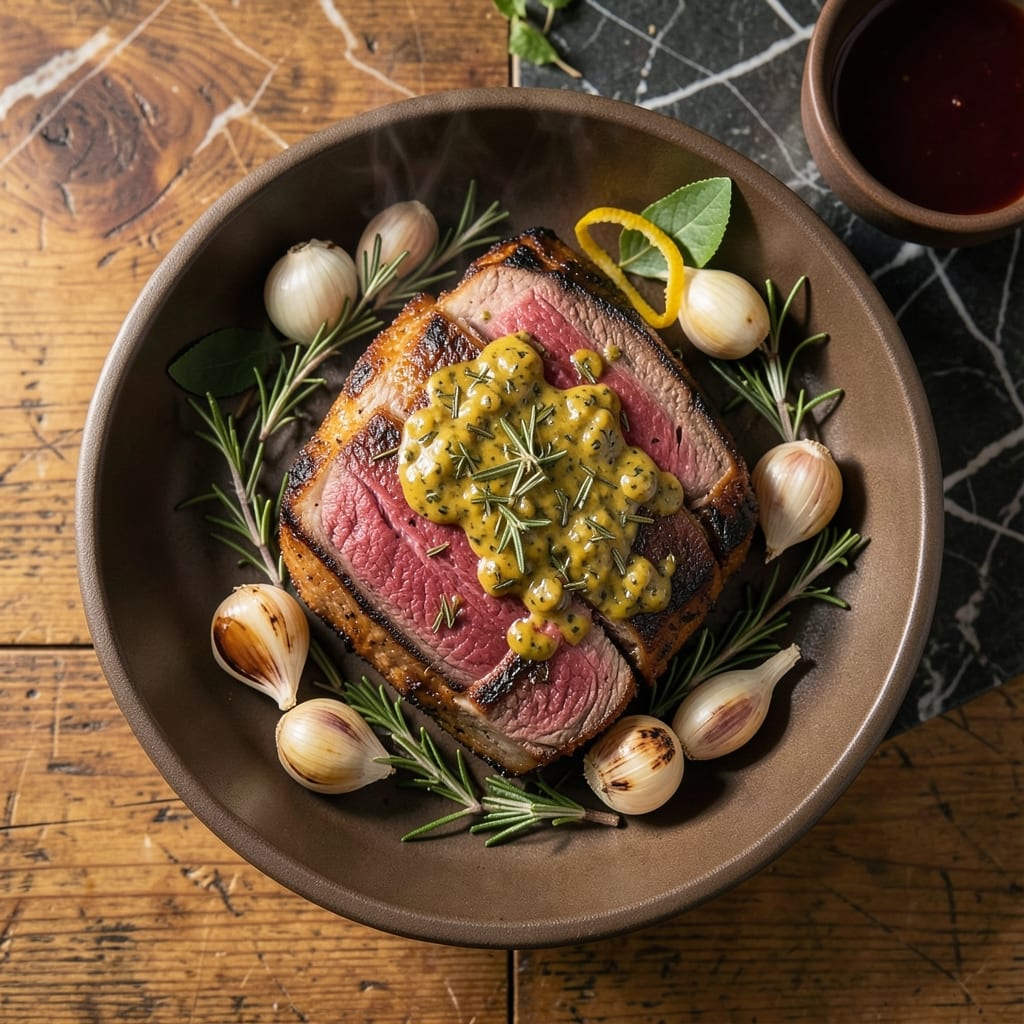
This herb-crusted prime rib delivers the holiday centerpiece worthy of your most special gatherings. I perfected this method after years of testing, ensuring a perfectly rosy center and crispy crust every time.
The secret lies in a simple but effective herb rub and precise oven timing. Starting with a high-heat sear locks in juices, while a lower temperature finish guarantees even cooking throughout the roast.
What emerges is a showstopping main course with a fragrant herb crust and tender, juicy meat. The aroma alone will have your guests gathering around the table in anticipation.
Serve with classic sides for a complete holiday meal that impresses without stress. Here’s how to make it perfectly.
Ingredients for Prime Rib Recipe Ina Garten
Rich, bold flavors and a fragrant herb crust make this the holiday centerpiece everyone remembers.
| Ingredient | Amount | Notes |
|---|---|---|
| Prime Rib Roast 🥩 | 5 lb | Bone-in, well-marbled preferred |
| Kosher Salt 🧂 | 2 tbsp | Diamond Crystal brand recommended |
| Freshly Ground Black Pepper 🌶️ | 1 ½ tbsp | Coarse grind for crust |
| Garlic Cloves 🧄 | 6 cloves | Minced into paste consistency |
| Fresh Rosemary 🌿 | 3 tbsp | Finely chopped, stems discarded |
| Fresh Thyme 🍃 | 3 tbsp | Finely chopped, stems discarded |
| Dijon Mustard 🟡 | ¼ cup | Whole grain variety preferred |
| Extra-Virgin Olive Oil 🫒 | ¼ cup | For herb rub consistency |
| Unsalted Butter 🧈 | 4 tbsp | Softened to room temperature |
| Red Wine 🍷 | 1 cup | Dry variety like Cabernet Sauvignon |
| Beef Broth 🥣 | 2 cups | Low-sodium preferred |
| All-Purpose Flour 🌾 | 2 tbsp | For optional pan gravy |
The prime rib itself is non-negotiable—ask your butcher for a well-marbled, bone-in rib roast. I always go to Whole Foods or a local butcher for this cut (the quality difference is noticeable). Look for bright red meat with creamy fat marbling. For the herbs, fresh rosemary and thyme are essential; dried won’t give you that vibrant, aromatic crust. A 5 lb roast serves six generously with leftovers.
No red wine? Substitute with an extra cup of beef broth plus 1 tbsp balsamic vinegar. Fresh out of thyme? Sage works in a pinch, but use half the amount (it’s stronger). If you can’t find Dijon, whole grain mustard adds great texture. The butter can be swapped for olive oil, but the flavor won’t be as rich. For a deeper crust, some chefs add a dash of horseradish to the rub.
Prime rib is best served fresh but reheats wonderfully. Store leftovers in the fridge for up to 4 days or freeze for 3 months. To reheat, place slices in a baking dish with a splash of broth, cover with foil, and warm at 300°F until heated through (about 20 minutes).
Why You’ll Love This Recipe
- I’ll be real: the leftovers make the best sandwiches—thinly sliced with a little horseradish on crusty bread.
- Set It and Forget: That prime rib roast goes straight from the fridge to the oven—no searing, no stress, just salt, pepper, and a handful of rosemary sprigs.
- Garlic-Kissed Magic: The garlic and rosemary form a crust so fragrant, it perfumes the whole house while it roasts.
- Holiday Hero: Between us, this is my secret for feeding a crowd without being chained to the stove all day.
Step-by-Step Instructions for Herb-Crusted Prime Rib
Here’s the method that guarantees a showstopping centerpiece with perfect crust and juicy interior.
Step 1: Prepare the Herb Rub and Season the Roast
In a small bowl, combine the 0.25 cup Dijon mustard, 0.25 cup extra-virgin olive oil, 6 cloves garlic cloves (minced to a paste), 3 tbsp fresh rosemary, 3 tbsp fresh thyme, 2 tbsp kosher salt, and 1.5 tbsp freshly ground black pepper. Mix until it forms a thick, fragrant paste that clings to a spoon.
Pat the 5 lb prime rib roast dry with paper towels—this is crucial for a good sear. Place it bone-side down on a rack in a roasting pan and rub the herb mixture all over the surface, pressing it in firmly. Let it sit at room temperature for 1 hour to allow the flavors to penetrate the meat.
Step 2: Sear and Begin Roasting
Preheat your oven to 450°F. This high heat will create a beautiful crust. Place the roast in the oven and cook for 20 minutes to develop a deep brown exterior. You’ll hear it sizzling—that’s the sound of a perfect crust forming.
After 20 minutes, reduce the oven temperature to 325°F. This drop in temperature ensures the meat cooks evenly without over-browning the exterior. Resist the urge to open the oven door—every peek releases valuable heat and can extend the cooking time.
Step 3: Roast to Perfection
Continue roasting at 325°F until the internal temperature reaches 120-125°F for medium-rare. This typically takes about 1 hour and 15 minutes to 1 hour and 30 minutes for a 5 lb roast, but rely on a meat thermometer, not time. Insert it into the thickest part of the meat, avoiding the bone.
If you’re making pan gravy, place the 4 tbsp unsalted butter in a small dish to soften at room temperature. You’ll use it later to enrich the sauce. The roast is ready when the thermometer shows your desired temperature and the exterior is deeply browned and fragrant.
Step 4: Rest and Make Pan Gravy
Transfer the roast to a cutting board and tent it loosely with foil. Let it rest for 20-30 minutes—this allows the juices to redistribute, ensuring every slice is moist and flavorful. The internal temperature will rise 5-10°F during this time, so factor that into your target.
For the gravy, place the roasting pan on the stovetop over medium heat. Add the 2 tbsp all-purpose flour and stir to combine with the pan drippings, scraping up any browned bits. Pour in the 1 cup red wine and 2 cups beef broth, whisking constantly. Simmer for 5-7 minutes until thickened. Finish by whisking in the 4 tbsp unsalted butter until melted and smooth. Strain and serve alongside the roast.
Pro Tips For Making Prime Rib Recipe Ina Garten
- Room Temp First: Pull the prime rib out of the fridge 2 hours before cooking—cold meat seizes up and cooks unevenly, and I learned this the hard way with a tough center.
- Go Heavy on Salt: Use more kosher salt than you think, especially on the fat cap. Sounds like overkill, but it forms that crispy, flavorful crust Ina’s recipe is known for.
- Skip the Crowded Pan: If your roasting pan is too small, the rib won’t brown properly. I was skeptical until I tried it, but a spacious pan makes a real difference.
- Rest Under Foil: Tent the prime rib with foil and let it rest 20-30 minutes before slicing—it keeps the juices inside where they belong, not on your cutting board.
Regional Styles of This Recipe
Texas Style
In Lone Star country, they love their prime rib with a bold coffee-chili rub. I mix 2 tbsp finely ground coffee, 1 tbsp chili powder, and 1 tbsp brown sugar into the herb paste. The coffee adds depth while chili provides a subtle kick that complements the beef’s richness. 🌶️
California Coast
West coast style leans lighter with citrus and herbs. I add zest of 1 orange and 2 tbsp chopped fresh parsley to the rub. The bright citrus notes balance the richness, perfect for those sunny holiday gatherings by the ocean.
Midwest Classic
Heartland cooks often use a simple salt-pepper-garlic approach. I stick to 2 tbsp kosher salt, 1.5 tbsp black pepper, and 8 garlic cloves for this version. The focus stays on the beef’s natural flavor, letting the quality of the meat shine through.
French Influence
For a European touch, I incorporate 2 tbsp Dijon mustard and 1 tbsp herbes de Provence into the crust. The mustard creates a beautiful golden exterior while the herb blend adds complex floral notes that elevate the dish beautifully.
Southern Comfort
Down south, they might add 1 tbsp smoked paprika and 1 tsp cayenne to the rub. This gives the prime rib a subtle smoky heat that pairs wonderfully with traditional sides like mashed potatoes and collard greens.
Pacific Northwest
This region embraces fresh herbs and local flavors. I use 2 tbsp chopped fresh sage and 1 tbsp juniper berries crushed into the rub. The earthy sage and piney juniper complement the beef while celebrating the area’s abundant herb gardens. 🌿
Nutrition Facts
Frequently Asked Questions
How long should I let the roast rest before slicing?
Let it rest for 20-30 minutes after removing from the oven. This allows juices to redistribute throughout the meat, ensuring each slice stays moist. Skipping this step can result in dry, less flavorful meat.
What’s the best internal temperature for medium-rare?
Aim for 120-125°F on your meat thermometer. The temperature will rise another 5-10°F during resting, reaching perfect medium-rare. Always insert the thermometer into the thickest part, avoiding the bone.
Can I prepare the herb rub the night before?
Yes! Mix the rub ingredients and store in an airtight container in the fridge. Apply it to the roast 1 hour before cooking to let the flavors meld. This saves time on the day of your meal.
What if my roast doesn’t have a bone?
No problem! Use a boneless roast and adjust cooking time slightly. A 5 lb boneless roast may finish 15-20 minutes faster, so check the temperature early. The herb rub works just as well.

- BBQ Sausage Recipe Oven: Smoky Depth Without the Grill - September 28, 2026
- BBQ Chicken Bowl Recipe Rice: Smoky Sweetness Over Fluffy Grains - September 28, 2026
- Beef Cutlet Recipe Ideas: Crispy Breaded Patties With Bold Seasonings - September 28, 2026