
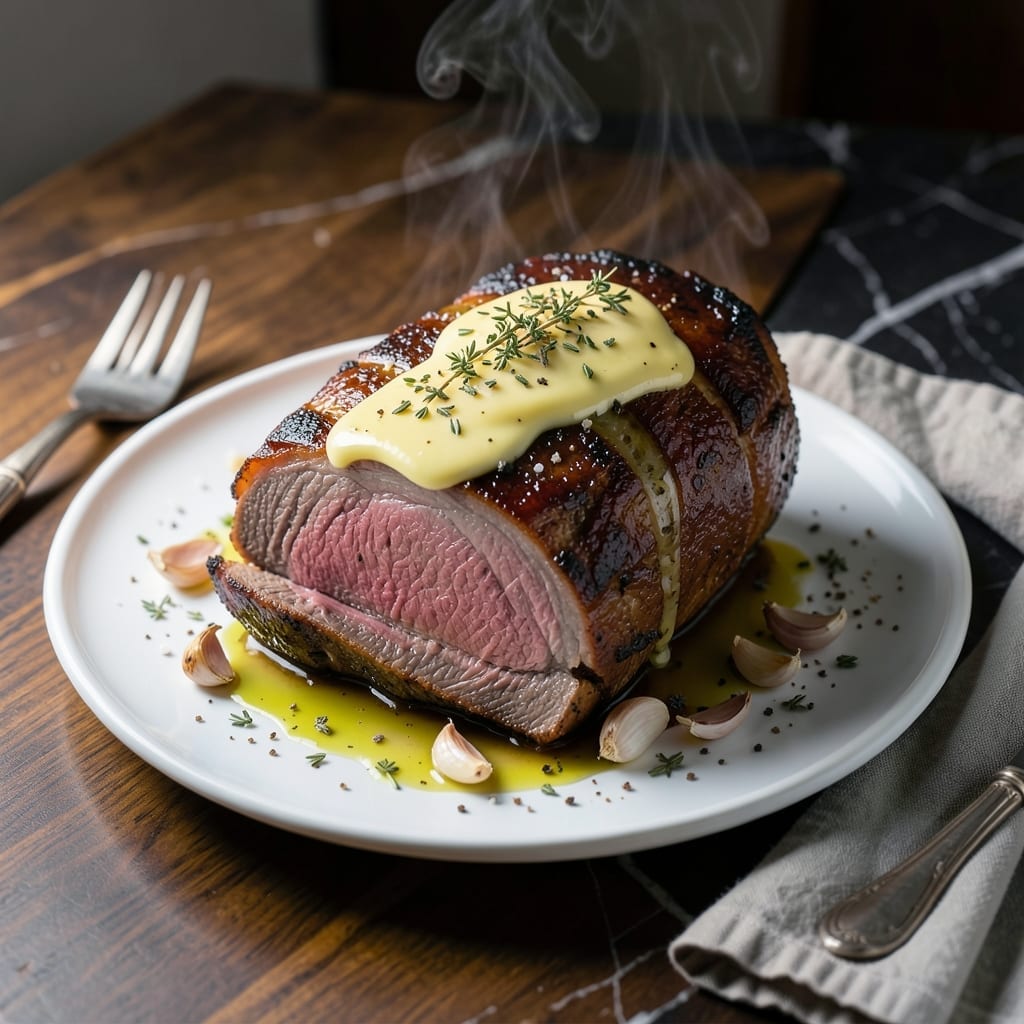
This prime rib delivers a perfectly tender center with a crispy herb crust that’s impossible to resist. The combination of rich butter and fragrant Herbes de Provence creates a flavor profile that elevates this classic roast to new heights.
I’ve refined this method over years of holiday dinners, ensuring every bite is juicy and packed with aromatic depth. A hot sear locks in moisture, while slow roasting guarantees even doneness from edge to edge.
What you’ll get is a showstopping centerpiece with a golden, herb-encrusted exterior and melt-in-your-mouth meat. The butter basting step is what makes all the difference, infusing every layer with flavor.
Serve this for special occasions or Sunday supper—it’s always a hit. Here’s how to achieve restaurant-quality results at home.
Ingredients for Prime Rib Recipe with Butter and Herbs De Provence
A handful of premium ingredients elevate this roast to restaurant-quality perfection.
| Ingredient | Amount | Notes |
|---|---|---|
| Prime Rib Roast 🥩 | 5 lb | Bone-in, well-marbled preferred |
| Unsalted Butter 🧈 | 1 cup | Softened to room temperature |
| Herbes de Provence 🌿 | 2 tbsp | Freshly blended for best aroma |
| Kosher Salt 🧂 | 2 tbsp | Diamond Crystal preferred |
| Freshly Ground Black Pepper 🌶️ | 2 tbsp | Coarse grind for texture |
| Garlic Cloves 🧄 | 8 cloves | Peeled and smashed |
| Fresh Rosemary Sprigs 🌿 | 4 whole | Stems removed and chopped |
| Fresh Thyme Sprigs 🍃 | 6 whole | Leaves stripped from stems |
| Olive Oil 🫒 | 2 tbsp | High smoke point preferred |
| Red Wine 🍷 | 1 cup | Dry red like Cabernet Sauvignon |
| Beef Stock 🥩 | 2 cups | Low-sodium preferred |
| Dijon Mustard 🟡 | 2 tbsp | Smooth, not whole grain |
The prime rib is everything here. Look for USDA Prime or Choice grade with abundant marbling—this is what guarantees that buttery texture. Bone-in roasts have more flavor and cook more evenly. Whole Foods or Costco usually have great options, but your local butcher is the gold standard (they’ll even trim it for you). For the Herbes de Provence, Williams Sonoma has an excellent blend, or make your own with dried thyme, rosemary, lavender, and savory.
No Herbes de Provence? Mix dried thyme, rosemary, and a pinch of lavender—it’s not identical but gets you close. Red wine can be swapped for extra beef stock with a splash of balsamic. Fresh herbs are non-negotiable though—dried won’t give you that vibrant crust. The Dijon can be yellow mustard in a pinch, but the sharpness of Dijon really sings with the beef. Butter must be unsalted so you control the seasoning.
Prime rib is best cooked fresh, but leftovers (if there are any) reheat beautifully. Wrap slices in foil with a splash of beef stock, then warm in a 300°F oven for 15-20 minutes. The herb butter keeps 1 week in the fridge or can be frozen for 3 months—perfect for steaks later.
Why You’ll Love This Recipe
- Set It and Forget: I rub the roast with butter and Herbes de Provence, pop it in the oven, and let the flavors work their magic while I relax.
- Melt-in-Your-Mouth Good: The butter bastes the prime rib as it roasts, locking in juices and creating a crust that’s pure luxury with every bite.
- Crowd Pleaser: Honestly, this is my go-to for holiday dinners—everyone from my picky nephew to my foodie sister asks for seconds.
- Next-Day Luxury: The leftovers make killer sandwiches or a hearty beef hash, so nothing goes to waste and my lunches are sorted.
Step-by-Step Instructions for Prime Rib With Herb Butter Crust
Here’s the method I use for perfectly tender prime rib with an aromatic herb crust.
Step 1: Prepare the Prime Rib and Herb Butter
Remove the prime rib from the refrigerator 1 hour before cooking to bring it to room temperature. Pat it dry thoroughly with paper towels—this ensures a good sear and proper seasoning adhesion.
In a small bowl, combine the softened unsalted butter, herbes de Provence, kosher salt, freshly ground black pepper, and Dijon mustard. Stir until evenly incorporated. This compound butter will create a flavorful crust and baste the roast as it cooks.
Step 2: Sear and Season the Roast
Preheat your oven to 450°F. Heat the olive oil in a large roasting pan over high heat until shimmering. Sear the prime rib on all sides until deeply browned, about 2-3 minutes per side. This builds a flavorful crust and locks in juices.
Once seared, place the roast fat-side up in the pan. Rub the herb butter mixture generously over the entire surface, pressing it in so it adheres. Arrange the garlic cloves, rosemary sprigs, and thyme sprigs around the roast and in the pan—these will infuse the meat with aromatic flavors as it roasts.
Step 3: Roast to Desired Doneness
Transfer the roasting pan to the preheated oven. Roast for 15 minutes at 450°F to set the crust, then reduce the oven temperature to 325°F. Continue roasting until the internal temperature reaches 115-120°F for medium-rare (about 1.5-2 hours for a 5 lb roast).
Use a meat thermometer to check the temperature in the thickest part of the roast, avoiding the bone. The thermometer should register 115°F for rare, 120°F for medium-rare, or 125°F for medium. Remember, the temperature will rise 5-10°F during resting.
Step 4: Rest and Prepare the Au Jus
Transfer the prime rib to a cutting board, tent loosely with foil, and let it rest for 20-30 minutes. This resting period allows the juices to redistribute, ensuring a moist and tender roast when sliced.
While the roast rests, place the roasting pan on the stovetop over medium heat. Add the red wine and cook for 2-3 minutes, scraping up the browned bits from the bottom of the pan. Add the beef stock and simmer for 5-7 minutes until the liquid reduces by half. Strain the au jus through a fine-mesh sieve and serve alongside the sliced prime rib.
Step 5: Carve and Serve
To carve, locate the bones and slice along them to remove the meat in one large piece. Then, slice the prime rib against the grain into ½-inch to 1-inch thick slices. The meat should be pink and juicy in the center with a flavorful, aromatic crust on the outside.
Arrange the slices on a platter and drizzle with some of the prepared au jus. Serve the remaining au jus on the side for guests to add as desired. This dish pairs beautifully with roasted vegetables or mashed potatoes.
Pro Tips For Making Prime Rib Recipe With Butter And Herbs De Provence
- Dry the Roast: Pat the prime rib completely dry with paper towels before seasoning—this guarantees a better sear and helps the salt and herbs de Provence stick properly.
- Start High, Finish Low: Sear the roast at 450°F for 20 minutes, then drop to 325°F to finish; this locks in flavor without overcooking the center.
- Use Room-Temp Butter: Soften the unsalted butter slightly before mixing with herbs de Provence—it spreads easier and coats the meat evenly.
- Rest Before Slicing: Let the prime rib rest under foil for at least 15 minutes after roasting; cutting too soon sends all the juices running out onto the board.
Creative Variations of prime rib recipe with butter and herbs de provence
Garlic and Rosemary Focus
Swap the Herbes de Provence for 6 tbsp chopped fresh rosemary and 4 tbsp minced garlic. This creates a bold, aromatic crust that’s more rustic. I love this for a simpler but equally impressive flavor profile. The garlic becomes sweet and mellow during roasting. 🌿
Red Wine Reduction
Add ½ cup additional red wine to the pan when searing. After removing the roast, reduce the wine by half before making the au jus. This intensifies the wine flavor in the sauce, creating a richer accompaniment. Use a bold Cabernet Sauvignon for best results.
Horseradish Crust
Mix 2 tbsp prepared horseradish into your herb butter for a spicy kick. This pairs wonderfully with the richness of the beef. The heat from the horseradish cuts through the fat, adding a delightful contrast. I recommend using fresh horseradish if available.
Smoked Paprika Version
Add 1 tbsp smoked paprika to your herb butter mixture for a Spanish-inspired twist. This gives the crust a beautiful color and subtle smokiness. The paprika’s earthiness complements the beef’s natural flavors. 🔥
Coffee-Rubbed Prime Rib
Incorporate 1 tbsp finely ground coffee into the herb butter. The coffee enhances the beef’s depth without making it taste like a morning brew. This technique is popular in steakhouse preparations for its ability to intensify meaty flavors.
Honey-Glazed Finish
During the last 30 minutes of roasting, brush the prime rib with a mixture of 2 tbsp honey and 1 tbsp Dijon mustard. This creates a glossy, slightly sweet crust that caramelizes beautifully. The honey’s sweetness balances the savory herbs perfectly.
Nutrition Facts
Frequently Asked Questions
Should I use salted or unsalted butter?
Always use unsalted butter so you can control the seasoning. Salted butter can make your crust too salty, especially with the kosher salt already in the recipe.
What’s the best way to check doneness?
A meat thermometer is essential. For medium-rare, pull the roast at 115-120°F internal temp—the temperature will rise 5-10°F while resting. Avoid cutting into the meat to check, as this releases valuable juices.
Can I prepare the herb butter in advance?
Yes! Mix the herb butter up to 2 days ahead and store it in the fridge. For longer storage, freeze for up to 3 months. Let it soften slightly before rubbing on the roast.
Why does my roast need to rest?
Resting for 20-30 minutes allows the juices to redistribute throughout the meat. Slicing too soon causes all those flavorful juices to spill out, leaving your prime rib dry.

- Protein Pudding Recipe With Sugar Free Pudding: High-Protein Creamy Indulgence - November 3, 2026
- Progresso Recipe Starters Creamy Parmesan Basil Cooking Sauce: Rich Herb-Infused Base for Pasta and More - November 3, 2026
- Pudding Recipe With Egg Yolks: Silky Smooth Custard in Minutes - November 3, 2026