
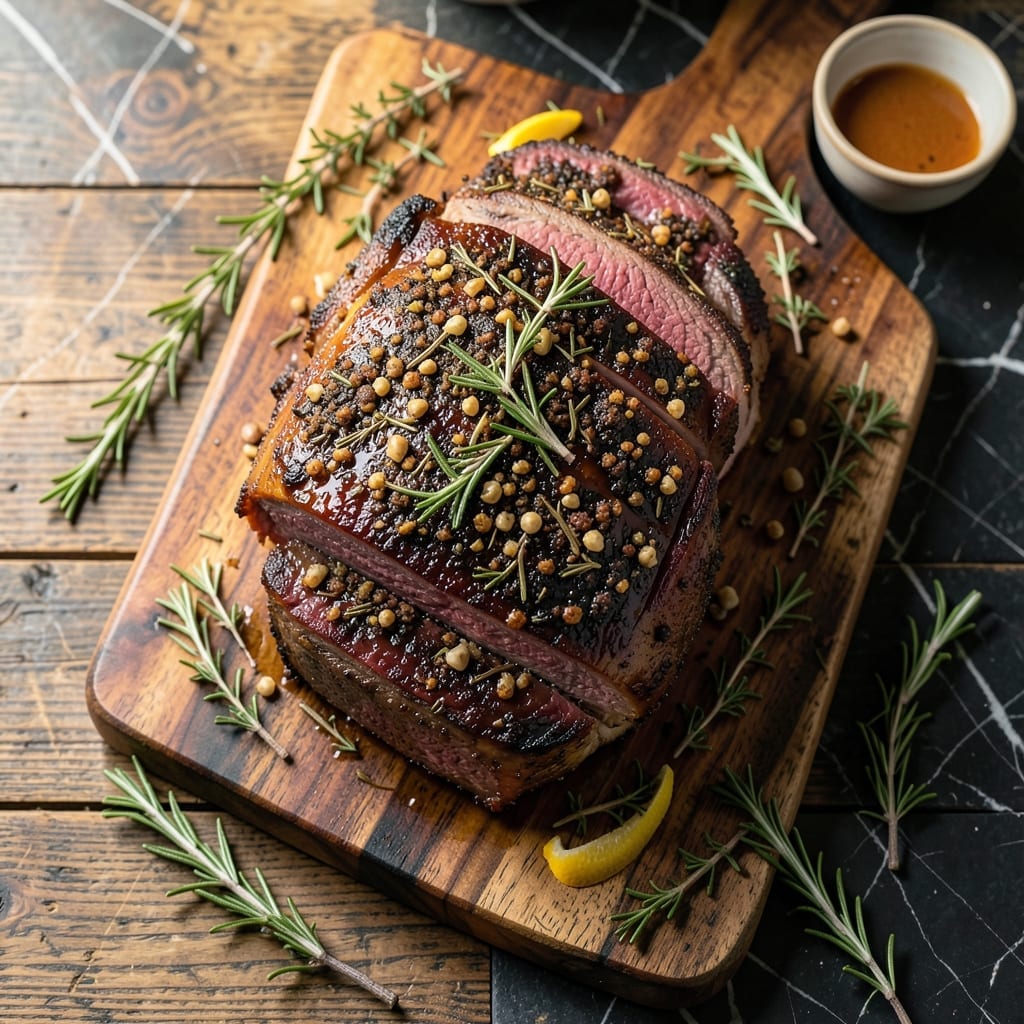
Achieving a perfectly cooked prime rib on your Big Green Egg requires precision and patience. This method delivers a smoky, charcoal-crusted exterior with a tender, juicy interior every time.
The key is maintaining consistent temperature control while allowing the meat to absorb that signature charcoal flavor. I’ve refined this approach over years of cooking for gatherings, ensuring impressive results without stress.
You’ll end up with a centerpiece-worthy roast that’s rich, flavorful, and encased in a deeply seasoned crust. The Big Green Egg’s ceramic walls lock in moisture, guaranteeing a melt-in-your-mouth experience.
Pair it with classic sides like roasted potatoes or creamy horseradish for a complete meal.
Ingredients for Prime Rib Roast Recipe Big Green Egg
A premium cut, bold seasonings, and charcoal for that signature Big Green Egg flavor.
| Ingredient | Amount | Notes |
|---|---|---|
| Prime Rib Roast 🥩 | 5 lb | Bone-in, well-marbled preferred |
| Kosher Salt 🧂 | 2 tbsp | Diamond Crystal preferred for even seasoning |
| Coarse Black Pepper 🌶️ | 2 tbsp | Freshly cracked for bold flavor |
| Garlic Cloves 🧄 | 8 cloves | Minced into a coarse paste |
| Fresh Rosemary Sprigs 🌿 | 4 sprigs | Leaves stripped and finely chopped |
| Fresh Thyme Sprigs 🍃 | 4 sprigs | Leaves stripped and finely chopped |
| Olive Oil 🫒 | ¼ cup | Extra-virgin for binding the rub |
| Dijon Mustard 🟡 | 2 tbsp | For crust adhesion and tang |
| Lump Charcoal ⚫ | 8 lb | High-quality for consistent heat |
| Hickory Wood Chunks 🪵 | 4 pieces | For smoky depth of flavor |
| Unsalted Butter 🧈 | ½ cup | Melted, for basting during cook |
| Beef Tallow 🧈 | 2 tbsp | Optional for enhanced richness |
The prime rib is the star—Costco or a trusted butcher for well-marbled, bone-in roasts. Look for bright red color with fat evenly distributed (not just on one side). I always ask for the rib cap to stay on—it’s the most flavorful part. For the charcoal, Jealous Devil or Kamado Joe brands burn hot and clean. Skip the briquettes; they don’t give you that pure, smoky heat.
No fresh herbs? Dried at one-third the amount, but fresh really shines here. Out of Dijon? Whole-grain mustard works too—just strain out the seeds if you want a smoother crust. The butter can be swapped for ghee if you’re avoiding dairy, but traditional butter adds that classic richness. Don’t skip the garlic paste—it clings better than minced cloves.
Store the roast uncovered in the fridge 1-2 days before cooking to dry the surface for better bark. Leftover prime rib? Slice thin for sandwiches—keeps 4-5 days wrapped tightly. Charcoal and wood chunks stay good indefinitely if kept dry (I use a sealed metal bin).
Why You’ll Love This Recipe
- Set and Forget: I toss the prime rib on the Big Green Egg with just salt, pepper, garlic, and rosemary, then let the smoker do all the work.
- Crust You’ll Crave: That garlic-rosemary rub forms the most insane bark—crispy, herby, and worth every bite.
- Holiday Hero: I serve this for Christmas and birthdays—always disappears first.
- Leftovers Luxe: The next-day sandwiches with cold prime rib and au jus? Honestly, sometimes better than the original meal.
Step-by-Step Instructions for Smoky Charcoal-Crusted Prime Rib
Here’s my proven method for achieving that perfect crust and tender interior on your Big Green Egg.
Step 1: Create the Herb Crust for Maximum Flavor
In a small bowl, combine the 2 tbsp Kosher Salt, 2 tbsp Coarse Black Pepper, minced 8 cloves Garlic Cloves, chopped leaves from the 4 sprigs Fresh Rosemary Sprigs and 4 sprigs Fresh Thyme Sprigs. This aromatic blend forms the base of your flavor profile.
Add the 0.25 cup Olive Oil and 2 tbsp Dijon Mustard to create a thick paste. The mustard acts as a binder while adding a subtle tang that cuts through the richness. I always let this mixture sit for 10 minutes to allow the flavors to meld before applying.
Step 2: Prepare and Season the Prime Rib
Pat the 5 lb Prime Rib Roast completely dry with paper towels—this ensures the rub adheres properly and creates that coveted crust. Place the roast on a clean surface and coat it evenly with the herb paste, pressing firmly so it sticks to all sides including the ends.
Let the seasoned roast sit at room temperature for 1 hour before cooking. This step is crucial as it allows the salt to begin penetrating the meat and the flavors to develop. The surface should look deeply seasoned with no dry spots.
Step 3: Set Up Your Big Green Egg for Indirect Heat
Load your Big Green Egg with 8 lb Lump Charcoal and add the 4 pieces Hickory Wood Chunks for that signature smoky flavor. Light the charcoal and let it burn until it’s covered with white ash—this typically takes 15-20 minutes.
Once hot, adjust for indirect cooking by adding the convEGGtor (plate setter) with the legs up. This creates the perfect environment for low and slow cooking. Aim for a stable temperature of 250°F—this is the sweet spot for prime rib on the Egg.
Step 4: Smoke and Baste to Perfection
Place the roast directly on the grill grates, bone-side down. Close the lid and maintain that 250°F temperature. After 2 hours, begin basting every 30 minutes with the 0.5 cup Unsalted Butter and optional 2 tbsp Beef Tallow for extra richness.
Cook until the internal temperature reaches 125°F for medium-rare, about 3-4 hours total. The crust should be a deep mahogany color with visible smoke rings. Use a reliable meat thermometer inserted into the thickest part for accuracy.
Step 5: Rest and Serve
When the roast hits your target temperature, remove it from the Egg and transfer to a cutting board. Tent loosely with foil and let it rest for 20-30 minutes—this allows the juices to redistribute throughout the meat.
The internal temperature will rise 5-10°F during resting (carryover cooking). Slice against the grain into 1-inch thick portions. Each serving should reveal that perfect pink center with a robust, smoky crust that makes this preparation so special.
Pro Tips For Making Prime Rib Roast Recipe Big Green Egg
- Dry the Roast: Pat the prime rib completely dry with paper towels before seasoning—I learned this the hard way after my first few attempts had a steamed, pale crust instead of that deep brown sear.
- Salt Overnight: Apply the kosher salt at least 12 hours before cooking, even if it seems like overkill. My grandmother swore by this, and the seasoning penetrates deeper than you’d expect.
- Skip the Water Pan: Resist the urge to add a water pan in the Big Green Egg; it steams the meat and softens the crust. After burning a few roasts, I finally figured out dry heat is what you want.
- Rest Under Foil: Tent the finished roast with foil and let it rest for 20-30 minutes—yes, even if you’re starving. I skip this when I’m lazy, but the juices redistribute and the slices are noticeably better when I don’t.
Troubleshooting prime rib roast recipe big green egg
Temperature Fluctuations
If your Big Green Egg temperature swings wildly, check your air vents. I keep my bottom vent at ¼ open and adjust the daisy wheel for fine-tuning. A sudden drop often means you need more lump charcoal—add 1-2 lbs to stabilize heat. 🌡️
Stall Phase Struggles
When the internal temp stalls around 150°F, don’t panic. This is normal as moisture evaporates. Wrap the roast in pink butcher paper and increase heat to 275°F to push through. I’ve found this adds a subtle steam effect that keeps the meat moist.
Uneven Cooking
If one side cooks faster, rotate the roast every hour. The Big Green Egg can have hot spots, especially near the firebox. For extra insurance, place a heat deflector under the grate to even out the heat distribution.
Weak Smoke Flavor
For a stronger smoke profile, add 2 more hickory chunks at the 2-hour mark. Soak wood chunks in water for 30 minutes first to slow the burn. I prefer Jealous Devil charcoal—it burns cleaner and hotter, enhancing smoke absorption.
Overcooked Edges
If the ends dry out, tent them with aluminum foil during the final hour. Baste more frequently with the butter-tallow mix to lock in moisture. A water pan in the Egg adds humidity, preventing dryness. 💡
Thermometer Issues
Always use a calibrated instant-read thermometer. Test it in boiling water—it should read 212°F. If your probe feels slow, insert it ½ inch deeper into the thickest part, avoiding bones and fat pockets.
Nutrition Facts
Frequently Asked Questions
How long should I let the roast rest before slicing?
Let it rest for 20-30 minutes tented with foil. This allows juices to redistribute, ensuring each slice is moist and flavorful. Skipping this step risks dry meat.
What’s the best wood for smoking prime rib?
Hickory adds robust flavor, but oak or cherry work well too. Avoid mesquite—it can overpower the beef. Soak chunks for 30 minutes to slow the burn.
Can I cook a smaller roast with the same method?
Yes, but reduce cook time. A 3 lb roast may finish in 2-3 hours at 250°F. Always use a thermometer—target 125°F for medium-rare.

- Protein Pudding Recipe With Sugar Free Pudding: High-Protein Creamy Indulgence - November 3, 2026
- Progresso Recipe Starters Creamy Parmesan Basil Cooking Sauce: Rich Herb-Infused Base for Pasta and More - November 3, 2026
- Pudding Recipe With Egg Yolks: Silky Smooth Custard in Minutes - November 3, 2026