
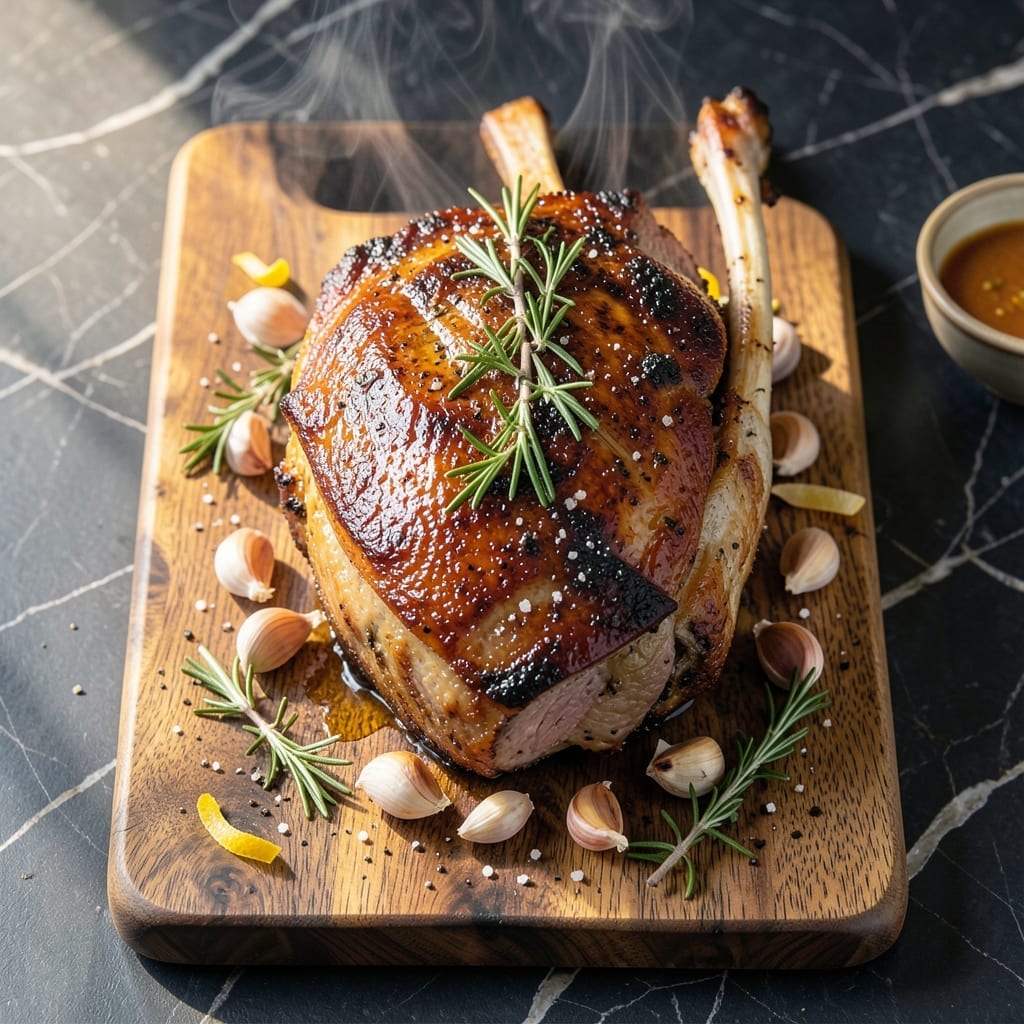
The reverse-sear method transforms this bone-in prime rib into a masterpiece of even cooking and perfect crust. This technique delivers perfect medium-rare from edge to edge.
By starting low and slow, then finishing with a high-heat sear, you ensure a tender, juicy roast with a deeply caramelized exterior. It’s the professional approach for show-stopping results.
Ingredients for Prime Rib Roast Recipe Bone In
This is what a show-stopping roast looks like: prime beef, bold herbs, and a perfect crust.
| Ingredient | Amount | Notes |
|---|---|---|
| Bone-In Prime Rib Roast 🥩 | 4 lb | First three ribs, well-marbled |
| Kosher Salt 🧂 | 2 tbsp | Diamond Crystal preferred |
| Coarse Black Pepper 🌶️ | 1 ½ tbsp | Freshly cracked for best texture |
| Garlic Cloves 🧄 | 6 cloves | Smashed, skins removed |
| Fresh Rosemary Sprigs 🌿 | 4 sprigs | Woody stems removed |
| Fresh Thyme Sprigs 🍃 | 4 sprigs | Leaves stripped from stems |
| Extra-Virgin Olive Oil 🫒 | 2 tbsp | High-smoke point variety |
| Unsalted Butter 🧈 | 4 tbsp | Softened for herb mixture |
| Red Wine 🍷 | ½ cup | Dry variety like Cabernet |
| Beef Broth 💧 | ½ cup | Low-sodium preferred |
| Dijon Mustard 🟡 | 2 tbsp | For crust enhancement |
| Horse Radish 🥬 | 2 tbsp | Prepared, for serving |
The prime rib is the star—bone-in for superior flavor. Seek out USDA Prime grade at Whole Foods or a trusted butcher (I swear by Snake River Farms for mail-order). Look for generous marbling; that fat is your insurance for juiciness. The bones should be frenched (cleaned of meat) for presentation. Ask your butcher to do this if you’re not comfortable—most will happily oblige.
No fresh herbs? Dried at one-third the amount, but fresh is non-negotiable for that bright, aromatic punch. Swap rosemary for sage if that’s what’s growing in your garden. Out of red wine? Substitute more beef broth with a splash of balsamic vinegar. The butter can be salted in a pinch, but reduce the added kosher salt by half. Don’t skip the Dijon—it’s the secret to that gorgeous, deep crust.
This roast needs to rest 30-45 minutes before slicing—non-negotiable for juiciness. Leftovers (if you’re lucky enough to have any) keep 4-5 days in the fridge. Slice against the grain for serving, and save those bones for a killer beef stock later (trust me on this).
Why You’ll Love This Recipe
- Set It & Forget: That bone-in roast does all the work in the oven—just rub it with salt, pepper, garlic, and rosemary, then let it roast low and slow.
- Crust You’ll Brag About: Honestly, the combo of coarse salt and fresh rosemary creates this deep, herby crust that’s worth every minute.
- Holiday Hero: I serve this for Christmas and birthdays, but it’s just as good on a random Sunday when I’m craving something special.
- Leftovers for Days: Between us, the sandwiches I make with the leftovers might be even better than the original meal.
Step-by-Step Instructions for Reverse-Seared Bone-In Prime Rib Roast
This method guarantees a perfectly cooked roast with a beautiful crust every single time.
Step 1: Season and Slow-Roast the Prime Rib
Pat the 4 lb Bone-In Prime Rib Roast completely dry with paper towels. This is crucial for achieving that perfect golden crust. I like to let it sit uncovered in the refrigerator for 1 hour to dry the surface further.
Rub the entire roast with the 2 tbsp Extra-Virgin Olive Oil, then season aggressively with the 2 tbsp Kosher Salt and 1.5 tbsp Coarse Black Pepper. Press the seasoning into the meat so it adheres well. The salt will penetrate the meat during the slow roast, enhancing every bite.
Place the roast bone-side down on a wire rack set in a rimmed baking sheet. Position it in the center of an oven preheated to 250°F. Slow-roast for 2 to 2.5 hours until the internal temperature reaches 110-115°F for medium-rare. This low-and-slow method ensures even cooking and maximum tenderness.
Step 2: Prepare the Herb-Garlic Butter Mixture
While the roast cooks, make the herb butter. In a small bowl, combine the 4 tbsp Unsalted Butter with the 6 cloves Garlic Cloves (smashed), leaves from the 4 sprigs Fresh Rosemary Sprigs, and leaves from the 4 sprigs Fresh Thyme Sprigs. Mix well to distribute the herbs and garlic evenly.
I like to add the 2 tbsp Dijon Mustard to this mixture—it adds a subtle tang that complements the rich beef flavor beautifully. The butter will melt into the roast during the searing phase, infusing it with aromatic goodness.
Step 3: Sear to Perfection
Remove the roast from the oven when it hits 110-115°F internally. Increase the oven temperature to 450°F. Spread the herb-garlic butter mixture evenly over the top and sides of the roast. This will create a flavorful crust as it sears.
Return the roast to the oven and cook for an additional 10-15 minutes until the internal temperature reaches 125-130°F for perfect medium-rare. Watch closely—the sugar in the butter can cause it to brown quickly. You want a deep golden crust, not a burnt exterior.
Step 4: Rest and Prepare the Au Jus
Transfer the roast to a cutting board and tent loosely with foil. Let it rest for 20-30 minutes—this allows the juices to redistribute, ensuring every slice is moist and flavorful. The internal temperature will continue to rise by about 5-10°F during this time.
While the roast rests, place the baking sheet on the stovetop over medium heat. Add the 0.5 cup Red Wine and 0.5 cup Beef Broth to the pan drippings. Bring to a simmer, scraping up all those delicious browned bits. Reduce by half to create a rich au jus for serving.
Step 5: Carve and Serve
To carve, I first remove the bones in one piece by slicing along the ribs. Then, I slice the meat against the grain into 1-inch thick portions. This ensures each serving is tender and easy to cut.
Serve the prime rib with the warm au jus on the side, along with the 2 tbsp Horse Radish for those who enjoy a little heat. The contrast of the tender, juicy meat with the bold flavors of the au jus and horseradish is absolutely divine.
Pro Tips For Making Prime Rib Roast Recipe Bone In
- Salt the Night Before: I learned this the hard way—dry-brine your prime rib with kosher salt 12-24 hours ahead to guarantee a well-seasoned crust and even juiciness throughout.
- Start Hot, Finish Low: Sear it at 450°F for 30 minutes, then drop to 225°F until it hits 120°F internal for perfect medium-rare without overcooking the ends.
- Skip the Cold Roast: Let the prime rib sit on the counter for 2 hours before roasting—this prevents uneven cooking and a gray band near the edges.
- Crush the Garlic: Smash the garlic cloves and rub them into the meat with the rosemary for more flavor penetration than whole cloves ever give.
Serving Suggestions for This Dish
Plating Like a Pro
Place 1-inch thick slices on a warm platter with the bones arranged alongside for dramatic effect. Drizzle some au jus over the meat, letting it pool slightly on the board. This presentation highlights the reverse-sear’s beautiful crust. 🔥
Holiday Centerpiece
For special occasions, garnish with fresh rosemary sprigs and whole garlic cloves. The aromatic herbs release their fragrance as guests serve themselves, enhancing the dining experience. I love this rustic, elegant look for Christmas dinner.
Sauce Pairings
Serve the au jus in a small gravy boat for dipping. Offer horseradish cream on the side—mix 2 tbsp prepared horseradish with ¼ cup sour cream. This creamy, spicy contrast elevates every bite.
Side Dish Harmony
Classic pairings include creamy mashed potatoes to soak up the juices, and roasted Brussels sprouts with bacon. For a lighter option, try a winter salad with pomegranate seeds and walnuts. The acidity cuts through the richness perfectly.
Wine Recommendations
A bold Cabernet Sauvignon stands up to the rich beef flavors. For white wine lovers, an oaky Chardonnay offers a buttery complement. I always serve wine at room temperature for the best experience. 🍷
Leftovers Magic
Transform leftovers into prime rib sandwiches on crusty rolls with melted provolone and caramelized onions. Or dice and toss with roasted vegetables for a hearty beef hash. The possibilities are endless with this versatile cut.
Frequently Asked Questions
What internal temperature ensures perfect medium-rare?
Remove from oven at 125-130°F for ideal medium-rare. The temperature will rise 5-10°F during resting. Use a meat thermometer for accuracy.
Why use a reverse-sear method?
Reverse-searing guarantees even cooking from edge to edge. The low-and-slow start (250°F) maximizes tenderness, while the final 450°F sear creates a perfect crust.
How long should the roast rest before slicing?
20-30 minutes is essential for juiciness. Tent loosely with foil to keep warm. Skipping this step means dry meat.
Can I use boneless instead of bone-in?
Yes, but bone-in adds flavor and helps maintain moisture. Adjust cooking time slightly as boneless cooks faster. The reverse-sear method works for both.
Nutrition Facts

- BBQ Sausage Recipe Oven: Smoky Depth Without the Grill - September 28, 2026
- BBQ Chicken Bowl Recipe Rice: Smoky Sweetness Over Fluffy Grains - September 28, 2026
- Beef Cutlet Recipe Ideas: Crispy Breaded Patties With Bold Seasonings - September 28, 2026