
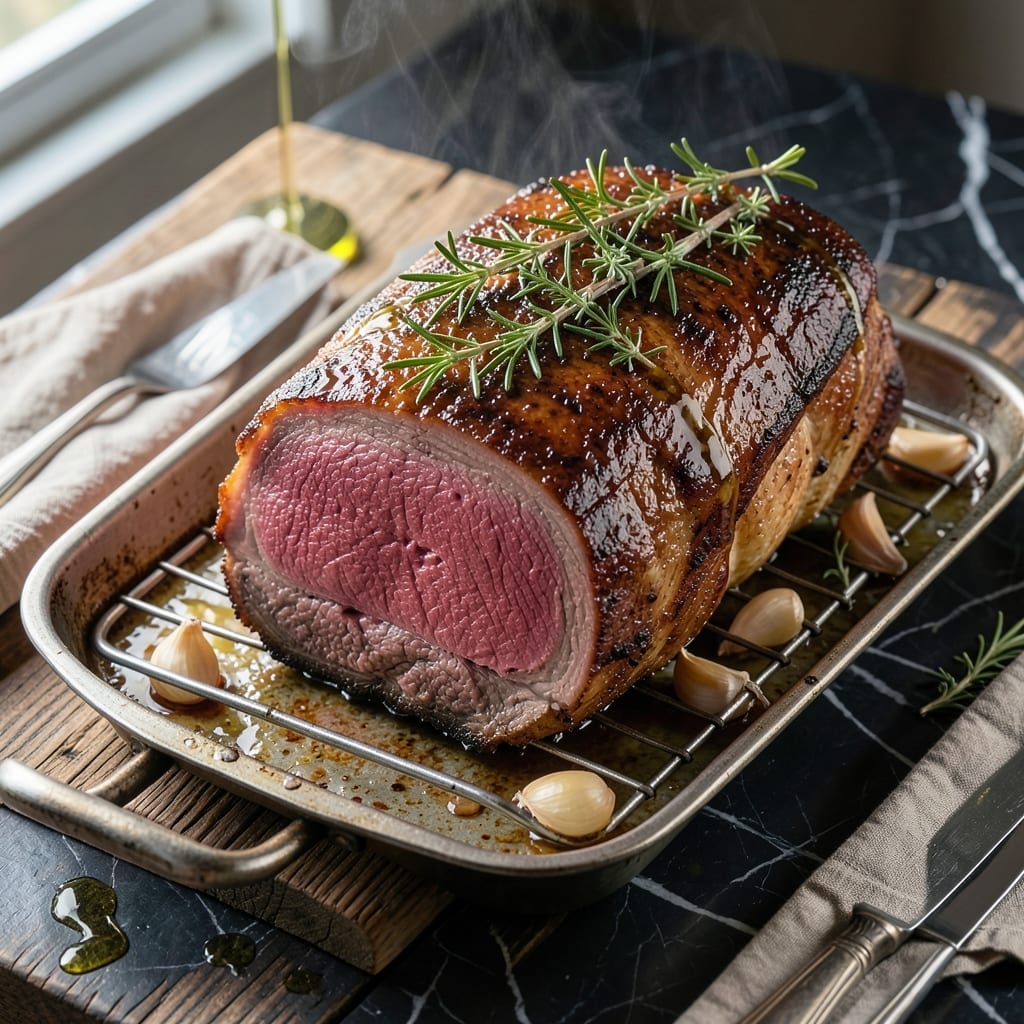
For special occasions, this slow-roasted prime rib delivers perfect medium-rare results every time. I’ve tested this method in my small Boston kitchen, and it works flawlessly.
The key is starting with a high-heat sear to create a deep crust, then finishing at a low temperature for even cooking. This approach ensures a tender, juicy center with a flavorful exterior.
You’ll end up with a roast that’s impressive enough for holidays but simple enough for a Sunday dinner. The meat stays succulent, and the crust develops rich, caramelized flavors.
Pair it with roasted vegetables or creamy mashed potatoes for a complete meal. Here’s how to achieve this showstopping result.
Ingredients for Prime Rib Roast Recipe in Roaster
Prime rib needs just a few quality ingredients to shine. Nothing hides here.
| Ingredient | Amount | Notes |
|---|---|---|
| Prime Rib Roast 🥩 | 5 lb | Bone-in, well-marbled preferred |
| Kosher Salt 🧂 | 2 tbsp | Diamond Crystal preferred for even seasoning |
| Freshly Ground Black Pepper 🌶️ | 2 tbsp | Coarsely ground for texture |
| Garlic Cloves 🧄 | 6 cloves | Smashed, peeled for rubbing |
| Fresh Rosemary Sprigs 🌿 | 4 pieces | Stems removed, finely chopped |
| Fresh Thyme Sprigs 🍃 | 4 pieces | Leaves stripped from stems |
| Olive Oil 🫒 | ¼ cup | Extra-virgin for richness |
| Unsalted Butter 🧈 | 4 tbsp | Room temperature for basting |
| Red Wine 🍷 | ½ cup | Dry variety for deglazing |
| Beef Stock 🥩 | 1 cup | Low-sodium preferred for control |
| Yellow Onion 🧅 | 1 whole | Roughly chopped for roasting bed |
| Carrots 🥕 | 3 whole | Peeled, cut into chunks |
| Celery Stalks 🌿 | 3 pieces | Cut into large pieces |
The prime rib is the star. Whole Foods or a trusted butcher for the best cut—look for bright red meat with plenty of marbling throughout (that fat = flavor). Bone-in gives more flavor, but boneless works if that’s what’s available. I always ask for the ribeye end—it’s got the most fat cap. Don’t trim the fat yourself; that layer protects the meat while roasting.
No fresh herbs? Dried at one-third the amount works in a pinch, but fresh is worth the effort here. Swap the red wine for extra beef stock with a splash of balsamic—close enough for the pan sauce. Out of butter? Olive oil alone is fine for the sear, but you’ll miss that rich basting flavor. The onion, carrot, and celery are your aromatics—skip them only if desperate.
Prime rib leftovers are a gift. Carve and store in airtight containers for up to 4 days in the fridge, or freeze for 3 months. The fat will solidify—just skim it off before reheating. Always bring to room temp before slicing (about 30 minutes on the counter).
Why You’ll Love This Recipe
- Set It & Forget It: The roaster does all the work—I just season, pop it in, and let the oven handle the rest.
- Herb-Crusted Heaven: That garlic and rosemary rub forms the most ridiculous crust, and the meat stays juicy every single time.
- Holiday Hero: I’ve served this for Christmas, birthdays, even a random Sunday dinner. It always feels like a celebration.
- Leftovers for Days: Between us, the sandwiches I make with the leftovers are almost better than the original meal.
Step-by-Step Instructions for Prime Rib Roast in Roaster
Here’s the method I’ve perfected for achieving that ideal medium-rare result every time.
Step 1: Prepare and Season the Prime Rib Roast
Begin by removing the 5 lb Prime Rib Roast from the refrigerator and letting it sit at room temperature for 1-2 hours. This ensures even cooking throughout the thick cut. Pat it completely dry with paper towels—moisture prevents proper browning.
In a small bowl, combine the 2 tbsp Kosher Salt, 2 tbsp Freshly Ground Black Pepper, the finely chopped 4 pieces Fresh Rosemary Sprigs, and the leaves from the 4 pieces Fresh Thyme Sprigs. Rub this mixture all over the roast, pressing firmly to adhere. The herbs and coarsely ground pepper will create a fragrant crust as it roasts.
Step 2: Create the Roasting Bed and Initial Sear
Preheat your roaster to 450°F. While it heats, scatter the roughly chopped 1 whole Yellow Onion, the 3 whole Carrots (peeled and cut into chunks), and the 3 pieces Celery Stalks across the bottom of the roaster pan. These vegetables will flavor the drippings and prevent the roast from sitting directly in the fat.
Place the seasoned roast bone-side down on top of the vegetables. Drizzle with the 0.25 cup Olive Oil, ensuring it’s evenly coated. This high-heat start will create a beautiful crust on the exterior while keeping the interior tender. Roast at 450°F for 30 minutes to develop that deep brown color.
Step 3: Slow Roast to Medium Rare Perfection
After the initial sear, reduce the roaster temperature to 325°F. At this point, baste the roast with the 4 tbsp Unsalted Butter that has been softened to room temperature. I like to do this every 30 minutes to keep the meat moist and add richness to the crust.
Continue roasting until the internal temperature reaches 120-125°F for medium rare, which typically takes about 1.5-2 hours for a 5 lb roast. Use a meat thermometer inserted into the thickest part, avoiding the bone. The roast is done when it reaches your desired temperature—the meat will continue to rise 5-10°F as it rests.
Step 4: Rest and Prepare the Au Jus
Transfer the roast to a cutting board and tent loosely with foil. Let it rest for 20-30 minutes—this is crucial for the juices to redistribute throughout the meat. While it rests, place the roaster pan on the stovetop over medium heat.
Add the 0.5 cup Red Wine to deglaze the pan, scraping up all the browned bits. Simmer for 2-3 minutes until reduced by half. Add the 1 cup Beef Stock and simmer for another 5 minutes. Strain the au jus and serve alongside the carved prime rib for a perfect finishing touch.
Pro Tips For Making Prime Rib Roast Recipe In Roaster
- Salt the Night Before: I learned this the hard way—rub the prime rib with kosher salt at least 12 hours ahead, then leave it uncovered in the fridge. This draws out moisture for a better crust and ensures the seasoning penetrates deep into the meat.
- Start Hot, Finish Low: Crank the roaster to 450°F for the first 30 minutes to get that perfect sear, then drop it to 325°F for even cooking. This gives you a crispy exterior without drying out the inside.
- Don’t Skip the Herb Paste: Crush the garlic and rosemary with a little olive oil into a paste before rubbing it on the roast—it sticks better than whole sprigs and infuses every bite with flavor.
- Rest Under Foil: After pulling the roast out, tent it loosely with foil and let it sit for 20-30 minutes. Skipping this step means all the juices will end up on the cutting board instead of in the meat.
Common Mistakes When Making Perfect Results
Skipping the Rest
I learned this the hard way—carving too soon ruins everything. That 20-30 minute rest lets juices redistribute. Slice early and you’ll watch all that beautiful moisture pool on your cutting board, not in your meat. 💪
Uneven Temperature
Your roaster needs to hold 325°F consistently. Hot spots cause uneven cooking. I rotate my roast pan 180 degrees halfway through and always use an oven thermometer to verify. That cheap $10 digital probe saved my first few attempts.
Cold Meat Start
Never put a cold roast straight from the fridge into the oven. Let your 5 lb prime rib sit at room temperature for 1-2 hours first. This ensures even cooking from edge to center, preventing a dry exterior with a raw middle.
Overcrowding the Pan
Give your roast space. Cramming vegetables too tightly around the meat steams instead of roasts it. Use a large enough roaster pan that air can circulate freely around the prime rib.
Ignoring the Thermometer
Color and cooking time are unreliable guides. I pulled my first roast at 125°F internal temp, thinking it looked done. Use a meat thermometer in the thickest part, avoiding the bone, for perfect medium-rare every time.
Forgetting to Baste
That 4 tbsp unsalted butter isn’t just for flavor—it’s insurance against dry meat. Baste every 30 minutes during the slow roast phase. I use a bulb baster, but a spoon works just as well in my tiny Boston kitchen. ✨
Nutrition Facts
Frequently Asked Questions
Should I cover the roast while cooking?
No, leave it uncovered to develop a proper crust. Covering traps steam, which softens the exterior instead of browning it.
How do I know when it’s done without a thermometer?
While a thermometer is best, the meat should feel like the base of your thumb when touching your index finger (medium-rare). But for accuracy, a thermometer is highly recommended.
Can I use an electric roaster instead of an oven?
Yes! Set it to 450°F for the initial sear, then reduce to 325°F. Follow the same timing and temperature guidelines.
What if my roast is smaller or larger than 5 lbs?
Adjust cooking time: allow about 15-20 minutes per pound at 325°F after the initial sear. Always use a thermometer to check doneness.

- Pudding Recipe With Egg Yolks: Silky Smooth Custard in Minutes - November 3, 2026
- Pudding Pops Recipe Cook and Serve: Silky Frozen Treats Without the Machine - November 3, 2026
- Protein Ice Cream Recipe Blender Xanthan Gum: Ultra Creamy Texture Without the Guilt - November 3, 2026