
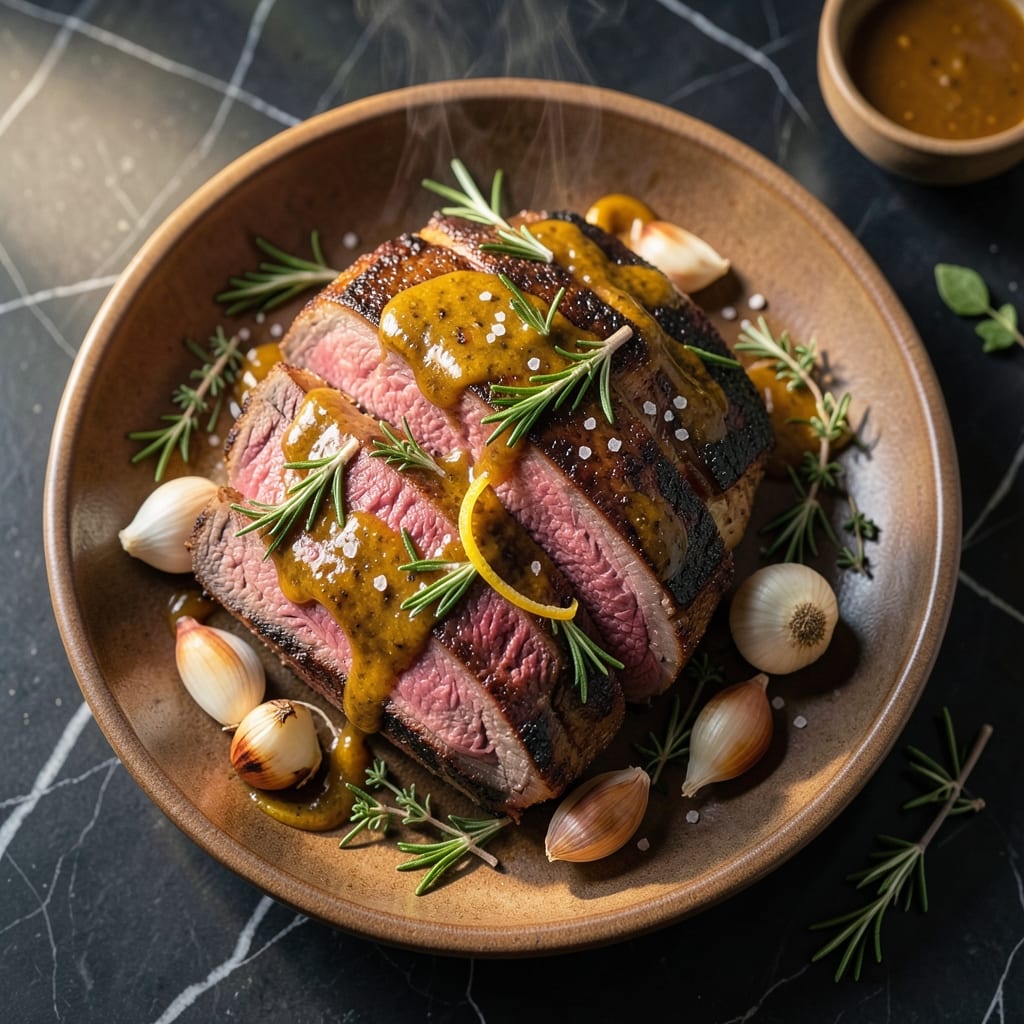
Few dishes command a holiday table like a perfectly roasted prime rib with its rich, beefy aroma filling the kitchen. This method delivers a golden seared crust and tender, rosy center every time, using a mustard-herb paste that forms an irresistible barrier of flavor.
The mustard in the crust isn’t just for taste—it helps create that coveted caramelized exterior while keeping the meat juicy. I learned this technique from a Portland butcher who swore by it, and it’s never failed me.
With a simple seasoning approach and precise temperatures, you’ll achieve restaurant-quality results without the stress. The herb-mustard coating locks in moisture while adding complex layers of flavor that complement the beef’s natural richness.
Serve with au jus for dipping or as a base for Yorkshire pudding. This is the centerpiece your special occasions deserve.
Ingredients for Prime Rib Roast Recipe Mustard
Golden crust starts with bold flavors: mustard, herbs, and prime beef. Nothing else matters.
| Ingredient | Amount | Notes |
|---|---|---|
| Prime Rib Roast 🥩 | 5 lb | Bone-in, well-marbled preferred |
| Dijon Mustard 🟡 | ½ cup | Whole grain or smooth works |
| Fresh Rosemary 🌿 | 3 tbsp | Finely chopped for paste |
| Fresh Thyme 🍃 | 3 tbsp | Leaves stripped from stems |
| Garlic Cloves 🧄 | 6 cloves | Minced for maximum flavor |
| Kosher Salt 🧂 | 2 tbsp | For seasoning roast exterior |
| Black Pepper 🌶️ | 1 ½ tbsp | Freshly ground for best results |
| Olive Oil 🫒 | ¼ cup | For binding herb paste |
| Beef Stock 🥣 | 2 cups | Low-sodium preferred for au jus |
| Red Wine 🍷 | 1 cup | Dry variety for deglazing |
| Unsalted Butter 🧈 | 4 tbsp | For finishing au jus |
| All-Purpose Flour 🌾 | 1 tbsp | Optional for thickening au jus |
The prime rib is the star—bone-in from a reputable butcher (I trust Whole Foods or local shops) gives the best marbling. Look for bright red meat with creamy fat. Ask for the ribeyes to be left on if they’re not already. The mustard? Maille or Grey Poupon are my go-tos. Fresh herbs make a difference here (the good stuff, not the pre-dried kind).
No prime rib? Ribeye roast works in a pinch, though the texture differs. Swap Dijon for whole grain mustard if you prefer more texture. Fresh out of rosemary? Dried at one-third the amount works, but fresh is ideal. The red wine can be any dry variety—Cabernet or Merlot both shine. For au jus, vegetable stock substitutes fine.
Prime rib needs to rest after cooking—30 minutes minimum. Leftovers? Wrap tightly, keep in fridge for 4-5 days. The au jus freezes beautifully for 3 months (perfect for future roasts or gravy).
Why You’ll Love This Recipe
- Minimal Hands-On Time: Honestly, it’s just rub, roast, and rest—no flipping, no fussing, and the oven does all the work.
- Herb-Crusted Perfection: That Dijon mustard crust with rosemary and garlic forms this crave-worthy, savory-sweet bark that’s impossible to resist.
- Holiday or Tuesday: I’ve served this at Christmas and also, yes, on a random Tuesday night—it feels special either way.
- Leftovers for Days: One roast means sandwiches, tacos, or just cold slices straight from the fridge for at least three more meals.
Step-by-Step Instructions for Herb-Crusted Prime Rib Roast
Here’s how I make this showstopping roast with a mustard-herb crust that’s crispy outside, tender inside.
Step 1: Prep and Season the Roast
Remove the 5 lb prime rib roast from the fridge 2 hours before cooking to bring it to room temperature. Pat it completely dry with paper towels—this ensures the crust adheres properly.
Rub the entire surface with the 2 tbsp kosher salt and 1.5 tbsp black pepper. I press the seasoning in firmly so it forms a good base layer for the herb paste. This step builds the foundation of flavor.
Step 2: Create the Mustard-Herb Paste
In a small bowl, combine the 0.5 cup Dijon mustard, 3 tbsp fresh rosemary, 3 tbsp fresh thyme, 6 cloves garlic cloves, and 0.25 cup olive oil. Mix until it forms a thick, spreadable paste. The olive oil helps bind everything together.
Spread this paste evenly over the entire surface of the roast, pressing it into all the nooks and crannies. The mustard will create a tangy, aromatic crust as it cooks. Let the roast sit with the paste for 30 minutes before roasting.
Step 3: Roast at High Heat for a Golden Crust
Preheat your oven to 450°F. Place the roast bone-side down in a roasting pan. This high heat will sear the outside quickly, locking in juices and creating that beautiful golden brown crust.
Roast for 20 minutes, then reduce the oven temperature to 325°F without opening the door. Continue roasting until the internal temperature reaches 120°F for medium-rare. This usually takes 1.5 to 2 hours total, depending on your oven.
Step 4: Make the Au Jus
Transfer the roast to a cutting board and tent it loosely with foil. Place the roasting pan on the stovetop over medium heat. Add the 1 cup red wine and deglaze, scraping up all the browned bits from the bottom of the pan.
Stir in the 2 cups beef stock and bring to a simmer. For a thicker sauce, whisk in the 1 tbsp all-purpose flour mixed with 2 tbsp of the 4 tbsp unsalted butter. Simmer for 5 minutes until slightly reduced, then whisk in the remaining butter for a glossy finish.
Step 5: Rest and Serve
Let the roast rest for 20 minutes before slicing. This allows the juices to redistribute, ensuring every bite is moist and flavorful. The internal temperature will rise about 5°F during resting.
Slice the roast between the bones and serve with the au jus on the side. The herb crust should be deeply browned and fragrant, while the meat inside stays perfectly pink and juicy. Serve immediately for the best experience.
Pro Tips For Making Prime Rib Roast Recipe Mustard
- Reverse Sear First: Start with a low oven at 250°F until the internal temp hits 110°F for medium-rare, then blast it at 450°F for 10-15 minutes to get that mustard-herb crust to caramelize properly—I learned this the hard way after pulling out dry roasts from a too-hot oven.
- Score the Fat Cap: Make shallow cuts in a crosshatch pattern over the fat before rubbing in the Dijon, garlic, rosemary, and thyme. Sounds weird, but it works: the mustard and herbs penetrate deeper, and the fat renders out more evenly.
- Skip Cold Meat: Let the roast sit out for 1-2 hours before cooking—yes, even if you’re impatient like me. A cold prime rib steals heat from the oven and cooks unevenly, leaving the center underdone while the edges dry out.
- Rest Under Foil: After pulling it from the oven, tent it loosely with foil and give it a solid 20 minutes. My grandmother swore by this, and she was right: it keeps the juices inside where they belong instead of all over your cutting board.
Troubleshooting This Recipe
Crust Not Browning
If your mustard-herb crust isn’t getting that golden finish, your oven might not be hot enough at the start. I always preheat my oven to 450°F for 15 minutes before roasting. Also, pat the roast completely dry before applying the paste—moisture prevents browning. 🔥
Uneven Cooking
For even doneness, place the roast bone-side down in the pan. The bones act as a natural rack, allowing heat to circulate. If one side browns faster, rotate the pan 180 degrees halfway through cooking. Avoid opening the oven door unnecessarily during the first 20 minutes.
Dry or Tough Meat
This usually means overcooking. Pull the roast when internal temp hits 120°F for medium-rare—it will rise to 125°F while resting. Always use a meat thermometer; visual cues can be misleading. Let it rest 20 minutes before slicing to redistribute juices.
Paste Sliding Off
If your mustard-herb paste isn’t sticking, the roast might not be dry enough. Pat it thoroughly with paper towels first. I also find that pressing the paste firmly into the meat helps. Let it sit for 30 minutes before roasting to allow the flavors to adhere.
Au Jus Too Thin
For a thicker au jus, mix 1 tbsp flour with 2 tbsp cold water before adding to the pan. Simmer for 5 minutes to reach your desired consistency. If it’s still too thin, reduce it further over medium heat until it coats the back of a spoon.
Overly Salty Crust
If your crust tastes too salty, you may have used too much kosher salt in the initial rub. Next time, use 1 tbsp per pound of meat. Also, rinse the roast and pat dry if you’ve oversalted—this removes some of the excess. The mustard paste helps balance the saltiness too. 💡
Nutrition Facts
Frequently Asked Questions
Why use mustard in the crust?
Mustard adds tangy depth that cuts through the beef’s richness. It also helps create a caramelized, flavorful crust while keeping the meat moist.
Can I use a different mustard type?
Yes! Whole grain mustard adds texture, while yellow mustard offers milder flavor. Avoid sweet varieties like honey mustard.
How do I know when it’s done?
Use a meat thermometer: 120°F for medium-rare. The temperature will rise 5°F while resting. Never rely on color alone.
What if my crust burns before the meat cooks?
Tent the roast with foil if the crust browns too quickly. Continue cooking until the internal temperature reaches 120°F.

- Progresso Recipe Starters Creamy Parmesan Basil Cooking Sauce: Rich Herb-Infused Base for Pasta and More - November 3, 2026
- Pudding Recipe With Egg Yolks: Silky Smooth Custard in Minutes - November 3, 2026
- Pudding Pops Recipe Cook and Serve: Silky Frozen Treats Without the Machine - November 3, 2026