
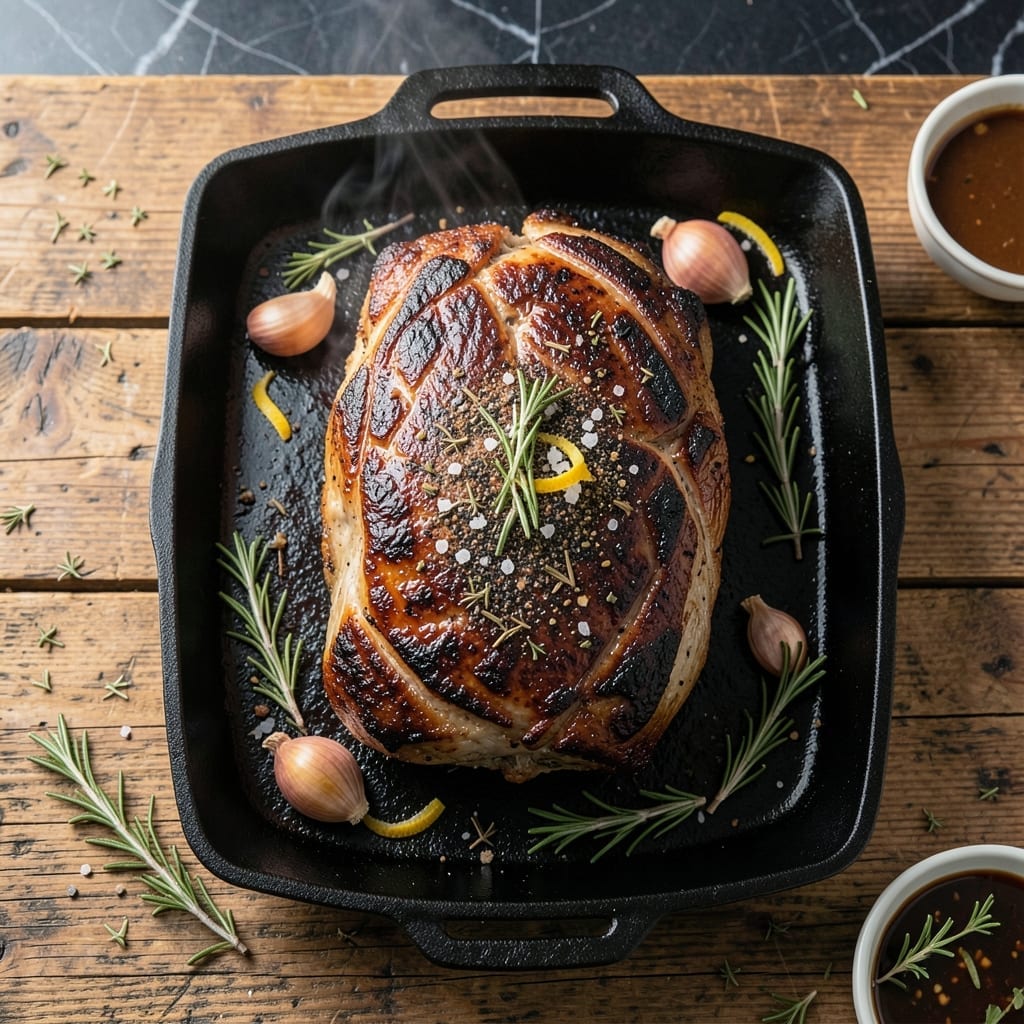
Achieving perfectly even doneness in a prime rib roast requires a strategic approach that many home cooks overlook. The reverse-sear method transforms this luxurious cut into a masterpiece of tender, juicy meat with a beautifully browned crust.
I developed this technique after years of uneven results with traditional methods. By starting low and slow in the oven, then finishing with a high-heat sear, you ensure the entire roast reaches your desired temperature without overcooking the outer layers.
The process begins with a simple seasoning blend that enhances the beef’s natural flavor. A thermometer becomes your most valuable tool, guaranteeing precise results every time. This method works beautifully for holiday meals or special occasions.
What emerges is a prime rib with a deeply caramelized crust and consistent pink center from edge to edge. The reverse-sear approach delivers restaurant-quality results with minimal active cooking time.
Ingredients for Prime Rib Roast Recipe Sear First
Luxurious beef meets simple seasonings for a showstopping centerpiece without complication.
| Ingredient | Amount | Notes |
|---|---|---|
| Prime Rib Roast 🥩 | 5 lb | Bone-in, well-marbled preferred |
| Kosher Salt 🧂 | 2 tbsp | Diamond Crystal or Morton preferred |
| Freshly Ground Black Pepper 🌶️ | 2 tbsp | Coarse grind for crust |
| Garlic Powder 🧄 | 1 tbsp | Not garlic salt substitute |
| Dried Rosemary 🌿 | 1 tbsp | Crushed for better adhesion |
| Dried Thyme 🍃 | 1 tbsp | Rubbed between fingers before use |
| Olive Oil 🫒 | ¼ cup | Extra-virgin for searing |
| Unsalted Butter 🧈 | ½ cup | Softened for basting |
| Fresh Garlic Cloves 🧄 | 6 cloves | Smashed for basting infusion |
| Fresh Rosemary Sprigs 🌿 | 4 pieces | For aromatic basting |
| Red Wine 🍷 | ½ cup | Dry bold variety for deglazing |
| Beef Stock 🥩 | 1 cup | Low-sodium preferred for reduction |
The prime rib is non-negotiable here. USDA Prime grade delivers superior marbling, but Choice works excellently with proper cooking. Source from a reputable butcher or Whole Foods—ask for the ribeye end (more fat = more flavor). The bone-in variety provides both insulation and presentation value. Ensure the roast sits uncovered in the fridge for 24-48 hours before cooking for optimal dry-brine penetration.
No fresh rosemary? Dried at one-third the amount suffices, though fresh delivers superior aroma. Red wine substitution: Balsamic vinegar plus beef broth (2:1 ratio) achieves comparable depth. For the butter basting, duck fat or ghee offer excellent alternatives with higher smoke points. If avoiding alcohol entirely, San Pellegrino or sparkling apple cider can deglaze effectively.
Store raw roast on a wire rack over a tray for 3-4 days max. Cooked prime rib keeps beautifully—slice before storing for easier reheating. Freeze slices wrapped tightly for up to 3 months. Always bring to room temperature before reheating to preserve moisture and texture.
Why You’ll Love This Recipe
- One Pan Magic: I sear the prime rib first, then let the oven do the rest—just salt, pepper, garlic, and rosemary. One dish, minimal mess.
- Crispy Perfection: That first sear locks in juices while creating a crust so good, I skip the gravy.
- Holiday or Tuesday: Honestly, I make this for Christmas and random weeknights. Fancy enough for guests, simple enough for me.
- Leftovers for Days: One roast feeds us for three meals—sandwiches, tacos, you name it. My wallet and my lunchbox thank me.
Step-by-Step Instructions for Prime Rib Roast Sear First
This reverse-sear method guarantees perfect edge-to-edge doneness with a deep crust.
Step 1: Season and Slow-Roast the Prime Rib Roast
Pat the 5 lb Prime Rib Roast completely dry with paper towels. This step is non-negotiable—moisture prevents proper browning. Combine the 2 tbsp Kosher Salt, 2 tbsp Freshly Ground Black Pepper, 1 tbsp Garlic Powder, 1 tbsp Dried Rosemary, and 1 tbsp Dried Thyme in a small bowl.
Rub this mixture evenly over all surfaces of the roast, pressing firmly to ensure adhesion. Place the roast on a wire rack set in a rimmed baking sheet and refrigerate uncovered for 12-24 hours. This dry-brine process seasons the meat deeply and creates a tacky surface for better crust formation.
When ready to cook, preheat your oven to 250°F. Roast the prime rib roast on the center rack until the internal temperature reaches 120-125°F for medium-rare, approximately 2-2.5 hours. Use a probe thermometer inserted into the thickest part, avoiding bone and fat.
Step 2: Sear the Roast in Olive Oil
Remove the roast from the oven and let it rest while you heat the 0.25 cup Olive Oil in a large, heavy skillet over high heat until it shimmers but doesn’t smoke. This high smoke point makes olive oil ideal for this searing step.
Carefully place the roast in the hot oil—it will sizzle violently. Sear for 2-3 minutes per side until a deep, mahogany crust forms. Use tongs to hold the roast and sear the fat cap and ends as well. The crust should be dark brown with a slightly crisp texture, not black or burnt.
Step 3: Baste with Aromatic Butter
Reduce heat to medium and add the 0.5 cup Unsalted Butter, 6 cloves Fresh Garlic Cloves (smashed), and 4 pieces Fresh Rosemary Sprigs to the skillet. Tilt the pan slightly and continuously spoon the foaming butter over the roast for 1-2 minutes.
This basting step infuses the crust with garlic and rosemary flavors while adding a glossy sheen. The butter should foam but not burn—if it starts browning too quickly, reduce the heat slightly. The aroma at this stage will be intensely savory and fragrant.
Step 4: Rest and Prepare the Pan Sauce
Transfer the roast to a cutting board, tent loosely with foil, and let it rest for 15-20 minutes. The internal temperature will rise 5-10°F during this time. Do not skip resting—it allows juices to redistribute, ensuring moist, flavorful meat.
Meanwhile, pour off all but 2 tablespoons of fat from the skillet. Place it over medium-high heat and deglaze with the 0.5 cup Red Wine, scraping up all browned bits with a wooden spoon. Simmer for 2-3 minutes until reduced by half.
Add the 1 cup Beef Stock and simmer for another 5-7 minutes until the sauce coats the back of a spoon. Strain if desired or serve as-is for rustic texture.
Pro Tips For Making Prime Rib Roast Recipe Sear First
- Dry the Roast: Pat the prime rib completely dry with paper towels before seasoning—I learned this the hard way after my first few roasts steamed instead of seared.
- Start Hot, Finish Low: Sear the roast in a screaming hot pan for 2-3 minutes per side, then transfer to a 325°F oven. Sounds obvious, but I used to rush the sear and lost that deep crust.
- Salt It Overnight: Rub the roast with kosher salt 12-24 hours before cooking—yes, even if it seems like too much. My grandmother swore by this, and she was right.
- Rest Under Foil: After pulling it from the oven, tent the roast with foil and let it sit for 15-20 minutes. I skip this when I’m lazy, but the juices redistribute better every time I wait.
Flavor Customization for This prime rib roast recipe sear first
Herb-Enhanced Crust
Swap dried herbs for fresh—use 2 tbsp chopped fresh rosemary and 2 tbsp fresh thyme leaves with 1 tbsp garlic powder. The oils in fresh herbs create a more aromatic crust during searing. I often add 1 tbsp chopped sage for an earthy depth. 🌿
Spicy Kick
Add 1 tsp cayenne pepper or 1 tbsp smoked paprika to your dry rub for heat. For a milder version, try ½ tsp red pepper flakes. The spice pairs beautifully with beef’s richness and adds a subtle warmth to each bite.
Coffee-Rubbed Depth
Mix 2 tbsp finely ground coffee into your seasoning blend. The coffee enhances beef’s natural flavors without tasting like a cup of joe. I use dark roast for a deeper, more robust crust. It’s a game-changer for special occasions.
Mustard Crust
Brush the roast with 2 tbsp Dijon mustard before applying the dry rub. The mustard’s acidity tenderizes the surface while adding a tangy contrast to the rich meat. This French-inspired technique creates a complex, layered flavor. 💛
Citrus Zest Brightness
Add zest of 1 lemon or 1 orange to your seasoning mix. The citrus oils brighten the beef’s richness and add a subtle freshness to the crust. I prefer orange zest for its sweeter, more mellow profile.
Umami Boost
Incorporate 1 tbsp Worcestershire sauce or 1 tbsp soy sauce into your basting butter. These additions deepen the savory notes and create a glossier, more flavorful crust. Just a small amount makes a noticeable difference.
Nutrition Facts
Frequently Asked Questions
Why start with a low oven temperature?
This gentle 250°F start ensures even cooking throughout. The slow heat prevents the outer layers from overcooking before the center reaches your desired doneness.
How do I know when it’s done?
Use a meat thermometer! Pull it at 120-125°F for medium-rare. The temperature will rise 5-10°F during resting.
Can I skip the searing step?
No – searing creates the flavorful crust. Without it, you’ll miss that signature caramelized exterior that makes prime rib special.
What if my crust burns during searing?
Reduce heat to medium and sear in batches. Use tongs to hold the roast and sear the sides carefully.

- Pudding Recipe With Egg Yolks: Silky Smooth Custard in Minutes - November 3, 2026
- Pudding Pops Recipe Cook and Serve: Silky Frozen Treats Without the Machine - November 3, 2026
- Protein Ice Cream Recipe Blender Xanthan Gum: Ultra Creamy Texture Without the Guilt - November 3, 2026