
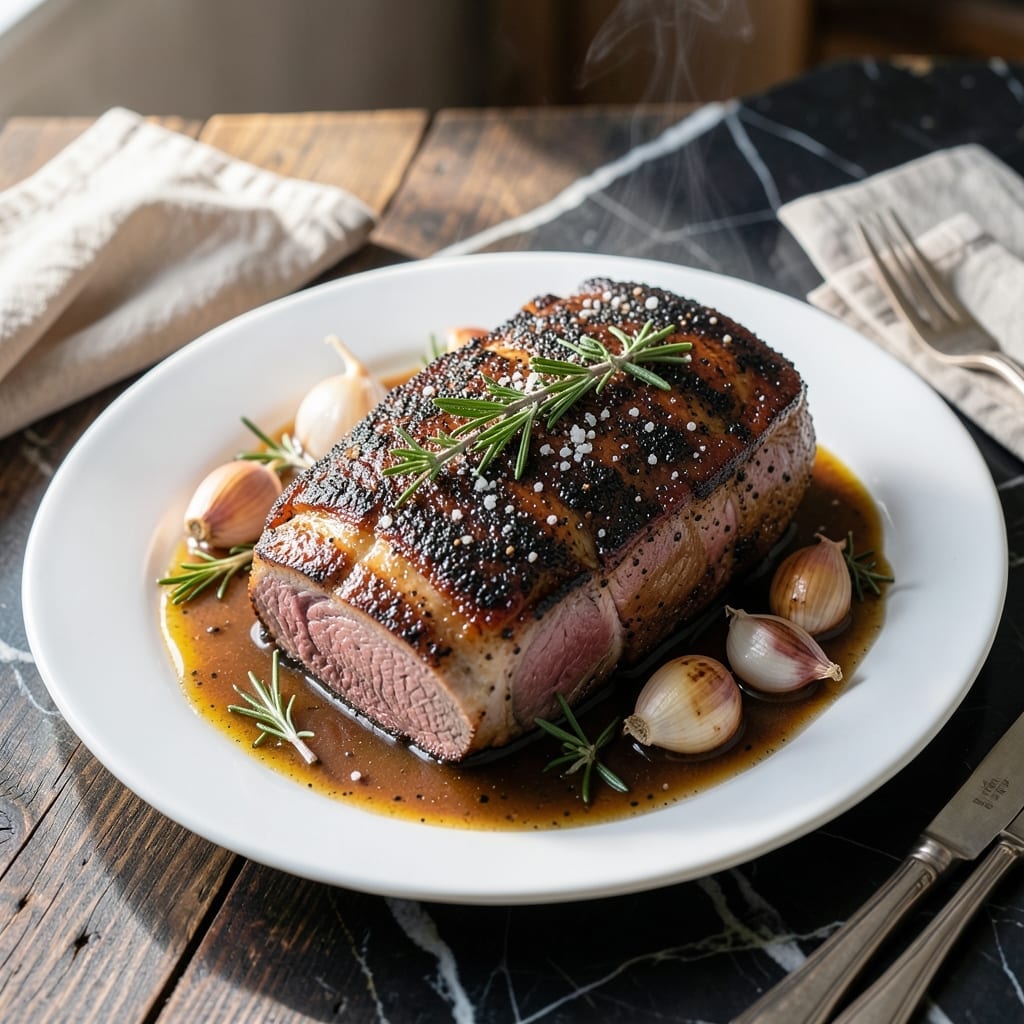
Achieving perfect medium rare prime rib every time is simpler than you think with the reverse sear method. This professional technique starts low and slow, then finishes with a high-heat sear for ideal results.
The secret lies in the oven management: cook at 200°F until the internal temperature reaches 110°F, then turn off the oven and let it rest. This ensures even cooking without overcooking the edges.
What emerges is a roast with a perfectly pink center from edge to edge, juicy and tender throughout. The reverse sear method eliminates the guesswork of traditional high-heat roasting.
This approach delivers consistent, restaurant-quality results with minimal effort. The turn-off-the-oven step is the game-changer for evenly cooked prime rib.
Ingredients for Prime Rib Roast Recipe Turn Off Oven
Quality cut plus a handful of aromatics. Restaurant-grade results start here.
| Ingredient | Amount | Notes |
|---|---|---|
| Prime Rib Roast 🥩 | 5 lb | Bone-in, well-marbled preferred |
| Kosher Salt 🧂 | 2 tbsp | Diamond Crystal preferred for even seasoning |
| Freshly Ground Black Pepper 🌶️ | 1 tbsp | Coarse grind for texture |
| Garlic Cloves 🧄 | 6 cloves | Smashed, unpeeled for roasting |
| Fresh Rosemary Sprigs 🌿 | 4 whole | Stems intact for infusion |
| Fresh Thyme Sprigs 🌿 | 4 whole | Stems intact for infusion |
| Olive Oil 🫒 | 2 tbsp | Extra-virgin for searing |
| Unsalted Butter 🧈 | 4 tbsp | For basting during sear |
| Red Wine 🍷 | 1 cup | Dry variety for au jus |
| Beef Broth 🥩 | 2 cups | Low-sodium preferred for reduction |
| Dijon Mustard 🟡 | 2 tbsp | For horseradish cream variation |
| Prepared Horseradish 🌿 | 2 tbsp | For serving, optional |
The prime rib is non-negotiable here. Bone-in roasts from a reputable butcher yield the most consistent results, with the bone acting as a natural rack for even heat distribution. Look for heavy marbling—those white fat streaks ensure juiciness. Costco and Whole Foods carry excellent pre-trimmed options if you’re short on time. Avoid pre-seasoned roasts; you want full control over the salt and pepper crust.
No fresh herbs? Dried rosemary and thyme at one-third the amount work, but fresh delivers superior aroma. For the wine, any dry red like Cabernet Sauvignon or Merlot is ideal—avoid sweet varieties. The butter can be swapped for ghee if you prefer a higher smoke point. Skip the horseradish cream if you dislike the bite, but it’s a classic pairing worth trying.
Store the uncooked roast in the coldest part of your fridge for up to 3 days. Once cooked, it keeps for 4-5 days wrapped tightly. The au jus can be made ahead and reheated—flavor actually deepens overnight. Always bring the roast to room temperature before starting the reverse sear process.
Why You’ll Love This Recipe
- Set and Forget: I love that I can turn off the oven and let the prime rib finish cooking on its own—no constant checking required.
- Garlic-Rosemary Magic: The garlic and rosemary infuse the meat with a rich, aromatic flavor that’s hard to beat.
- Holiday Ready: This is my go-to for special dinners, but it’s honestly just as good on a Sunday with the family.
- Leftovers for Days: One roast means sandwiches, tacos, and hash for the rest of the week—no waste, just deliciousness.
Step-by-Step Instructions for Prime Rib Roast Turn Off Oven
This reverse sear method guarantees even cooking and a perfect medium-rare finish every time.
Step 1: Season and Slow-Roast the Prime Rib Roast
Pat the 5 lb Prime Rib Roast completely dry with paper towels. This ensures the 2 tbsp Kosher Salt and 1 tbsp Freshly Ground Black Pepper adhere properly to form a flavorful crust. Rub the seasoning aggressively over the entire surface, including the fat cap and ends.
Place the roast fat-side up on a wire rack set in a roasting pan. Surround it with the 6 cloves Garlic Cloves, 4 whole Fresh Rosemary Sprigs, and 4 whole Fresh Thyme Sprigs for aromatic infusion. Insert a meat thermometer into the thickest part of the roast, avoiding bone and fat.
Preheat your oven to 250°F. Roast the prime rib until the internal temperature reaches 115-120°F for medium-rare, which typically takes 2 to 2.5 hours for this size. The slow rise in temperature ensures even cooking from edge to center.
Step 2: Rest and Preheat for the Sear
Once the prime rib reaches 115-120°F, remove it from the oven and tent loosely with foil. Turn off the oven completely—this is the critical “turn off oven” moment that defines this method. Let the roast rest while the internal temperature continues to rise toward 125°F.
Place your roasting pan with the rack and aromatics on the stovetop. Add the 2 tbsp Olive Oil and 4 tbsp Unsalted Butter to the pan. Turn the burner to medium-high heat to preheat the pan for searing. The residual heat from the oven and the direct flame will create a perfect crust.
The roast can rest for up to 30 minutes during this phase. This extended rest allows the juices to redistribute, and the internal temperature will stabilize at the ideal medium-rare range.
Step 3: Sear for a Crust and Build the Au Jus
Return the prime rib to the hot pan, fat-side down. Sear for 2-3 minutes until deeply browned and a crust forms. Flip and sear the other side and ends for 1-2 minutes each until uniformly deep brown.
Transfer the roast to a cutting board and tent with foil. Pour off excess fat from the pan, leaving the browned bits. Place the pan over medium heat, add the 1 cup Red Wine, and deglaze, scraping up all the fond. Reduce by half, then add the 2 cups Beef Broth and simmer for 5 minutes to create a rich au jus.
Step 4: Carve and Serve
Let the prime rib rest for an additional 10-15 minutes before carving. This final rest ensures the juices settle completely. Slice between the bones for even portions, or remove the bones and carve the meat into 1-inch thick slices.
Strain the au jus and serve it alongside the prime rib. For a creamy accompaniment, mix the 2 tbsp Dijon Mustard with the 2 tbsp Prepared Horseradish and offer it on the side. The roast should be uniformly pink from edge to edge, with a crisp, flavorful crust.
Pro Tips For Making Prime Rib Roast Recipe Turn Off Oven
- Start High, Finish Low: Sear the prime rib at 450°F for 15 minutes to get a deep crust, then drop the oven to 225°F and turn it off—let it cook in the residual heat for perfect even doneness.
- Salt Overnight: I learned this the hard way—dry-brine the roast with kosher salt at least 12 hours ahead so the seasoning penetrates deep and the surface dries out for a better crust.
- Don’t Crowd the Pan: Skip the urge to add veggies or aromatics under the roast; they’ll steam the meat instead of letting it brown properly in its own fat.
- Rest Under Foil: After pulling it from the oven, tent it loosely with foil and wait a full 20 minutes—this keeps the juices inside where they belong, not on your cutting board.
Serving Suggestions for This prime rib roast recipe turn off oven
Plating Perfection
Slice your prime rib into 1-inch thick portions and fan them slightly on a warm platter. This presentation showcases the beautiful medium-rare interior. I always arrange the bones alongside for a rustic touch. 💫
Au Jus Service
Strain the au jus into a gravy boat and serve it on the side. I recommend using a small ladle for easy pouring. The rich, reduced sauce pairs perfectly with each bite of the tender meat.
Classic Pairings
Serve with creamy horseradish sauce—just mix the 2 tbsp Dijon Mustard and 2 tbsp Prepared Horseradish—for that signature kick. A side of roasted garlic mashed potatoes soaks up the juices beautifully.
Vegetable Sides
Balance the richness with roasted asparagus or a winter vegetable medley. Toss with a little olive oil, salt, and pepper, then roast at 400°F for 15-20 minutes until tender.
Bread Basket
Include a basket of crusty bread or dinner rolls to mop up every bit of au jus. I love using a sourdough baguette for this—it adds a nice chew contrast.
Wine Match
A bold Cabernet Sauvignon or Malbec complements the rich flavors. Serve slightly below room temperature, around 60-65°F, to enhance the dining experience.
Nutrition Facts
Frequently Asked Questions
Why turn off the oven for prime rib?
Turning off the oven allows the roast to finish cooking gently using residual heat, preventing overcooking. This method helps achieve an even medium-rare from edge to edge.
How long should I rest the roast?
Rest the roast for 30 minutes after removing it from the oven. This lets juices redistribute for a moister, more flavorful result.
Can I skip the searing step?
Not recommended. Searing creates a flavorful crust and enhances the visual appeal. It only takes 2-3 minutes per side.
What if my roast is smaller?
For a 3-4 lb roast, reduce slow-roasting time to 1.5-2 hours. Use a meat thermometer to check doneness at 115-120°F.

- Protein Pudding Recipe With Sugar Free Pudding: High-Protein Creamy Indulgence - November 3, 2026
- Progresso Recipe Starters Creamy Parmesan Basil Cooking Sauce: Rich Herb-Infused Base for Pasta and More - November 3, 2026
- Pudding Recipe With Egg Yolks: Silky Smooth Custard in Minutes - November 3, 2026