
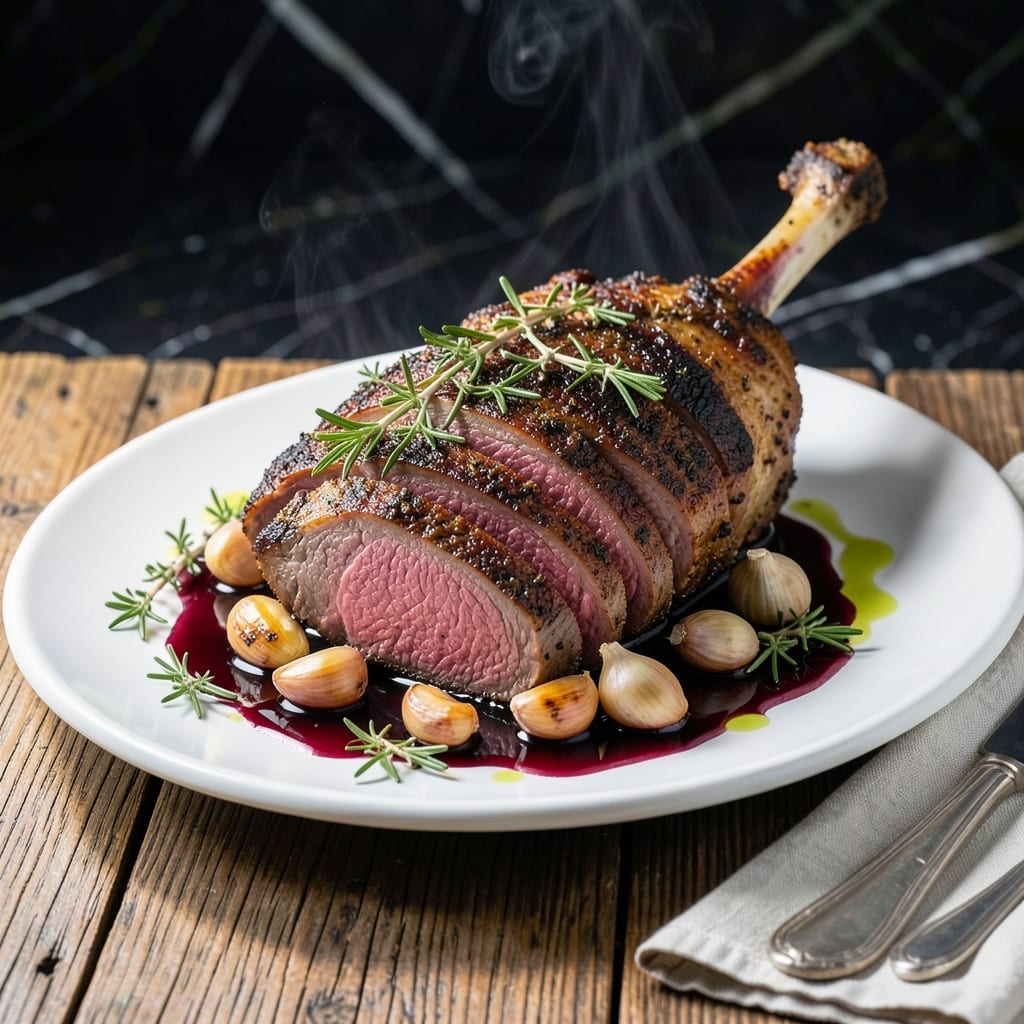
This prime rib recipe delivers a holiday centerpiece with perfectly rosy pink centers every time. I developed this method after testing multiple approaches in my small kitchen, ensuring foolproof results without fancy equipment.
The red wine enhances the beef’s natural richness, creating a crust that’s deeply flavorful. A simple dry rub and proper resting time guarantee tender, juicy meat that impresses without stress.
You’ll achieve restaurant-quality results with this professional technique, designed for home cooks. The aroma alone will have your guests gathering around the table in anticipation.
Serve with au jus for a complete experience that feels special enough for any celebration. Here’s how to make it right.
Ingredients for Prime Rib Roast Recipe with Red Wine
Holiday-worthy roast with bold flavors. Simple rub, wine-kissed crust, tender every time.
| Ingredient | Amount | Notes |
|---|---|---|
| Prime Rib Roast 🥩 | 5 lb | Bone-in, well-marbled preferred |
| Kosher Salt 🧂 | 2 tbsp | Diamond Crystal preferred |
| Freshly Ground Black Pepper 🌶️ | 1 ½ tbsp | Coarse grind ideal |
| Garlic Cloves 🧄 | 6 cloves | Minced for dry rub |
| Fresh Rosemary 🌿 | 3 tbsp | Finely chopped, stems discarded |
| Fresh Thyme 🍃 | 2 tbsp | Leaves stripped from stems |
| Dry Red Wine 🍷 | 2 cups | Full-bodied like Cabernet Sauvignon |
| Beef Stock 🥣 | 2 cups | Low-sodium preferred |
| Unsalted Butter 🧈 | ½ cup | Melted for au jus |
| All-Purpose Flour 🌾 | 2 tbsp | For thickening au jus |
| Yellow Onion 🧅 | 1 whole | Roughly chopped for au jus |
| Carrots 🥕 | 2 whole | Peeled, cut into chunks |
| Celery Stalks 🌿 | 2 whole | Cut into large pieces |
The rib roast is non-negotiable here. Bone-in ribeye end gives you that perfect marbling for juicy results. Look for bright red color with creamy fat—Costco or Whole Foods have great options. Prime grade is ideal, but Choice works if you’re budget-conscious. Ask the butcher to trim the fat cap to 1/4 inch for even cooking (worth the extra minute).
No red wine? Substitute beef broth plus 1 tbsp balsamic vinegar. Fresh herbs are best, but dried at one-third the amount works in a pinch. Out of beef stock? Chicken stock plus 1 tsp Worcestershire sauce (the Lea & Perrins kind) gets you close. The au jus can be made ahead—just reheat gently before serving.
Leftovers keep 4-5 days in the fridge, or freeze for 3 months. Slice before storing for easy reheating. The au jus thickens as it cools—stir in a splash of warm water to loosen before serving. Always rest the meat 20 minutes before slicing (don’t skip this part).
Why You’ll Love This Recipe
- Set and Forget: I just rub the prime rib with salt, pepper, garlic, and rosemary, pop it in the oven, and let the red wine do its magic.
- Flavor Bomb: The red wine and rosemary create this deep, rich crust that’s honestly ridiculous.
- Holiday Hero: It’s my go-to for Christmas dinner—fancy enough to impress, simple enough to actually enjoy making.
- Leftovers Luxury: Between us, the sandwiches the next day with that rosemary-garlic crust might be even better.
Step-by-Step Instructions for Prime Rib Roast With Red Wine
Here’s the method I swear by for a showstopping holiday centerpiece.
Step 1: Prepare and Season the Prime Rib Roast
Pat the 5 lb Prime Rib Roast completely dry with paper towels—this is non-negotiable for a proper crust. I always take it out of the fridge 2 hours before cooking to bring it to room temperature, which ensures even cooking throughout.
In a small bowl, combine the 2 tbsp Kosher Salt, 1.5 tbsp Freshly Ground Black Pepper, minced 6 cloves Garlic Cloves, 3 tbsp Fresh Rosemary, and 2 tbsp Fresh Thyme. Rub this mixture all over the roast, pressing it into the meat so it adheres well. The fat cap should be generously coated—this creates that beautiful herb crust everyone raves about.
Step 2: Roast at High Heat for a Perfect Crust
Preheat your oven to 450°F. Place the roast bone-side down in a roasting pan (the bones act as a natural rack). Slide it into the oven and roast for 30 minutes at this high temperature. You’ll start to see a deep brown crust forming—that’s the Maillard reaction working its magic.
After the initial sear, reduce the heat to 325°F without opening the oven door. This temperature drop allows the interior to cook gently while the exterior continues to develop flavor. Resist the urge to baste at this stage; we want that crust to stay intact.
Step 3: Cook to Desired Doneness and Rest
Continue roasting until an instant-read thermometer inserted into the thickest part (avoiding bone) reaches 120°F for medium-rare. This usually takes another 1 to 1.5 hours for a 5 lb roast, but start checking at 1 hour—ovens vary. The internal temperature will rise 5-10°F during resting, landing you at that perfect rosy pink center.
Transfer the roast to a cutting board, tent loosely with foil, and let it rest for 20 minutes. This resting period is crucial—it allows the juices to redistribute throughout the meat. If you slice too soon, you’ll lose all those precious juices to the cutting board.
Step 4: Prepare the Red Wine Au Jus
While the roast rests, place the roasting pan on the stovetop over medium heat. Add the roughly chopped 1 whole Yellow Onion, 2 whole Carrots, and 2 whole Celery Stalks to the pan drippings. Cook for 5 minutes, stirring occasionally, until the vegetables begin to soften and brown.
Pour in the 2 cups Dry Red Wine and 2 cups Beef Stock, scraping up all the browned bits from the bottom of the pan. Bring to a simmer and cook for 10 minutes until reduced by about half. For a thicker au jus, mix the 2 tbsp All-Purpose Flour with the 0.5 cup Unsalted Butter to form a beurre manié, then whisk it into the simmering liquid until smooth. Strain before serving.
Pro Tips For Making Prime Rib Roast Recipe With Red Wine
- Reverse Sear First: Start at 250°F until the internal temp hits 110°F, then blast it at 450°F for 15 minutes—I learned this the hard way after serving gray, overcooked prime rib to my in-laws.
- Salt the Night Before: Rub the roast with kosher salt 12-24 hours ahead and leave it uncovered in the fridge. Sounds weird, but it works: the salt penetrates deep and the surface dries out for a better crust.
- Skip the Cold Wine: Use room temperature red wine for the pan sauce, or warm it slightly first. After ruining a batch with chilled cabernet, I finally figured out cold wine makes the sauce taste harsh and slows down reduction.
- Crush the Garlic: Smash the garlic cloves with the side of your knife before inserting them into the roast—my grandmother swore by this, and she was right: it releases way more flavor than whole cloves.
Wine and Beer Pairings for This Dish
Bold Red Wines
A full-bodied Cabernet Sauvignon from Napa Valley mirrors the wine in your au jus, creating perfect harmony. I love how its dark fruit and tannins cut through the fat. Look for Chateau Montelena or Caymus if you want to splurge. 🍷
Elegant Alternatives
A Syrah from the Rhône Valley offers peppery notes that complement the herb crust beautifully. For a more budget-friendly option, Apothic Red Blend delivers similar richness without breaking the bank.
White Wine Surprise
If you prefer white, a full-bodied Chardonnay with oak aging can stand up to the beef. I was skeptical until I tried it with a buttery Meiomi—the vanilla notes actually work.
Craft Beer Pairings
A porter or stout with coffee and chocolate notes pairs surprisingly well. Try Guinness or Founders Porter for that roasted malt character. The carbonation cleanses your palate between bites. 🍺
Non-Alcoholic Option
For a sophisticated alcohol-free pairing, try sparkling pomegranate juice with a squeeze of lime. The tartness mimics wine’s acidity, and the bubbles provide that refreshing lift.
Nutrition Facts
Frequently Asked Questions
What’s the best internal temperature for medium-rare?
Remove from oven at 120°F—it will rise to 125-130°F while resting. This ensures juicy, rosy centers every time.
Can I use a different wine variety?
Yes! A bold Syrah or Merlot works well. Avoid sweet wines—they won’t balance the rich beef flavors.
How do I prevent the crust from burning?
Tent loosely with foil after the first 30 minutes at 450°F. This shields the crust while the interior cooks.
Can I make this ahead of time?
Cook and rest as directed, then refrigerate. Reheat slices in au jus at 350°F for 15 minutes.

- Protein Pudding Recipe With Sugar Free Pudding: High-Protein Creamy Indulgence - November 3, 2026
- Progresso Recipe Starters Creamy Parmesan Basil Cooking Sauce: Rich Herb-Infused Base for Pasta and More - November 3, 2026
- Pudding Recipe With Egg Yolks: Silky Smooth Custard in Minutes - November 3, 2026