
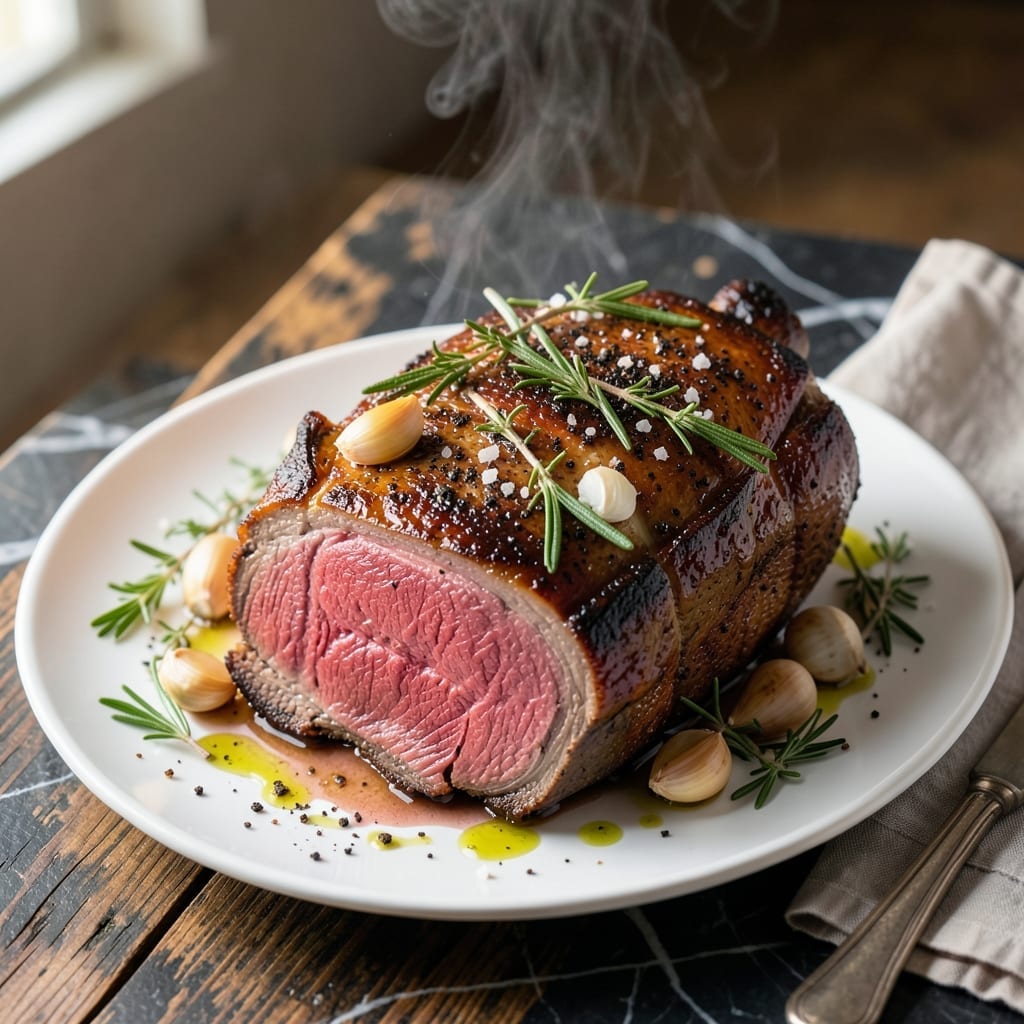
There’s nothing like a perfectly cooked prime roast with a golden herb crust to impress at the dinner table. I’ve spent years perfecting this method to ensure melt-in-your-mouth tenderness every time.
The secret starts with a simple dry brine overnight, which seasons the meat deeply and helps create that coveted crust. A blend of fresh rosemary, thyme, and garlic forms the aromatic topping that makes this dish unforgettable.
What you get is a centerpiece worthy of any special occasion—juicy, tender beef with a fragrant herb crust that releases incredible aromas as it roasts. The oven does most of the work while you prepare the sides.
Resting is key here. Letting it sit for 20 minutes after roasting ensures all those delicious juices stay locked in. Serve with roasted vegetables for the complete meal.
Ingredients for Prime Roast Recipe Oven
A few high-quality ingredients create a showstopping roast with that golden herb crust.
| Ingredient | Amount | Notes |
|---|---|---|
| Prime Rib Roast 🥩 | 4 lb | Bone-in for best flavor |
| Kosher Salt 🧂 | 2 tbsp | For dry brining overnight |
| Black Pepper 🌶️ | 1 tbsp | Freshly ground preferred |
| Fresh Rosemary 🌿 | 3 piece | Sprigs, roughly chopped |
| Fresh Thyme 🍃 | 6 piece | Sprigs, leaves stripped |
| Garlic Cloves 🧄 | 6 cloves | Peeled and smashed |
| Olive Oil 🫒 | 3 tbsp | Extra-virgin for crust |
| Dijon Mustard 🟡 | 2 tbsp | For herb paste binding |
| Red Wine 🍷 | ½ cup | Dry variety preferred |
| Beef Stock 🥣 | 1 cup | Low-sodium for control |
| Unsalted Butter 🧈 | 4 tbsp | For basting roast |
| Carrots 🥕 | 3 whole | Peeled and chopped |
| Yellow Onion 🧅 | 1 whole | Quartered for roasting |
The prime rib is the star—look for bone-in at Whole Foods or Costco for the best marbling. Ask the butcher for a roast with the cap on (that fatty layer on top) for maximum flavor. The rosemary and thyme? Fresh only—dried won’t give you that aromatic punch when it hits the hot oven. I grab mine from Trader Joe’s (cheaper than the grocery store and just as vibrant).
No prime rib? Ribeye roast is the closest swap—similar fat content and flavor. Out of fresh herbs? Double the dried at half the amount, but the crust won’t cling as well. For the wine, any dry red works (Cabernet or Merlot are safe bets). If you’re avoiding alcohol, beef stock with a splash of balsamic mimics the depth.
The roast needs to rest 20 minutes before slicing—don’t skip this. Leftovers (if there are any) keep 4-5 days in the fridge, or freeze slices for 3 months. I like to repurpose them into French dip sandwiches (trust me on this).
Why You’ll Love This Recipe
- Set and Forget: I rub the roast with salt, pepper, rosemary and thyme, pop it in the oven, and let the oven do the work.
- Herb-Kissed Crust: That crust from the fresh rosemary and thyme with the juicy center is ridiculously good.
- Holiday Centerpiece: Honestly, it’s my go-to for Christmas dinner—impressive but unfussy.
- Leftovers for Days: One prime rib feeds us for two meals, and the sandwiches the next day are even better.
Step-by-Step Instructions for Prime Roast Oven
Here’s the method I use for melt-in-your-mouth prime rib every time.
Step 1: Dry Brine and Prep the Roast
Pat the 4 lb prime rib roast dry with paper towels, then rub it all over with the 2 tbsp kosher salt and 1 tbsp black pepper. I press the seasoning in firmly so it adheres well to the meat. Place it on a wire rack set over a plate and refrigerate uncovered for at least 12 hours, up to 24 hours.
This dry brining process is what ensures the roast stays juicy and develops maximum flavor. You’ll notice the surface looks slightly tacky after salting—that’s exactly what you want.
Step 2: Make the Herb Paste and Prep Vegetables
In a small bowl, combine the 3 tbsp olive oil, 2 tbsp Dijon mustard, roughly chopped 3 piece fresh rosemary, leaves from the 6 piece fresh thyme, and the 6 cloves garlic cloves (peeled and smashed). Mash everything together into a thick paste.
While the oven preheats, peel and chop the 3 whole carrots and quarter the 1 whole yellow onion. These will form a flavorful bed for the roast and soak up all those delicious pan juices.
Step 3: Sear and Start the Roast
Preheat your oven to 450°F. Rub the herb paste all over the roast, coating it evenly. Place the carrots and onion in the bottom of a roasting pan, then set the roast on top, fat-side up.
Roast at 450°F for exactly 20 minutes to develop a beautiful crust. This high-heat start is crucial for that flavorful brown exterior while keeping the inside tender. You’ll smell the herbs and garlic starting to caramelize—that’s your cue it’s working.
Step 4: Lower Temperature and Baste
Reduce the oven temperature to 325°F. Pour the 0.5 cup red wine and 1 cup beef stock into the pan with the vegetables. Cut the 4 tbsp unsalted butter into small pieces and place a few on top of the roast.
Roast for another 1 to 1.5 hours, basting the roast with the pan juices every 30 minutes. You’ll know it’s ready when an instant-read thermometer inserted into the thickest part reaches 125-130°F for medium-rare. The meat should feel slightly soft when pressed.
Step 5: Rest and Serve
Transfer the roast to a cutting board and tent loosely with foil. Let it rest for at least 15-20 minutes before slicing—this is non-negotiable for juicy results. The internal temperature will rise to about 135-140°F during this time.
Slice against the grain into thick pieces and serve with the roasted vegetables and some of the pan juices spooned over the top. The herbs will have infused every bite with aroma, and the outside will have that perfect crust we worked for.
Pro Tips For Making Prime Roast Recipe Oven
- Dry the Roast: Pat the prime rib completely dry with paper towels before seasoning—moisture is the enemy of a good crust. I learned this the hard way after wondering why my roast never browned properly.
- Room Temp Start: Pull the roast out of the fridge 1-2 hours before cooking so it cooks evenly. Cold meat seizes up in the oven, and you’ll end up with uneven doneness.
- Don’t Overcrowd Herbs: Use a light hand with the rosemary and thyme—too much can burn and leave a bitter taste. A few sprigs tucked under the roast is plenty.
- Rest Before Slicing: Let the roast rest under foil for at least 20 minutes after pulling it from the oven. Skipping this means all those juices will end up on the cutting board, not in your meat.
Storing and Reheating Leftovers
Refrigerator Storage
Let your roast cool to room temperature—about 2 hours—before slicing and storing. I use airtight glass containers to preserve the moisture and flavor. This creation keeps beautifully in the fridge for 4-5 days. 💡
Freezer Storage
For longer storage, wrap individual slices tightly in plastic wrap, then place in a freezer-safe bag. Squeeze out excess air to prevent freezer burn. It maintains quality for up to 3 months without losing tenderness.
Stovetop Reheating
My preferred method for leftovers: Warm a skillet over medium-low heat with 1 tbsp beef stock. Add slices and cover for 2-3 minutes per side. This keeps the meat juicy and prevents drying out.
Oven Reheating
Preheat oven to 300°F. Place slices on a wire rack over a baking sheet with ¼ cup beef stock below. Cover loosely with foil and heat for 10-15 minutes until warmed through. ❄️
Cold Serving Idea
Thinly sliced leftovers make incredible sandwiches. Layer on crusty bread with horseradish mayo and arugula. The flavors deepen overnight, making this a delicious second meal.
Nutrition Facts
Frequently Asked Questions
What’s the ideal internal temperature for medium-rare?
Aim for 125-130°F on your meat thermometer. The temperature will rise to 135-140°F during the 20-minute rest, giving you perfect medium-rare every time.
Can I skip the dry brining step?
I don’t recommend it. The 12-24 hour dry brine is crucial for deep seasoning and moisture retention. Without it, your roast may lack flavor and dry out more easily.
How often should I baste the roast?
Baste with pan juices every 30 minutes during the 1-1.5 hour cooking time at 325°F. This keeps the crust flavorful and helps maintain moisture throughout.
What if my roast doesn’t have the fat cap?
Ask your butcher for a roast with the cap on, as it adds flavor and moisture. If unavailable, place 4 tbsp butter on top to mimic the fat cap’s effect during roasting.

- Protein Pudding Recipe With Sugar Free Pudding: High-Protein Creamy Indulgence - November 3, 2026
- Progresso Recipe Starters Creamy Parmesan Basil Cooking Sauce: Rich Herb-Infused Base for Pasta and More - November 3, 2026
- Pudding Recipe With Egg Yolks: Silky Smooth Custard in Minutes - November 3, 2026