
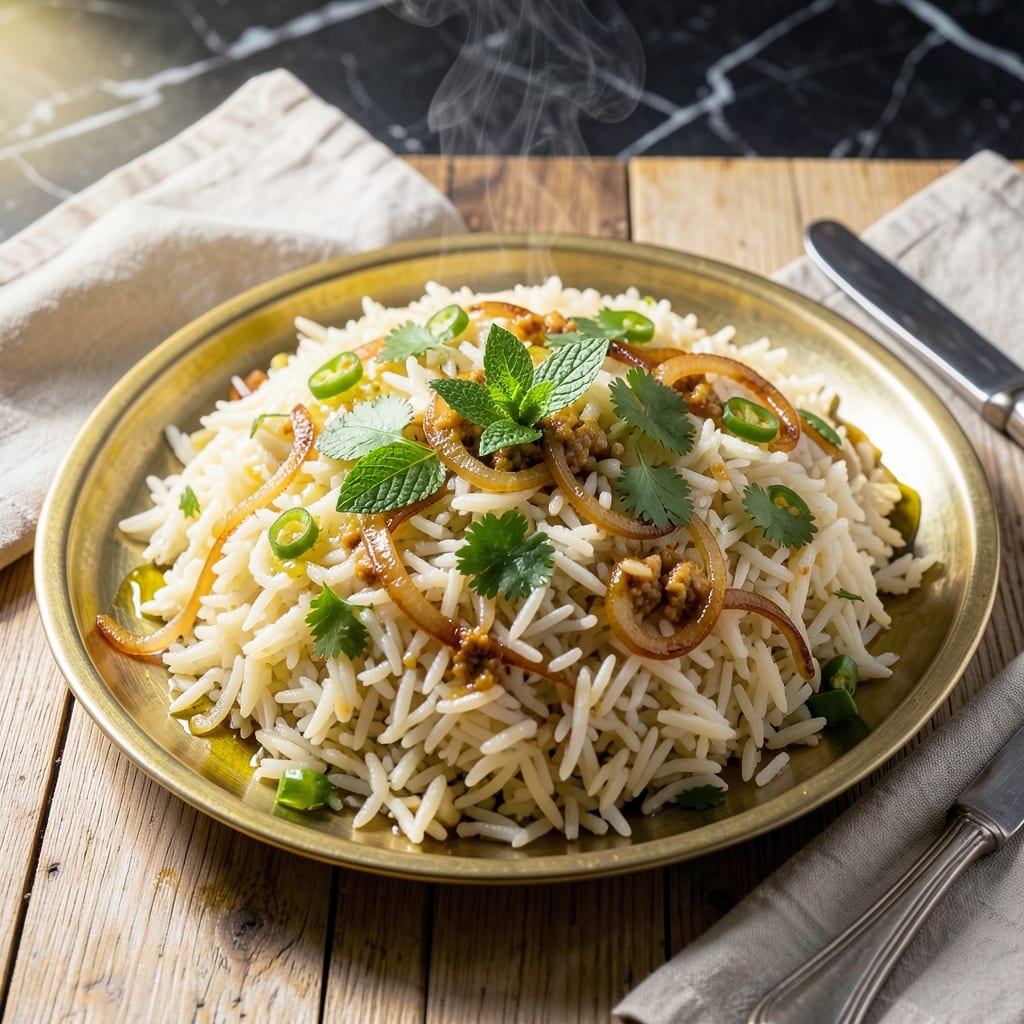
There’s something magical about the fresh aroma of mint filling your kitchen as you prepare this South Indian classic. This dish transforms simple ingredients into a fragrant, flavorful meal that’s both comforting and impressive.
I’ve adapted traditional techniques to create a foolproof method for perfect pudina rice every time. The key is balancing the bold mint flavor with just the right amount of spices and rice texture.
The result is a vibrant dish with bright green herbs, tender rice grains, and a subtle warmth from the spices. Each bite delivers a satisfying combination of freshness and depth that’s characteristic of authentic South Indian cuisine.
Serve it with raita or papad for a complete meal. Here’s how to make this delicious creation.
Ingredients for Pudina Rice Recipe in Telugu
Bright mint, aromatic spices, and fluffy rice make this dish sing with authentic South Indian flavors.
| Ingredient | Amount | Notes |
|---|---|---|
| Basmati Rice 🍚 | 1 ½ cups | Rinsed and soaked 20 minutes |
| Fresh Mint Leaves 🌿 | 2 cups | Packed, stems removed |
| Fresh Cilantro 🌿 | ½ cup | Packed, chopped |
| Green Chilies 🌶️ | 3 whole | Slit lengthwise, adjust to taste |
| Onion 🧅 | 1 whole | Finely chopped medium |
| Ginger-Garlic Paste 🧄 | 1 tbsp | Freshly ground preferred |
| Cumin Seeds 🌿 | 1 tsp | Whole for tempering |
| Cloves 🌶️ | 3 whole | Optional for depth |
| Cinnamon Stick 🌿 | 1 piece | Small 1-inch piece |
| Bay Leaf 🍃 | 1 whole | Dried or fresh |
| Turmeric Powder 🌶️ | ¼ tsp | For color and earthiness |
| Salt 🧂 | 1 ½ tsp | Adjust to taste |
| Lemon Juice 🍋 | 1 tbsp | Freshly squeezed |
| Vegetable Oil 🫒 | 3 tbsp | Or ghee for richness |
| Cashew Halves 🌰 | ¼ cup | Optional for garnish |
The mint is non-negotiable here—farmers market bunches have the most fragrance, but grocery store mint works if it’s fresh and vibrant. Look for bright green leaves with no wilting (the sad, blackened stems won’t cut it). For the rice, Indian grocery stores carry the best basmati—brands like Daawat or India Gate are my go-tos. Soaking the rice is key for that perfect, separate grain texture.
Out of fresh mint? Dried mint at half the amount works in a pinch, but the flavor won’t be as bright. No cilantro? Skip it—this dish shines with just mint. Green chilies can be swapped for serranos (same heat, different shape). Want more richness? Ghee instead of oil adds that buttery depth. The cashews are optional but add a nice crunch (toast them first).
Leftover pudina rice keeps beautifully for 3-4 days in the fridge. Store in an airtight container—reheat with a splash of water to restore moisture. The flavors actually deepen overnight, so it might taste even better the next day (worth the wait).
Why You’ll Love This Recipe
- One Pot Wonder: I love that I can cook the rice and temper the mint, cilantro, and green chilies all in the same pot—minimal cleanup, maximum flavor.
- Fresh Herb Magic: That first bite with the aromatic mint and cilantro hitting the basmati rice? Ridiculously good.
- Lunchbox Hero: Pack it for work or school—this rice stays fresh and tasty even hours later. My kids actually finish their lunchbox.
- Budget-Friendly Feast: Basmati rice and a handful of fresh herbs stretch into a filling meal. Honestly, it’s my go-to when I need to feed a crowd without breaking the bank.
Step-by-Step Instructions for Pudina Rice
Here’s how I create this aromatic dish with perfectly balanced flavors and fragrant herbs.
Step 1: Prepare and Cook the Basmati Rice
Begin by draining the 1.5 cups Basmati Rice after its 20-minute soak. This step removes excess starch, preventing sticky grains. I use a fine-mesh strainer and rinse briefly under cold water to stop the soaking process.
In a pot, bring 3 cups water to a boil. Add the drained rice along with ½ tsp salt and ¼ tsp turmeric powder. The water should turn a pale golden color. Cook the rice until it’s 70% done—the grains will still have a slight bite at the center. Drain immediately and spread on a plate to cool. This partial cooking ensures the rice absorbs the herb flavors without turning mushy.
Step 2: Create the Fragrant Herb Paste
In a blender, combine the 2 cups Fresh Mint Leaves, ½ cup Fresh Cilantro, and 3 whole Green Chilies. I pack the herbs tightly into the measuring cups for maximum flavor. Pulse until you have a coarse paste—don’t over-blend or it’ll become watery.
The paste should be vibrant green with visible herb flecks. Set it aside while you prepare the tempering. This paste is the heart of the dish, so take your time to get the texture right. The chilies add heat, but you can remove seeds first if you prefer a milder flavor.
Step 3: Temper the Whole Spices
Heat 3 tbsp Vegetable Oil in a heavy-bottomed pan over medium heat. When the oil shimmers, add the 1 tsp Cumin Seeds, 3 whole Cloves, 1 piece Cinnamon Stick, and 1 whole Bay Leaf. The cumin should sizzle immediately, releasing its earthy aroma.
After 30 seconds, add the finely chopped onion and sauté until translucent. Then stir in the 1 tbsp Ginger-Garlic Paste and cook for 1 minute until the raw smell disappears. This spice base builds the foundation of flavor for your creation.
Step 4: Combine and Finish
Add the herb paste to the pan and cook for 3-4 minutes, stirring constantly. The mixture will darken slightly and the raw herb smell will mellow into a rich, complex aroma. This cooking step is crucial—it removes the raw edge from the mint while preserving its freshness.
Now add the partially cooked rice and remaining 1 tsp salt. Gently fold everything together, being careful not to break the rice grains. Cook for 2-3 minutes until the rice is heated through and the flavors have melded. The grains should be separate and coated with the vibrant green herb mixture.
Step 5: Garnish and Serve
Remove from heat and stir in the 1 tbsp Lemon Juice. The acid brightens all the flavors and balances the richness. Taste and adjust salt if needed—remember, the flavors will continue to develop as it sits.
Transfer to a serving dish and garnish with ¼ cup Cashew Halves if using. I like to lightly toast the cashews first for extra crunch. Serve warm, when the aromas are at their peak and the herbs are most fragrant.
Pro Tips For Making Pudina Rice Recipe In Telugu
- Toast the Spices: Heat the cumin and mustard seeds in hot oil until they sizzle and pop—about 30 seconds. I learned this the hard way: raw spices taste bitter and ruin the fresh mint flavor.
- Use Stale Rice: Cook and cool the basmati rice at least an hour before mixing. Freshly cooked rice turns mushy when tossed with pudina masala—this keeps the grains separate.
- Skip the Stem: Pluck only the mint leaves and tender stems; the tougher ones add a bitter, grassy taste. After burning a batch with woody stems, I now take the extra minute to sort them.
- Chill Before Serving: Let the pudina rice sit for 10 minutes after mixing. Sounds weird, but it lets the flavors meld and the rice absorb the masala without getting soggy.
Dietary Considerations for These Flavors
Gluten-Free Naturally
This dish is inherently gluten-free as it uses only rice, fresh herbs, and spices. With no wheat-based ingredients, it’s safe for most gluten-sensitive individuals. I always double-check my cumin seeds and other spices for cross-contamination warnings. 🌱
Vegan Adaptation
To make this fully vegan, simply replace ghee with vegetable oil and ensure your cashew halves are from a dedicated facility. The dish loses no flavor—my vegan friends rave about it just as much.
Nut Allergy Note
Skip the cashew halves garnish entirely if allergies are a concern. The dish remains delicious without them. For extra crunch, try toasted pumpkin seeds instead—they add a nice texture without the allergen risk.
Low-Sodium Option
Reduce the salt by half and use low-sodium vegetable broth instead of water for cooking the rice. The herbs and spices still provide plenty of flavor, and you can always adjust salt at the table. I often do this for family members watching their intake.
Diabetic Considerations
Basmati rice has a lower glycemic index than many other varieties. For better blood sugar control, pair this dish with protein-rich sides like yogurt or dal to slow carbohydrate absorption. Portion control is key—stick to ½ cup rice per serving. 💪
Pregnancy Safety
All ingredients here are pregnancy-safe, but moderate the green chilies if heartburn is an issue. Fresh mint can actually help with nausea, making this a comforting option during those challenging first trimesters. Always consult your doctor with dietary concerns.
Nutrition Facts
Frequently Asked Questions
Can I use dried mint instead of fresh?
Yes, but use half the amount since dried herbs are more concentrated. Soak in warm water for 10 minutes to rehydrate before blending. Fresh is preferred for the best flavor.
How do I prevent the rice from turning mushy?
Cook rice only 70% before mixing with herbs. Spread on a plate to cool and stop cooking. Use 1:2 rice-to-water ratio for perfect texture.
What can I serve with this dish?
Pair with cool yogurt raita, crisp papad, or a simple cucumber salad. For protein, try dal or grilled chicken. The cool sides balance the bold mint flavor.
How long does it keep in the fridge?
Store in an airtight container for up to 3-4 days. Reheat with a splash of water to restore moisture. Flavors often taste even better the next day.

- Protein Pudding Recipe With Sugar Free Pudding: High-Protein Creamy Indulgence - November 3, 2026
- Progresso Recipe Starters Creamy Parmesan Basil Cooking Sauce: Rich Herb-Infused Base for Pasta and More - November 3, 2026
- Pudding Recipe With Egg Yolks: Silky Smooth Custard in Minutes - November 3, 2026