
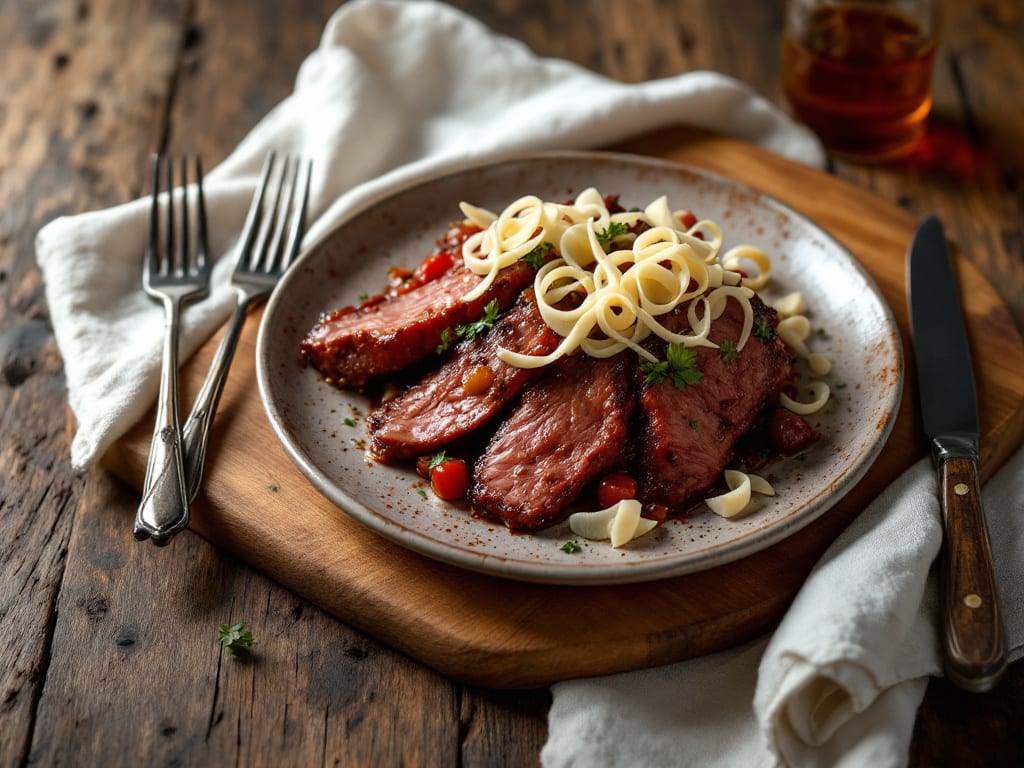
This puerco pibil recipe brings the smoky, citrusy flavors of Yucatán straight to your kitchen—where tender pork slow-cooks wrapped in achiote-spiced banana leaves. After years of perfecting this dish, I’ve adapted the traditional pit-roasting method for home ovens while keeping the soul of Mayan cuisine intact.
The result? Fall-apart pork with layers of deep, earthy, and tangy flavors that’ll transport you to Mexico’s southeastern coast.
The secret lies in the marinade: achiote paste gives that signature rust-red hue and smoky depth, while sour orange and vinegar tenderize the meat and add bright acidity.
I’ve tested this recipe with both banana leaves (for authenticity) and foil (for convenience), so you get the same rich results either way. The slow cooking transforms tough cuts into melt-in-your-mouth perfection, and the pickled onions add a crisp, tangy contrast that cuts through the richness.
By the time you’re done, you’ll have a dish that’s restaurant-quality but feels like a home-cooked masterpiece—juicy pork that practically dissolves on your tongue, infused with smoky, citrusy aromas.
Serve it with warm tortillas, black beans, and a simple cabbage slaw for a meal that’s as impressive as it is satisfying. This is the kind of recipe that turns weeknights into celebrations.
Whether you’re cooking for a family gathering or a quiet Sunday dinner, puerco pibil delivers bold flavors without the fuss of traditional pit-roasting. Let’s get started—your taste buds (and dinner guests) will thank you.
Ingredients for puerco pibil
Sixteen ingredients for a dish that tastes like a Yucatán feast—smoky, citrusy, and packed with tradition.
| Ingredient | Amount | Notes |
|---|---|---|
| Pork Shoulder 🥩 | 3 lb | Bone-in, cut into 2-inch chunks |
| Achiote Paste 🌶️ | ½ cup | Authentic Yucatán-style preferred |
| Sour Orange Juice 🍊 | 1 cup | Freshly squeezed, or substitute grapefruit |
| White Vinegar 🍶 | ½ cup | White or apple cider vinegar |
| Garlic Cloves 🧄 | 8 cloves | Peeled and smashed for intensity |
| Cinnamon Sticks 🌿 | 2 whole | For aromatic depth |
| Bay Leaves 🍃 | 2 whole | Dried, for subtle earthiness |
| Red Onion 🧅 | 1 whole | Thinly sliced for pickling |
| White Wine Vinegar 🍶 | ¼ cup | For pickled onions |
| Banana Leaves 🍃 | 6 whole | For authentic wrapping (or foil) |
| Olive Oil 🫒 | ¼ cup | Extra-virgin for finishing |
| Salt 🧂 | 2 tsp | Diamond Crystal kosher preferred |
| Ground Black Pepper 🌶️ | 1 tsp | Freshly cracked |
| Fresh Cilantro 🌿 | ¼ cup | Chopped, for garnish |
| Lime Wedges 🍋 | 4 whole | For serving |
The pork shoulder is non-negotiable here—bone-in cuts stay juicier during the slow cook. Costco or your local butcher are your best bets for quality, and look for well-marbled meat. Achiote paste is the soul of this dish; Penzeys or Latin markets carry authentic versions, but if you can’t find it, mix 1 tbsp annatto seeds with 2 tbsp oil for a DIY version. Sour orange juice is key for that signature tang—Trader Joe’s usually stocks it, or use grapefruit juice in a pinch. The banana leaves? They’re worth hunting down for authenticity, but foil works perfectly if you’re short on time.
No sour orange? Grapefruit juice plus a splash of lime gets you close. Running low on banana leaves? Heavy-duty foil is a foolproof substitute—just grease it well to mimic the leaf’s moisture. The pickled onions can be prepped ahead and stored in the fridge for up to 5 days. For extra depth, toast the cinnamon sticks and bay leaves in the oil before adding them to the marinade—worth the extra minute. If you’re feeling adventurous, add a pinch of cloves to the marinade for a spice-forward twist.
This dish tastes even better the next day, so plan ahead. The pork keeps well in the fridge for 4-5 days and freezes beautifully for 3 months. I like to wrap individual portions in foil before freezing—just reheat in the oven at 350°F for 20 minutes. The banana leaves (if using) can be stored in a dry, dark place for up to 6 months. Garnish with fresh cilantro and lime wedges right before serving—that’s when it shines.
Why You’ll Love This Recipe
- One-Pot Magic: I swear by this—just rub the pork with achiote and garlic, wrap it in banana leaves (or foil if you’re short on time), and let it slow-cook. No flipping, no fussing, no extra dishes. That’s 20 minutes of hands-off time while the magic happens.
- Tangy, Smoky Bomb: The sour orange juice and vinegar cut through the richness of the pork like a citrusy knife. Honestly, the first time I tasted it, I thought, “Why haven’t I done this sooner?”—that perfect balance of sweet, sour, and smoky achiote is ridiculously good.
- Party or Pantry: Between us, this dish is my go-to for gatherings and lazy Sundays. For parties, it’s impressive enough to feed a crowd (and leftovers taste just as good). For me? I make a double batch, shred it, and eat it all week in tacos, sandwiches, or even over rice.
- Budget Stretch: Pork shoulder is cheap, and a single achiote paste jar lasts for months—I’ve made three batches from one. Plus, the leftovers? They’re so flavorful, no one complains when I repurpose them into quesadillas or nachos. (Yes, even on a Tuesday night.)
Step-by-step instructions for Yucatán-style puerco pibil
Here’s the method that delivers authentic Yucatán flavors with tender, citrus-kissed pork every time.
Prepare the Pork and Marinade
Cut the 3 lb pork shoulder into 2-inch chunks, removing any large fat deposits but leaving some for flavor. In a large bowl, combine the 0.5 cup achiote paste, 1 cup sour orange juice, 0.5 cup white vinegar, 8 smashed garlic cloves, 2 cinnamon sticks, 2 bay leaves, and 2 tsp salt. Whisk until the achiote paste dissolves completely, creating a vibrant red marinade.
Add the pork to the marinade, ensuring each piece is fully coated. Cover and refrigerate for at least 4 hours, preferably overnight. The longer it marinates, the more tender and flavorful the pork becomes. I’ve found that overnight marinating develops deeper citrus notes and a more complex achiote flavor profile.
Real talk: Don’t skip this step. The acidity from the sour orange juice and vinegar breaks down the tough pork fibers, while the achiote paste infuses that signature Yucatán color and earthy aroma. You’ll know it’s working when the marinade takes on a deep reddish hue.
Create the Pickled Onions and Wrapping
While the pork marinates, prepare the pickled onions by thinly slicing the 1 whole red onion. In a small bowl, combine the sliced onions with 0.25 cup white wine vinegar. Let them sit for at least 30 minutes to soften and develop their tangy flavor. This step adds a bright contrast to the rich pork.
If using banana leaves, soak the 6 whole leaves in hot water for 5 minutes to make them pliable. Drain and pat dry – they should be soft enough to wrap easily but not soggy. If banana leaves aren’t available, use heavy-duty aluminum foil as a substitute. The leaves impart a subtle floral aroma that complements the citrus and achiote perfectly.
Here’s the thing – the pickled onions should be just slightly softened, not mushy. They’ll continue cooking when wrapped with the pork, so you want them to hold their shape while adding that essential tangy crunch. Taste a slice after 30 minutes – it should be bright and acidic, not vinegary.
Assemble and Cook the Pibil
Preheat your oven to 300°F. Remove the pork from the marinade (reserve the marinade) and place each piece on a banana leaf or foil. Spoon about 1 tablespoon of the reserved marinade over each piece, then top with some pickled onions. Fold the banana leaves or foil tightly around each piece to create individual packages.
Place the wrapped pork on a baking sheet and bake for 3 to 3.5 hours, until the internal temperature reaches 203°F and the pork is fork-tender. The slow cooking at this lower temperature is crucial – it allows the collagen in the pork to break down completely, resulting in that signature pull-apart tenderness.
Don’t be tempted to peek or check the temperature early. The steam created by opening the oven will actually slow down the cooking process. Instead, trust the thermometer reading and the visual cues – the pork should look moist and the juices should run clear when pierced.
Rest and Serve with Fresh Garnishes
Remove the pork from the oven and let it rest for 15 minutes before unwrapping. This resting period allows the juices to redistribute throughout the meat, preventing them from running out when you serve. The pork should be moist and tender enough to pull apart with your hands.
To serve, drizzle each portion with the 0.25 cup olive oil and garnish with the 0.25 cup chopped fresh cilantro and 4 lime wedges. The bright citrus notes of the lime cut through the richness of the pork, while the cilantro adds a fresh herbal element. Serve immediately with warm tortillas or rice to soak up those delicious juices.
This is the moment that matters: the contrast between the tender, citrus-marinated pork and the bright, acidic garnishes. Each bite should deliver layers of smoky achiote, sweet citrus, and subtle spice. The perfect puerco pibil has a balance of textures – tender meat, slightly crisp edges from the banana leaf, and that essential crunch from the pickled onions.
Pro Tips For Making Puerco Pibil
- Marinate Overnight: I learned this the hard way—rushing the marination leaves the pork dry and flavorless. Let the achiote paste, sour orange juice, and vinegar work their magic for at least 12 hours (24 is even better). The acid and spices need time to tenderize the meat and seep deep.
- Simmer Slow and Low: After burning three batches, I finally figured out: wrap the pork tightly in banana leaves (or foil if you’re in a pinch) and cook it at 275°F (135°C) for 5-6 hours. Too high a heat? You’ll end up with tough, unevenly cooked meat. Patience here makes all the difference.
- Strain the Achiote: Sounds weird, but it works—blend the achiote paste with a splash of water first, then strain out the gritty bits. The paste can be thick and uneven, and those little seeds? They’ll stick to your teeth and ruin the smooth texture of the sauce. Trust me, your mouth will thank you.
- Balance the Sour: My grandmother swore by this, and she was right: the sour orange juice should be bright but not overpowering. If your pork tastes like a lemon drop, cut it with a little honey or brown sugar (just 1-2 tablespoons). The vinegar in the marinade already adds tang—don’t double down on sour.
Regional styles of this dish
Yucatán’s Traditional Pit Style
In its homeland, puerco pibil is traditionally slow-cooked in underground pits lined with hot stones, wrapped in banana leaves. The Mayan technique uses indirect heat for hours, creating that signature tender texture.
I’ve replicated this by using a 300°F oven for 3-3.5 hours—the closest home method to the original pit-roasting. The banana leaves aren’t just for flavor; they create a steam environment that keeps the meat moist while infusing a subtle floral aroma. 🌿
Belizean Coastal Twist
Across the border in Belize, this dish becomes even more vibrant with the addition of scotch bonnet peppers to the marinade. I like to add 1-2 chopped peppers to the achiote paste for a fruity heat that complements the citrus perfectly.
Belizean versions also often include coconut milk in the marinade for extra richness. The coastal influence makes this version slightly sweeter and more complex than the classic Yucatán recipe.
Modern Oven Adaptations
For home cooks without access to banana leaves, I recommend using heavy-duty aluminum foil generously greased with olive oil. The foil mimics the moisture retention of banana leaves while preventing sticking.
Place the wrapped pork on a baking sheet with ½ inch of water in the bottom to create additional steam. This adaptation maintains all the authentic flavors while making the dish more accessible for weeknight cooking. ❄️
Tortilla Wrapping Tradition
In some regional variations, particularly in rural Yucatán, the cooked pork is served wrapped in warm corn tortillas with pickled onions and a drizzle of the reserved marinade. This creates a portable, handheld version perfect for festivals.
I’ve found that using small corn tortillas (about 6 inches) works best—heat them briefly in a dry skillet before wrapping to make them pliable. The tortilla adds a starchy contrast that balances the rich pork perfectly.
Smoky Grill Variation
For those with access to a grill, this dish can be adapted for outdoor cooking. Wrap the marinated pork in banana leaves or foil and place on the grill over indirect heat at 250°F. The smoky grill flavor adds an extra dimension to the traditional preparation.
I recommend using charcoal briquettes for a more authentic smoke profile, and rotate the packages every 30 minutes to ensure even cooking. This method works particularly well for larger gatherings where outdoor cooking is preferred.
Vegetarian Adaptation
While not traditional, I’ve experimented with a vegetarian version using portobello mushrooms or jackfruit marinated in the same achiote-citrus blend. The mushrooms absorb the marinade beautifully and develop a tender, meaty texture when slow-cooked.
For jackfruit, use 2 cans young green jackfruit in brine, drained and roughly chopped. This adaptation maintains the dish’s vibrant flavors while making it accessible to plant-based eaters. 🌱
Nutrition facts
Frequently asked questions
What makes puerco pibil different from other citrus-marinated pork dishes?
The signature combination of achiote paste (for its deep smoky flavor) and banana leaves (for floral aroma) sets it apart. Unlike regular citrus-marinated pork, this Yucatán specialty uses sour orange juice and slow-cooks wrapped in leaves or foil, creating that signature tender, rust-colored texture. The pickled onions add a tangy contrast that’s essential to the dish’s balance.
Can I substitute banana leaves with something else?
Yes! Use heavy-duty aluminum foil generously greased with olive oil as a perfect substitute. For extra moisture, place the wrapped pork on a baking sheet with ½ inch of water in the bottom. The foil mimics the banana leaf’s steam retention while preventing sticking. This adaptation works just as well for home ovens.
How do I know when the pork is fully cooked?
Use a meat thermometer to check for an internal temperature of 203°F. The pork should be fork-tender and pull apart easily. Look for juices that run clear when pierced – this indicates perfect doneness. The cooking time varies slightly based on your oven, so always rely on the thermometer rather than time alone.
What’s the best way to reheat leftover puerco pibil?
Reheat in a 350°F oven for 20-25 minutes wrapped in foil to maintain moisture. For microwave reheating, use 30-second intervals with a damp paper towel covering the dish. The slow oven method preserves the best texture, while microwave works in a pinch. Leftovers keep well for 4-5 days in the fridge.
Why does my puerco pibil taste bland?
Most likely, the marinade didn’t infuse long enough. Always marinate for at least 4 hours (overnight is best). Check your achiote paste – it should be vibrant red. For extra depth, toast the cinnamon sticks and bay leaves in oil before adding to the marinade. The acidity from sour orange juice is crucial – if using grapefruit, add a splash of lime to boost brightness.

- Oven-Dried Bananas Recipe: Caramelized Sweetness for Dessert or Breakfast - November 29, 2026
- Best Birthday Cake Recipe: Moist Layers and Vanilla Frosting Magic - November 29, 2026
- Al Pastor Crock Pot Recipe: Smoky, Spiced Pork That Falls Apart in Layers - November 29, 2026