
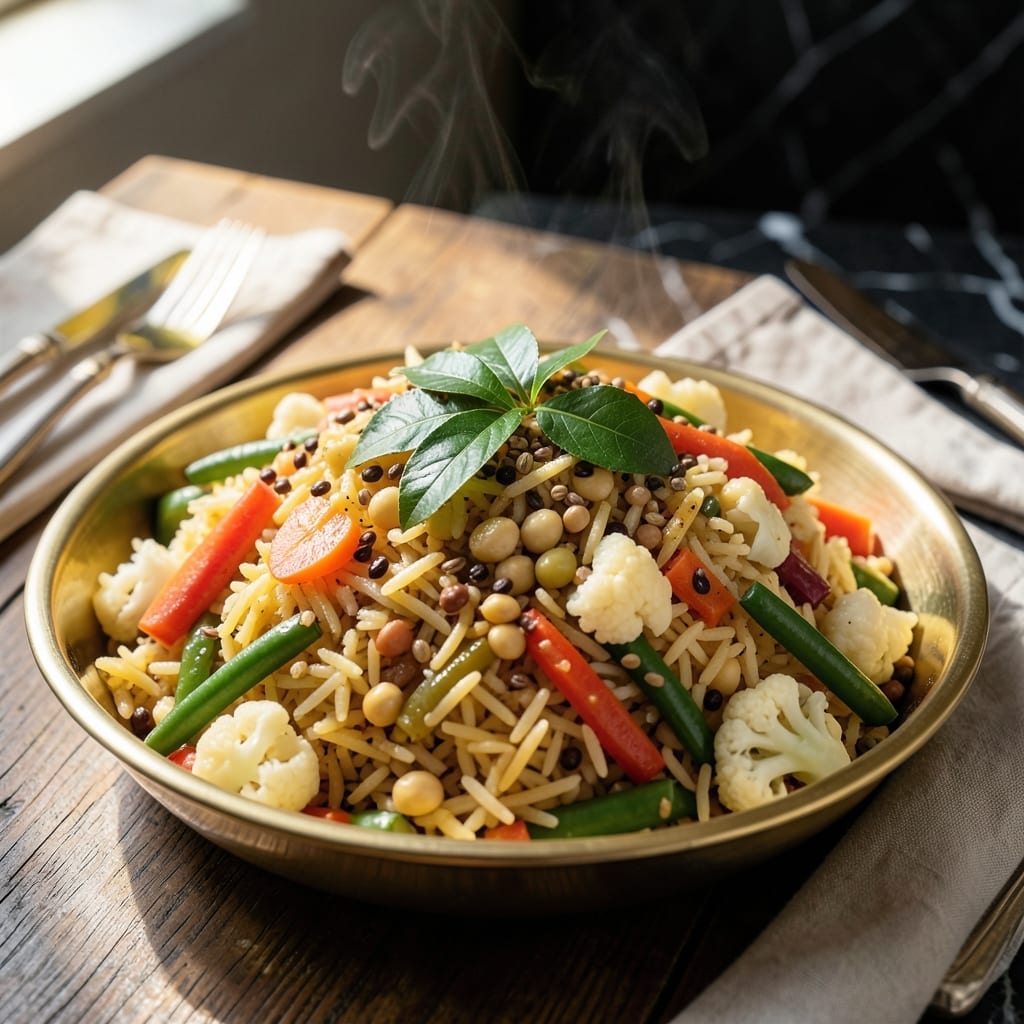
This traditional South Indian one-pot meal brings generations of Telugu culinary wisdom to your kitchen. The beauty lies in its simplicity—rice, lentils, and vegetables simmer together with aromatic spices to create a perfectly balanced dish every time.
What makes this recipe special is its one-pot convenience without sacrificing authentic flavor. The tempering of mustard seeds, cumin, and curry leaves releases fragrances that transform basic ingredients into something extraordinary.
You’ll end up with fluffy rice infused with earthy lentils, tender vegetables, and warm spices in every bite. The texture is soft yet distinct, with each component holding its identity while contributing to the whole.
Serve hot with yogurt or papad for a complete traditional meal that’s as nourishing as it is delicious.
Ingredients for Pulagam Rice Recipe in Telugu
Simple pantry staples and fresh produce create this comforting one-pot wonder with ease.
| Ingredient | Amount | Notes |
|---|---|---|
| Basmati Rice 🌾 | 1 ½ cups | Rinsed and drained thoroughly |
| Yellow Moong Dal 🥣 | ½ cup | Rinsed until water runs clear |
| Mixed Vegetables 🥕 | 2 cups | Diced, carrots, beans, peas |
| Mustard Seeds 🌶️ | 1 tsp | Black or yellow variety |
| Cumin Seeds 🌿 | 1 tsp | Whole seeds for tempering |
| Curry Leaves 🍃 | 10 pieces | Fresh preferred for aroma |
| Green Chilies 🌶️ | 2 whole | Slit lengthwise for heat |
| Fresh Ginger 🧄 | 1 tbsp | Finely grated or minced |
| Asafoetida 🌿 | ¼ tsp | Hing, essential for flavor |
| Turmeric Powder 🌶️ | ½ tsp | For golden color and earthiness |
| Water 💧 | 4 cups | Adjust based on rice absorption |
| Salt 🧂 | 1 ½ tsp | Adjust to taste preference |
| Fresh Cilantro 🌿 | ¼ cup | Chopped for garnishing |
| Ghee or Vegetable Oil 🫒 | 2 tbsp | For tempering spices |
The rice and lentils are the backbone here. Basmati rice gives the perfect fluffy texture, while yellow moong dal cooks fast and blends beautifully. I get mine from Indian grocery stores (they’re cheaper there anyway) but any well-stocked supermarket works. Curry leaves are non-negotiable for that authentic South Indian aroma—Patel Brothers or Local Indian markets always have them fresh. Look for bright green leaves, not dried or brown ones.
No moong dal? Toor dal or masoor dal work too, but adjust cooking time (they take longer). Missing curry leaves? Dried curry leaf powder at half the amount is your backup. Asafoetida (hing) is key for that traditional depth—if you don’t have it, a pinch of garlic powder gets you close but not quite the same. The veggies are flexible: zucchini, potatoes, or cauliflower all play nice in this one-pot.
Leftovers taste even better the next day once flavors meld. Stores 3-4 days in the fridge, freezes for 1 month. Reheat gently with a splash of water—don’t let it dry out. (Pro tip: garnish with fresh cilantro just before serving.)
Why You’ll Love This Recipe
- One Pot Magic: I toss in the rice, dal, and veggies with a single tempering of mustard and cumin—no extra pans, no fuss.
- Comfort in Every Bite: The moong dal melts into the basmati with that earthy warmth from the cumin, while the veggies add just enough crunch.
- Feeds All Day: Honestly, it tastes even better the next day—pack it for lunch or serve it fresh at dinner with a side of yogurt.
- Budget’s Best Friend: A handful of dal stretches the rice, and those mixed veggies clean out the fridge. I’ll be real: it’s my cheapest, most filling meal.
Step-by-Step Instructions for Pulagam Rice
This traditional one-pot method delivers authentic South Indian flavor with minimal effort.
Step 1: Rinse and Prepare the Base Ingredients
Begin by thoroughly rinsing the 1.5 cups Basmati Rice until the water runs clear, then drain it completely. I always soak it for 15 minutes while prepping other ingredients—this prevents the grains from breaking during cooking.
Next, rinse the 0.5 cup Yellow Moong Dal until the water runs clear as well. This removes any surface starch that could make your dish gummy. Drain it and set aside with the rice. Properly rinsed rice and dal are the foundation of a perfect pulagam.
Step 2: Temper the Spices for Maximum Flavor
Heat the 2 tbsp Ghee or Vegetable Oil in a heavy-bottomed pot over medium heat. Add the 1 tsp Mustard Seeds first—they should pop within 30-45 seconds. Immediately add the 1 tsp Cumin Seeds, 10 pieces Curry Leaves, and 2 whole Green Chilies.
Stir in the 0.25 tsp Asafoetida and 1 tbsp Fresh Ginger, cooking for another 30 seconds until the ginger releases its aroma. The tempering should be fragrant but not browned. This step builds the aromatic base that defines pulagam’s authentic taste.
Step 3: Combine and Cook the Pulagam
Add the 2 cups Mixed Vegetables, 0.5 tsp Turmeric Powder, and 1.5 tsp Salt to the pot. Stir well to coat the vegetables in the tempered spices. Cook for 3-4 minutes until the vegetables begin to soften slightly.
Now add the drained rice, dal, and 4 cups Water. Stir once to combine, then bring to a boil. Reduce heat to low, cover, and simmer for 15-18 minutes until the water is absorbed and the rice is tender. Resist stirring—it can break the grains.
Step 4: Rest and Garnish for Serving
Once cooked, turn off the heat and let the pulagam sit covered for 5 minutes. This resting period allows the steam to finish cooking the grains evenly and lets the flavors meld together beautifully.
Gently fluff the rice with a fork, then stir in the 0.25 cup Fresh Cilantro. The cilantro adds a bright, fresh finish that balances the earthy spices. Serve hot with yogurt or a simple raita on the side for the complete traditional experience.
Pro Tips For Making Pulagam Rice Recipe In Telugu
- Soak the Dal: I learned this the hard way—soak the yellow moong dal for at least 20 minutes before cooking to cut the cooking time in half and prevent mushy grains.
- Temper Properly: Heat the mustard and cumin seeds in hot oil until they splutter, but don’t let them burn—about 30 seconds—otherwise the pulagam will taste bitter.
- Rice to Water Ratio: Use a 1:2.5 ratio of basmati rice to water for pulagam, or you’ll end up with either a dry or soggy mess.
- Chop Veggies Small: Cut the mixed vegetables into tiny, even pieces so they cook quickly and blend seamlessly into the rice and dal.
Troubleshooting This Recipe
Rice Too Mushy
If your rice turns out mushy, you likely used too much water or stirred too much during cooking. Stick to 4 cups water for 1.5 cups rice and 0.5 cup dal. Also, avoid stirring after adding rice—just one gentle mix is enough. 💡
Undercooked Rice
When the rice is still firm after 15-18 minutes, add ½ cup hot water, cover, and cook for another 5 minutes on low heat. If using older rice, soak it for 20 minutes before cooking. Always check the water level halfway through.
Bland Flavor
If your dish tastes flat, the tempering might need adjustment. Use fresh curry leaves and ensure the mustard and cumin seeds are popping well. Add ½ tsp more salt or a pinch of asafoetida to boost the depth. Garnish generously with fresh cilantro for brightness.
Vegetables Too Soft
For firmer vegetables, add them after tempering and cook for only 2-3 minutes before adding rice. Use hard vegetables like carrots and beans, and avoid overcrowding the pot. This keeps them crisp-tender in the final dish.
Dal Not Cooked
If the dal remains hard, it may need a longer soak. Rinse and soak moong dal for 15 minutes in warm water before cooking. Alternatively, pressure cook the dal separately for 2 whistles and mix it in at the end.
Sticking to Pot
To prevent sticking, use a heavy-bottomed pot and ensure the heat is medium-low after boiling. Add 1 tsp oil extra to the tempering for a protective layer. If it sticks, gently scrape the bottom with a wooden spoon and add ¼ cup water to deglaze. 🔥
Nutrition Facts
Frequently Asked Questions
Can I use a different type of rice?
Yes, but Basmati gives the best texture. Short-grain rice may turn sticky. Adjust water to 4.5 cups for other varieties.
Why soak the rice before cooking?
Soaking for 15 minutes prevents grains from breaking during cooking. It also ensures even cooking and fluffier texture.
Can I make this without asafoetida?
You can, but the flavor won’t be as authentic. Substitute with ½ tsp garlic powder for similar depth.
How do I store leftovers?
Keep in an airtight container in the fridge for 3-4 days. Reheat with 1-2 tbsp water to restore moisture.

- Pudding Recipe With Egg Yolks: Silky Smooth Custard in Minutes - November 3, 2026
- Pudding Pops Recipe Cook and Serve: Silky Frozen Treats Without the Machine - November 3, 2026
- Protein Ice Cream Recipe Blender Xanthan Gum: Ultra Creamy Texture Without the Guilt - November 3, 2026