
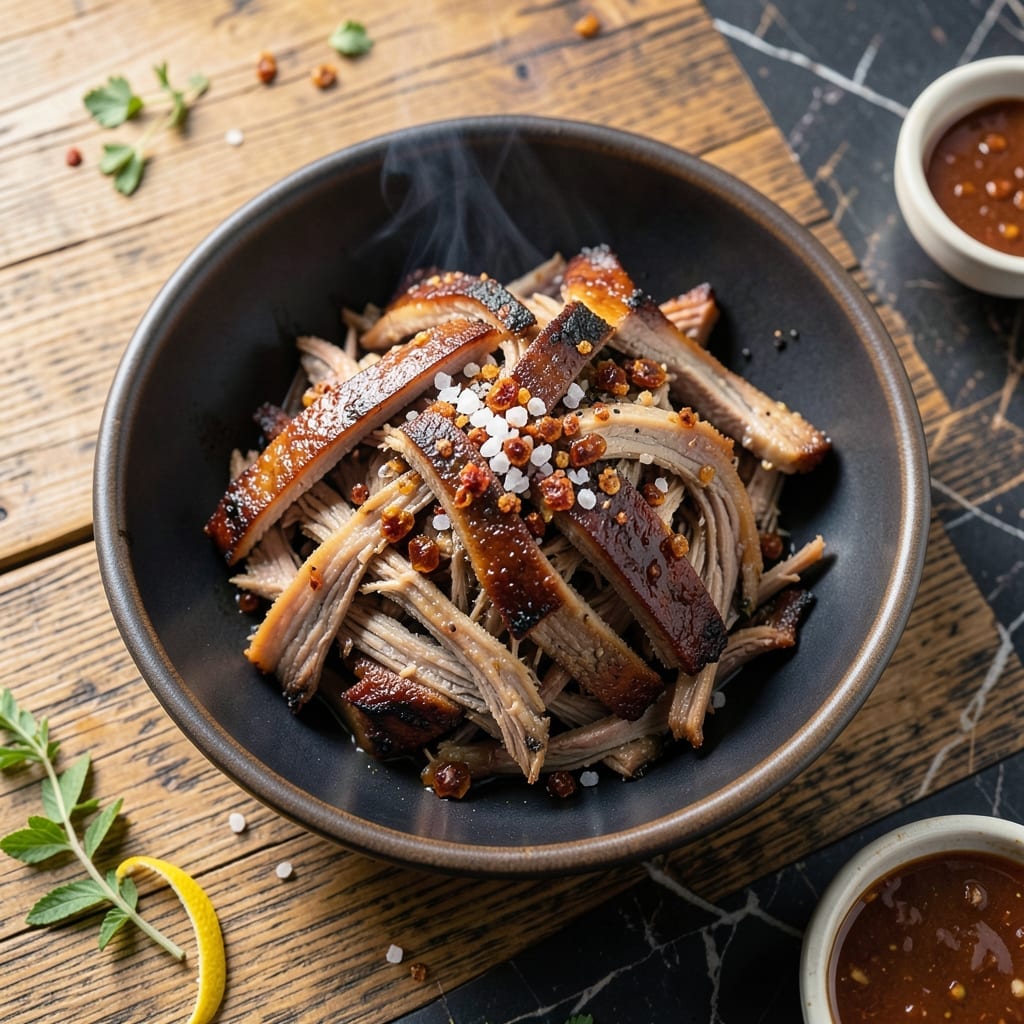
There’s nothing quite like the deep, smoky flavor of pulled pork cooked low and slow on the grill. This method delivers tender, fall-apart meat with a charred crust that you just can’t achieve in the oven.
I’ve refined this technique over years of backyard cookouts, learning that patience and proper heat management are key. The grill’s indirect heat allows the pork to cook evenly while developing that signature smoky profile.
What you’ll get is meat so tender it shreds with a fork, infused with wood-smoke flavor and a crispy bark on the outside. The transformation from tough cut to melt-in-your-mouth perfection is truly rewarding.
Whether you’re feeding a crowd or meal prepping for the week, this approach makes it simple to achieve professional-quality results at home.
Ingredients for Pulled Pork Recipe Grill
Pantry staples plus a pork shoulder. That’s all you need for smoky perfection.
| Ingredient | Amount | Notes |
|---|---|---|
| Pork Shoulder 🥩 | 4 lb | Bone-in for best flavor |
| Kosher Salt 🧂 | 2 tbsp | Diamond Crystal preferred |
| Black Pepper 🌶️ | 2 tbsp | Freshly ground coarse |
| Brown Sugar 🍚 | ½ cup | Light or dark variety |
| Paprika 🌶️ | 2 tbsp | Smoked paprika ideal |
| Garlic Powder 🧄 | 1 tbsp | Not garlic salt |
| Onion Powder 🧅 | 1 tbsp | Fresh ground preferred |
| Apple Cider Vinegar 🍏 | ½ cup | Balances sweetness |
| Wood Chips 🪵 | 2 cups | Hickory or applewood |
| Yellow Mustard 🟡 | ¼ cup | Binder for dry rub |
| Chicken Stock 🍲 | 1 cup | Low-sodium preferred |
| BBQ Sauce 🍯 | 2 cups | Your favorite brand |
The pork shoulder is non-negotiable here. Bone-in gives you that fall-apart texture—boneless works but loses some richness. Look for 8-10 lb roasts and freeze half for next time. Costco has great prices, but most butchers will have it. Don’t trim the fat cap; it renders down and bastes the meat as it cooks (trust me on this).
No hickory chips? Applewood or cherry work beautifully too. Out of apple cider vinegar? White vinegar in a pinch, but the apple adds depth. For the BBQ sauce, I’m partial to Stubb’s Original—tangy without being too sweet. The mustard is just a binder; Dijon works too if you’re already stocked. Brown sugar can be swapped for white, but it won’t have the same molasses notes.
Pork shoulder keeps in the fridge 3-4 days raw, but I like to dry-brine it overnight (worth the extra minute). Leftovers freeze for 3 months—portion into sandwich-sized bags for easy meal prep. The wood chips? Store in a sealed bag away from moisture.
Why You’ll Love This Recipe
- Set It and Forget: I toss the pork shoulder on the grill with just salt, pepper, brown sugar, and paprika, then let the smoky magic happen hands-off.
- Sweet & Smoky: The brown sugar caramelizes while the paprika adds a subtle kick that makes every bite ridiculously good.
- Feeds a Crowd: Between us, this pulled pork stretches from tacos to sandwiches to salads all week long.
- Budget Win: Pork shoulder is cheap, and one batch gives me leftovers for days—no waste, all flavor.
Step-by-Step Instructions for Pulled Pork on the Grill
Master the art of smoky, tender pulled pork with these proven grill techniques.
Step 1: Create and Apply the Dry Rub
In a bowl, combine the 2 tbsp Kosher Salt, 2 tbsp Black Pepper, 0.5 cup Brown Sugar, 2 tbsp Paprika, 1 tbsp Garlic Powder, and 1 tbsp Onion Powder. This blend delivers the perfect balance of sweet, smoky, and savory flavors that define great pulled pork.
Pat the 4 lb Pork Shoulder dry with paper towels, then brush it all over with the 0.25 cup Yellow Mustard—this acts as a binder for the rub. Coat the pork liberally with the rub mixture, pressing it into the meat so it adheres well. Let it sit at room temperature for 30 minutes while you prepare the grill.
Step 2: Set Up the Grill for Indirect Heat
Soak the 2 cups Wood Chips in water for 30 minutes, then drain. Fill a chimney starter with charcoal and light it. Once the coals are covered with white ash, dump them onto one side of the grill, creating a two-zone fire. Place the drained wood chips directly on the hot coals.
Position the grill grates and place a disposable aluminum pan filled with the 1 cup Chicken Stock on the cool side of the grill. This adds moisture to the cooking environment and helps regulate the temperature. Maintain the grill temperature at 275-300°F throughout cooking.
Step 3: Smoke the Pork Low and Slow
Place the pork shoulder on the cool side of the grill, fat-side up. Insert a meat thermometer into the thickest part of the pork, avoiding the bone. Cover the grill and smoke for 4-5 hours, or until the internal temperature reaches 160°F.
Resist the urge to peek—every time you open the lid, you lose heat and smoke. If the temperature starts to drop, add more charcoal as needed. Spritz the pork with the 0.5 cup Apple Cider Vinegar every 1-2 hours to keep the surface moist and add a tangy depth to the bark.
Step 4: Wrap and Finish Cooking
Once the pork reaches 160°F, transfer it to a large sheet of heavy-duty foil. Pour 1 cup BBQ Sauce over the pork, then wrap it tightly in the foil. Return it to the grill and continue cooking until the internal temperature reaches 195-203°F and the pork is probe-tender.
This wrapping step, often called the “Texas crutch,” helps power through the stall while keeping the meat moist. The pork is done when a probe or fork slides in with no resistance, like butter. This typically takes another 2-3 hours.
Step 5: Rest, Shred, and Sauce
Remove the pork from the grill and let it rest in the foil for 30-60 minutes. This resting period allows the juices to redistribute throughout the meat, ensuring it stays moist when shredded. Unwrap the pork and discard any large fat chunks.
Shred the pork using two forks, pulling it apart into bite-sized pieces. Transfer it to a serving dish and toss with the remaining 1 cup BBQ Sauce. The meat should be tender, juicy, and infused with smoky flavor. Serve immediately on buns with your favorite toppings.
Pro Tips For Making Pulled Pork Recipe Grill
- Use Low and Slow: Keep your grill temperature between 225-250°F and give the pork shoulder 8-10 hours to cook. I learned this the hard way—rushing it with higher heat just makes the meat tough.
- Trim the Fat Cap: Leave about 1/4 inch of fat on the pork shoulder for flavor, but trim any excess so the rub actually touches the meat. Sounds weird, but it works.
- Skip the Shortcut: Resist the urge to pull the pork too early—it should reach 195-203°F internally before it’s ready to shred. After burning three batches, I finally figured out patience is the thing that matters most.
- Rest Before Pulling: Let the pork rest under foil for at least 30 minutes after cooking—this keeps all the juices inside. My grandmother swore by this, and she was right.
Wine and Beer Pairings for These Flavors
Bold Red Wines
For pulled pork, I love a full-bodied Zinfandel from California—its jammy fruit and peppery notes complement the smoky meat. A Syrah with its dark berry flavors and hint of spice also works beautifully. These stand up to the rich, tangy BBQ sauce. 🍷
Lighter Red Options
A chilled Pinot Noir from Oregon’s Willamette Valley offers bright acidity that cuts through the fat while enhancing the pork’s natural sweetness. I grab mine from New Seasons Market—they always have great local picks.
Craft Beer Pairings
A smoky Porter or Stout is a classic choice—the roasted malt flavors mirror the charred crust. For something lighter, try a crisp Amber Ale from a Pacific Northwest brewery like Deschutes. The caramel notes pair perfectly. 🍺
White Wine Surprise
If you prefer white, an off-dry Riesling from Washington State balances the heat and tang with its touch of sweetness. Serve it well-chilled to refresh your palate between bites.
Non-Alcoholic Choices
For a booze-free option, I mix sparkling water with a splash of apple cider vinegar and a dash of brown sugar. It echoes the dish’s flavors while keeping things light. ✨
Nutrition Facts
Frequently Asked Questions
What internal temperature should I aim for?
Cook until the pork reaches 195-203°F internally. At this range, the collagen breaks down, making the meat fall-apart tender. Use a meat thermometer for accuracy.
Can I use a gas grill instead of charcoal?
Set your gas grill for indirect heat with one side off. Place wood chips in a smoker box or foil pouch over the lit burner to add smoky flavor.
Why did my pork turn out dry?
Dryness usually means it cooked too hot or fast. Keep the grill at 275-300°F, spritz every 1-2 hours, and wrap in foil when it hits 160°F.
How long should I rest the pork before shredding?
Let it rest in foil for 30-60 minutes. This allows juices to redistribute for maximum moisture. Resting is non-negotiable for perfect texture.

- Pudding Recipe With Egg Yolks: Silky Smooth Custard in Minutes - November 3, 2026
- Pudding Pops Recipe Cook and Serve: Silky Frozen Treats Without the Machine - November 3, 2026
- Protein Ice Cream Recipe Blender Xanthan Gum: Ultra Creamy Texture Without the Guilt - November 3, 2026