
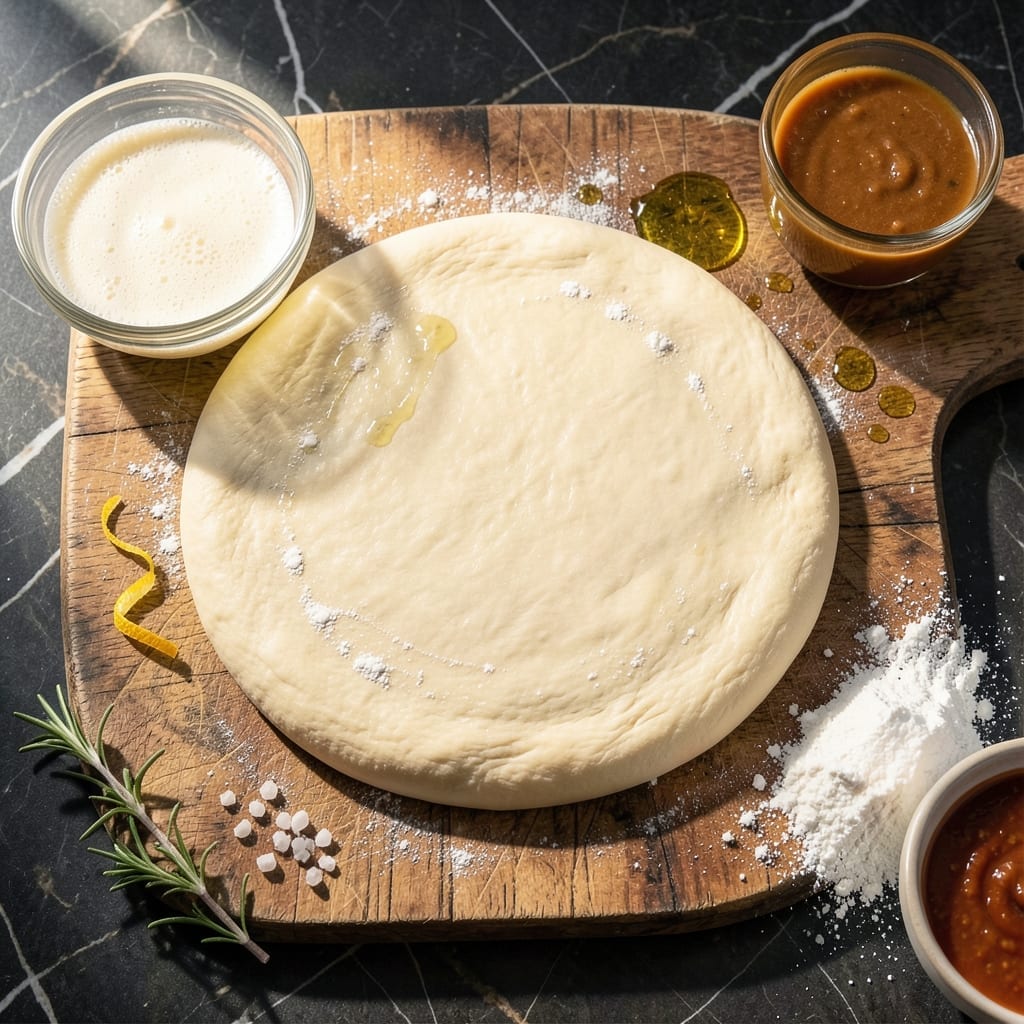
Homemade pizza dough doesn’t need to be a day-long project. This proven technique delivers fluffy, airy crust in a fraction of the time traditional recipes require.
By using instant yeast and a warm environment, the dough rises quickly without sacrificing texture or flavor. The result is a soft yet sturdy base that bakes to golden perfection with a tender crumb.
What makes this method special is its reliability—no failed rises, no dense crusts. With just 10 minutes of active prep, you’ll have pizza-ready dough that handles toppings like a pro.
Shape it thick or thin, bake it crispy or chewy. This recipe keeps its promise of speed without compromising on quality.
Ingredients for Quick Rise Pizza Dough
Simple pantry ingredients yield a restaurant-quality crust in record time.
| Ingredient | Amount | Notes |
|---|---|---|
| Bread Flour 🌾 | 3 ½ cups | Plus extra for dusting |
| Instant Yeast 🍞 | 2 ¼ tsp | One packet, active dry works too |
| Granulated Sugar 🍚 | 1 tsp | Feeds the yeast for quick rise |
| Kosher Salt 🧂 | 1 ½ tsp | Diamond Crystal preferred |
| Warm Water 💧 | 1 ¼ cups | About 110°F, not hot |
| Extra-Virgin Olive Oil 🫒 | 2 tbsp | Divided for dough and bowl |
| Cornmeal 🌽 | 2 tbsp | For dusting pan (optional) |
| All-Purpose Flour 🌾 | ½ cup | If bread flour unavailable |
The flour is critical here. King Arthur Bread Flour is my go-to for its high protein content—gives that perfect chew. Instant yeast is non-negotiable for speed; SAF or Fleischmann’s brands work flawlessly. Warm water temperature is key: too hot kills the yeast, too cold slows the rise. A kitchen thermometer takes the guesswork out (worth the $5 investment
No bread flour? All-purpose plus 1 tbsp vital wheat gluten per cup mimics the protein content. Out of instant yeast? Active dry works—just proof it in the warm water with sugar first. The olive oil adds tenderness; California Olive Ranch is a reliable supermarket brand. Skip the cornmeal? Semolina or extra flour works just as well for dusting. Dough keeps in the fridge for 24 hours (flavor improves overnight) or freezes for 3 months. Portion into balls before freezing for easy single-use. Thaw overnight in the fridge, then bring to room temp before shaping.
Why You’ll Love This Recipe
- 20-Minute Magic: That instant yeast means I can go from mixing to stretching dough in the time it takes to preheat the oven.
- Crisp Chewy Bliss: Bread flour gives it that perfect chew while the sugar adds just a hint of caramelized depth to the crust.
- Freezer Friendly: I always double the batch and stash the extras—fresh pizza dough on demand, even on a Tuesday night.
- Budget Winner: Five pantry staples and no fancy equipment. Honestly, it costs less than a delivery tip.
Step-by-Step Instructions for Quick Rise Pizza Dough
This streamlined method delivers perfectly proofed dough in record time with minimal effort.
Step 1: Activate the Yeast and Combine Wet Ingredients
In a large mixing bowl, whisk together the 1.25 cups warm water, 1 tsp granulated sugar, and 2.25 tsp instant yeast. The sugar feeds the yeast, creating the rapid rise this recipe promises. Let this mixture sit for 2-3 minutes until it becomes frothy and slightly bubbly—this confirms your yeast is active.
Once the yeast is activated, stir in 1 tbsp extra-virgin olive oil. The oil adds richness to the dough and helps create a tender, elastic texture. I use a fork for this initial mixing to break up any clumps of yeast before adding the dry ingredients.
Step 2: Incorporate Dry Ingredients and Knead
Add 3.5 cups bread flour and 1.5 tsp kosher salt to the bowl with the wet ingredients. If bread flour isn’t available, substitute with 0.5 cup all-purpose flour plus 3 cups bread flour—the higher protein content in bread flour gives this dough its chewy texture.
Mix with a wooden spoon until a shaggy dough forms, then turn it out onto a lightly floured surface. Knead for 5-7 minutes until the dough becomes smooth and elastic. You’ll know it’s ready when it springs back quickly when poked. If the dough feels too sticky, add a small amount of flour, but resist the urge to over-flour—this can make your crust tough.
Step 3: First Rise in Oiled Bowl
Lightly coat a clean bowl with the remaining 1 tbsp extra-virgin olive oil. Place the kneaded dough in the bowl and turn it once to coat all sides with oil. This prevents the dough from sticking as it rises and adds flavor.
Cover the bowl with a damp kitchen towel or plastic wrap and place it in a warm, draft-free spot. For this quick-rise method, I recommend preheating your oven to its lowest setting (170°F or below), then turning it off and placing the bowl inside. The dough should double in size in 30-45 minutes.
Step 4: Shape and Second Rise
Once doubled, punch down the dough to release the air. Turn it out onto a surface lightly dusted with 2 tbsp cornmeal—this adds texture to your crust and prevents sticking. Divide the dough into 4 equal portions for individual pizzas or keep it whole for a large pie.
Shape each portion into a ball, then flatten into a disk. Place on a parchment-lined baking sheet dusted with additional cornmeal. Cover and let rest for 15-20 minutes while you preheat your oven. This second rise relaxes the gluten, making the dough easier to stretch without snapping back.
Step 5: Pre-Bake Preparation
After the second rise, stretch each dough portion to your desired thickness. For a classic thin crust, aim for about ¼-inch thick. If the dough resists stretching, let it rest for 5 minutes then try again.
The dough is now ready for toppings. For best results with this quick-rise method, bake on a preheated pizza stone or inverted baking sheet at 475°F. The high heat mimics a wood-fired oven, creating a crisp exterior while keeping the inside soft and airy.
Pro Tips For Making Quick Rise Pizza Dough
- Check Water Temp: Use a thermometer—110°F is ideal. I learned this the hard way after killing yeast with water that was too hot.
- Weigh Your Flour: Scooping with a cup compacts the bread flour and throws off the ratio. 1 cup should weigh about 120 grams for consistency.
- Skip Cold Proofing: Instant yeast doesn’t need it—just cover the dough and let it rise in a warm spot for 30-45 minutes.
- Add Sugar Last: Mix the yeast into the warm water first, then stir in the sugar. This prevents the yeast from clumping and ensures even activation.
Pro Cooking Tips for quick rise pizza dough
Yeast Activation Secrets
Always use 110°F water—any hotter kills the yeast, any cooler slows the rise. I verify with a thermometer; guesswork leads to disappointment. The sugar isn’t just for sweetness—it kickstarts the yeast activity that makes this dough rise so quickly.
Kneading Perfection
Don’t rush the 5-7 minute knead. The dough should feel tacky but not sticky. If it sticks to your hands, add flour 1 tbsp at a time. Over-flouring creates a dense crust—this is where most quick-rise doughs fail. 💪
Warm Environment Hack
My favorite trick: preheat oven to 170°F, turn it off, then place the bowl inside. This creates the ideal warm, draft-free space. The dough should double in 30-45 minutes. If your kitchen is cold, this method guarantees consistent results.
Second Rise Matters
After shaping, that 15-20 minute rest isn’t optional. It relaxes the gluten, preventing the dough from snapping back when you stretch it. Skip this and you’ll fight the dough—patience here means easier handling and better texture.
Baking Surface Prep
Always preheat your pizza stone or baking sheet at 475°F for 30 minutes. The hot surface creates that coveted crisp bottom. Dust with cornmeal for extra texture and to prevent sticking. A properly preheated surface makes all the difference. 🔥
Thickness Control
For thin crust, stretch to ¼-inch thickness. If the dough resists, let it rest 5 minutes then try again. The gluten relaxes during this pause. Thicker crusts need less stretching—just press the dough into your pan.
Nutrition Facts
Frequently Asked Questions
Can I use active dry yeast instead of instant?
Yes, but dissolve it in warm water with sugar first and wait 5-10 minutes for foaming. This proofing step ensures it’s active before mixing with flour.
Why does my dough not rise in 30 minutes?
Check your water temperature—it should be 110°F. Also ensure your environment is warm enough. A cold kitchen can double the rise time.
Can I make this dough the night before?
After the first rise, refrigerate the dough for up to 24 hours. The cold slows fermentation, enhancing flavor.
What if my dough is too sticky to handle?
Add flour 1 tbsp at a time while kneading. Too much flour makes crust dense, so use a light touch. Lightly oil your hands for easier handling.

- Blue Zone Recipe Ideas: Longevity-Boosting Meals for Vibrant Living - September 28, 2026
- Beefaroni Recipe With Tomato Soup: One-Pot Nostalgic Comfort - September 28, 2026
- Bread Recipe KitchenAid Mixer: Foolproof Loaf With Perfect Rise - September 28, 2026