
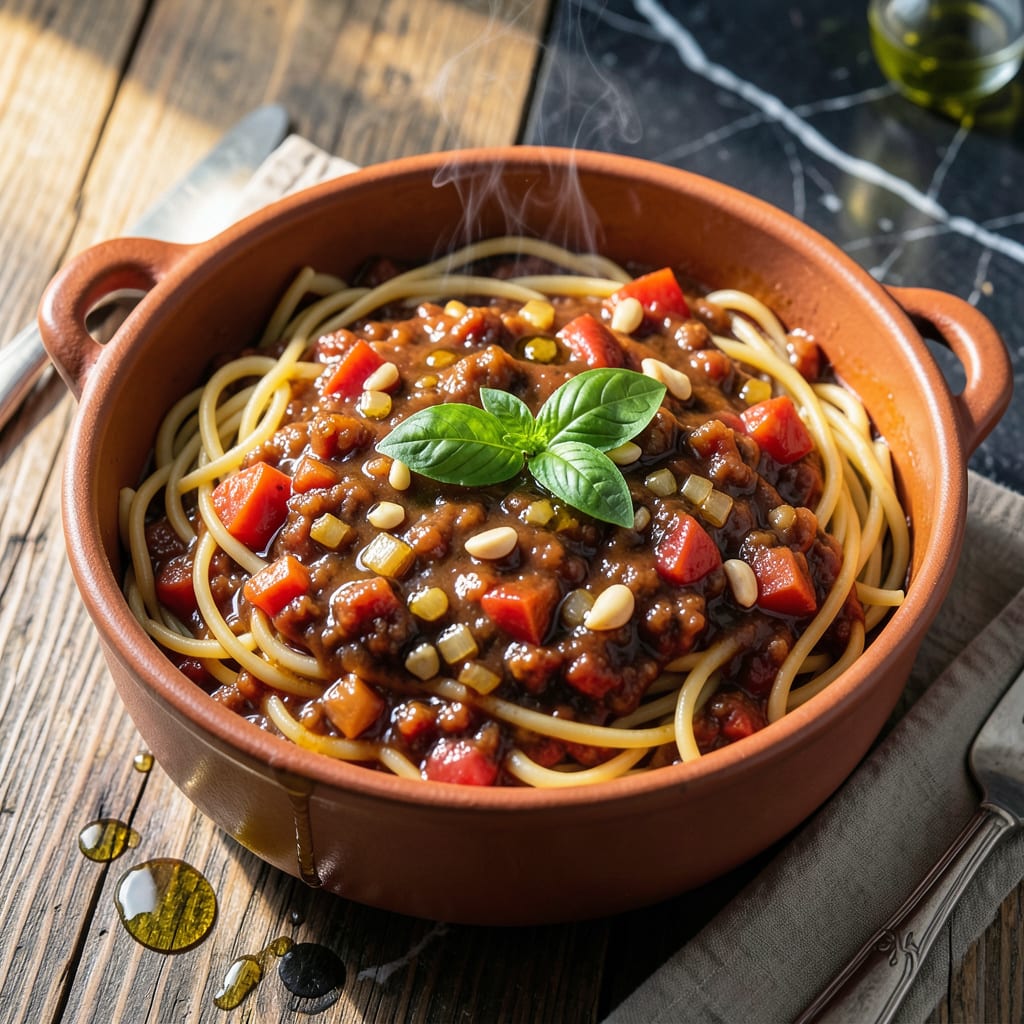
This sauce transforms simple ingredients into a deeply flavorful base that elevates any pasta dish. Slow-simmered tomatoes and herbs create a rich, complex ragu that tastes like it cooked all day.
With a foolproof method and basic pantry staples, you’ll achieve restaurant-quality results every time. The long simmer develops layers of taste that canned sauces simply can’t match.
Ingredients for Ragu Spaghetti Sauce
Basic pantry staples slow-simmered into a rich, complex sauce that elevates pasta night.
| Ingredient | Amount | Notes |
|---|---|---|
| Canned San Marzano Tomatoes 🍅 | 28 oz | Whole peeled, hand crushed |
| Tomato Paste 🍅 | 3 tbsp | Double concentrated preferred |
| Yellow Onion 🧅 | 1 whole | Finely diced for base |
| Garlic Cloves 🧄 | 6 cloves | Minced for depth |
| Extra-Virgin Olive Oil 🫒 | ¼ cup | High quality for sautéing |
| Dry Red Wine 🍷 | ½ cup | Bold variety for acidity |
| Fresh Basil Leaves 🌿 | ½ cup | Torn, added at finish |
| Fresh Oregano 🍃 | 2 tbsp | Chopped, stems removed |
| Dried Bay Leaf 🍃 | 2 whole | Removed before serving |
| Kosher Salt 🧂 | 1 ½ tsp | Diamond Crystal preferred |
The tomatoes are everything here. San Marzano cans from Italian producers deliver the sweet, low-acid base this ragu demands. Look for the DOP certification on the label—it’s worth the extra dollar or two. The onion and garlic form the aromatic foundation, so use fresh, not pre-minced. Costco carries decent San Marzanos in bulk if you’re making this often.
No red wine? Substitute with beef or vegetable broth plus a splash of red wine vinegar. Dried oregano works at one-third the amount of fresh. If you’re out of tomato paste, reduce the canned tomatoes by half and cook them down first. The bay leaf is subtle but important—don’t skip it. For a richer sauce, add a Parmesan rind while simmering (remove before serving).
This sauce actually improves overnight. Store in an airtight container in the fridge for up to 5 days or freeze for 3 months. Portion into freezer bags flat—they’ll thaw faster. The flavor deepens with time, so make a double batch.
Why You’ll Love This Recipe
- I’ll be real: this makes enough sauce for two dinners, so leftovers are a win.
- One Pot Wonder: I just toss the San Marzano tomatoes, onion, and garlic in with olive oil—minimal prep, maximum flavor.
- Rich and Deep: The slow-simmered tomato paste and garlic create that classic ragu taste I crave.
- Feeds a Crowd: I’ll be real: this makes enough sauce for two dinners, so leftovers are a win.
Step-by-Step Instructions for Ragu Spaghetti Sauce
This method builds deep flavor through slow simmering and careful layering of ingredients.
Step 1: Build the Aromatic Base
Heat the 0.25 cup Extra-Virgin Olive Oil in a heavy pot over medium-low heat. Add the 1 whole Yellow Onion, finely diced, and cook for 8-10 minutes until translucent and just beginning to caramelize at the edges.
Add the 6 cloves Garlic Cloves, minced, and cook for 1 minute until fragrant but not browned. This gentle start prevents bitterness while developing the foundation flavors. Stir in the 3 tbsp Tomato Paste and cook for 2-3 minutes, stirring constantly, until it darkens slightly and adheres to the bottom of the pot.
Step 2: Deglaze and Develop Depth
Pour in the 0.5 cup Dry Red Wine and increase heat to medium-high. Scrape the browned bits from the bottom with a wooden spoon, allowing the wine to reduce by half, about 3-4 minutes. This deglazing step incorporates the fond into the sauce.
Add the 28 oz Canned San Marzano Tomatoes, hand-crushing them as they go in. Include all the juices from the can. Stir in the 2 tbsp Fresh Oregano, 2 whole Dried Bay Leaf, and 1.5 tsp Kosher Salt. The tomatoes should sizzle gently when added.
Step 3: Simmer to Perfection
Reduce heat to low and simmer uncovered for 2-2.5 hours. The sauce should maintain a lazy bubble, not a rapid boil. Stir occasionally, especially at the beginning, to prevent sticking.
As the sauce reduces, it will thicken and darken in color. The oil will separate slightly at the surface—this is normal. After about 90 minutes, begin checking the consistency. The sauce should coat the back of a spoon but still flow easily.
Step 4: Finish with Fresh Herbs
Remove the 2 whole Dried Bay Leaf from the sauce. Stir in the 0.5 cup Fresh Basil Leaves, torn by hand. The basil should wilt into the sauce within 1-2 minutes.
Taste and adjust seasoning. The sauce should have a bright acidity from the tomatoes balanced by the sweetness of the onions and the depth from the wine. If it tastes flat, a pinch more Kosher Salt often brings the flavors into focus.
Step 5: Rest Before Serving
Remove the sauce from heat and let it rest for 10-15 minutes before serving. This allows the flavors to meld completely. The sauce will thicken slightly as it cools.
Serve over al dente spaghetti, allowing the pasta to absorb some of the sauce. The ragù should cling to the noodles with a rich, velvety texture and a complex balance of sweet, acidic, and herbal notes.
Pro Tips For Making Ragu Spaghetti Sauce
- Sweat the Onions: Cook the onions in olive oil over medium-low heat for at least 8-10 minutes until translucent—I learned this the hard way when my early batches tasted raw and harsh.
- Crush the Tomatoes: Hand-crush the San Marzano tomatoes before adding them to the pot. Sounds weird, but it works: it breaks down the flesh faster and creates a thicker, more rustic texture.
- Bloom the Paste: Let the tomato paste cook in the oil with the onions for 2-3 minutes until it darkens slightly. My grandmother swore by this, and she was right: it removes the tinny taste and deepens the flavor.
- Skip the Garlic Press: Smash the garlic cloves with the side of your knife and remove the skins, but leave them whole—this prevents burning and gives a milder, sweeter flavor that melts into the sauce.
Pro Cooking Tips for Great ragu spaghetti sauce
Low and Slow Simmer
The key to this sauce is patience. Keep the heat at low for that 2-2.5 hour simmer—you want a gentle bubble, not a rolling boil. I use a heavy-bottomed Dutch oven for even heat distribution. Stir every 20-30 minutes to prevent sticking.
Tomato Paste Perfection
Cook the 3 tbsp Tomato Paste until it turns a deep brick red, about 2-3 minutes. This caramelizes the natural sugars and develops a rich, almost sweet depth. Don’t rush this step—it’s the foundation of your sauce’s complexity. 🔥
Deglaze Properly
When adding the 0.5 cup Dry Red Wine,
Season in Layers
Start with 1.5 tsp Kosher Salt at the beginning, but taste as you go. The sauce will concentrate as it reduces, so you may need to adjust. I find that adding salt gradually prevents over-seasoning. The bay leaves should stay in for the full simmer but get removed before serving.
Rest for Best Flavor
Always let your sauce rest for 10-15 minutes off the heat before using. This lets the flavors meld together. You’ll notice the texture thickens slightly as it cools. I often make mine a day ahead—the flavors deepen overnight. 💡
Consistency Check
Your sauce should coat the back of a spoon but still flow easily. If it’s too thick, stir in ¼ cup water or broth. If too thin, simmer uncovered for another 15-20 minutes. The oil separation on top is normal—just stir it back in before serving.
Nutrition Facts
Frequently Asked Questions
Can I use regular canned tomatoes instead of San Marzano?
Yes, but expect a slightly more acidic flavor. Regular canned tomatoes work in a pinch, though San Marzano’s sweetness and low acidity create the best base for this ragu.
How do I fix a sauce that’s too acidic?
A pinch of sugar or a splash of cream can balance acidity. Alternatively, simmer longer to mellow the flavors naturally. Start with ½ tsp sugar and adjust.
Why does my sauce taste bitter?
Bitterness often comes from overcooked garlic or tomato paste. Cook garlic only until fragrant (1 minute) and tomato paste until it darkens (2-3 minutes). Stir constantly.
Can I make this in a slow cooker?
Sauté the aromatics first, then transfer to a slow cooker on low for 6-8 hours. The hands-off method works well, though stovetop simmering yields slightly deeper flavor.

- BBQ Sausage Recipe Oven: Smoky Depth Without the Grill - September 28, 2026
- BBQ Chicken Bowl Recipe Rice: Smoky Sweetness Over Fluffy Grains - September 28, 2026
- Beef Cutlet Recipe Ideas: Crispy Breaded Patties With Bold Seasonings - September 28, 2026