
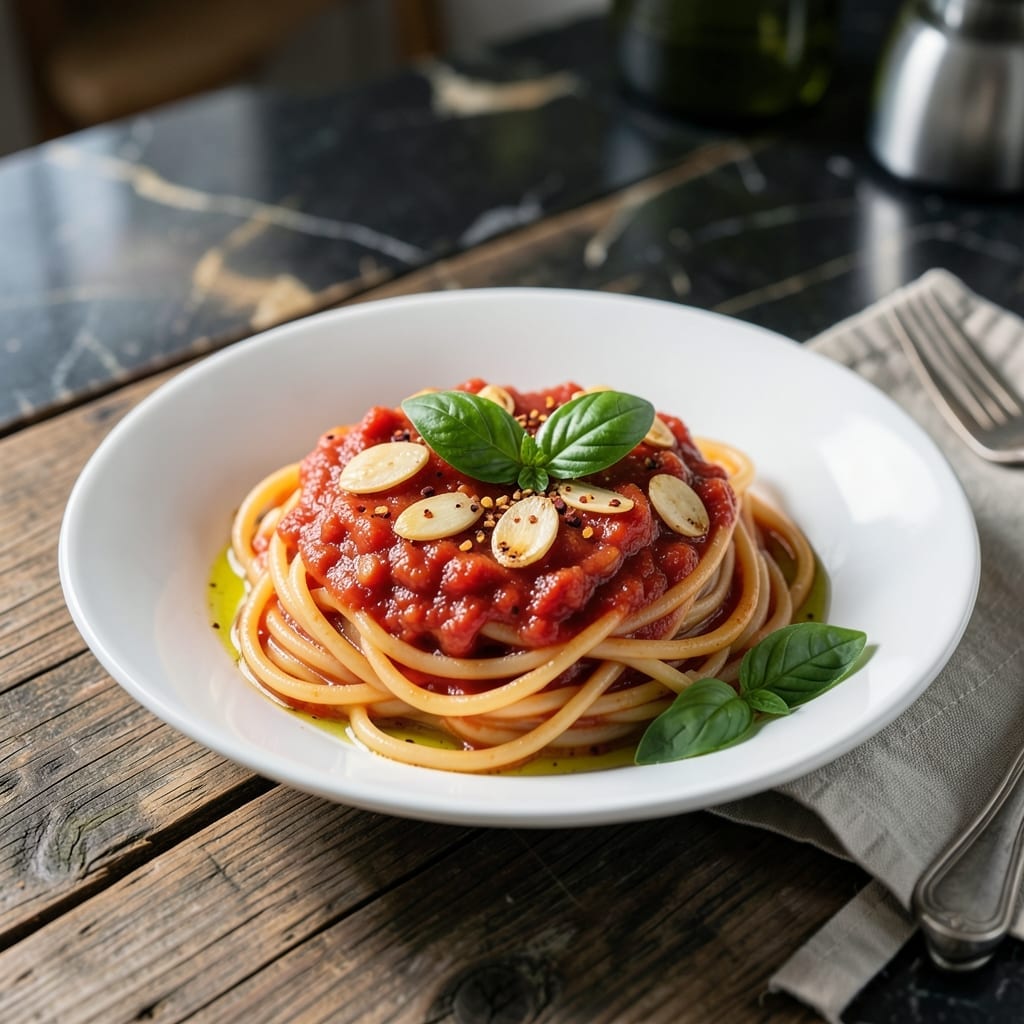
This recipe captures the essence of Rao’s legendary approach to Italian cooking with its rich, garlic-infused tomato sauce and perfectly cooked pasta. The sauce simmers low and slow, allowing flavors to meld into something deeply satisfying and authentic.
The technique is straightforward yet precise: quality San Marzano tomatoes, fresh garlic, and olive oil form the base. A touch of red pepper flakes adds subtle heat, while fresh basil finishes the sauce with bright, aromatic notes.
What sets this apart is the attention to detail—al dente pasta that holds its bite, a sauce that clings beautifully, and a balance of acidity, sweetness, and savory depth in every forkful.
Serve with grated Parmesan and extra basil for a dish that tastes like it came from a New York institution.
Ingredients for Rao Spaghetti
Quality tomatoes, garlic, and olive oil form the base of this authentic dish.
| Ingredient | Amount | Notes |
|---|---|---|
| Spaghetti 🍝 | 1 lb | Dried, bronze-cut preferred |
| San Marzano Tomatoes 🍅 | 28 oz | Canned, whole peeled |
| Extra-Virgin Olive Oil 🫒 | ½ cup | High-quality, fruity |
| Garlic Cloves 🧄 | 6 cloves | Fresh, thinly sliced |
| Fresh Basil Leaves 🌿 | ½ cup | Loosely packed, torn |
| Red Pepper Flakes 🌶️ | ½ tsp | Adjust to taste |
| Kosher Salt 🧂 | 1 ½ tsp | Diamond Crystal preferred |
| Black Pepper 🌶️ | ½ tsp | Freshly ground |
| Parmesan Cheese 🧀 | ½ cup | Freshly grated from wedge |
| Dry White Wine 🍷 | ½ cup | Optional, for deglazing |
| Pasta Water 💧 | ½ cup | Reserved from cooking |
The tomatoes are non-negotiable here. San Marzano canned tomatoes from Italy (look for the DOP label) deliver the right balance of sweetness and acidity. Most Whole Foods or specialty grocers carry them, but any good-quality whole peeled tomato works. The olive oil should be extra-virgin—this isn’t the time for that old bottle in the back of your cabinet. California Olive Ranch is a solid, accessible brand.
No white wine? Skip it entirely—the dish will still shine. Fresh basil is ideal, but dried at one-third the amount gets you close (just add it earlier). If you’re sensitive to heat, reduce the red pepper flakes to a pinch. The Parmesan can be swapped for Pecorino Romano for a sharper bite, or Gran Padano for a milder, budget-friendly option.
Sauce keeps in the fridge for 4-5 days and freezes beautifully for 3 months. Cook the pasta fresh when reheating—it absorbs the sauce better. Always reserve that starchy pasta water; it’s the secret to a silky, clingy sauce that Rao’s is famous for.
Why You’ll Love This Recipe
- One Pot Wonder: I love that this comes together in a single pot—just sauté garlic in olive oil, toss in the San Marzano tomatoes, and let the sauce simmer while the pasta cooks.
- Sunshine on a Plate: The sweetness of San Marzano tomatoes paired with fresh basil and that rich olive oil? It’s the kind of flavor that makes me pause mid-bite.
- Weeknight Hero: Honestly, it’s my go-to for busy evenings, but it’s also fancy enough for company. (Yes, even on a Tuesday night)
- Double the Joy: Leftovers taste even better the next day—the flavors meld overnight, and it reheats like a dream.
Step-by-Step Instructions for Garlic-Infused Tomato Sauce With Al Dente Pasta
Master this simple technique for a restaurant-quality dish that comes together in under an hour.
Step 1: Cook the Pasta to Al Dente Perfection
Bring a large pot of water to a rolling boil and add 1.5 tsp Kosher Salt. Add the 1 lb Spaghetti and cook according to package instructions, but stop 2 minutes early—you want it just shy of al dente since it will finish cooking in the sauce.
Before draining, reserve 0.5 cup Pasta Water in a measuring cup. This starchy liquid is essential for creating a silky sauce that clings beautifully to the strands. Drain the pasta but do not rinse it; the surface starch helps the sauce adhere properly.
Step 2: Infuse the Olive Oil with Garlic and Chili
In a large, deep skillet, heat the 0.5 cup Extra-Virgin Olive Oil over medium-low heat. Add the 6 cloves Garlic Cloves (thinly sliced) and 0.5 tsp Red Pepper Flakes. Cook for 3-4 minutes, stirring occasionally, until the garlic turns light golden brown.
Watch carefully—garlic burns easily. Remove the skillet from heat as soon as the garlic reaches the desired color to prevent bitterness. The oil should be fragrant with a subtle spicy aroma from the red pepper flakes, but not smoking.
Step 3: Build the Sauce with Tomatoes and Wine
Return the skillet to medium heat and add the 28 oz San Marzano Tomatoes, crushing them by hand as they go into the pan. Add 0.5 tsp Black Pepper and stir to combine. Pour in the 0.5 cup Dry White Wine and simmer for 5 minutes to let the alcohol cook off.
The sauce will start to bubble and thicken slightly. Use a wooden spoon to break up the tomatoes further if needed. You want a chunky yet cohesive texture that will coat the pasta evenly.
Step 4: Combine Pasta and Sauce with Fresh Basil
Add the drained spaghetti to the skillet with the sauce, tossing well to coat. Drizzle in ¼ cup of the reserved 0.5 cup Pasta Water and continue tossing for 2-3 minutes until the pasta absorbs the flavors and reaches perfect al dente texture.
Remove from heat and stir in the 0.5 cup Fresh Basil Leaves (torn) and 0.5 cup Parmesan Cheese. The basil should wilt slightly from the residual heat but retain its bright green color and fresh aroma. Taste and adjust seasoning if needed.
Step 5: Serve Immediately with Extra Parmesan
Transfer to serving plates right away—this dish is best enjoyed fresh. The sauce should glisten and cling to each strand of spaghetti, with visible flecks of garlic, basil, and Parmesan throughout.
Garnish with additional Parmesan if desired. The tomatoes will have mellowed into a rich, sweet base, while the garlic and chili provide a subtle kick that balances the dish perfectly.
Pro Tips For Making Rao Spaghetti
- Hand-Crush Tomatoes: Skip the blender and crush San Marzano tomatoes by hand—I learned this the hard way after making a watery sauce with a food processor. The uneven texture actually changes the outcome, giving you a chunkier, more rustic consistency.
- Salt the Pasta Water: Make it taste like the sea, about 1-2 tablespoons of salt per pound of spaghetti. My grandmother swore by this, and she was right: it’s the only way to properly season the pasta itself.
- Low and Slow Garlic: Cook the garlic in olive oil over low heat until it’s just golden, never brown. After burning three batches, I finally figured out that high heat turns it bitter in seconds.
- Finish with Basil: Tear fresh basil leaves and stir them in at the very end—yes, even if you’re impatient like me. Adding it earlier dulls the bright, fresh flavor that makes this dish sing.
Troubleshooting Perfect Results
Sauce Too Thin
If your sauce seems watery, simmer uncovered for an additional 5-10 minutes to reduce and concentrate flavors. I also stir in 1-2 tbsp of reserved pasta water at a time—it thickens naturally from the starch. Avoid adding flour as it dulls the fresh tomato taste. 💡
Garlic Burnt Bitter
Burnt garlic is the most common mistake. If it happens, start over with fresh oil—there’s no saving that acrid flavor. To prevent it, keep heat at medium-low and remove pan from heat as soon as garlic turns light golden. The residual heat will continue cooking it perfectly.
Pasta Overcooked
Mushy pasta ruins the texture. Stop boiling when strands are just shy of al dente, as they’ll finish in the sauce. If already overcooked, rinse briefly with cold water to halt cooking, then toss in sauce for 30 seconds to reheat. Undercooked pasta is easier to fix—just simmer longer in the sauce.
Sauce Too Acidic
A pinch of sugar (½ tsp) balances acidity without sweetening. Alternatively, stir in 1 tbsp butter at the end—it mellows the tomatoes beautifully. I’ve found San Marzano tomatoes are naturally sweeter, so this issue rarely occurs with quality cans.
Basil Turns Dark
Adding basil too early causes discoloration. Always stir it in off-heat at the very end. If using dried basil, add during sauce simmering instead. Fresh basil should stay bright green and fragrant. For extra vibrancy, tear leaves by hand rather than chopping with a knife.
Sauce Separates
If oil pools on top, whisk vigorously while adding ¼ cup pasta water. Emulsify by tossing pasta vigorously in the sauce for 2 minutes. This binds everything into a silky finish. A splash of wine during deglazing also helps prevent separation. ✨
Nutrition Facts
Frequently Asked Questions
Can I use regular canned tomatoes instead of San Marzano?
You can, but the flavor won’t be as sweet or balanced. If using regular tomatoes, add ½ tsp sugar to offset acidity. San Marzano’s lower acidity and meatier texture are key to authentic Rao-style sauce.
Why stop cooking pasta 2 minutes early?
The pasta finishes cooking in the sauce, absorbing flavors. Overcooked pasta becomes mushy. Tossing it in the sauce for 2-3 minutes ensures perfect al dente texture every time.
What if I don’t have white wine?
Skip it entirely—it’s optional. The dish will still taste great. If you want depth, deglaze with ¼ cup pasta water instead. The wine adds complexity but isn’t essential.
How do I prevent the sauce from splattering?
Use a deep skillet and simmer on medium-low heat. Partially cover with a lid to reduce splatter. Stir occasionally to keep it from boiling over.

- BBQ Sausage Recipe Oven: Smoky Depth Without the Grill - September 28, 2026
- BBQ Chicken Bowl Recipe Rice: Smoky Sweetness Over Fluffy Grains - September 28, 2026
- Beef Cutlet Recipe Ideas: Crispy Breaded Patties With Bold Seasonings - September 28, 2026