
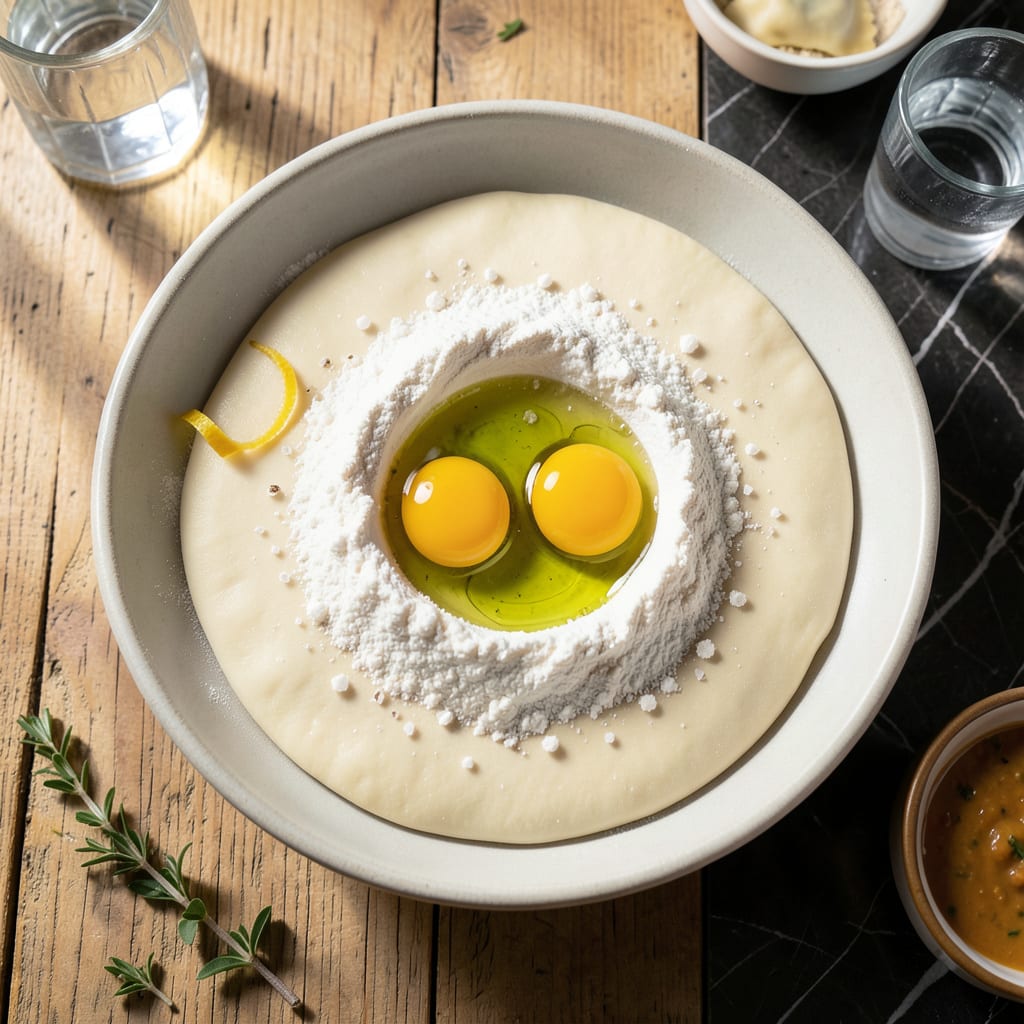
There’s a reason Italian nonnas swear by 00 flour for pasta—it creates the silkiest, most delicate dough imaginable. This recipe transforms that fine, powdery flour into perfectly elastic ravioli sheets that hold their shape while cooking.
The key lies in proper resting and rolling techniques. With just a few ingredients and 10 minutes of active work, you’ll have dough ready for any filling. The texture is what makes homemade ravioli truly special.
Ingredients for Ravioli Dough Recipe 00 Flour
Five simple ingredients transform into silky, elastic pasta sheets ready for any filling.
| Ingredient | Amount | Notes |
|---|---|---|
| 00 Flour 🌾 | 2 cups | Fine, powdery Italian flour essential |
| Large Eggs 🥚 | 3 whole | Room temperature for best texture |
| Extra-Virgin Olive Oil 🫒 | 1 tbsp | High quality for richness |
| Sea Salt 🧂 | ½ tsp | Fine grain preferred |
| Water 💧 | 1 tbsp | As needed for consistency |
The 00 flour is non-negotiable here. Eataly or Italian markets carry it, but Amazon and King Arthur’s online store are reliable too. Look for the fine, almost powdery texture—this is what gives the dough its delicate quality. Room temperature eggs incorporate better, so pull them out 30 minutes before starting. The olive oil should be high-quality, extra-virgin for the best flavor.
No 00 flour? All-purpose flour works in a pinch, but the texture won’t be as silky. Swap the olive oil for melted butter if you prefer a richer taste. For a vegan version, use flax eggs (1 tbsp ground flaxseed + 3 tbsp water per egg), though the texture will differ slightly. The salt can be adjusted to taste, but don’t skip it entirely.
Rest the dough at least 30 minutes before rolling—this relaxes the gluten for easier shaping. Wrap tightly in plastic and store unused dough in the fridge for up to 2 days. Freeze for 1 month if needed, but fresh is always best for texture.
Why You’ll Love This Recipe
- 5-Minute Mix: I just dump the 00 flour, eggs, olive oil, and salt in a bowl—no fancy steps, and the dough comes together in minutes.
- Silky Texture: The 00 flour makes it so tender it practically melts, and that hint of olive oil adds a richness I can’t get enough of.
- Freezer Friendly: Honestly, I double the batch and freeze half for lazy nights when I want fresh ravioli without the effort.
- Pocket Perfection: Between us, this dough holds any filling I throw at it—spinach and ricotta, butternut squash, you name it.
Step-by-Step Instructions for Ravioli Dough with 00 Flour
Master the technique for silky, elastic pasta sheets that roll out perfectly every time.
Step 1: Form the Well and Combine Wet Ingredients
On a clean work surface or in a large mixing bowl, mound the 2 cups 00 Flour and create a deep well in the center. The fine texture of 00 flour is essential—it creates a smoother, more delicate dough than all-purpose flour.
Crack the 3 whole Large Eggs into the well, then add the 1 tbsp Extra-Virgin Olive Oil and 0.5 tsp Sea Salt. Using a fork, gently whisk the eggs and oil in the well until fully combined. This gradual incorporation prevents lumps and ensures even distribution of fat throughout the dough.
Step 2: Gradually Incorporate the Flour
Begin drawing the flour into the egg mixture with the fork, working in small circular motions from the center outward. As the mixture thickens, switch to a bench scraper or your hands. The dough will start as a shaggy mass—this is normal.
Continue mixing until all the flour is incorporated. If the dough feels too dry and won’t come together, add the 1 tbsp Water 1 teaspoon at a time until it holds together. The dough should feel slightly sticky but not wet. Avoid adding too much water, as 00 flour absorbs liquid differently than other flours.
Step 3: Knead to Develop Gluten Structure
Turn the dough out onto a clean surface and begin kneading with the heel of your hand. Push the dough forward, then fold it back over itself, rotating a quarter turn after each push. This process develops the gluten, giving the dough its elastic texture.
Knead for 8-10 minutes until the dough is smooth, supple, and slightly springy to the touch. If it feels too stiff, wet your hands slightly and continue kneading. The finished dough should be soft but not sticky, and it should bounce back when pressed lightly with a finger.
Step 4: Rest the Dough for Optimal Elasticity
Shape the dough into a ball, wrap it tightly in plastic wrap, and let it rest at room temperature for 30 minutes. This resting period allows the gluten strands to relax, making the dough easier to roll out thinly without springing back.
After resting, the dough should feel even softer and more pliable. If you press it gently, it should hold the indentation briefly before slowly bouncing back. This is the sign that it’s ready to be rolled out into thin sheets for your ravioli.
Step 5: Roll and Shape the Dough
Divide the dough into 4 equal portions to make it easier to handle. Working with one portion at a time (keep the others covered), flatten it slightly with your hands, then pass it through a pasta machine starting at the widest setting.
Fold the sheet in half and repeat the rolling process, narrowing the setting by one notch each time, until the sheet is thin enough to see your hand through it—typically around the 6th or 7th setting on most machines. Lay the sheets flat on a floured surface until ready to fill and shape your ravioli.
Pro Tips For Making Ravioli Dough Recipe 00 Flour
- Knead Until Smooth: Work the dough for at least 8-10 minutes by hand—it’ll start rough but turns silky when the gluten develops. I learned this the hard way after my first few batches cracked.
- Use Room-Temp Eggs: Pull your eggs out 30 minutes before mixing. Cold eggs shock the flour and make the dough tight and stubborn to roll.
- Rest the Dough: Wrap it in plastic and let it sit at room temp for 30 minutes—skip this and it’ll spring back like a rubber band when you roll it.
- Dust With 00 Flour: Use the same 00 flour for dusting when rolling, not all-purpose. Sounds fussy, but it keeps the texture consistent and prevents gummy spots.
Storing and Reheating Leftovers
Refrigerator Storage
Wrap your dough tightly in plastic wrap or place in an airtight container before storing. It stays fresh in the fridge for up to 2 days. The gluten relaxes further during chilling, making it even easier to roll out later. ❄️
Freezer Storage
For longer storage, freeze the dough for up to 1 month. Portion it into 4 equal balls first, then wrap each tightly in plastic and place in a freezer bag. Thaw overnight in the fridge before using.
Room Temperature Rest
Let chilled dough sit at room temperature for 30-60 minutes before rolling. This brings it back to the ideal consistency. Cold dough is too stiff to roll thinly without cracking.
Prepared Ravioli Storage
If you’ve already shaped your ravioli, dust them with 00 flour and arrange in a single layer on a baking sheet. Freeze until solid, then transfer to a freezer bag for up to 2 months. 💡
Reheating Cooked Ravioli
For fresh or thawed ravioli, cook in boiling salted water for 2-3 minutes. Frozen ravioli need 4-5 minutes. Avoid overcooking—they’re done when they float to the surface.
Reviving Dried Dough
If your dough feels dry after storage, knead in 1-2 tsp water to restore elasticity. Work it in gradually until the dough regains its smooth, supple texture.
Nutrition Facts
Frequently Asked Questions
Why is 00 flour better for ravioli dough?
Its fine texture creates a silky, delicate pasta that holds fillings well. The low protein content makes it easier to roll thinly without toughness.
Can I make this dough without a pasta machine?
Yes! Use a rolling pin to roll the dough as thin as possible. It takes more effort but works for small batches.
How do I prevent my ravioli from bursting while cooking?
Seal edges tightly, avoid overfilling, and use 1 tablespoon of water in the dough for flexibility.
What’s the best way to store fresh ravioli?
Dust with flour, place on a tray, and freeze solid. Then transfer to a bag for up to 2 months.

- BBQ Sausage Recipe Oven: Smoky Depth Without the Grill - September 28, 2026
- BBQ Chicken Bowl Recipe Rice: Smoky Sweetness Over Fluffy Grains - September 28, 2026
- Beef Cutlet Recipe Ideas: Crispy Breaded Patties With Bold Seasonings - September 28, 2026