
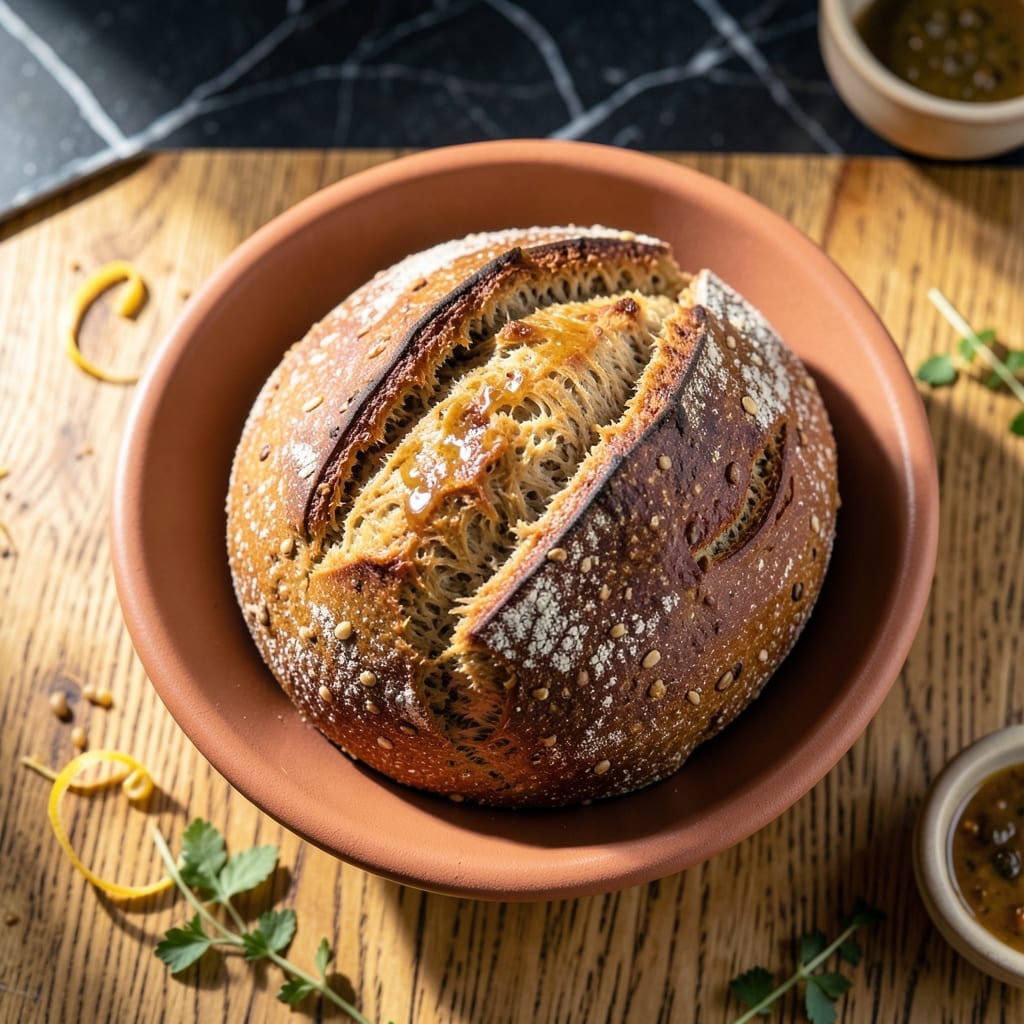
This ancient-inspired bread brings history to your kitchen with its hearty texture and rich, nutty flavor. Baked with whole grains, it offers a taste of tradition in every slice.
I developed this recipe to honor biblical-era baking, using simple ingredients and proven techniques. The result is a dense, satisfying loaf that pairs perfectly with meals or stands alone as a snack.
Ingredients for Recipe for Bible Bread
Hearty ancient grains and simple sweeteners bring this traditional loaf to life beautifully.
| Ingredient | Amount | Notes |
|---|---|---|
| Whole Wheat Flour 🌾 | 3 cups | Stone-ground preferred for authenticity |
| Barley Flour 🌾 | 1 cup | Ancient grain for nutty flavor |
| Spelt Flour 🌾 | 1 cup | Traditional biblical grain |
| Active Dry Yeast 🍞 | 2 ¼ tsp | One standard packet equivalent |
| Honey 🍯 | 2 tbsp | Natural sweetener for dough |
| Olive Oil 🫒 | ¼ cup | Extra-virgin for richness |
| Sea Salt 🧂 | 2 tsp | Fine grain for even distribution |
| Warm Water 💧 | 1 ½ cups | 110°F to activate yeast |
| Flaxseeds 🌰 | ¼ cup | Optional for added texture |
| Sunflower Seeds 🌻 | ¼ cup | Optional for crunch |
| Dates 🍈 | ½ cup | Pitted and chopped for sweetness |
| Cinnamon 🌿 | 1 tsp | Ground for warm spice notes |
For authentic biblical-era flavor, sourced stone-ground whole wheat and spelt flour are essential. Look for these at Whole Foods or specialty health stores—they often stock heritage grains. Barley flour adds a distinct nuttiness, but if unavailable, farro flour works as a substitute. The yeast should be fresh; check the expiration date on the packet. King Arthur Baking offers reliable stone-ground options if you prefer mail order.
No honey on hand? Maple syrup or date syrup can replace it at a 1:1 ratio. Olive oil can be swapped with melted coconut oil for a different fat profile. If flaxseeds or sunflower seeds aren’t available, pumpkin seeds or chopped walnuts add a similar texture. Dates can be replaced with chopped figs or raisins for a different but complementary sweetness.
Store flours in airtight containers in a cool, dark place for up to 3 months. The baked loaf stays fresh for 5 days at room temperature in a bread box or wrapped in a clean towel. For longer storage, slice and freeze for up to 3 months.
Why You’ll Love This Recipe
- No-Knead Wonder: I mix the flours, yeast, and honey, let it rise, and that’s it—no fancy techniques or elbow grease.
- Nutty Sweetness: The blend of whole wheat, barley, and spelt flours with honey gives it this warm, toasty depth that’s just right with a smear of butter.
- Weekend Project: I love baking a big batch on Saturday—perfect for Sunday brunch or gifting to neighbors.
- Stays Fresh: Honestly, it tastes just as good days later, toasted up for breakfast or as an afternoon snack.
Step-by-Step Instructions for Bible Bread
Master the ancient grain technique with precision and patience for optimal results.
Step 1: Activate the Yeast and Prepare the Liquid Base
Begin by proofing the 2.25 tsp Active Dry Yeast in 1.5 cups Warm Water heated to exactly 110°F. The water should feel warm but not hot to the touch—too hot will kill the yeast, too cool will prevent activation.
Add the 2 tbsp Honey to the yeast mixture and stir gently. Let it stand for 5-7 minutes until the surface becomes frothy and slightly domed. This visual confirmation means the yeast is active and ready to leaven your dough. The honey provides both sweetness and food for the yeast.
Step 2: Combine the Flours and Dry Ingredients
In a large mixing bowl, whisk together the 3 cups Whole Wheat Flour, 1 cup Barley Flour, and 1 cup Spelt Flour until fully blended. These ancient grains each contribute distinct nutritional profiles and flavors that define this bread.
Stir in the 2 tsp Sea Salt to ensure even distribution throughout the dough. Then add the 1 tsp Cinnamon, which provides warm spice notes that complement the natural sweetness of the grains and dates. Create a well in the center of the dry ingredients for the wet mixture.
Step 3: Incorporate Wet Ingredients and Mix the Dough
Pour the proofed yeast mixture into the well of dry ingredients. Add the 0.25 cup Olive Oil and begin mixing with a wooden spoon until a shaggy dough forms. The olive oil adds richness and helps create a tender crumb.
Fold in the 0.5 cup Dates (pitted and chopped), 0.25 cup Flaxseeds, and 0.25 cup Sunflower Seeds. These additions provide texture, natural sweetness, and nutritional boosts. The dough will be sticky but should pull away from the sides of the bowl. If it’s too wet, add a tablespoon of whole wheat flour.
Step 4: Knead, First Rise, and Shape the Loaf
Turn the dough onto a lightly floured surface and knead for 8-10 minutes until smooth and elastic. The dough should spring back when gently pressed with a finger. This development of gluten is crucial for proper structure.
Place the dough in a lightly oiled bowl, cover with a damp towel, and let rise in a warm, draft-free area for 1 to 1.5 hours or until doubled in volume. The ideal rise environment is 75-80°F. Punch down the dough, shape into a round or oval loaf, and place on a parchment-lined baking sheet.
Step 5: Second Rise and Bake to Golden Perfection
Cover the shaped loaf and let it rise again for 45-60 minutes until it has puffed noticeably. Preheat your oven to 375°F during the last 15 minutes of rising. The loaf should look full and rounded, with visible expansion.
Bake for 35-40 minutes until the bread is deep golden brown and sounds hollow when tapped on the bottom. For an accurate test, use an instant-read thermometer—the internal temperature should register 190-200°F. Cool on a wire rack for at least 1 hour before slicing to allow the crumb to set properly.
Pro Tips For Making Recipe For Bible Bread
- Warm the Honey: Gently heat the honey for 10-15 seconds in the microwave before mixing—cold honey slows yeast activation and can leave your dough sluggish.
- Proof the Yeast: I learned this the hard way: always dissolve yeast in warm water with a pinch of honey first to confirm it’s alive before mixing with flours.
- Hydrate the Flours: Whole wheat, barley, and spelt absorb liquid differently—let the dough rest 15 minutes after kneading to fully hydrate and prevent a dense loaf.
- Use Room Temp Ingredients: Sounds obvious, but cold flours or honey can seize up the dough. Pull everything out 30 minutes before starting—your loaf will rise more evenly.
Flavor Customization for This Recipe
Sweet and Spiced
Add 1 additional tsp cinnamon and ½ tsp nutmeg to the dry ingredients for a warmer, more aromatic loaf. I also love mixing in ¼ cup raisins with the dates for extra fruity bursts. This creates a bread perfect for breakfast toast. 💛
Savory Seed Blend
Swap the dates for ½ cup chopped olives and increase the sunflower seeds to ½ cup. Add 1 tbsp dried rosemary to the dough for a Mediterranean-inspired twist. This savory version pairs wonderfully with soups and stews.
Nutty Crunch
Replace flaxseeds with ½ cup chopped walnuts and add 2 tbsp sesame seeds to the top before baking. The combination adds a delightful texture contrast. I often toast the nuts lightly before adding for enhanced flavor.
Fruit-Forward
Use ½ cup chopped dried apricots instead of dates and add 1 tbsp orange zest to the wet ingredients. This brightens the loaf with citrus notes. The apricots rehydrate slightly during baking, creating tender pockets of sweetness.
Herb-Infused
Mix in 1 tbsp fresh thyme leaves and 1 tbsp fresh rosemary (chopped) with the dry ingredients. This herbaceous version complements roasted meats beautifully. I find fresh herbs work better than dried for this variation.
Reduce the cinnamon to ½ tsp to let the herbal notes shine through. ✨
Frequently Asked Questions
Can I use all-purpose flour instead of ancient grains?
Yes, but the flavor and texture will differ. Substitute 5 cups all-purpose flour for the grain blend. The result will be lighter but less nutty. For better nutrition, use 2 cups whole wheat and 3 cups all-purpose.
How do I know when the dough has risen enough?
It should double in size and spring back slowly when pressed. If it springs back quickly, let it rise longer. Ideal rise takes 1-1.5 hours at 75-80°F.
Why did my bread turn out dense?
Underproofed dough or inactive yeast are common causes. Ensure yeast is frothy before mixing. Knead for the full 8-10 minutes and let it rise until truly doubled.
Can I make this without a mixer?
Mix and knead by hand. The sticky dough will be messy but manageable. Use wet hands to prevent sticking during shaping.
Nutrition Facts

- BBQ Sausage Recipe Oven: Smoky Depth Without the Grill - September 28, 2026
- BBQ Chicken Bowl Recipe Rice: Smoky Sweetness Over Fluffy Grains - September 28, 2026
- Beef Cutlet Recipe Ideas: Crispy Breaded Patties With Bold Seasonings - September 28, 2026