
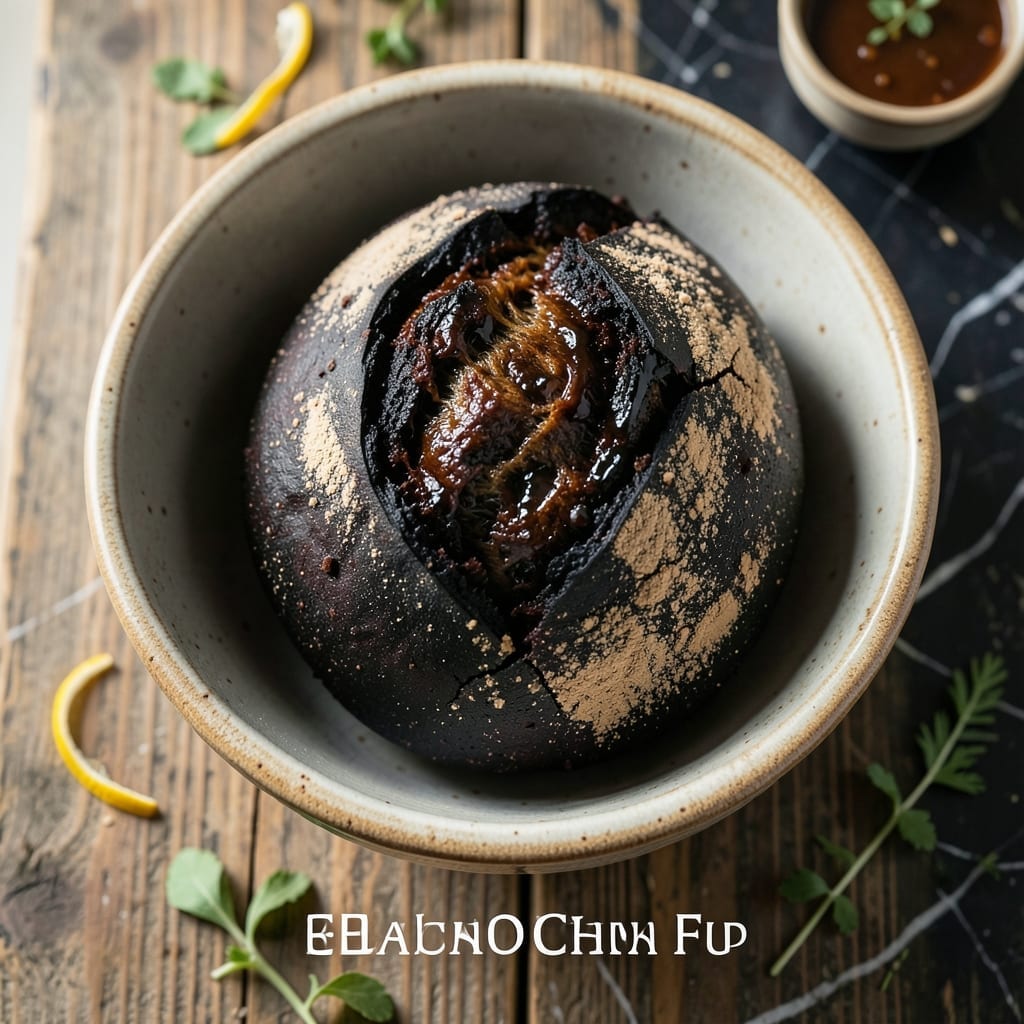
This dense rye bread delivers earthy depth that traditional loaves simply can’t match. The dark color comes from a combination of molasses and cocoa powder, creating a rich, slightly sweet base that defines the character of this bread.
What sets this recipe apart is its simplicity—no fancy techniques, just precise measurements and patience. The dough requires a long, slow rise to develop its signature dense texture and complex flavor profile.
You’ll end up with a loaf that’s hearty enough to stand up to bold toppings yet mild enough to enjoy on its own. The crust forms a perfectly crisp exterior that gives way to a moist, tight crumb inside.
Serve it warm with butter or use it as the foundation for robust sandwiches. This bread keeps well and actually improves with age.
Ingredients for Recipe for Black Bread
Dark, dense, and deeply flavorful—these ingredients create a loaf with serious character.
| Ingredient | Amount | Notes |
|---|---|---|
| Rye Flour 🌾 | 3 cups | Dark or medium variety |
| Bread Flour 🌾 | 1 cup | For structure and texture |
| Water 💧 | 1 ½ cups | Warm, about 110°F |
| Active Dry Yeast 🍞 | 2 ¼ tsp | One packet equivalent |
| Molasses 🍯 | ¼ cup | Unsulphured for clean flavor |
| Unsweetened Cocoa Powder 🍫 | ¼ cup | Dutch-processed preferred |
| Salt 🧂 | 2 tsp | Kosher or sea salt |
| Vegetable Oil 🫒 | 2 tbsp | For greasing bowl |
| Cornmeal 🌽 | 2 tbsp | For dusting baking sheet |
| Caraway Seeds 🌿 | 1 tbsp | Optional for authentic flavor |
| Honey 🍯 | 1 tbsp | Optional for slight sweetness |
| Butter 🧈 | 2 tbsp | Melted, for brushing crust |
The rye flour is non-negotiable here. Bob’s Red Mill has a great dark rye that works perfectly (find it in the baking aisle at Whole Foods or most grocery stores). Molasses adds that signature depth—Grandma’s or Brer Rabbit are solid brands. Cocoa powder might seem weird in bread, but trust me—it just deepens the color and flavor without tasting chocolatey. Look for unsulphured molasses for cleaner taste.
No molasses? Dark brown sugar plus a splash of blackstrap gets you close. Out of cocoa powder? Skip it and add 1 extra tablespoon of molasses for color. Caraway seeds are traditional but polarizing—leave them out if you’re not a fan. The honey can be swapped for maple syrup. Bread flour is ideal for structure, but all-purpose in a pinch works fine too.
This bread actually gets better after a day or two. Store wrapped in plastic at room temp for up to 5 days, or freeze for 3 months. Slice before freezing for easy toasting later (worth the extra minute).
Why You’ll Love This Recipe
- Minimal Effort: I mix the dough the night before and let the yeast do its magic overnight—no kneading required.
- Deep Rich Taste: That molasses swirled into the rye gives it a dark, almost caramel-like depth that’s irresistible.
- Sandwich Savior: I slice it thick for hearty lunches or toast it thin for breakfast—it holds up to anything I pile on.
- Budget Baker: Rye flour and molasses stretch further than you’d think, and one loaf lasts us all week without going stale.
Step-by-Step Instructions for Black Bread
Here’s the method that delivers that signature dark, dense loaf with rich depth.
Step 1: Activate the Yeast and Mix Wet Ingredients
In a large mixing bowl, combine the 1.5 cups Water (warm, about 110°F) with the 2.25 tsp Active Dry Yeast and the 0.25 cup Molasses. Let it sit for 5-10 minutes until the mixture becomes frothy—this confirms the yeast is active and ready to work its magic.
Stir in the 0.25 cup Unsweetened Cocoa Powder, 1 tbsp Honey, and 2 tbsp Vegetable Oil. The cocoa and molasses will give this bread its deep, dark color and earthy flavor. I like to whisk these together until the cocoa is fully dissolved and the mixture looks smooth.
Step 2: Combine Dry Ingredients and Form the Dough
In a separate bowl, whisk together the 3 cups Rye Flour, 1 cup Bread Flour, 2 tsp Salt, and 1 tbsp Caraway Seeds. The bread flour adds structure, while the rye flour gives that dense, hearty texture we’re after. The caraway seeds bring that classic, slightly nutty aroma.
Add the dry ingredients to the wet mixture and stir with a wooden spoon until a shaggy dough forms. It’ll be sticky—that’s normal for rye bread. Turn the dough out onto a lightly floured surface and knead for 8-10 minutes until it’s smooth and elastic. Rye dough is denser, so don’t expect it to be as light as white bread dough.
Step 3: First Rise Until Doubled in Size
Lightly grease a clean bowl with a bit of the 2 tbsp Vegetable Oil, place the dough inside, and cover with a damp kitchen towel. Let it rise in a warm, draft-free spot for 1 to 1.5 hours, or until doubled in size. I usually turn my oven on to its lowest setting, then turn it off and place the bowl inside—this creates the perfect rising environment.
You’ll know it’s ready when the dough has visibly expanded and springs back slowly when gently pressed with a finger. Don’t rush this step; proper rising is key to a light yet dense texture.
Step 4: Shape, Second Rise, and Prepare for Baking
Punch down the dough to release the air, then shape it into a round loaf. Place it seam-side down on a baking sheet dusted with 2 tbsp Cornmeal. The cornmeal prevents sticking and adds a nice texture to the bottom crust. Cover and let rise again for 45 minutes to 1 hour until puffy.
Preheat your oven to 375°F during the last 15 minutes of rising. This ensures it’s fully heated when the bread goes in. Use a sharp knife to make a shallow slash across the top of the loaf—this helps control the expansion during baking.
Step 5: Bake and Finish with Butter
Bake the loaf for 35-40 minutes until the internal temperature reaches 200°F and the crust is deep brown and sounds hollow when tapped. If the top browns too quickly, tent it with foil for the last 10 minutes of baking.
As soon as it comes out of the oven, brush the crust with the 2 tbsp Butter (melted). This adds a subtle richness and gives the crust a beautiful sheen. Let the bread cool on a wire rack for at least 1 hour before slicing—this prevents a gummy texture. The result should be a dense, moist crumb with a deep, earthy flavor.
Pro Tips For Making Recipe For Black Bread
- Warm the Molasses: I learned this the hard way—cold molasses seizes up the yeast. Microwave it for 10-15 seconds to loosen before mixing, or you’ll spend forever stirring a stiff, stubborn dough.
- Balance the Flours: Rye flour is dense and can turn your loaf into a brick. Use a 2:1 ratio of bread flour to rye for structure, or your bread won’t rise like it should.
- Proof with Patience: Rye dough takes its sweet time. Let it proof until nearly doubled—about 1.5 to 2 hours at room temp—or you’ll end up with a dense, underdeveloped crumb.
- Steam the Oven: Sounds weird, but it works: place a pan of boiling water on the bottom rack when baking. This keeps the crust from cracking too early and gives that dark, glossy finish black bread is known for.
Serving Suggestions for This recipe for black bread
Warm and Simple
There’s nothing better than a thick slice of this bread warm from the oven, slathered with salted butter that melts into every nook. The butter enhances the earthy notes while adding a creamy contrast. I often serve it alongside a simple bowl of soup.
Hearty Sandwiches
This bread holds up beautifully to robust fillings. Try it with smoked turkey, Swiss cheese, and whole-grain mustard for a Reuben-style sandwich. The density prevents sogginess, even with saucy ingredients. It’s my go-to for lunch the next day.
Cheese Pairings
For a quick snack, pair slices with sharp cheeses like aged cheddar or Gouda. The bread’s deep flavor stands up to bold cheeses without overpowering them. Add a drizzle of honey for a sweet-savory combination that’s irresistible.
Breakfast Favorite
Toast a slice and top it with cream cheese and smoked salmon for a hearty breakfast. The bread’s density makes it perfect for toasting—it gets crispy on the outside while staying tender inside. I love this combo on lazy weekend mornings. 💛
Charcuterie Board
Cut the loaf into small cubes and serve with cured meats, olives, and pickles for a rustic charcuterie spread. The bread’s earthy tones complement salty and tangy flavors beautifully. It’s a hit at gatherings.
Sweet Treats
For dessert, lightly toast a slice and drizzle with molasses or maple syrup. The caramelized sugar enhances the bread’s natural sweetness. A sprinkle of sea salt on top takes it to the next level. 🔥
Nutrition Facts
Frequently Asked Questions
Why does this bread have a dark color?
The deep hue comes from molasses and cocoa powder in the recipe. These ingredients provide rich color without adding chocolate flavor. The longer baking time also contributes to the dark crust.
Can I substitute all-purpose flour for bread flour?
Yes, but expect a slightly less structured loaf. Bread flour’s higher protein content helps create the dense texture. If using all-purpose, add an extra 1-2 tablespoons to compensate.
How do I store leftover bread?
Wrap cooled loaf tightly in plastic and keep at room temperature for up to 5 days. For longer storage, slice and freeze for up to 3 months. Toast frozen slices directly from the freezer.
Why is my bread gummy inside?
This usually means it wasn’t baked long enough or cooled properly. Always check internal temperature reaches 200°F and let it cool completely on a rack before slicing.

- BBQ Sausage Recipe Oven: Smoky Depth Without the Grill - September 28, 2026
- BBQ Chicken Bowl Recipe Rice: Smoky Sweetness Over Fluffy Grains - September 28, 2026
- Beef Cutlet Recipe Ideas: Crispy Breaded Patties With Bold Seasonings - September 28, 2026