
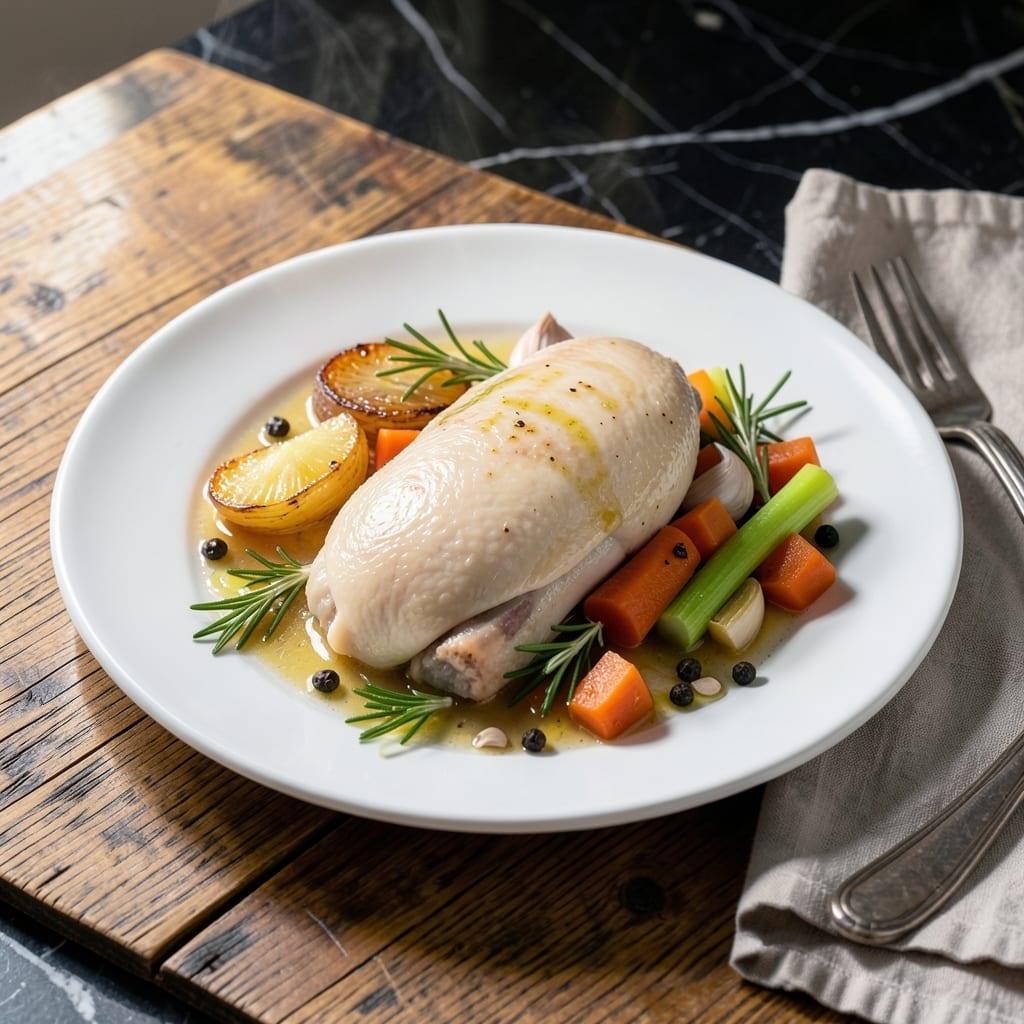
This simple boiling method transforms chicken thighs into fork-tender protein that works perfectly for meal prep. The technique is straightforward but delivers consistent results every time.
I developed this approach to create juicy, flavorful chicken that stays moist even after storage. A few aromatic additions to the water make all the difference in the final taste.
What you get is chicken that shreds effortlessly and adapts to countless recipes. It becomes the foundation for soups, salads, or sandwiches throughout the week.
The process takes less than an hour from start to finish. This method proves that basic techniques often produce the most reliable results.
Ingredients for Recipe for Boiled Chicken Thighs
Simple ingredients create fork-tender chicken thighs perfect for meal prep and beyond.
| Ingredient | Amount | Notes |
|---|---|---|
| Boneless, Skinless Chicken Thighs 🍗 | 2 lb | Trimmed of excess fat |
| Water 💧 | 8 cups | Enough to cover chicken |
| Kosher Salt 🧂 | 2 tbsp | Diamond Crystal preferred |
| Black Peppercorns 🌶️ | 1 tbsp | Whole for infusion |
| Garlic Cloves 🧄 | 6 cloves | Smashed for flavor release |
| Fresh Rosemary Sprigs 🌿 | 2 whole | About 4 inches long |
| Fresh Thyme Sprigs 🍃 | 4 whole | Stems included for boiling |
| Bay Leaves 🌿 | 2 whole | Dried or fresh |
| Lemon 🍋 | 1 whole | Cut in half, juiced |
| Yellow Onion 🧅 | 1 whole | Quartered with skin on |
| Carrots 🥕 | 2 whole | Peeled and roughly chopped |
| Celery Stalks 🌿 | 2 whole | Cut into large pieces |
The chicken thighs are the foundation—select boneless, skinless for even cooking. For optimal results, Costco or Whole Foods offer consistent quality in bulk. Fresh herbs like rosemary and thyme add depth; look for vibrant green sprigs without wilting. The onion and celery form a subtle aromatic base, while the lemon brightens the broth (don’t skip the peel—it’s packed with flavor).
No fresh herbs? Dried at one-third the amount works in a pinch. Out of bay leaves? Add an extra sprig of thyme for similar earthy notes. For a more pronounced citrus flavor, substitute lime or orange for the lemon. The salt should be kosher for clean flavor—Diamond Crystal is the professional standard. Black peppercorns can be swapped for ground pepper if needed.
Cooked chicken keeps 4-5 days refrigerated in its broth or 3 months frozen. The broth itself is liquid gold—strain and save for soups or cooking grains. For best texture, shred the meat while warm (it’s easier and more uniform).
Why You’ll Love This Recipe
- One Pot Simple: I just toss the thighs, garlic, salt, and peppercorns in water and let it simmer—no fancy steps.
- Garlic-Infused Comfort: The garlic cloves and peppercorns turn the broth into something I could drink with a straw.
- Meal Prep MVP: I shred the chicken for tacos one day, soup the next—it’s my weekly cooking shortcut.
- Budget Stretcher: A pound of thighs costs pennies, and the leftovers last me through multiple meals.
Step-by-Step Instructions for Boiled Chicken Thighs
Here’s the method for perfectly tender chicken thighs with aromatic flavor infusion.
Step 1: Prepare the Aromatics and Chicken
Quarter the yellow onion with the skin on, as this adds beautiful color and depth to the broth. Peel and roughly chop the carrots and cut the celery stalks into large pieces. Cut the lemon in half and juice it directly into the pot.
Smash the 6 cloves garlic cloves to release their oils, and leave the 2 whole fresh rosemary sprigs and 4 whole fresh thyme sprigs intact. Trim any excess fat from the 2 lb boneless, skinless chicken thighs, though some fat is fine for flavor. This preparation ensures every element contributes to the final broth.
Step 2: Build the Flavorful Broth
In a large pot, combine the 8 cups water, 2 tbsp kosher salt, 1 tbsp black peppercorns, 2 whole bay leaves, and all the prepared aromatics. The water should be enough to fully submerge the chicken thighs once added.
Bring the mixture to a boil over high heat, then reduce to a gentle simmer. The aromatics will begin to release their flavors into the water, creating a fragrant base. You’ll notice the kitchen filling with the scent of garlic, rosemary, and thyme as the broth develops.
Step 3: Poach the Chicken to Tenderness
Carefully add the chicken thighs to the simmering broth. Ensure they are fully submerged—this guarantees even cooking and maximum flavor absorption. Return the broth to a gentle simmer, maintaining a temperature just below boiling to keep the meat tender.
Poach the chicken for 25-30 minutes, or until the internal temperature reaches 165°F and the meat is fork-tender. Avoid boiling vigorously, as this can toughen the chicken. The thighs should feel firm yet yield easily when pierced with a fork.
Step 4: Rest and Serve
Using a slotted spoon, transfer the chicken thighs to a cutting board or serving dish. Discard the spent aromatics and bay leaves from the broth if you plan to use it for soups or sauces.
Let the chicken rest for 5-10 minutes before slicing or shredding. This allows the juices to redistribute, ensuring moist, flavorful meat. Serve the chicken as-is for meal prep, or shred it for salads, tacos, or sandwiches.
Pro Tips For Making Recipe For Boiled Chicken Thighs
- Start Cold, End Hot: Drop your chicken into cold water with salt and aromatics, then bring to a gentle simmer—I learned this the hard way after tough, dry thighs from starting in boiling water.
- Smash the Garlic: Lightly crush the garlic cloves with the side of your knife before adding them; it releases more flavor without the risk of burning or bitter notes.
- Skip the Rolling Boil: Keep the water at a bare simmer, just a few bubbles breaking the surface, or your thighs will tighten up and turn rubbery.
- Rest in Broth: Let the chicken cool in the cooking liquid for 10 minutes after turning off the heat—it stays juicier and soaks up extra seasoning.
Health Benefits of This Dish
Lean Protein Power
Chicken thighs offer a rich source of high-quality protein—about 25 grams per 3-ounce serving. This supports muscle maintenance and repair, making it ideal for active lifestyles. The protein is complete, containing all nine essential amino acids your body needs. 💪
Heart-Healthy Fats
While slightly higher in fat than breast meat, chicken thighs contain mostly unsaturated fats, which are beneficial for heart health. These fats help absorb fat-soluble vitamins like A, D, E, and K from other foods in your meal.
The skinless version reduces saturated fat content while retaining the rich flavor that makes thighs so popular.
Rich in B Vitamins
This cut is particularly high in B vitamins, especially B12 and niacin. A single serving provides about 30% of your daily B12 needs, which is crucial for nerve function and red blood cell production.
Mineral Boost
You’ll get a significant dose of iron and zinc from chicken thighs. The iron is heme iron, which your body absorbs more easily than plant-based iron. Zinc supports immune function and wound healing.
Low-Carb Friendly
With virtually no carbohydrates, this dish fits perfectly into low-carb or keto diets. The protein helps maintain satiety, while the natural fats provide sustained energy without blood sugar spikes.
I find this especially helpful for meal prep when I’m watching my carb intake. ✨
Nutrition Facts
Frequently Asked Questions
Can I use bone-in thighs instead?
Yes, but they’ll need 5-10 extra minutes to cook through. Bone-in adds flavor to the broth but may require adjusting the water level to keep them submerged. The meat will still be tender and juicy.
How do I know when it’s done?
Use a meat thermometer to check for 165°F internally. The meat should pull apart easily with a fork and appear opaque throughout. Never rely on color alone.
Can I reuse the cooking liquid?
Strain and store the flavorful broth for soups, stews, or cooking grains. It keeps for 4-5 days refrigerated or 3 months frozen. This adds depth to other dishes.
Why did my chicken turn out dry?
Boiling too vigorously or overcooking can dry it out. Maintain a gentle simmer and remove promptly at 165°F. Let it rest before slicing to retain moisture.

- BBQ Sausage Recipe Oven: Smoky Depth Without the Grill - September 28, 2026
- BBQ Chicken Bowl Recipe Rice: Smoky Sweetness Over Fluffy Grains - September 28, 2026
- Beef Cutlet Recipe Ideas: Crispy Breaded Patties With Bold Seasonings - September 28, 2026