
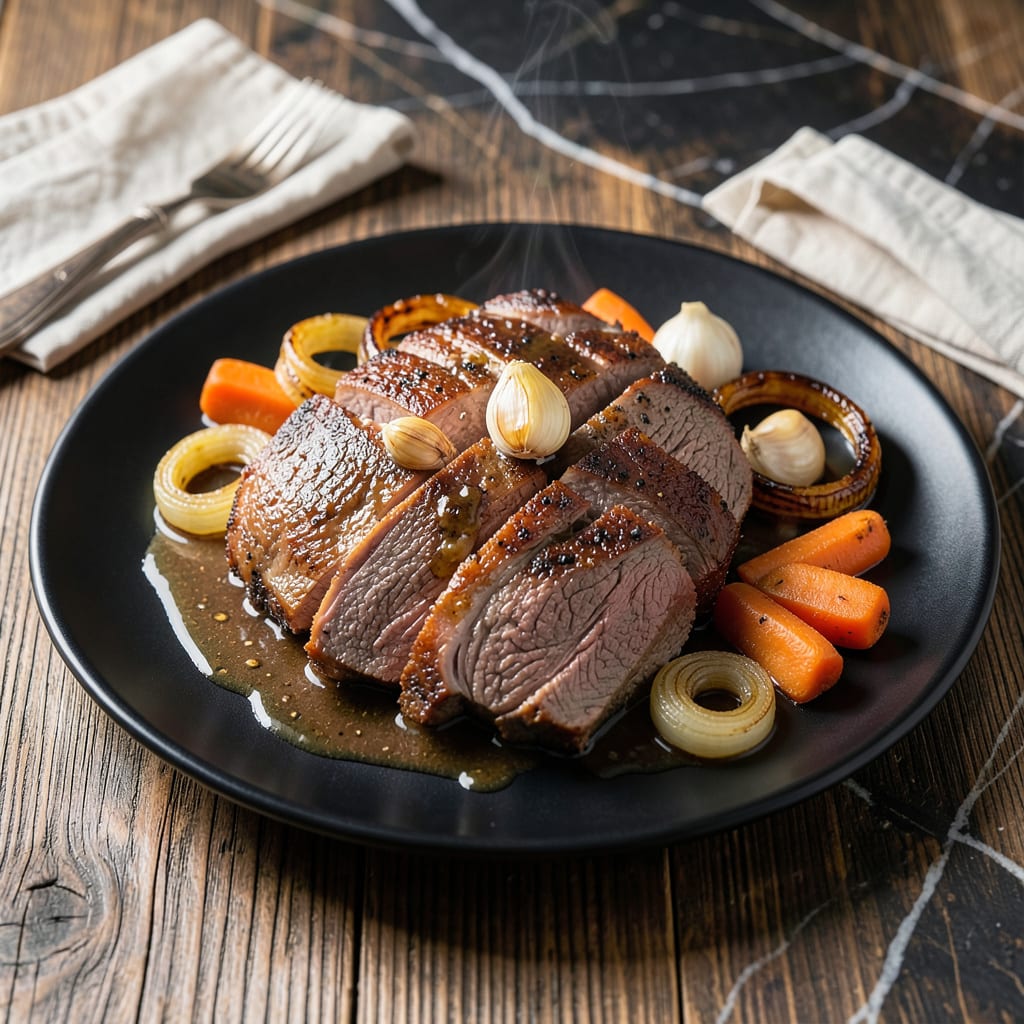
This method transforms tough bottom round into fork-tender perfection through low, slow cooking. The extended time allows connective tissues to break down completely, resulting in meat that practically melts at the touch.
By maintaining a consistent 325°F temperature, you’ll achieve even cooking without drying. The result is a roast with deep beefy flavor and the ideal tender texture that makes this cut truly shine.
Ingredients for Recipe for Bottom Round Roast
Fifteen ingredients transform this humble cut into a showstopping centerpiece with melt-in-your-mouth texture.
| Ingredient | Amount | Notes |
|---|---|---|
| Bottom Round Roast 🥩 | 3 lb | Well-marbled, trimmed of excess fat |
| Kosher Salt 🧂 | 1 ½ tbsp | Diamond Crystal preferred for even seasoning |
| Coarsely Ground Black Pepper 🌶️ | 1 tbsp | Freshly ground for maximum aroma |
| Garlic Cloves 🧄 | 6 cloves | Peeled and smashed for robust flavor |
| Yellow Onions 🧅 | 2 whole | Medium-sized, quartered with skin on |
| Carrots 🥕 | 3 whole | Large, cut into 3-inch chunks |
| Celery Stalks 🌿 | 3 whole | Cut into 3-inch pieces for aroma |
| Fresh Thyme Sprigs 🍃 | 4 whole | Tied with kitchen twine for easy removal |
| Fresh Rosemary Sprigs 🍃 | 2 whole | Tied with thyme for herb bundle |
| Bay Leaves 🌿 | 2 whole | Dried, for depth of flavor |
| Beef Stock 💧 | 2 cups | Low-sodium preferred for control |
| Red Wine 🍷 | 1 cup | Dry variety like Cabernet Sauvignon |
| Olive Oil 🫒 | 2 tbsp | Extra-virgin for searing |
| Tomato Paste 🍅 | 2 tbsp | For umami depth in braising liquid |
| Dijon Mustard 🟡 | 1 tbsp | Smooth variety for tangy finish |
The bottom round must be well-marbled for optimal results—look for bright red meat with thin white fat streaks. Whole Foods and Costco consistently carry high-quality options. Avoid pre-cut stew meat as it lacks the connective tissue needed for this preparation. The beef stock should be low-sodium to allow precise seasoning control during cooking.
No red wine? Substitute with additional beef stock plus 1 tbsp balsamic vinegar. Fresh herbs are ideal but dried at one-third the quantity works in a pinch. If tomato paste isn’t on hand, ketchup at half the amount provides similar depth. For the Dijon, whole-grain mustard offers a pleasant texture variation without compromising flavor.
The roast can be seared and prepped 1 day ahead—refrigerate uncovered to dry the surface for better browning. Leftover meat keeps 4-5 days refrigerated or 3 months frozen. Reheat gently in the braising liquid to maintain moisture.
Why You’ll Love This Recipe
- Set It and Forget: Honestly, I just rub the roast with salt, pepper, garlic, and onions, then let the oven do the work.
- Sunday Dinner Vibes: That slow-roasted garlic and onion combo turns the bottom round into something ridicuously tender and flavorful.
- Feeds the Week: One roast means Sunday dinner, Monday sandwiches, and Tuesday tacos—no waste, all win.
- Budget Hero: A bottom round is one of the most affordable cuts, and this method makes it taste like a million bucks.
Step-by-Step Instructions for Bottom Round Roast
Master the technique that transforms this lean cut into a melt-in-your-mouth centerpiece.
Step 1: Season and Sear the Roast
Pat the 3 lb Bottom Round Roast completely dry with paper towels. This ensures a proper sear rather than steaming the surface. Season aggressively on all sides with 1.5 tbsp Kosher Salt and 1 tbsp Coarsely Ground Black Pepper, pressing the seasoning into the meat so it adheres during cooking.
Heat 2 tbsp Olive Oil in a heavy Dutch oven over medium-high heat until shimmering. Sear the roast on all sides for 2-3 minutes per side until deeply browned. You’re building a flavorful crust that will translate into rich depth in the finished dish. Don’t rush this step—the fond created here is essential for the braising liquid.
Step 2: Build the Aromatic Base
After removing the roast, reduce heat to medium. Add the 2 whole Yellow Onions (quartered with skin on), 3 whole Carrots (cut into 3-inch chunks), and 3 whole Celery Stalks (cut into 3-inch pieces) to the pot. Cook for 5 minutes, stirring occasionally, until the vegetables begin to soften and develop color.
Add the 6 cloves Garlic Cloves (peeled and smashed), 2 tbsp Tomato Paste, and 1 tbsp Dijon Mustard. Stir for 1-2 minutes until the tomato paste darkens slightly—this intensifies its natural sweetness and eliminates any raw flavor. The mixture should become fragrant and start to stick slightly to the bottom of the pot.
Step 3: Braise with Wine and Stock
Deglaze the pot with 1 cup Red Wine, scraping up all the browned bits from the bottom with a wooden spoon. These caramelized particles contain concentrated flavor that will enrich your braising liquid. Let the wine simmer for 2-3 minutes until reduced by half.
Return the seared roast to the pot. Add 2 cups Beef Stock, 4 whole Fresh Thyme Sprigs, 2 whole Fresh Rosemary Sprigs (tied together with kitchen twine), and 2 whole Bay Leaves. The liquid should come about halfway up the roast. Bring to a gentle simmer.
Step 4: Slow-Cook to Fork-Tender Perfection
Cover the pot tightly and transfer to a preheated 325°F oven. Braise for 2.5 to 3 hours, turning the roast halfway through the cooking time. The low, steady heat breaks down the tough connective tissues in the bottom round, transforming it into something tender and succulent.
You’ll know it’s done when the meat yields easily to a fork and the internal temperature reaches 195-200°F. The braising liquid should have reduced slightly and taken on a rich, meaty character from the roast and vegetables. This temperature range ensures the collagen has fully converted to gelatin, giving you that perfect pull-apart texture.
Step 5: Rest and Serve
Carefully transfer the roast to a cutting board and tent loosely with foil. Let it rest for 15-20 minutes before slicing. This allows the juices to redistribute throughout the meat, ensuring every bite is moist and flavorful rather than dry.
Meanwhile, skim any excess fat from the surface of the braising liquid and reduce it on the stovetop over medium heat for 5-10 minutes if you prefer a thicker sauce. Slice the roast against the grain and serve with the vegetables and reduced braising liquid spooned over the top.
Pro Tips For Making Recipe For Bottom Round Roast
- Sear It Hot: Heat your pan until it’s smoking before adding the roast—this gives bottom round that deep brown crust it desperately needs. I learned this the hard way after too many gray, sad-looking roasts.
- Slice Against Grain: After cooking, slice the roast thinly against the grain to break up those tough muscle fibers. Sounds fussy, but it actually changes the outcome—your guests won’t be chewing forever.
- Don’t Rush the Rest: Let it rest for at least 15 minutes under foil before slicing. I used to skip this and wondered why the juices ended up on the cutting board instead of in the meat.
- Smash the Garlic: Crush the garlic cloves with the side of your knife before peeling—it releases way more flavor into the roast. My grandmother swore by this, and she was right.
Dietary Considerations for This Dish
Gluten-Free Friendly
This dish is naturally gluten-free since it relies on whole ingredients like beef, vegetables, and herbs. Just double-check your beef stock and Dijon mustard labels—some brands add wheat-based thickeners. I always use Annie’s or Whole Foods 365 for peace of mind.
Low-Carb Option
With only 12g net carbs per serving (mostly from vegetables), this fits perfectly into low-carb diets. Skip the red wine and replace with extra beef stock to reduce carbs further. The rich, meaty flavor keeps it satisfying without added sugars.
Dairy-Free by Design
No dairy products are used in this preparation, making it safe for those avoiding lactose. The braising liquid gets its richness from the beef itself and the olive oil used for searing. I’ve served this to dairy-sensitive friends with zero issues.
Lower-Sodium Adjustments
To reduce sodium, use low-sodium beef stock and cut the kosher salt to 1 tbsp. The long cooking time allows flavors to develop deeply without excessive salt. Taste before serving and adjust seasoning gradually. 💪
Keto-Friendly
With its high protein and fat content, this roast is keto-approved. The 3 lb bottom round provides ample protein, while the olive oil and natural fats in the beef support ketosis. Pair with cauliflower mash for a complete keto meal.
Allergen Notes
This recipe contains no common allergens like nuts, dairy, or eggs. The only potential concern is mustard in the Dijon. For mustard allergies, simply omit it—the dish will still be flavorful with the other aromatic ingredients.
Nutrition Facts
Frequently Asked Questions
What’s the best way to slice the roast?
Always slice against the grain into 1/2-inch thick pieces. This shortens the muscle fibers for maximum tenderness. Use a sharp carving knife for clean cuts.
Can I cook this in a slow cooker instead?
Yes! Sear the roast first, then transfer to your slow cooker with all braising liquid. Cook on low for 8-10 hours or high for 5-6 hours until fork-tender.
What if my roast isn’t tender after the suggested time?
Bottom round needs time to break down. If still tough, return it to the oven for another 30-60 minutes at 325°F. Check the internal temperature—it should reach at least 195°F.
How do I store leftovers?
Store in an airtight container with some braising liquid for up to 5 days in the fridge. For longer storage, freeze for up to 3 months.

- BBQ Sausage Recipe Oven: Smoky Depth Without the Grill - September 28, 2026
- BBQ Chicken Bowl Recipe Rice: Smoky Sweetness Over Fluffy Grains - September 28, 2026
- Beef Cutlet Recipe Ideas: Crispy Breaded Patties With Bold Seasonings - September 28, 2026