
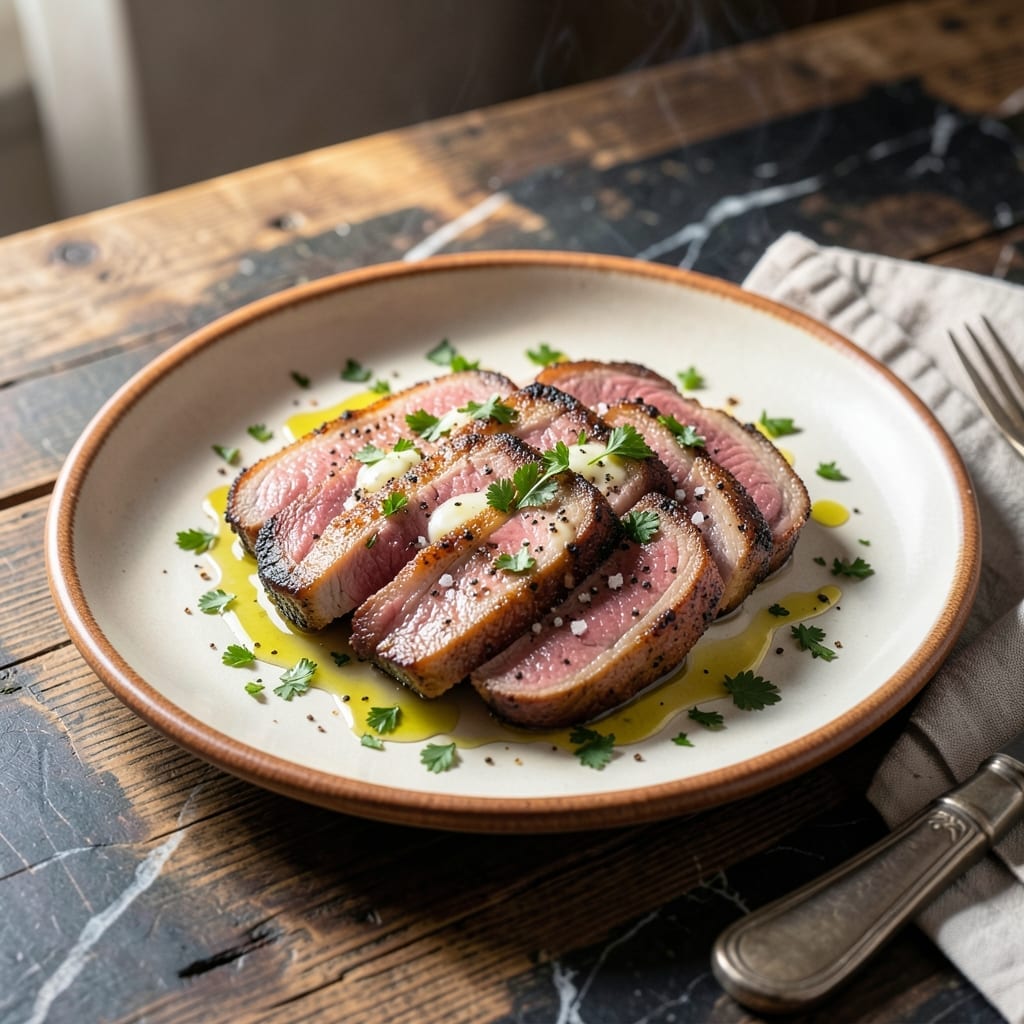
Pan-seared calves liver delivers a rich, iron-forward flavor that’s both hearty and refined. This method ensures a tender interior with a caramelized exterior, while the onion gravy adds a sweet, savory depth that complements the liver perfectly.
The key is quick cooking over medium-high heat—just 2-3 minutes per side—to prevent toughness. A simple flour dredge creates a light crust that locks in moisture, and deglazing the pan with broth builds the foundation for the silky gravy.
Serve this with creamy mashed potatoes or buttered egg noodles to soak up every drop of the gravy. The dish is robust enough for a special dinner yet simple enough for a weeknight meal.
For best results, choose fresh, high-quality calves liver and slice it evenly for consistent cooking. This technique guarantees a restaurant-quality finish every time.
Ingredients for Recipe for Calves Liver
Fresh liver, simple pantry staples, and a few aromatics create this refined dish.
| Ingredient | Amount | Notes |
|---|---|---|
| Calves Liver 🥩 | 1 ½ lb | Fresh, sliced 1/2-inch thick |
| All-Purpose Flour 🌾 | ½ cup | For dredging liver slices |
| Kosher Salt 🧂 | 1 ½ tsp | Divided for seasoning |
| Freshly Ground Black Pepper 🌶️ | 1 tsp | Divided for seasoning |
| Unsalted Butter 🧈 | 4 tbsp | Divided for cooking and gravy |
| Olive Oil 🫒 | 2 tbsp | For high-heat searing |
| Yellow Onion 🧅 | 2 whole | Thinly sliced for gravy |
| Beef Broth 💧 | 1 ½ cups | Low-sodium preferred |
| Worcestershire Sauce 🍶 | 1 tbsp | For umami depth in gravy |
| Dijon Mustard 🟡 | 1 tsp | Smooth, not whole grain |
| Heavy Cream 🥛 | ¼ cup | For rich gravy finish |
| Fresh Thyme Sprigs 🌿 | 4 pieces | Leaves stripped, stems discarded |
| Garlic Cloves 🧄 | 2 cloves | Minced for gravy |
The calves liver is non-negotiable—source from a trusted butcher like Whole Foods or a local shop with high turnover. Look for vibrant color and smooth texture; avoid anything with a grayish cast or strong odor. Slice it yourself for even thickness (aim for 1/2-inch), which ensures consistent cooking. The flour dredge should be fine and light—King Arthur all-purpose is reliable for this.
No calves liver? Beef liver at 3/4 the amount works, though the flavor is stronger. Swap beef broth for chicken or vegetable broth if needed, but the richness will be slightly different. For a gluten-free version, cornstarch or almond flour replaces the all-purpose. The Worcestershire can be omitted, but it adds a crucial depth—Annie’s makes a solid vegetarian alternative if anchovies are a concern.
Liver cooks quickly—use it within 2 days of purchase or freeze for up to 3 months. The gravy keeps for 4 days refrigerated; reheat gently to avoid curdling the cream. Always bring liver to room temperature before cooking (about 30 minutes on the counter).
Why You’ll Love This Recipe
- One Pan Magic: I love how this comes together in a single skillet—just dredge the liver in flour, salt, and pepper, then sear in butter.
- Buttery Richness: That crispy, golden crust with the tender liver inside, all soaked in melted butter? Pure comfort on a plate.
- Weeknight Hero: Honestly, it’s my go-to for busy evenings—fast, filling, and fancy enough for company.
- Budget Stretcher: A pound of calves liver feeds four for less than a steak dinner, and leftovers (if there are any) reheat beautifully.
Step-by-Step Instructions for Pan-Seared Calves Liver with Onion Gravy
Master the technique for tender liver and rich gravy with these precise steps.
Step 1: Prepare and Season the Liver
Pat the 1.5 lb calves liver slices dry thoroughly with paper towels to ensure proper browning. This step is non-negotiable—any moisture will cause the liver to steam instead of sear.
Season both sides generously with 1 tsp kosher salt and ½ tsp black pepper. The remaining ½ tsp kosher salt and ½ tsp black pepper will be used later in the gravy.
Dredge each slice in 0.5 cup all-purpose flour, shaking off the excess. The flour creates a light crust that protects the delicate liver during cooking while thickening the gravy later.
Step 2: Sear the Liver to Perfection
Heat a large skillet over medium-high heat and add 2 tbsp olive oil and 2 tbsp unsalted butter. When the butter stops foaming and the oil shimmers, add the liver slices in a single layer without crowding.
Cook for 2-3 minutes per side until the exterior develops a deep golden-brown crust and the interior reaches 145°F for medium. The liver should still have a slight blush in the center when cut—overcooking makes it tough and grainy.
Transfer the seared liver to a warm plate and tent with foil to keep it warm while you prepare the gravy.
Step 3: Build the Onion Gravy Base
In the same skillet, reduce heat to medium and add the remaining 2 tbsp unsalted butter. Add the 2 thinly sliced yellow onions and cook for 8-10 minutes, stirring occasionally, until they soften and turn a rich caramel color.
Add the 2 minced garlic cloves and the leaves from 4 fresh thyme sprigs, cooking for 30 seconds until fragrant. Be careful not to let the garlic burn, as it will turn bitter.
Pour in 1.5 cups beef broth, scraping the bottom of the pan to release all the browned bits. This deglazing step captures the fond, adding incredible depth to your gravy.
Step 4: Finish and Serve the Gravy
Stir in 1 tbsp Worcestershire sauce and 1 tsp Dijon mustard into the onion mixture. Simmer for 3-4 minutes until the liquid reduces by about half and begins to thicken slightly.
Reduce heat to low and stir in 0.25 cup heavy cream. Simmer for an additional 2 minutes until the gravy coats the back of a spoon. Taste and adjust seasoning with the remaining ½ tsp kosher salt and ½ tsp black pepper.
Pour the gravy over the liver and serve immediately. The liver should be tender with a slightly pink center, and the gravy should have a rich, velvety consistency with sweet, caramelized onions throughout.
Pro Tips For Making Recipe For Calves Liver
- Soak the Liver: I learned this the hard way—soak the calves liver in milk for 30 minutes before cooking to mellow the flavor and remove any bitterness. It’s a game-changer for texture too.
- High Heat Only: Crank the pan to medium-high and don’t overcrowd it. Calves liver cooks fast, and high heat guarantees that perfect sear without turning it rubbery.
- Pat It Dry: After soaking, pat the liver very dry with paper towels—any moisture left will steam it instead of searing. Sounds tedious, but it works.
- Butter at the End: Start with oil to prevent burning, then add the unsalted butter in the last minute for richness. I used to burn butter every time until I switched up the order.
Serving Suggestions for recipe for calves liver
Classic Comfort Sides
I always pair this with creamy mashed potatoes—Yukon Golds whipped with ½ cup warm milk and 4 tbsp butter soak up that onion gravy beautifully. For texture contrast, try buttered egg noodles instead; the wide ribbons hold the sauce perfectly. 💛
Fresh Vegetable Balance
Sautéed green beans with 2 sliced garlic cloves and a squeeze of lemon brighten the richness. Or serve steamed asparagus tossed with 1 tbsp olive oil and flaky sea salt for a lighter touch.
Bread for Soaking
A warm crusty baguette or sourdough bread is essential for mopping up every last drop of gravy. Toast slices lightly and rub with a raw garlic clove for extra flavor—this trick never fails to impress my guests.
Simple Garnishes
Sprinkle with chopped fresh parsley or thyme leaves for a pop of color. A few thinly sliced scallions add a mild onion bite that complements the caramelized onions in the gravy.
Beverage Pairings
A full-bodied Pinot Noir with its earthy notes stands up to the liver’s richness. For beer lovers, a malty English brown ale like Newcastle offers a smooth, slightly sweet contrast. 🍷
Nutrition Facts
Frequently Asked Questions
How can I tell when the liver is done?
Cook until it reaches 145°F internally. It should have a slight blush in the center. Overcooking makes it tough.
Can I use beef liver instead?
Yes, but use 25% less as beef liver has a stronger flavor. Adjust cooking time to 2 minutes per side for best results.
Why is my gravy too thin?
Simmer it longer to reduce. If needed, mix 1 tsp cornstarch with 1 tbsp water and stir in.
What’s the best way to store leftovers?
Keep in an airtight container for up to 2 days. Reheat gently to avoid drying out.

- BBQ Sausage Recipe Oven: Smoky Depth Without the Grill - September 28, 2026
- BBQ Chicken Bowl Recipe Rice: Smoky Sweetness Over Fluffy Grains - September 28, 2026
- Beef Cutlet Recipe Ideas: Crispy Breaded Patties With Bold Seasonings - September 28, 2026