
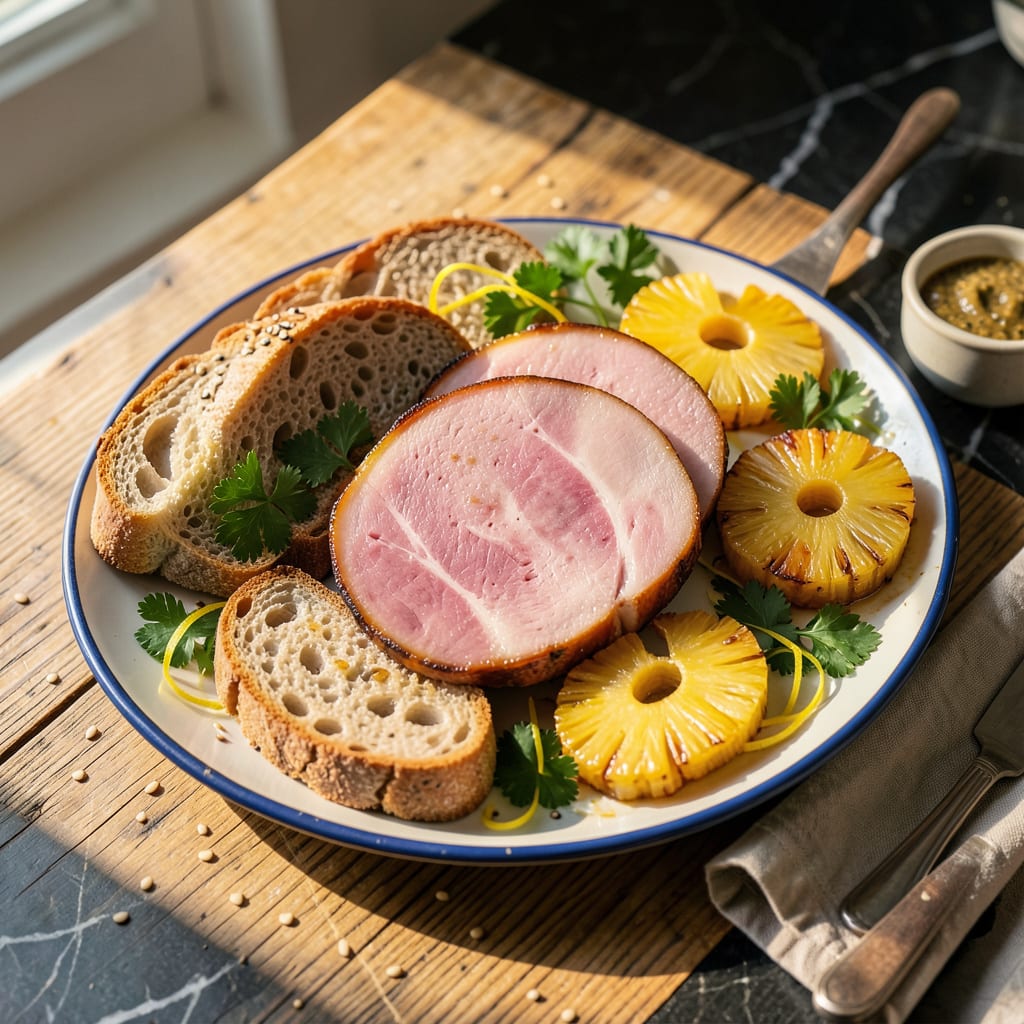
Transform canned ham into a delicious meal by baking it with a sweet glaze of brown sugar, mustard, and pineapple juice at 325°F for 15-20 minutes per pound. Serve warm with pan juices for extra flavor.
This method works because the caramelization of sugars creates a rich, glossy crust that balances the ham’s natural saltiness. The gentle heat helps soften the pre-cooked texture while allowing flavors to penetrate deeply. 🔥 I’ve found that adding a splash of pineapple juice not only tenderizes but also introduces a subtle tropical brightness that elevates the dish from ordinary to memorable.
What’s particularly useful about this approach is its versatility—it requires minimal prep time yet delivers restaurant-quality results. The glaze ingredients are pantry staples you likely already have, making this an excellent last-minute solution for busy weeknights or unexpected guests. ✨
💡 In This Article
- Why Canned Ham Benefits from Glazing and Baking
- Creative Serving Ideas for Canned Ham Recipes
Why Canned Ham Benefits from Glazing and Baking
The magic happens when sugar and heat combine through the Maillard reaction. When you bake canned ham with brown sugar at 325°F, the amino acids in the ham react with the sugar’s carbohydrates, creating complex flavor compounds. This process develops that irresistible caramelized crust while keeping the interior moist.
The mustard’s acidity cuts through the ham’s saltiness, creating perfect balance. 🔥
Canned ham’s pre-cooked structure actually benefits from gentle baking. The heat causes collagen in the meat to soften and redistribute, transforming what can sometimes be a dense, salty product into something tender and flavorful. Pineapple juice works double duty here—its natural enzymes (bromelain) help break down proteins while the sugars caramelize.
Baking for 15-20 minutes per pound ensures the glaze penetrates without drying out the ham. ✨
What most people don’t realize is that canned ham’s processing creates a unique texture that responds beautifully to glazing. The vacuum-sealing process makes the surface slightly porous, allowing glazes to adhere better than with fresh ham. When you score the surface before glazing, you create even more surface area for that flavorful crust to develop.
The result is a ham that tastes far more elaborate than its simple preparation suggests. 💫
The science of heat transfer plays a crucial role too. At 325°F, the ham heats evenly without the risk of drying out that comes with higher temperatures. This moderate heat allows the glaze to slowly reduce and thicken, creating a sticky, flavor-packed coating.
The pan juices that form during baking contain dissolved sugars and rendered fats that you can spoon over the ham when serving for an extra burst of flavor. ⚡
Timing matters because canned ham is already fully cooked. The 15-20 minutes per pound guideline ensures you’re heating it through without overcooking. This is where a meat thermometer becomes your best friend—aim for an internal temperature of 140°F to maintain perfect texture.
The glaze ingredients work together in specific ways: brown sugar caramelizes, mustard emulsifies the fats, and pineapple juice adds both sweetness and tenderizing enzymes. 🌟
Consider the transformation happening at the molecular level. The sugar in your glaze begins to melt at about 320°F, right at our baking temperature. As it liquefies, it carries flavor compounds deep into the ham’s surface. Meanwhile, the mustard’s vinegar content helps break down muscle fibers, making each bite more tender.
This combination of chemistry and culinary technique turns an ordinary canned product into something truly special. 💛

- BBQ Sausage Recipe Oven: Smoky Depth Without the Grill - September 28, 2026
- BBQ Chicken Bowl Recipe Rice: Smoky Sweetness Over Fluffy Grains - September 28, 2026
- Beef Cutlet Recipe Ideas: Crispy Breaded Patties With Bold Seasonings - September 28, 2026