
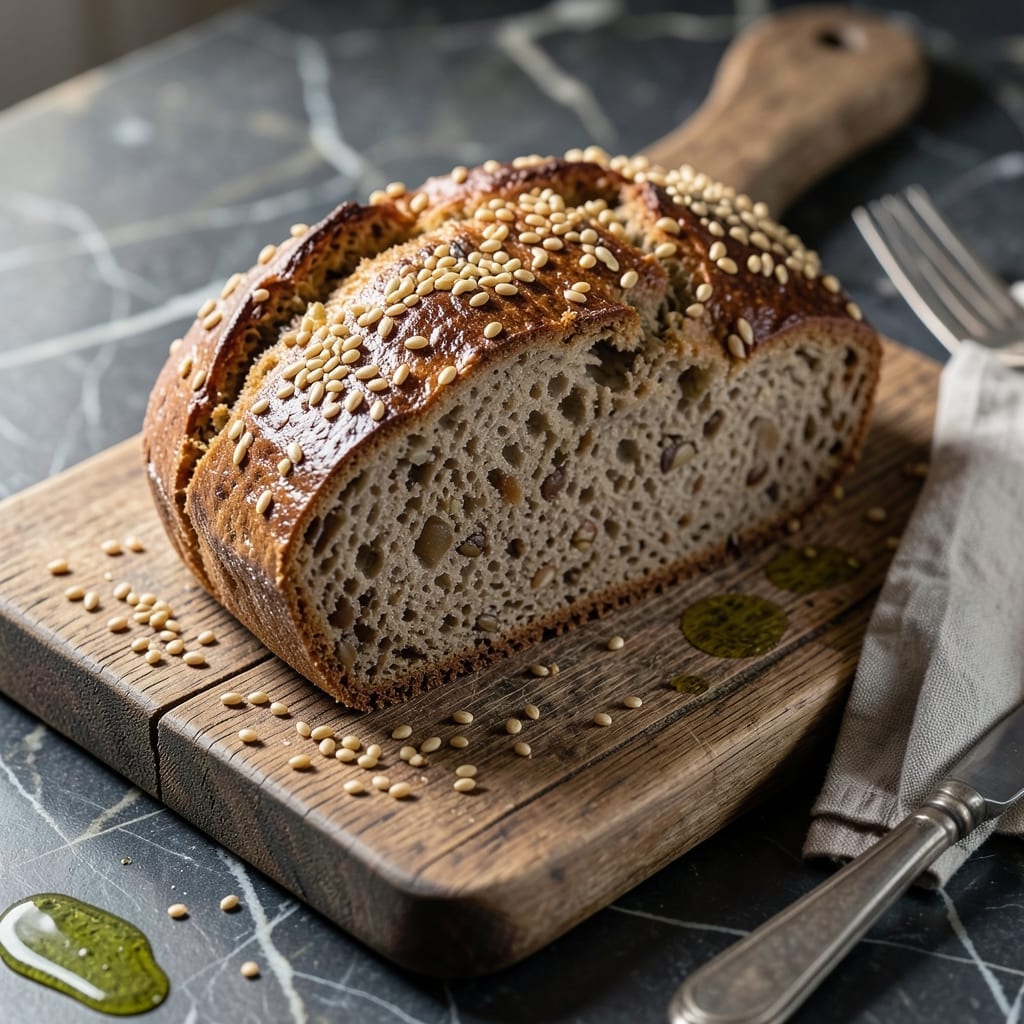
This nutrient-dense loaf brings together sprouted grains for a wholesome, homemade bread experience. The sprouting process enhances digestibility and nutrient absorption, making every slice packed with goodness.
With a hearty texture and rich, nutty flavor, this bread stands out from store-bought versions. Baking it at home ensures you control the ingredients, resulting in a loaf that’s both nourishing and delicious.
Ingredients for Recipe for Ezekiel Bread with Sprouted Grains
Wholesome sprouted grains and a handful of pantry staples create this nourishing loaf.
| Ingredient | Amount | Notes |
|---|---|---|
| Sprouted Wheat Berries 🌾 | 2 cups | Rinsed and drained thoroughly |
| Sprouted Barley 🌾 | 1 cup | Rinsed and drained thoroughly |
| Sprouted Millet 🌾 | ½ cup | Rinsed and drained thoroughly |
| Sprouted Lentils 🥜 | ½ cup | Green or brown variety |
| Sprouted Spelt 🌾 | 1 cup | Rinsed and drained thoroughly |
| Filtered Water 💧 | 1 ½ cups | Warm, about 110°F |
| Olive Oil 🫒 | 2 tbsp | Extra-virgin for richness |
| Honey 🍯 | 2 tbsp | Substitute with maple syrup for vegan |
| Sea Salt 🧂 | 1 ½ tsp | Fine grain preferred for even distribution |
| Active Dry Yeast 🍞 | 2 ¼ tsp | 1 packet, proofed in warm water |
| Whole Wheat Flour 🌾 | 3 cups | Plus extra for dusting surface |
| Vital Wheat Gluten 🍞 | ¼ cup | Improves bread structure and rise |
The sprouted grains are the soul of this bread. Bulk bins at Whole Foods or Sprouts are ideal for sourcing—look for plump, firm berries without any musty smell. If your store doesn’t carry sprouted, order online from Nuts.com or Azure Standard. The honey’s a sticking point for vegans (use maple syrup instead), but it feeds the yeast beautifully. For the flour, King Arthur or Bob’s Red Mill whole wheat works consistently.
No sprouted grains? Use unsprouted but soak them overnight—it’s not the same but gets you closer. Out of vital wheat gluten? The loaf will be denser but still edible. Honey swap is easy: maple syrup or agave at a 1:1 ratio. Olive oil can be any neutral oil in a pinch. Short on time? Skip the second rise—your loaf just won’t be as tall.
Dough keeps in the fridge for 24 hours before baking, or shape and freeze for 1 month. Baked loaves stay fresh wrapped in a towel for 2-3 days, or slice and freeze for 3 months. Pro tip: toast slices straight from frozen (worth the extra minute).
Why You’ll Love This Recipe
- One Bowl Mix: I just dump all the sprouted grains in a bowl, no fancy steps—honestly simpler than my old sandwich bread routine.
- Nutty Depth: The toasted sprouted wheat and spelt give it this warm, almost buttery richness that store-bought can’t touch.
- Meal Prep MVP: I bake two loaves Sunday and we’re set for toast, sandwiches, and even French toast all week.
- Pantry Hero: A bag of each sprout lasts me months, and it’s still cheaper than buying Ezekiel bread at the store.
Step-by-Step Instructions for Ezekiel Bread with Sprouted Grains
This method transforms sprouted grains into a hearty, nutrient-dense loaf with perfect texture.
Step 1: Sprout and Soak the Grains
Begin by thoroughly rinsing the 2 cups Sprouted Wheat Berries, 1 cup Sprouted Barley, 0.5 cup Sprouted Millet, 0.5 cup Sprouted Lentils, and 1 cup Sprouted Spelt. Drain them completely in a fine-mesh strainer. You’ll notice the grains plump slightly from the initial soaking they’ve already undergone.
Transfer the drained grains to a large bowl and cover with 1.5 cups Filtered Water. Let them soak for 4-6 hours at room temperature until the grains double in size. The water should look slightly cloudy, and the grains should feel tender when pinched between your fingers. Drain well again before proceeding.
Step 2: Grind the Sprouted Grains
Once soaked and drained, transfer the sprouted grains to a food processor. Pulse in batches until the mixture resembles a coarse, wet meal. You’re aiming for a texture between fine flour and whole grain—some bits should still be visible, but there shouldn’t be any whole grains left.
This step is crucial for texture. Under-processing leaves the bread dense, while over-processing can make it gummy. The mixture should hold together when pressed but still have some grit. Set the ground grains aside while you prepare the remaining ingredients.
Step 3: Activate the Yeast and Mix the Dough
In a small bowl, dissolve the 2.25 tsp Active Dry Yeast in ¼ cup of the warm Filtered Water with a pinch of the 2 tbsp Honey. Let it sit for 5-7 minutes until frothy and aromatic—this confirms the yeast is active and ready to leaven your loaf.
In a stand mixer fitted with the dough hook, combine the ground sprouted grains, 3 cups Whole Wheat Flour, 0.25 cup Vital Wheat Gluten, 1.5 tsp Sea Salt, remaining Honey, and 2 tbsp Olive Oil. Add the yeast mixture and mix on low for 2 minutes until a shaggy dough forms. Increase speed to medium and knead for 8-10 minutes until smooth and elastic.
Step 4: First Rise and Shape
Transfer the dough to a lightly oiled bowl, cover with a damp towel, and let it rise in a warm, draft-free spot for 1-1.5 hours or until nearly doubled in size. The dough should spring back slowly when poked with a finger, leaving a slight indentation.
Gently deflate the dough and shape it into a loaf. Place it seam-side down in a greased 9×5-inch loaf pan. Cover again and let it rise for another 45-60 minutes until the dough domes about 1 inch above the rim of the pan. Preheat your oven to 375°F during the last 15 minutes of rising.
Step 5: Bake to Golden Perfection
Bake the loaf on the middle rack for 40-45 minutes until the top is deep golden brown and the internal temperature reaches 190-200°F. If the top browns too quickly, tent loosely with aluminum foil after 25 minutes.
Remove the bread from the pan and let it cool on a wire rack for at least 1 hour before slicing. This waiting period allows the crumb to set properly, preventing a gummy texture. The finished loaf should have a firm, slightly chewy crust and a moist, dense interior with visible flecks of sprouted grains.
Pro Tips For Making Recipe For Ezekiel Bread With Sprouted Grains
- Check Sprout Length: Sprout your grains until they’re just 1/4 inch long—any longer and the bread turns bitter, any shorter and it won’t rise properly.
- Use Warm Water: Mix your dough with water around 110°F; too hot kills the yeast, too cold slows fermentation, and I learned this the hard way with dense loaves.
- Skip Packed Measurements: Weigh your sprouted grains instead of using volume—packed cups can add 20% more flour, making the bread dry and crumbly.
- Rest the Dough: After kneading, let it rest 10 minutes before shaping—sounds weird, but it works: the gluten relaxes and the loaf holds its structure better.
Health Benefits of This recipe for ezekiel bread with sprouted grains
Enhanced Nutrition
Sprouting unlocks more nutrients in grains, boosting vitamin C, B vitamins, and amino acids. This process also reduces anti-nutrients like phytic acid, making minerals like iron and zinc more absorbable. I noticed my energy levels improved after switching to sprouted bread. 💪
Improved Digestion
The sprouting process breaks down complex starches, making this bread easier to digest. Many people with mild gluten sensitivities find sprouted grain breads more tolerable. The live enzymes also support gut health and reduce bloating.
Complete Protein Source
By combining wheat, barley, millet, lentils, and spelt, this loaf creates a complete protein profile. Each slice provides all nine essential amino acids, which is rare for plant-based foods. Perfect for vegans and vegetarians.
Fiber Powerhouse
This bread packs a serious fiber punch—about 5-7 grams per slice. The combination of whole grains and legumes supports healthy digestion and keeps you full longer. It’s a great way to hit your daily fiber targets naturally.
Low Glycemic Impact
Sprouted grains have a lower glycemic index than regular bread, helping maintain steady blood sugar. This makes it an excellent choice for diabetics or anyone watching their carb intake. I feel more satisfied and energized throughout the day. ✨
Rich in Antioxidants
The sprouting process increases antioxidant levels, particularly phenolic compounds and flavonoids. These powerful compounds help combat oxidative stress and inflammation. Regular consumption can contribute to long-term health benefits.
Frequently Asked Questions
Why use sprouted grains instead of regular?
Sprouted grains offer better digestibility and nutrient absorption. They also have a lower glycemic index and more antioxidants.
Can I skip the vital wheat gluten?
Yes, but your loaf will be denser. Vital wheat gluten helps the bread rise and hold its shape.
How long does it stay fresh?
Store wrapped in a towel for 2-3 days at room temperature. For longer storage, slice and freeze for up to 3 months.
What if my dough doesn’t rise?
Check your yeast freshness and water temperature (110°F). Also ensure your grains were fully sprouted and ground properly.
Nutrition Facts

- BBQ Sausage Recipe Oven: Smoky Depth Without the Grill - September 28, 2026
- BBQ Chicken Bowl Recipe Rice: Smoky Sweetness Over Fluffy Grains - September 28, 2026
- Beef Cutlet Recipe Ideas: Crispy Breaded Patties With Bold Seasonings - September 28, 2026