
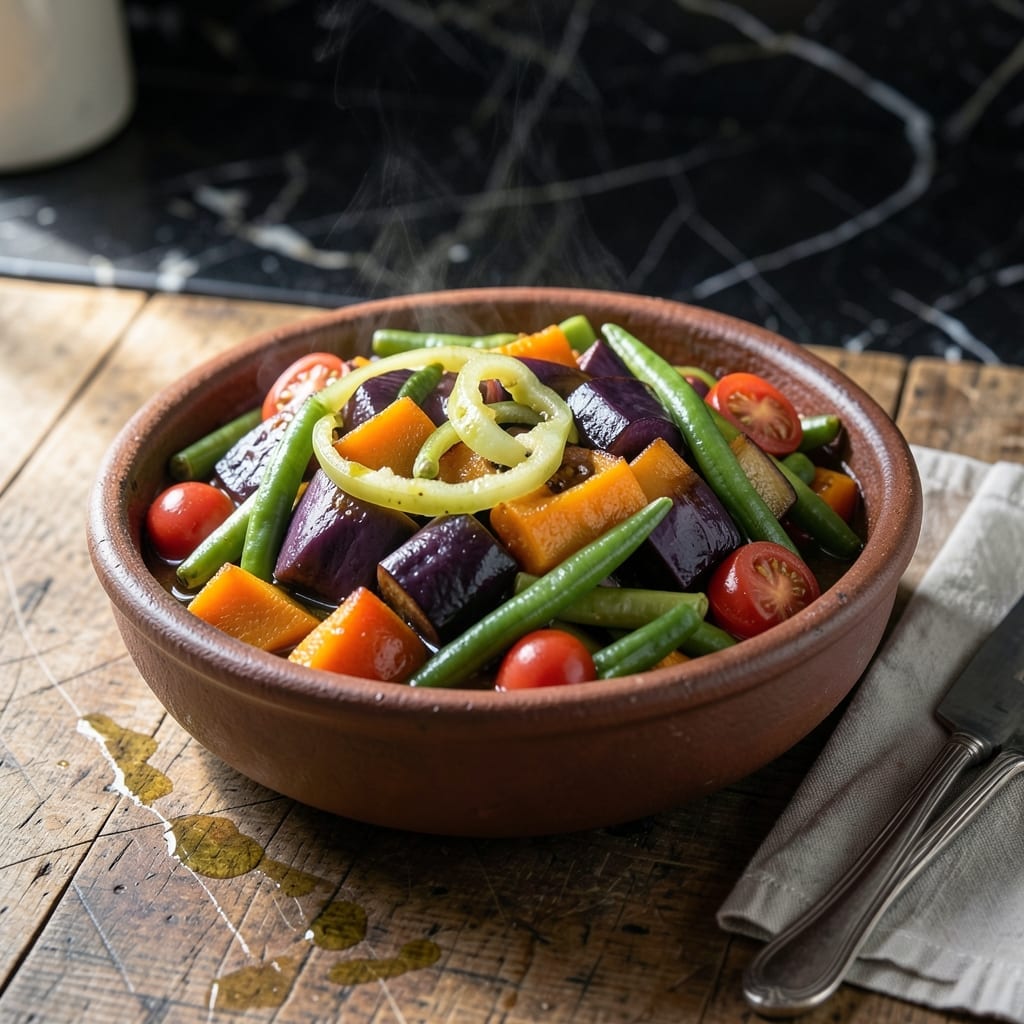
This classic Filipino dish brings together the freshest vegetables in a flavorful medley that’s both nourishing and deeply satisfying. The combination of bitter melon, eggplant, and okra creates a texture that’s uniquely Filipino.
The secret lies in the bagoong, a fermented shrimp paste that adds a rich, umami depth to every bite. It’s a dish that celebrates simplicity while delivering bold, traditional flavors.
Ingredients for Recipe for Filipino Pinakbet
Fresh vegetables and bold umami come together in this traditional Filipino medley.
| Ingredient | Amount | Notes |
|---|---|---|
| Bitter Melon 🥒 | 1 whole | Medium-sized, sliced thin |
| Eggplant 🍆 | 1 whole | Asian variety preferred, cubed |
| Okra 🥬 | 8 pieces | Fresh, trimmed |
| String Beans 🌿 | ½ lb | Cut into 2-inch pieces |
| Squash 🎃 | 1 whole | Kabocha or calabaza, cubed |
| Tomatoes 🍅 | 2 whole | Ripe, quartered |
| Onion 🧅 | 1 whole | Medium, thinly sliced |
| Garlic Cloves 🧄 | 4 cloves | Minced finely |
| Bagoong 🥫 | 2 tbsp | Fermented shrimp paste (vegetarian version) |
| Vegetable Oil 🫒 | 2 tbsp | For sautéing |
| Salt 🧂 | 1 tsp | Or to taste |
| Black Pepper 🌶️ | ½ tsp | Freshly ground |
The bagoong is non-negotiable for authenticity. Filipino markets will have the real deal, but for a vegetarian version, look for miso paste or fermented soybean paste at Whole Foods or Asian grocery stores. The bitter melon should be firm with a bright green skin—avoid any with soft spots. Eggplant and squash should feel heavy for their size, a sign of freshness.
No bitter melon? Zucchini or green papaya can stand in, though the flavor won’t be the same. Short on okra? Green beans or bell peppers add a similar texture. If you can’t find bagoong, fish-free oyster sauce or even a splash of soy sauce will add depth. The key is balancing the bitterness with the umami—taste as you go.
This dish tastes best the day it’s made, but leftovers keep well in the fridge for 3-4 days. Store in an airtight container. Reheat gently on the stove with a splash of water to restore moisture. The flavors deepen overnight, making it a great make-ahead option.
Why You’ll Love This Recipe
- One Pot Wonder: I toss everything in a single pan—bitter melon, eggplant, the works—and let it simmer. Cleanup is a breeze.
- Umami Bomb: The shrimp paste and bitter melon create this deep, salty-sweet flavor that’s honestly hard to resist.
- Feeds a Crowd: Between us, it’s my go-to for family dinners. Everyone gets their fill of veggies without complaining.
- Budget Stretcher: Squash and string beans are cheap, and this dish makes them shine. I’ll be real: it’s saved me on tight weeks.
Step-by-Step Instructions for Pinakbet
This traditional method ensures vibrant vegetables and authentic umami flavor in every bite.
Step 1: Prepare All Vegetables According to Specifications
Begin by slicing the bitter melon thin, as specified. Cube the eggplant and squash, ensuring uniform pieces for even cooking. Trim the okra and cut the 0.5 lb string beans into 2-inch pieces.
Quarter the 2 whole tomatoes and thinly slice the onion. Mince the 4 cloves garlic cloves finely. This preparation ensures all components cook uniformly and release their flavors effectively.
Step 2: Sauté Aromatics in Vegetable Oil
Heat the 2 tbsp vegetable oil in a large pot or deep skillet over medium heat. Add the sliced onion and cook for 2-3 minutes until translucent. Stir in the minced garlic cloves and sauté for 30 seconds until fragrant.
Add the 2 tbsp bagoong and stir to combine, allowing its umami depth to infuse the oil. This forms the flavor foundation for the entire dish. Be cautious not to let the garlic burn, as it can turn bitter quickly.
Step 3: Layer and Cook the Vegetables
Add the bitter melon first, as it requires the most cooking time to soften. Stir well to coat in the aromatics and cook for 3 minutes. Next, add the eggplant and squash, stirring to incorporate.
Follow with the string beans, okra, and tomatoes. Sprinkle with the 1 tsp salt and 0.5 tsp black pepper. Pour in enough water to just cover the bottom of the pot, about ½ cup, then cover and simmer on low heat for 15-20 minutes.
Step 4: Simmer Until Tender and Flavorful
Allow the vegetables to steam in their own juices, stirring occasionally to prevent sticking. The eggplant and squash should become tender but not mushy, while the okra and string beans retain a slight bite.
Taste and adjust seasoning if needed, though the bagoong provides a salty base. The dish is ready when all vegetables are cooked through and the flavors have melded together beautifully.
Serve hot, allowing the natural flavors of the vegetables and the rich umami of the bagoong to shine through in every bite.
Pro Tips For Making Recipe For Filipino Pinakbet
- Salt the Bitter Melon: Soak sliced bitter melon in salted water for 10 minutes to cut the bitterness—I learned this the hard way after serving a puckered-face dinner.
- Cut Evenly: Slice eggplant, squash, and string beans into uniform pieces so they cook at the same rate, no mushy or crunchy surprises.
- Sauté Shrimp Paste First: Cook the bagoong (shrimp paste) in oil for 1-2 minutes before adding veggies to deepen its flavor—my grandmother swore by this, and she was right.
- Layer by Texture: Add firmer veggies like string beans first, then softer ones like okra last, so everything finishes perfectly tender.
Health Benefits of recipe for filipino pinakbet
Rich in Fiber
This dish packs a serious fiber punch with bitter melon, eggplant, and okra—each serving delivers about 8-10 grams of fiber. That’s nearly half your daily needs! Fiber supports digestion and keeps you feeling full longer. I always feel lighter after eating it. 💪
Vitamin Powerhouse
The combination of string beans, squash, and tomatoes provides a spectrum of vitamins. You’ll get a hefty dose of vitamin A from the squash, vitamin C from the tomatoes, and folate from the beans. It’s like a multivitamin on a plate.
Low-Calorie Nourishment
With roughly 150-200 calories per serving, this creation is a guilt-free way to enjoy bold flavors. The vegetable oil adds minimal fat, while the bagoong brings depth without excess calories. Perfect for anyone watching their intake.
Antioxidant Boost
Bitter melon is packed with antioxidants like charantin and polypeptide-p, which help regulate blood sugar. The eggplant adds nasunin, a powerful free-radical scavenger. Together, they make this dish a nutritional powerhouse. ✨
Hydration Support
Many of the vegetables here—like squash and okra—have high water content, contributing to your daily hydration. The tomatoes also add a juicy freshness that balances the dish’s richness. Staying hydrated never tasted so good.
Heart-Healthy Choice
This meal is naturally low in saturated fat and cholesterol-free, making it a heart-smart option. The vegetable oil used in cooking adds healthy fats, while the fiber helps manage cholesterol levels. A win for your cardiovascular system!
Frequently Asked Questions
Can I make pinakbet without bagoong?
Yes, but the flavor will be less authentic. Use miso paste or fish-free oyster sauce as substitutes for the umami depth. The dish will still be tasty, just with a slightly different profile.
How do I reduce the bitterness in bitter melon?
Soak the sliced bitter melon in salted water for 10 minutes before cooking. This draws out some of the bitterness while keeping the texture intact.
What’s the best way to store leftovers?
Store in an airtight container in the fridge for up to 3-4 days. Reheat gently on the stove with a splash of water to restore moisture and flavor.
Can I add meat to the dish?
Many versions include pork belly or shrimp. Cook the meat first, then add the vegetables to absorb the flavors. This makes it heartier.
Nutrition Facts

- BBQ Sausage Recipe Oven: Smoky Depth Without the Grill - September 28, 2026
- BBQ Chicken Bowl Recipe Rice: Smoky Sweetness Over Fluffy Grains - September 28, 2026
- Beef Cutlet Recipe Ideas: Crispy Breaded Patties With Bold Seasonings - September 28, 2026